Lan Yungang, Li Zi, Wang Zhenzhen, Wang Xinran, Wang Gaili, Zhang Jing, Hu Shiyu, Zhao Kui, Xu Baofeng, Gao Feng, He Wenqi
Key Laboratory of Zoonosis Research, Ministry of Education, College of Veterinary Medicine, Jilin University, Changchun, China.
Jilin Academy of Animal Husbandry and Veterinary Medicine, Changchun, Jilin, China.
Mol Neurobiol. 2020 Dec;57(12):5299-5306. doi: 10.1007/s12035-020-02105-y. Epub 2020 Sep 2.
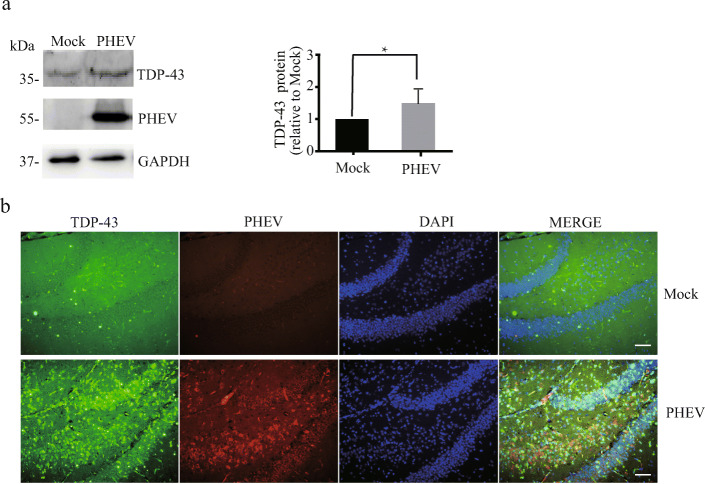
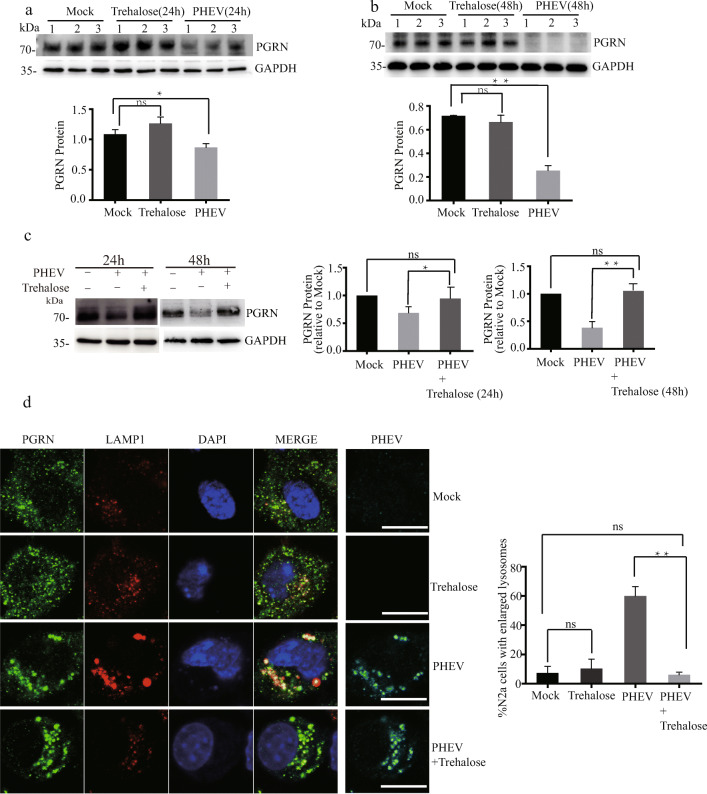
Lysosomes are involved in pathogenesis of a variety of neurodegenerative diseases and play a large role in neurodegenerative disorders caused by virus infection. However, whether virus-infected cells or animals can be used as experimental models of neurodegeneration in humans based on virus-related lysosomal dysfunction remain unclear. Porcine hemagglutinating encephalomyelitis virus displays neurotropism in mice, and neural cells are its targets for viral progression. PHEV infection was confirmed to be a risk factor for neurodegenerative diseases in the present. The findings demonstrated for the first time that PHEV infection can lead to lysosome disorders and showed that the specific mechanism of lysosome dysfunction is related to PGRN expression deficiency and indicated similar pathogenesis compared with human neurodegenerative diseases upon PHEV infection. Trehalose can also increase progranulin expression and rescue abnormalities in lysosomal structure in PHEV-infected cells. In conclusion, these results suggest that PHEV probably serve as a disease model for studying the pathogenic mechanisms and prevention of other degenerative diseases.
溶酶体参与多种神经退行性疾病的发病机制,并在病毒感染引起的神经退行性疾病中起重要作用。然而,基于病毒相关的溶酶体功能障碍,病毒感染的细胞或动物是否可作为人类神经退行性变的实验模型仍不清楚。猪血凝性脑脊髓炎病毒在小鼠中表现出嗜神经性,神经细胞是其病毒进展的靶标。目前已证实猪血凝性脑脊髓炎病毒感染是神经退行性疾病的一个危险因素。这些发现首次证明猪血凝性脑脊髓炎病毒感染可导致溶酶体紊乱,并表明溶酶体功能障碍的具体机制与颗粒蛋白前体表达缺陷有关,且显示出与猪血凝性脑脊髓炎病毒感染后人类神经退行性疾病相似的发病机制。海藻糖还可增加颗粒蛋白前体的表达,并挽救猪血凝性脑脊髓炎病毒感染细胞中的溶酶体结构异常。总之,这些结果表明猪血凝性脑脊髓炎病毒可能作为研究其他退行性疾病发病机制和预防的疾病模型。