Hajrah Nahid H, Obaid Abdullah Y, Atef Ahmed, Ramadan Ahmed M, Arasappan Dhivya, Nelson Charllotte A, Edris Sherif, Mutwakil Mohammed Z, Alhebshi Alawia, Gadalla Nour O, Makki Rania M, Al-Kordy Madgy A, El-Domyati Fotouh M, Sabir Jamal S M, Khiyami Mohammad A, Hall Neil, Bahieldin Ahmed, Jansen Robert K
Biotechnology Research Group, Department of Biological Sciences, Faculty of Science, King Abdulaziz University (KAU), Jeddah, Saudi Arabia.
Department of Chemistry, Faculty of Science, King Abdulaziz University (KAU), Jeddah, Saudi Arabia.
PLoS One. 2017 May 16;12(5):e0177589. doi: 10.1371/journal.pone.0177589. eCollection 2017.
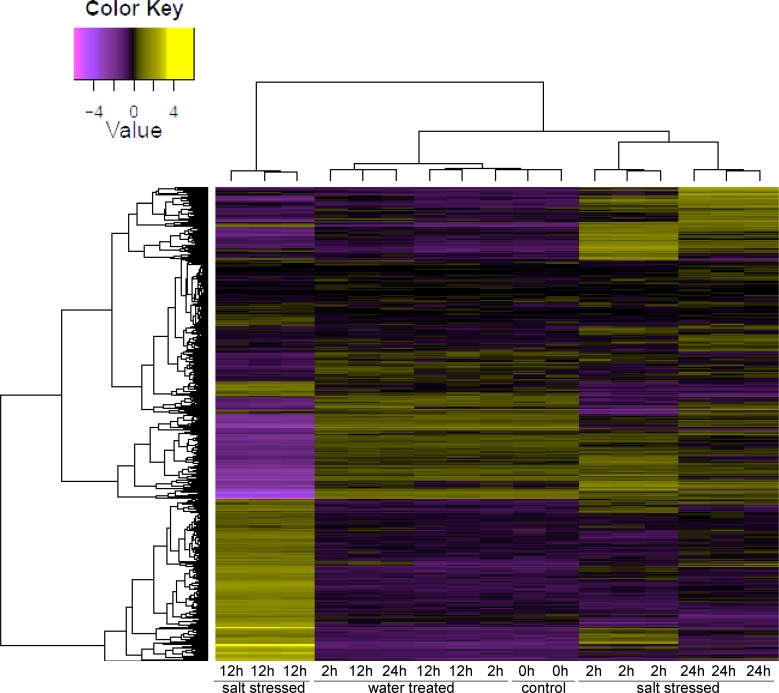
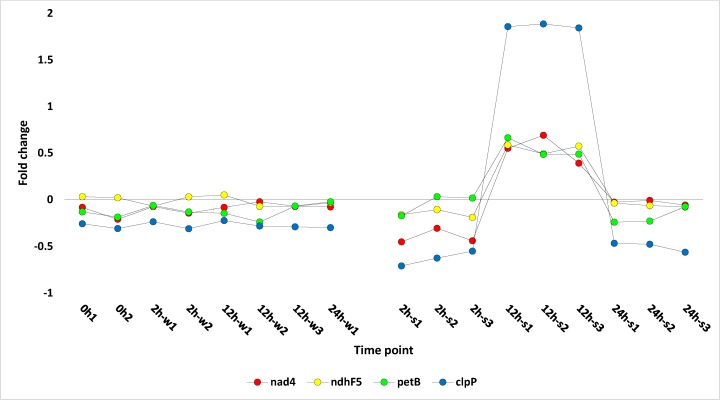
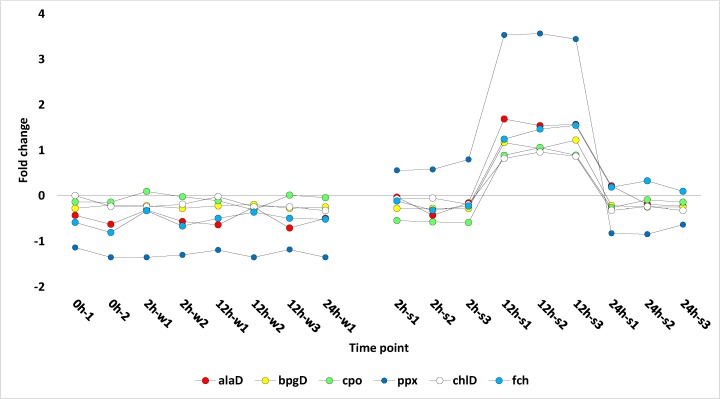
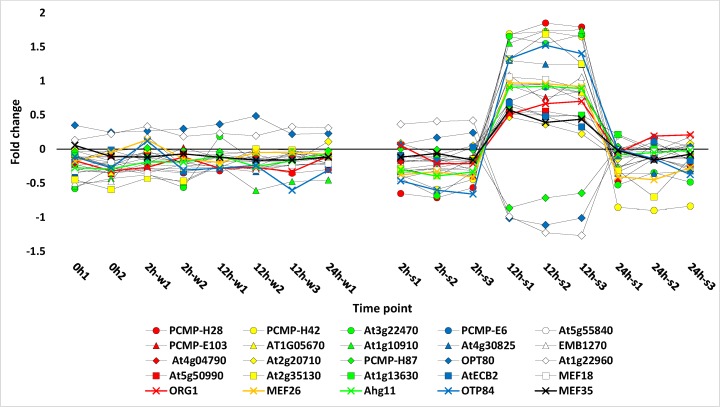
Rhazya stricta is an evergreen shrub that is widely distributed across Western and South Asia, and like many other members of the Apocynaceae produces monoterpene indole alkaloids that have anti-cancer properties. This species is adapted to very harsh desert conditions making it an excellent system for studying tolerance to high temperatures and salinity. RNA-Seq analysis was performed on R. stricta exposed to severe salt stress (500 mM NaCl) across four time intervals (0, 2, 12 and 24 h) to examine mechanisms of salt tolerance. A large number of transcripts including genes encoding tetrapyrroles and pentatricopeptide repeat (PPR) proteins were regulated only after 12 h of stress of seedlings grown in controlled greenhouse conditions. Mechanisms of salt tolerance in R. stricta may involve the upregulation of genes encoding chaperone protein Dnaj6, UDP-glucosyl transferase 85a2, protein transparent testa 12 and respiratory burst oxidase homolog protein b. Many of the highly-expressed genes act on protecting protein folding during salt stress and the production of flavonoids, key secondary metabolites in stress tolerance. Other regulated genes encode enzymes in the porphyrin and chlorophyll metabolic pathway with important roles during plant growth, photosynthesis, hormone signaling and abiotic responses. Heme biosynthesis in R. stricta leaves might add to the level of salt stress tolerance by maintaining appropriate levels of photosynthesis and normal plant growth as well as by the participation in reactive oxygen species (ROS) production under stress. We speculate that the high expression levels of PPR genes may be dependent on expression levels of their targeted editing genes. Although the results of PPR gene family indicated regulation of a large number of transcripts under salt stress, PPR actions were independent of the salt stress because their RNA editing patterns were unchanged.
沙漠玫瑰是一种常绿灌木,广泛分布于西亚和南亚,与夹竹桃科的许多其他成员一样,能产生具有抗癌特性的单萜吲哚生物碱。该物种适应非常恶劣的沙漠条件,使其成为研究耐高温和耐盐性的理想系统。对处于严重盐胁迫(500 mM NaCl)下的沙漠玫瑰在四个时间间隔(0、2、12和24小时)进行RNA测序分析,以研究其耐盐机制。在可控温室条件下生长的幼苗,大量转录本(包括编码四吡咯和五肽重复(PPR)蛋白的基因)仅在胁迫12小时后才受到调控。沙漠玫瑰的耐盐机制可能涉及伴侣蛋白Dnaj6、UDP-葡萄糖基转移酶85a2、透明种皮蛋白12和呼吸爆发氧化酶同源蛋白b等编码基因的上调。许多高表达基因在盐胁迫期间作用于保护蛋白质折叠以及黄酮类化合物的产生,黄酮类化合物是胁迫耐受性中的关键次生代谢产物。其他受调控基因编码卟啉和叶绿素代谢途径中的酶,这些酶在植物生长、光合作用、激素信号传导和非生物反应中起重要作用。沙漠玫瑰叶片中的血红素生物合成可能通过维持适当的光合作用水平和正常植物生长以及通过参与胁迫下活性氧(ROS)的产生来提高耐盐胁迫水平。我们推测PPR基因的高表达水平可能取决于其靶向编辑基因的表达水平。虽然PPR基因家族的结果表明在盐胁迫下大量转录本受到调控,但PPR的作用与盐胁迫无关,因为它们的RNA编辑模式没有变化。