Bak Seon Ho, Choi Hyun Ho, Lee Jinhee, Kim Mi Hee, Lee Youn Hee, Kim Jin Su, Cho Young-Seok
Department of Internal Medicine, Seoul St. Mary's Hospital, College of Medicine, The Catholic University of Korea, Seoul, Korea.
Department of Internal Medicine, Uijeongbu St. Mary's Hospital, College of Medicine, The Catholic University of Korea, Uijeongbu, Korea.
Intest Res. 2017 Apr;15(2):244-248. doi: 10.5217/ir.2017.15.2.244. Epub 2017 Apr 27.
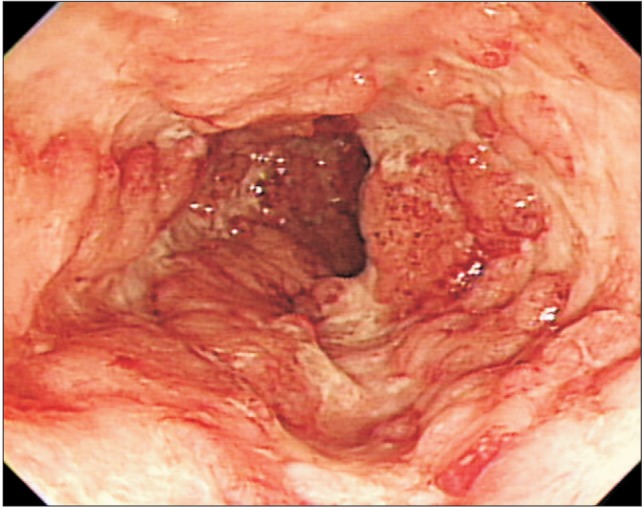
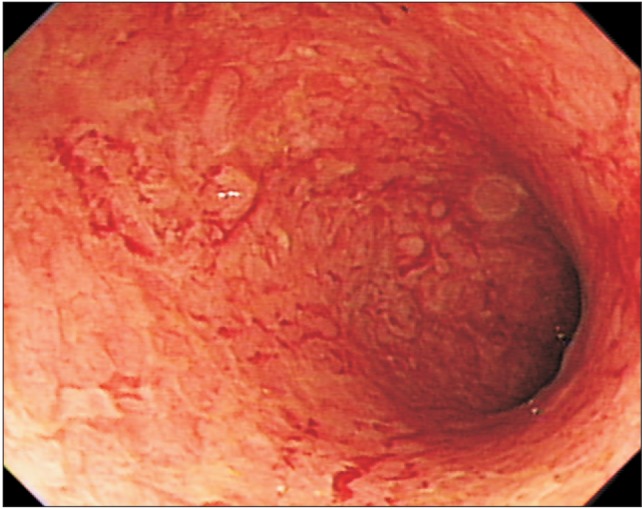
Approximately one-third of patients with Crohn's disease do not respond to conventional treatments, and some experience significant adverse effects, such as serious infections and lymphoma, and many patients require surgery due to complications. Increasing evidence suggests that specific changes in the composition of gut microbiota, termed as dysbiosis, are a common feature in patients with inflammatory bowel disease (IBD). Dysbiosis can lead to activation of the mucosal immune system, resulting in chronic inflammation and the development of mucosal lesions. Recently, fecal microbiota transplantation, aimed at modifying the composition of gut microbiota to overcome dysbiosis, has become a potential alternative therapeutic option for IBD. Herein, we present a patient with Crohn's colitis in whom biologic therapy failed previously, but clinical remission and endoscopic improvement was achieved after a single fecal microbiota transplantation infusion.
大约三分之一的克罗恩病患者对传统治疗无反应,一些患者会经历严重的不良反应,如严重感染和淋巴瘤,许多患者因并发症需要手术。越来越多的证据表明,肠道微生物群组成的特定变化,即生态失调,是炎症性肠病(IBD)患者的一个共同特征。生态失调可导致黏膜免疫系统激活,从而引发慢性炎症和黏膜病变的发展。最近,旨在改变肠道微生物群组成以克服生态失调的粪便微生物群移植,已成为IBD的一种潜在替代治疗选择。在此,我们报告一名克罗恩结肠炎患者,其先前生物治疗失败,但在单次粪便微生物群移植输注后实现了临床缓解和内镜改善。