Karnahl Matthias, Park Misoon, Mayer Ulrike, Hiller Ulrike, Jürgens Gerd
Center for Plant Molecular Biology (ZMBP), Developmental Genetics, University of Tübingen, Tübingen, Germany.
Center for Plant Molecular Biology (ZMBP), Microscopy, University of Tübingen, Tübingen, Germany.
Elife. 2017 May 19;6:e25327. doi: 10.7554/eLife.25327.
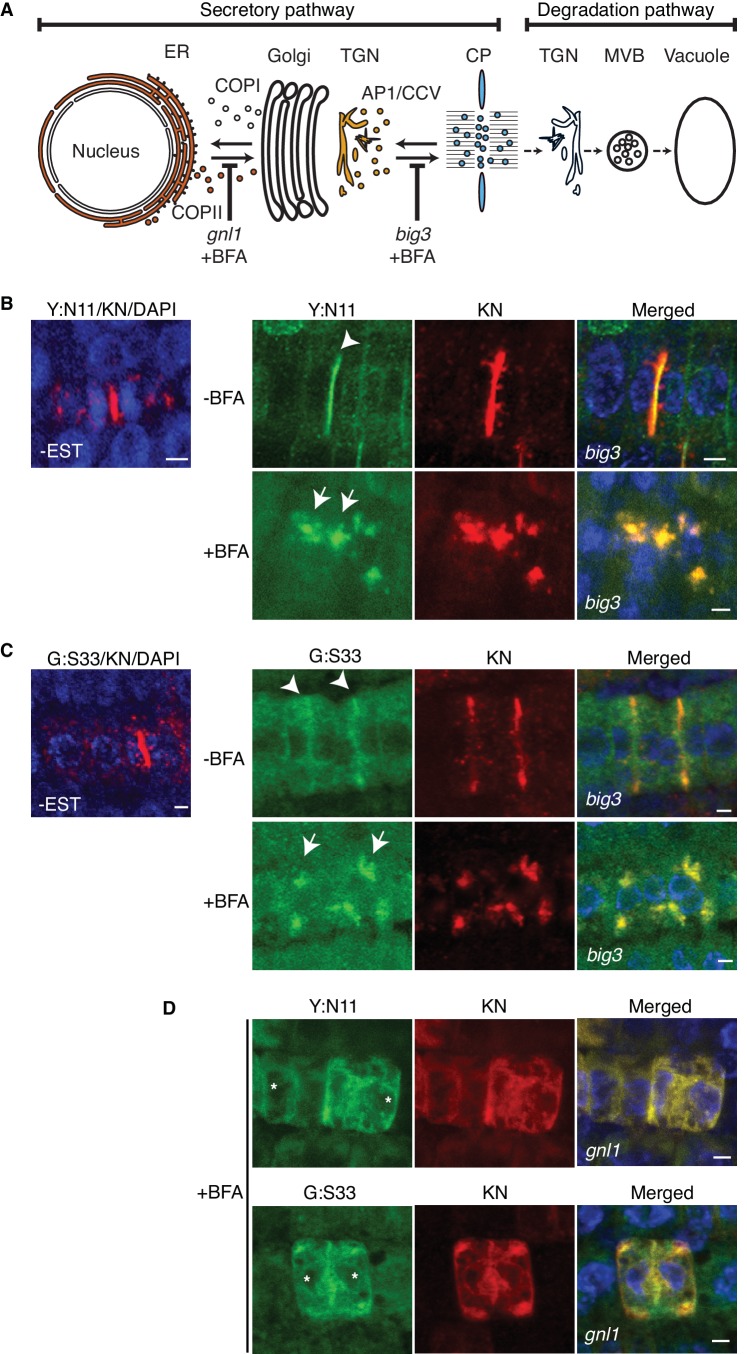
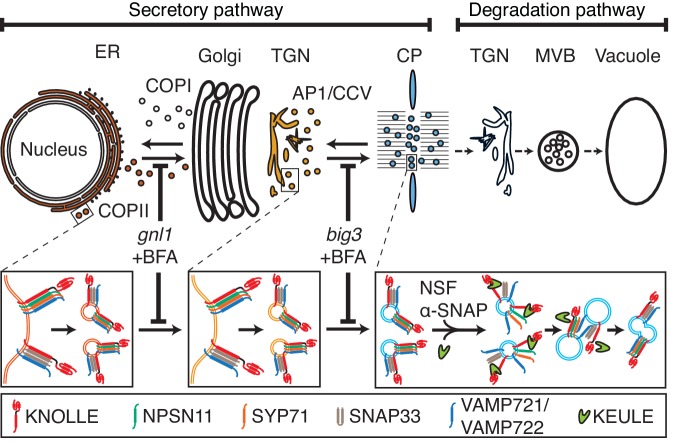
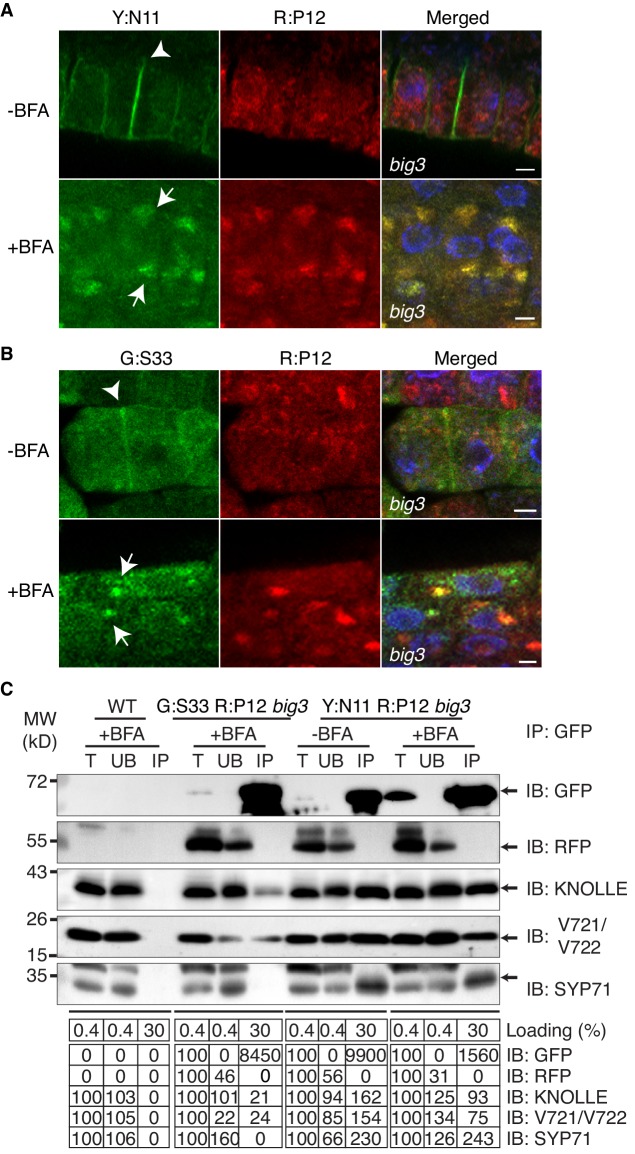
Intracellular membrane fusion mediates diverse processes including cell growth, division and communication. Fusion involves complex formation between SNARE proteins anchored to adjacent membranes. How and in what form interacting SNARE proteins reach their sites of action is virtually unknown. We have addressed this problem in the context of plant cell division in which a large number of TGN-derived membrane vesicles fuse with one another to form the partitioning membrane. Blocking vesicle formation at the TGN revealed -SNARE complexes. These inactive cytokinetic SNARE complexes were already assembled at the endoplasmic reticulum and, after passage through Golgi/TGN to the cell division plane, transformed into fusogenic SNARE complexes. This mode of trafficking might ensure delivery of large stoichiometric quantities of SNARE proteins required for forming the partitioning membrane in the narrow time frame of plant cytokinesis. Such long-distance trafficking of inactive SNARE complexes would also facilitate directional growth processes during cell differentiation.
细胞内膜融合介导多种过程,包括细胞生长、分裂和通讯。融合涉及锚定在相邻膜上的SNARE蛋白之间形成复合物。相互作用的SNARE蛋白如何以及以何种形式到达其作用位点实际上尚不清楚。我们在植物细胞分裂的背景下解决了这个问题,在植物细胞分裂过程中,大量源自反式高尔基体网络(TGN)的膜泡相互融合形成分隔膜。在TGN处阻断囊泡形成揭示了-SNARE复合物。这些无活性的细胞分裂SNARE复合物已经在内质网组装,经过高尔基体/TGN到达细胞分裂平面后,转变为促融合SNARE复合物。这种运输模式可能确保在植物胞质分裂的狭窄时间框架内提供形成分隔膜所需的大量化学计量的SNARE蛋白。这种无活性SNARE复合物的长距离运输也将促进细胞分化过程中的定向生长过程。