Pallett Laura J, Davies Jessica, Colbeck Emily J, Robertson Francis, Hansi Navjyot, Easom Nicholas J W, Burton Alice R, Stegmann Kerstin A, Schurich Anna, Swadling Leo, Gill Upkar S, Male Victoria, Luong TuVinh, Gander Amir, Davidson Brian R, Kennedy Patrick T F, Maini Mala K
Division of Infection and Immunity, Institute of Immunity and Transplantation, University College London, London, England, UK.
Centre for Digestive Diseases, Institute of Liver and Digestive Health, University College London, London, England, UK.
J Exp Med. 2017 Jun 5;214(6):1567-1580. doi: 10.1084/jem.20162115. Epub 2017 May 19.
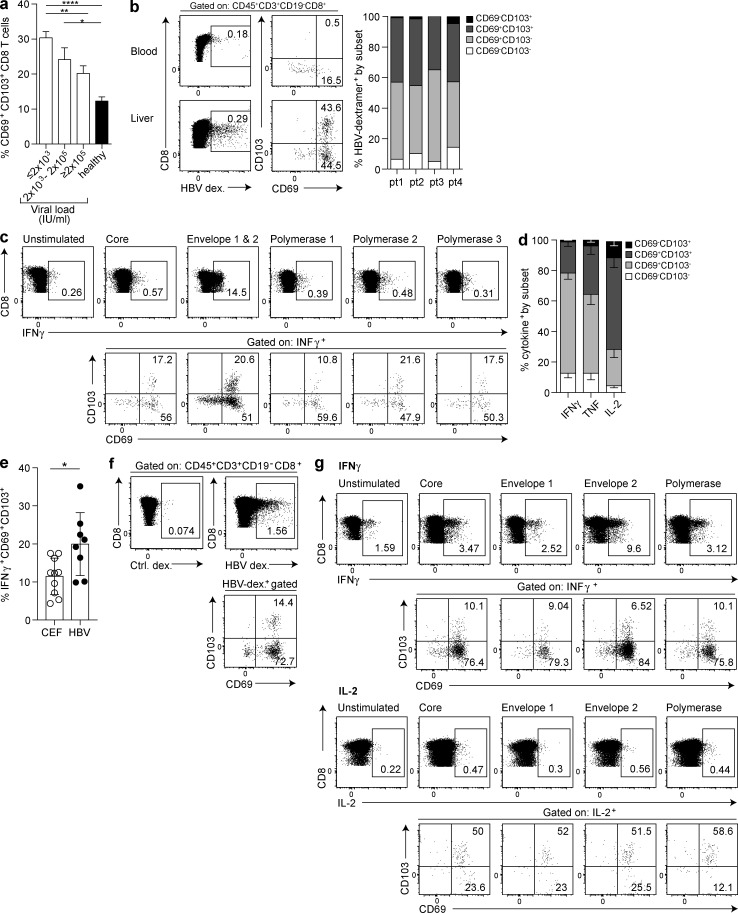
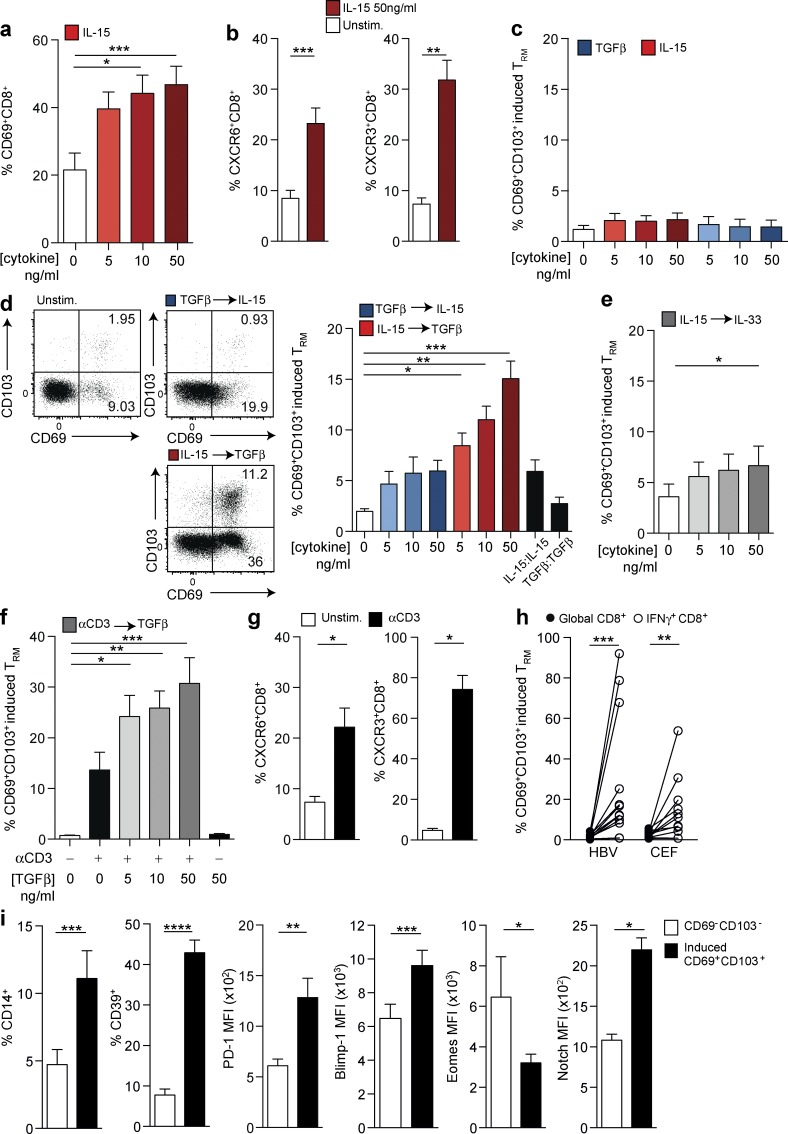
The liver provides a tolerogenic immune niche exploited by several highly prevalent pathogens as well as by primary and metastatic tumors. We have sampled healthy and hepatitis B virus (HBV)-infected human livers to probe for a subset of T cells specialized to overcome local constraints and mediate immunity. We characterize a population of T-betEomesBlimp-1Hobit T cells found within the intrahepatic but not the circulating memory CD8 T cell pool expressing liver-homing/retention markers (CD69CD103 CXCR6CXCR3). These tissue-resident memory T cells (T) are preferentially expanded in patients with partial immune control of HBV infection and can remain in the liver after the resolution of infection, including compartmentalized responses against epitopes within all major HBV proteins. Sequential IL-15 or antigen exposure followed by TGFβ induces liver-adapted T, including their signature high expression of exhaustion markers PD-1 and CD39. We suggest that these inhibitory molecules, together with paradoxically robust, rapid, cell-autonomous IL-2 and IFNγ production, equip liver CD8 T to survive while exerting local noncytolytic hepatic immunosurveillance.
肝脏提供了一个免疫耐受的微环境,几种高度流行的病原体以及原发性和转移性肿瘤均可利用这一环境。我们对健康人和乙型肝炎病毒(HBV)感染的人肝脏进行了采样,以探寻专门克服局部限制并介导免疫的T细胞亚群。我们鉴定出一群T-betEomesBlimp-1Hobit T细胞,它们存在于肝内记忆CD8 T细胞池中,而非循环记忆CD8 T细胞池中,并表达肝脏归巢/滞留标志物(CD69CD103 CXCR6CXCR3)。这些组织驻留记忆T细胞(Trm)在HBV感染获得部分免疫控制的患者中优先扩增,并且在感染消退后可留在肝脏中,包括对所有主要HBV蛋白内表位的分区反应。依次进行IL-15或抗原暴露,然后是TGFβ,可诱导肝脏适应性Trm,包括其标志性的高表达耗竭标志物PD-1和CD39。我们认为,这些抑制性分子,连同矛盾的强大、快速、细胞自主的IL-2和IFNγ产生,使肝脏CD8 T细胞能够在发挥局部非细胞溶解性肝脏免疫监视作用的同时存活下来。