Barts Liver Centre, Blizard Institute, Barts and The London School of Medicine and Dentistry, Queen Mary University of London, London, UK.
Division of Infection and Immunity, Institute of Immunity and Transplantation, University College London, London, UK.
Gut. 2019 Aug;68(8):1493-1503. doi: 10.1136/gutjnl-2018-317071. Epub 2018 Nov 28.
In order to refine new therapeutic strategies in the pipeline for HBV cure, evaluation of virological and immunological changes compartmentalised at the site of infection will be required. We therefore investigated if liver fine needle aspirates (FNAs) could comprehensively sample the local immune landscape in parallel with viable hepatocytes.
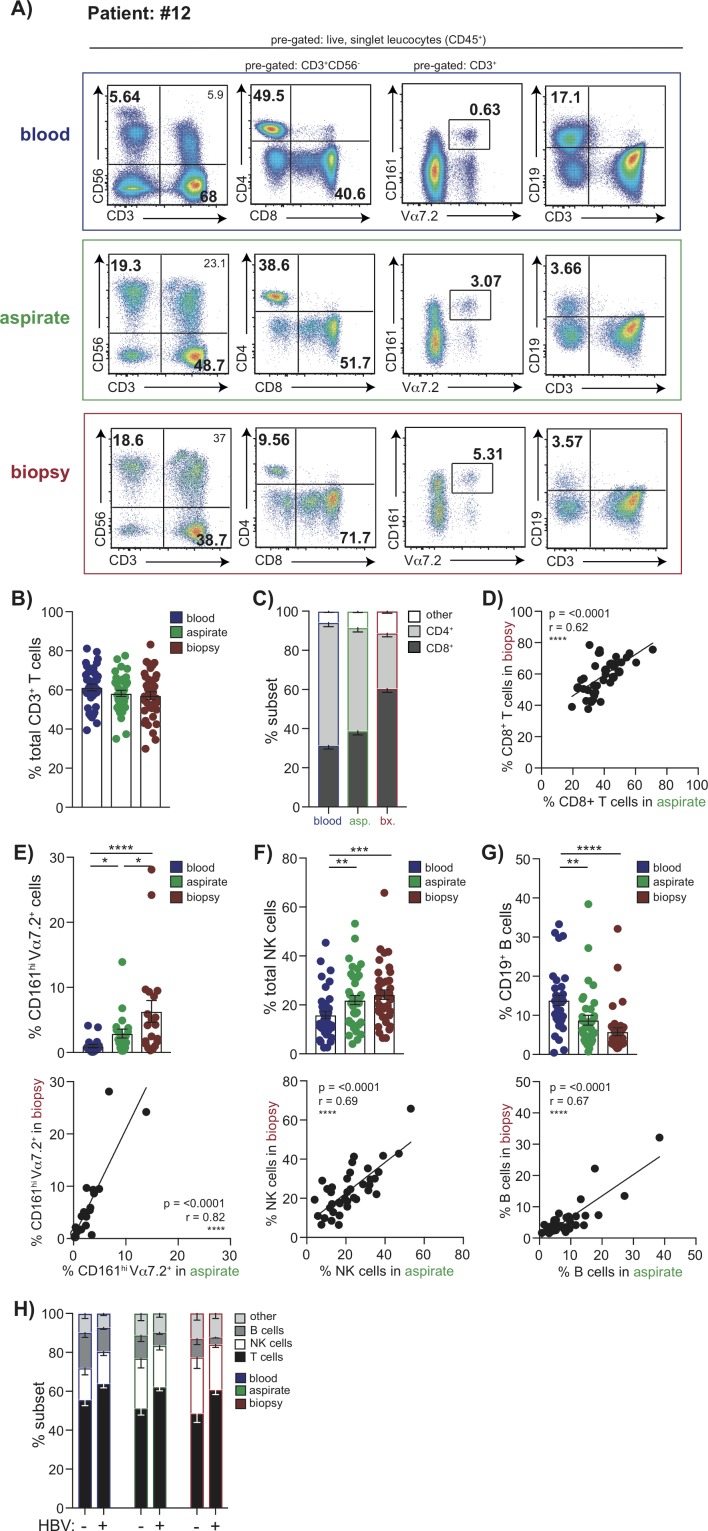
Matched blood, liver biopsy and FNAs from 28 patients with HBV and 15 without viral infection were analysed using 16-colour multiparameter flow cytometry.
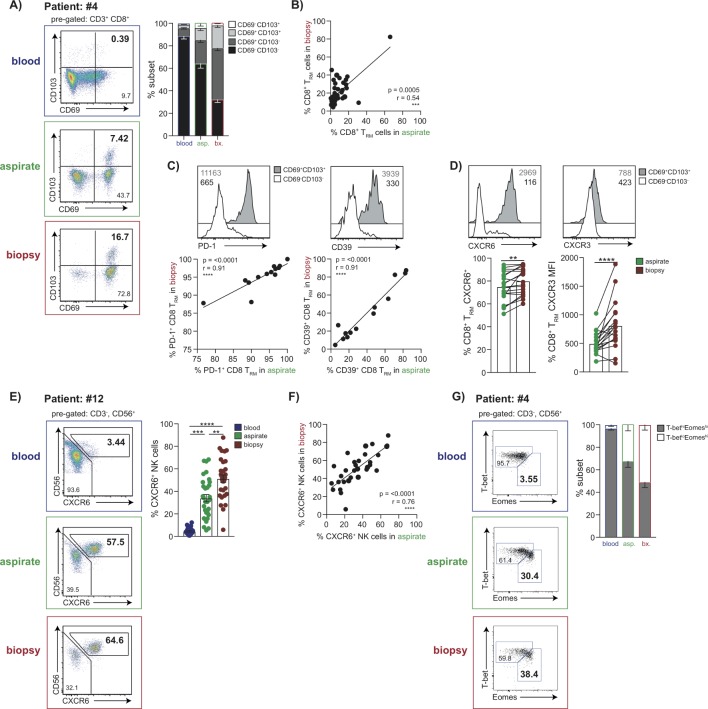
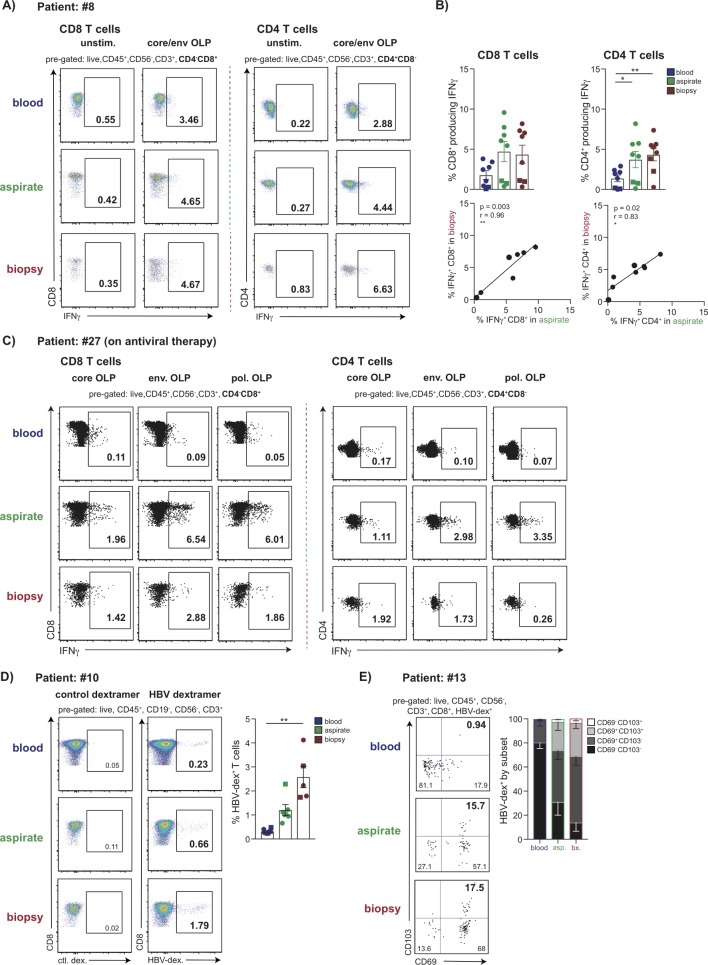
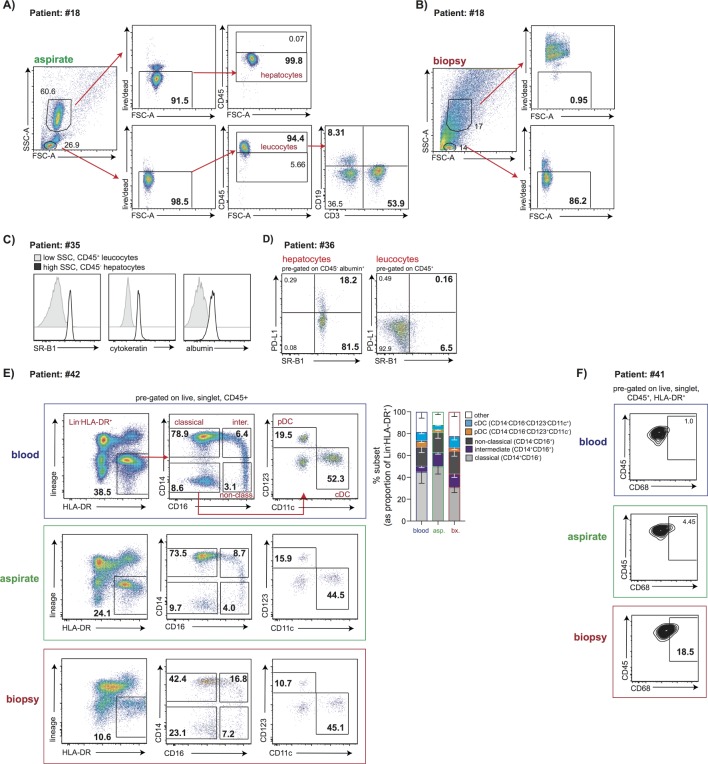
The proportion of CD4 T, CD8 T, Mucosal Associated Invariant T cell (MAIT), Natural Killer (NK) and B cells identified by FNA correlated with that in liver biopsies from the same donors. Populations of Programmed Death-1 (PD-1)CD39 tissue-resident memory CD8 T cells (CD69CD103) and liver-resident NK cells (CXCR6T-betEomes), were identified by both FNA and liver biopsy, and not seen in the blood. Crucially, HBV-specific T cells could be identified by FNAs at similar frequencies to biopsies and enriched compared with blood. FNAs could simultaneously identify populations of myeloid cells and live hepatocytes expressing albumin, Scavenger Receptor class B type 1 (SR-B1), Programmed Death-Ligand 1 (PD-L1), whereas hepatocytes were poorly viable after the processing required for liver biopsies.
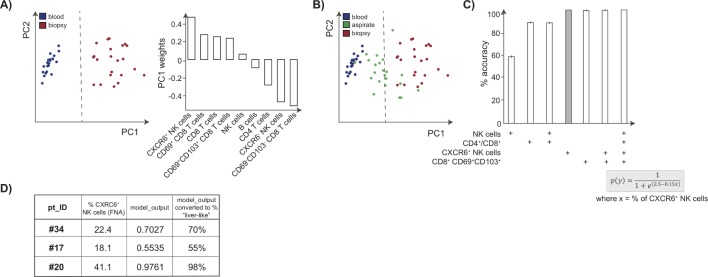
We demonstrate for the first time that FNAs identify a range of intrahepatic immune cells including locally resident sentinel HBV-specific T cells and NK cells, together with PD-L1-expressing hepatocytes. In addition, we provide a scoring tool to estimate the extent to which an individual FNA has reliably sampled intrahepatic populations rather than contaminating blood. The broad profiling achieved by this less invasive, rapid technique makes it suitable for longitudinal monitoring of the liver to optimise new therapies for HBV.
为了完善乙型肝炎病毒(HBV)治疗的新治疗策略,需要评估感染部位的病毒学和免疫学变化。因此,我们研究了肝细针抽吸(FNA)是否可以全面地对局部免疫景观进行采样,同时对活肝细胞进行采样。
对 28 例 HBV 患者和 15 例无病毒感染患者的匹配血液、肝活检和 FNA 进行了 16 色多参数流式细胞术分析。
通过 FNA 鉴定的 CD4 T、CD8 T、黏膜相关不变 T 细胞(MAIT)、自然杀伤(NK)和 B 细胞的比例与同一供体的肝活检相似。通过 FNA 和肝活检均可鉴定出程序性死亡受体-1(PD-1)+CD39 组织驻留记忆 CD8 T 细胞(CD69+CD103)和肝驻留 NK 细胞(CXCR6+T-bet+Eomes),但在血液中未见。至关重要的是,通过 FNA 鉴定的 HBV 特异性 T 细胞的频率与活检相似,并且与血液相比富集。FNA 可以同时鉴定髓样细胞和表达白蛋白、清道夫受体 B 型 1(SR-B1)、程序性死亡配体 1(PD-L1)的活肝细胞,而肝活检所需的处理后肝细胞的活力很差。
我们首次证明,FNA 可鉴定一系列肝内免疫细胞,包括局部驻留的乙型肝炎病毒特异性 T 细胞和 NK 细胞,以及表达 PD-L1 的肝细胞。此外,我们提供了一种评分工具来估计个体 FNA 可靠地采样肝内群体的程度,而不是污染血液。这种微创、快速的技术可以广泛地进行分析,非常适合对肝脏进行纵向监测,以优化乙型肝炎的新疗法。