Institute of Immunology and Immunotherapy, University of Birmingham, Birmingham, UK.
Institute of Immunity and Transplantation, Division of Infection and Immunity, University College London, London, UK.
Gut. 2022 Jul;71(7):1399-1411. doi: 10.1136/gutjnl-2020-323771. Epub 2021 Sep 21.
Tissue-resident memory T cells (T) are vital immune sentinels that provide protective immunity. While hepatic CD8 T have been well described, little is known about the location, phenotype and function of CD4 T.
We used multiparametric flow cytometry, histological assessment and novel human tissue coculture systems to interrogate the ex vivo phenotype, function and generation of the intrahepatic CD4 T-cell compartment. We also used leukocytes isolated from human leukocyte antigen (HLA)-disparate liver allografts to assess long-term retention.
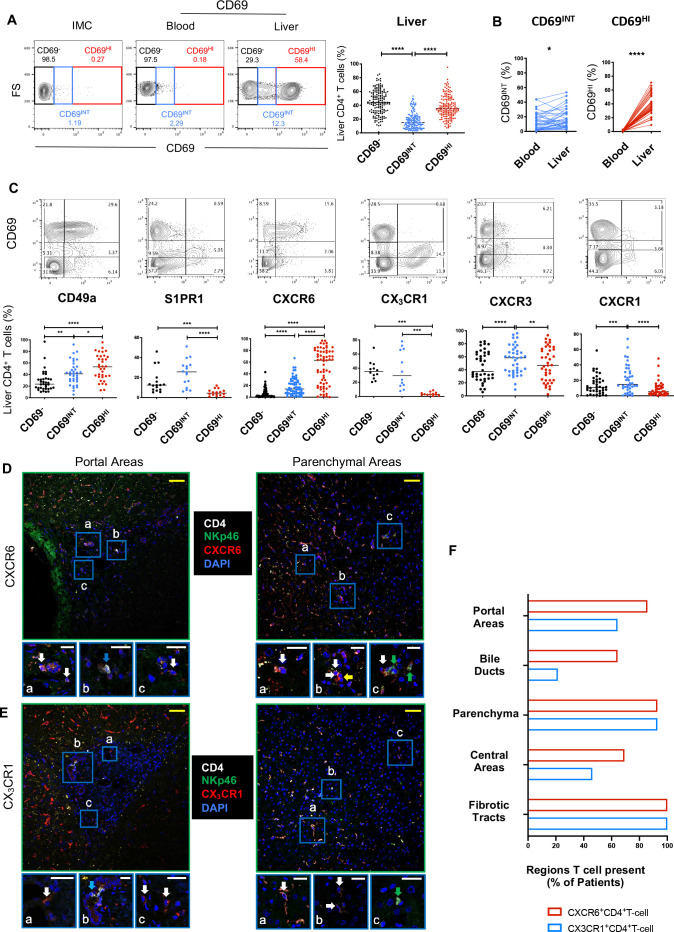
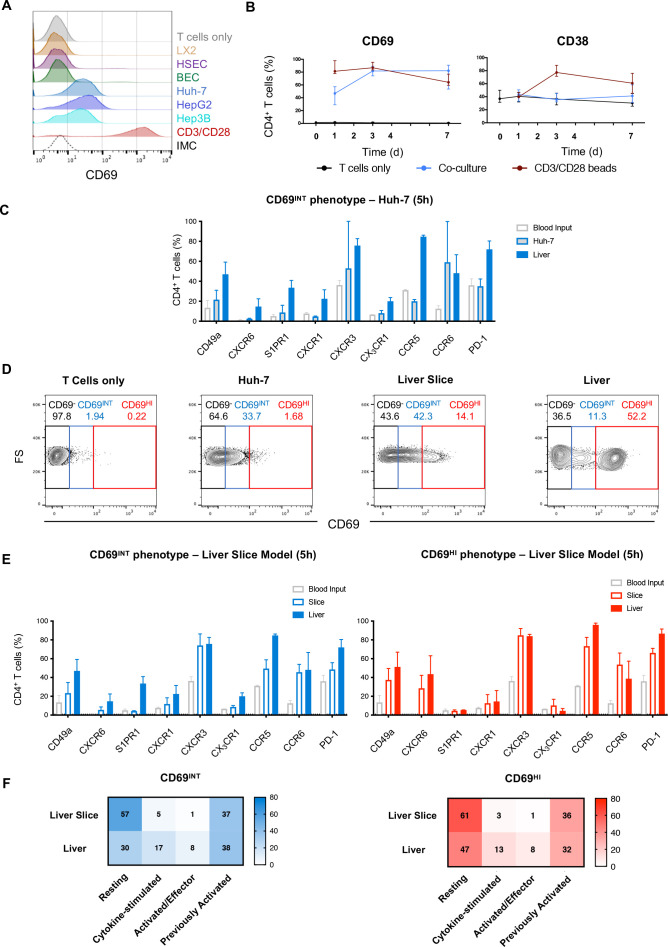
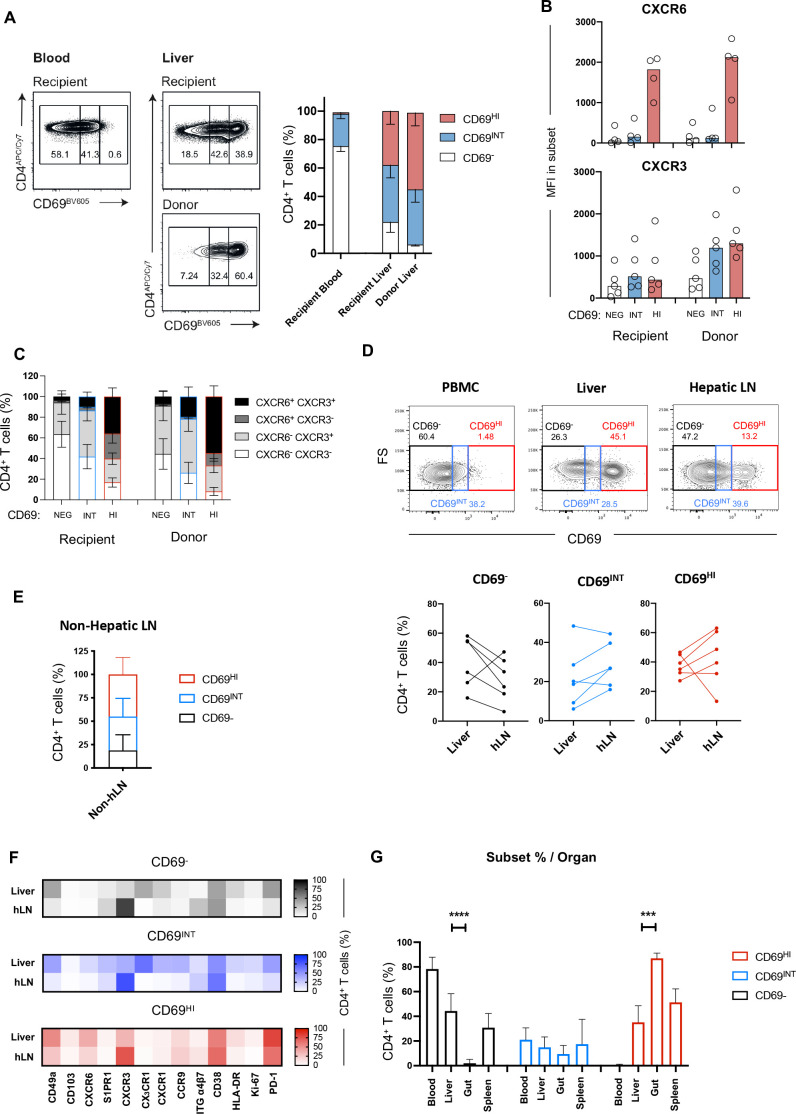
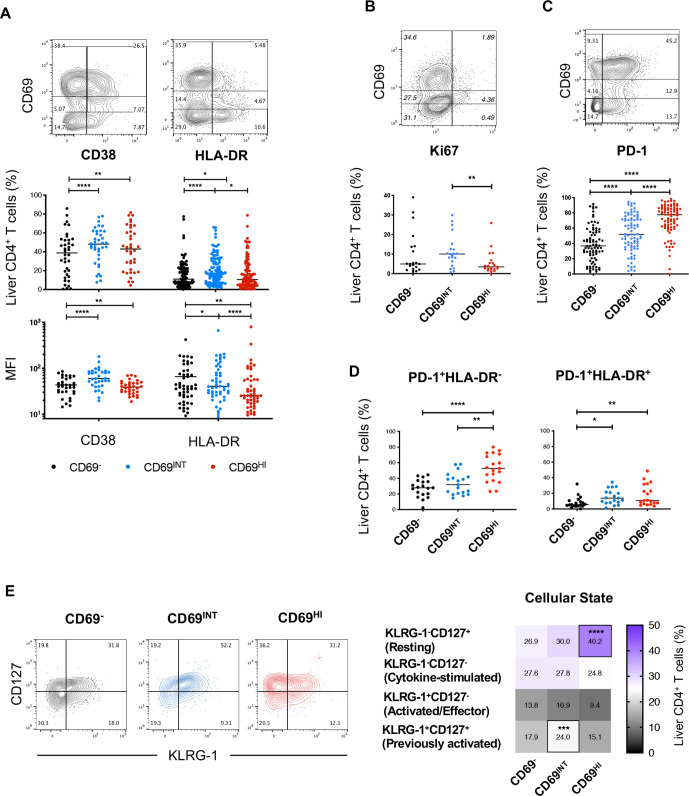
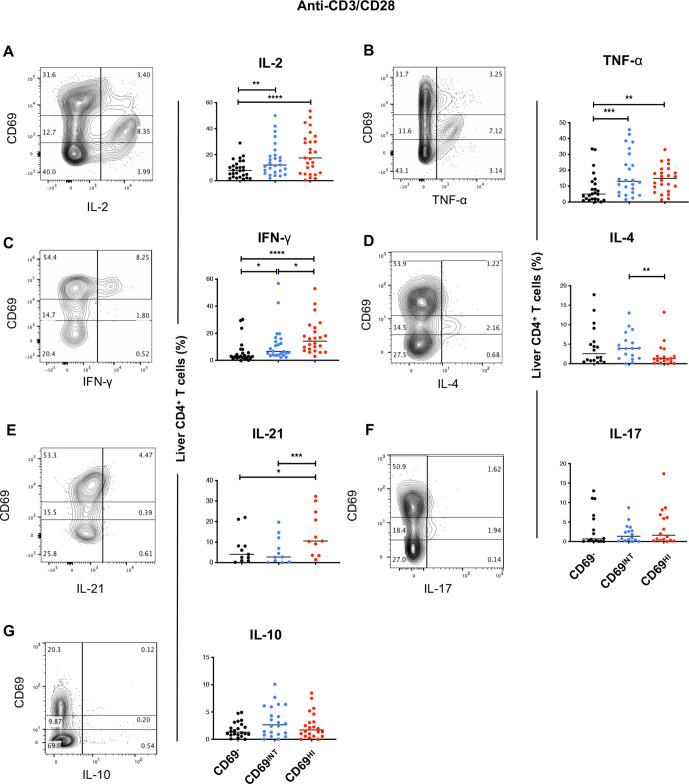
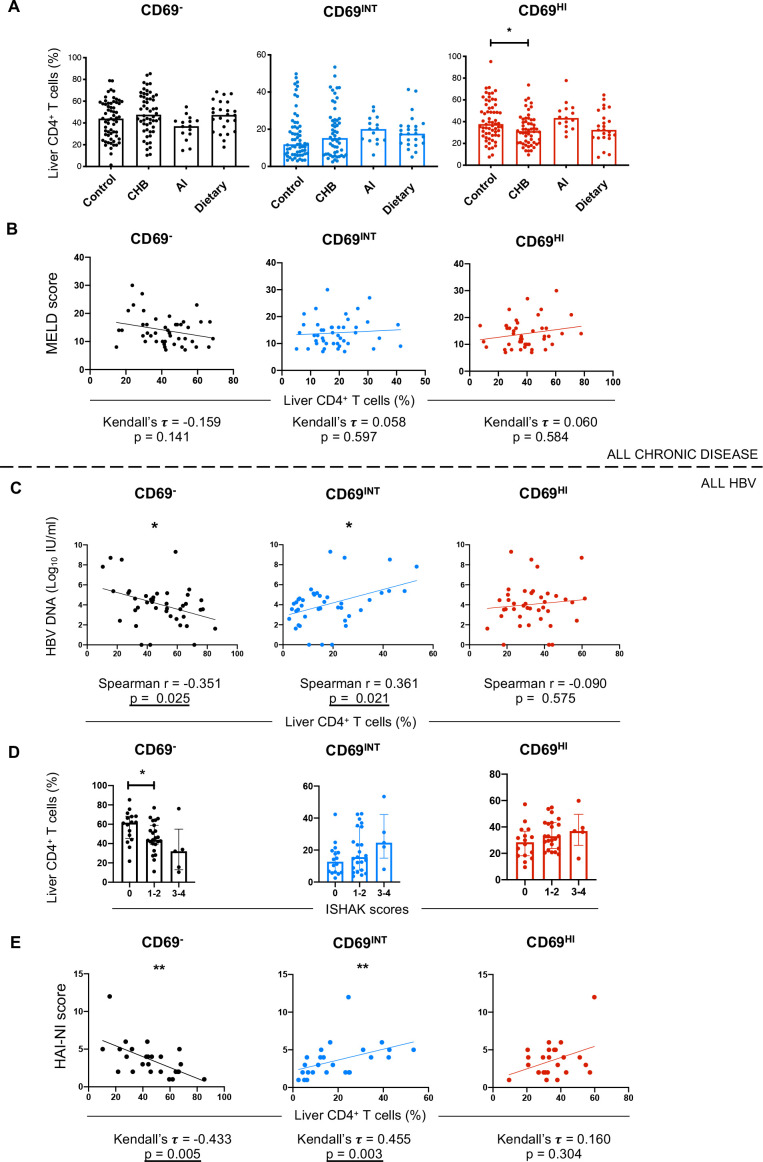
Hepatic CD4 T cells were delineated into three distinct populations based on CD69 expression: CD69, CD69 and CD69. CD69CD4 cells were identified as tissue-resident CD4 T cells on the basis of their exclusion from the circulation, phenotypical profile (CXCR6CD49aS1PR1PD-1) and long-term persistence within the pool of donor-derived leukcoocytes in HLA-disparate liver allografts. CD69CD4 T cells produced robust type 1 polyfunctional cytokine responses on stimulation. Conversely, CD69CD4 T cells represented a more heterogenous population containing cells with a more activated phenotype, a distinct chemokine receptor profile (CXCR1CXCR3CXCR1) and a bias towards interleukin-4 production. While CD69CD4 T cells could be found in the circulation and lymph nodes, these cells also formed part of the long-term resident pool, persisting in HLA-mismatched allografts. Notably, frequencies of CD69CD4 T cells correlated with necroinflammatory scores in chronic hepatitis B infection. Finally, we demonstrated that interaction with hepatic epithelia was sufficient to generate CD69CD4 T cells, while additional signals from the liver microenvironment were required to generate liver-resident CD69CD4 T cells.
High and intermediate CD69 expressions mark human hepatic CD4 T and a novel functionally distinct recirculating population, respectively, both shaped by the liver microenvironment to achieve diverse immunosurveillance.
组织驻留记忆 T 细胞(T)是提供保护性免疫的重要免疫哨兵。虽然肝 CD8 T 已得到很好的描述,但对 CD4 T 的位置、表型和功能知之甚少。
我们使用多参数流式细胞术、组织学评估和新型人组织共培养系统来研究肝内 CD4 T 细胞区室的体外表型、功能和产生情况。我们还使用来自人类白细胞抗原(HLA)不同的肝移植异体的白细胞来评估长期保留情况。
基于 CD69 的表达,将肝 CD4 T 细胞分为三个不同的群体:CD69、CD69 和 CD69。CD69CD4 细胞被确定为组织驻留的 CD4 T 细胞,因为它们被排除在循环之外,表型谱(CXCR6CD49aS1PR1PD-1)和在 HLA 不同的肝移植异体中供体来源白细胞库中的长期持久性。CD69CD4 T 细胞在刺激时产生强大的 1 型多功能细胞因子反应。相反,CD69CD4 T 细胞代表一个更异质的群体,包含具有更激活表型的细胞、独特的趋化因子受体谱(CXCR1CXCR3CXCR1)和偏向白细胞介素-4 产生的细胞。虽然 CD69CD4 T 细胞可以在循环和淋巴结中找到,但这些细胞也构成了长期驻留池的一部分,在 HLA 不匹配的同种异体移植物中持续存在。值得注意的是,CD69CD4 T 细胞的频率与慢性乙型肝炎感染的坏死性炎症评分相关。最后,我们证明与肝上皮细胞的相互作用足以产生 CD69CD4 T 细胞,而肝微环境中的其他信号需要产生肝驻留的 CD69CD4 T 细胞。
高和中等 CD69 表达标志着人类肝 CD4 T 细胞和一个新的功能上不同的循环群体,两者均由肝微环境塑造,以实现不同的免疫监视。