Sharrar Allison M, Flood Beverly E, Bailey Jake V, Jones Daniel S, Biddanda Bopaiah A, Ruberg Steven A, Marcus Daniel N, Dick Gregory J
Department of Earth and Environmental Sciences, University of Michigan, Ann ArborMI, USA.
Department of Earth Sciences, University of Minnesota, MinneapolisMN, USA.
Front Microbiol. 2017 May 8;8:791. doi: 10.3389/fmicb.2017.00791. eCollection 2017.
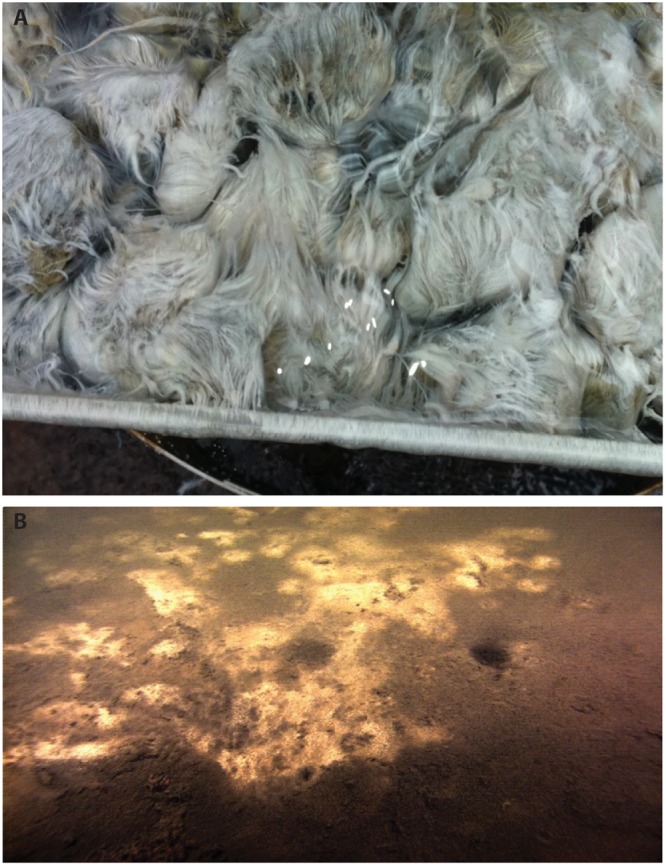
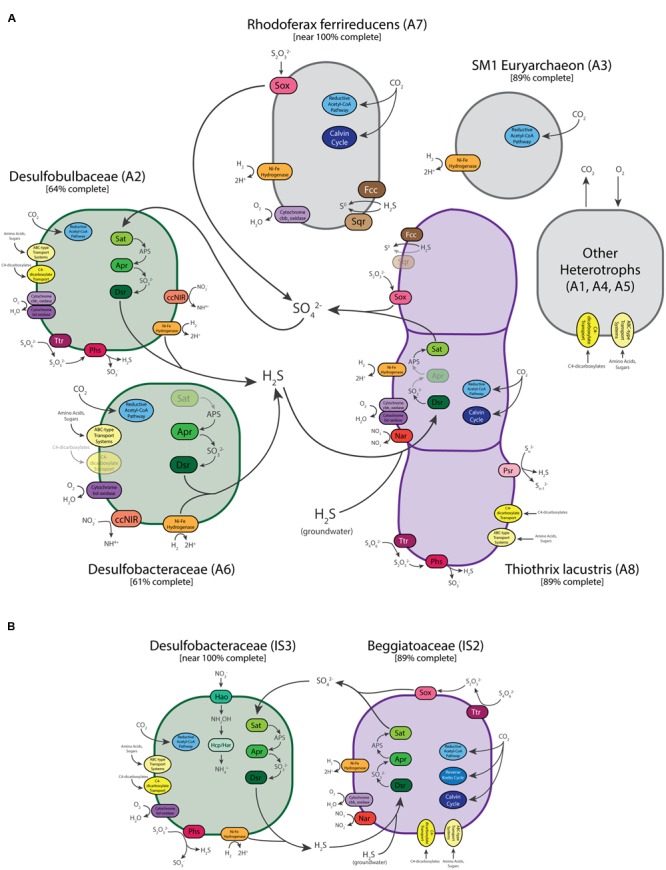
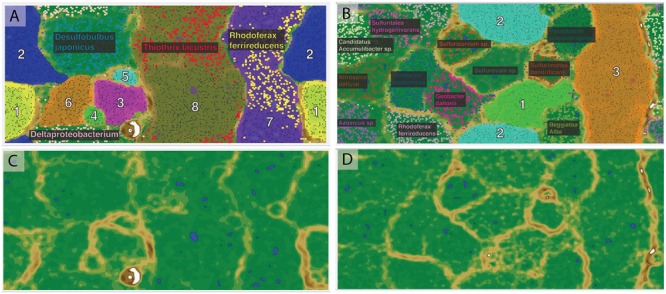
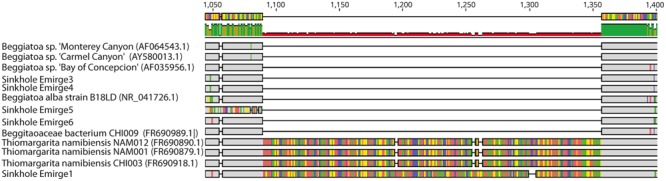
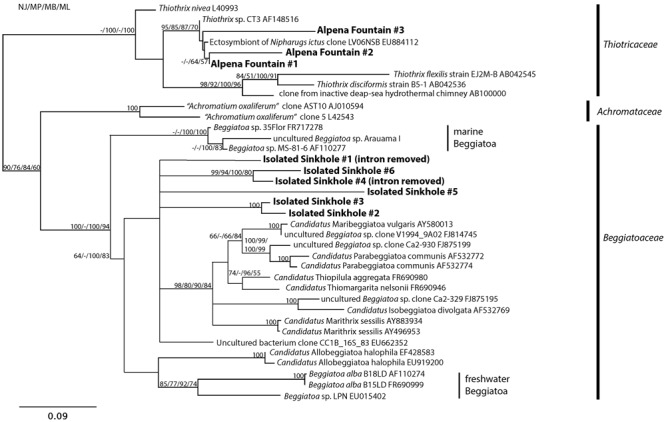
Little is known about large sulfur bacteria (LSB) that inhabit sulfidic groundwater seeps in large lakes. To examine how geochemically relevant microbial metabolisms are partitioned among community members, we conducted metagenomic analysis of a chemosynthetic microbial mat in the Isolated Sinkhole, which is in a deep, aphotic environment of Lake Huron. For comparison, we also analyzed a white mat in an artesian fountain that is fed by groundwater similar to Isolated Sinkhole, but that sits in shallow water and is exposed to sunlight. assembly and binning of metagenomic data from these two communities yielded near complete genomes and revealed representatives of two families of LSB. The Isolated Sinkhole community was dominated by novel members of the that are phylogenetically intermediate between known freshwater and marine groups. Several of these had 16S rRNA genes that contained introns previously observed only in marine taxa. The Alpena fountain was dominated by populations closely related to and an SM1 euryarchaeon known to live symbiotically with spp. The SM1 genomic bin contained evidence of H-based lithoautotrophy. Genomic bins of both the and contained genes for sulfur oxidation via the rDsr pathway, H oxidation via Ni-Fe hydrogenases, and the use of O and nitrate as electron acceptors. Mats at both sites also contained Deltaproteobacteria with genes for dissimilatory sulfate reduction (, and ) and hydrogen oxidation (Ni-Fe hydrogenases). Overall, the microbial mats at the two sites held low-diversity microbial communities, displayed evidence of coupled sulfur cycling, and did not differ largely in their metabolic potentials, despite the environmental differences. These results show that groundwater-fed communities in an artesian fountain and in submerged sinkholes of Lake Huron are a rich source of novel LSB, associated heterotrophic and sulfate-reducing bacteria, and archaea.
对于栖息在大湖硫化物地下水渗流处的大型硫细菌(LSB),人们了解甚少。为了研究与地球化学相关的微生物代谢如何在群落成员之间分配,我们对休伦湖深处无光环境中的孤立沉洞的化学合成微生物垫进行了宏基因组分析。作为比较,我们还分析了一个自流泉中的白色垫子,该自流泉由与孤立沉洞类似的地下水供给,但位于浅水区且暴露于阳光下。对这两个群落的宏基因组数据进行组装和分箱,得到了近乎完整的基因组,并揭示了两个大型硫细菌家族的代表。孤立沉洞群落由 的新成员主导,这些成员在系统发育上介于已知的淡水和海洋类群之间。其中一些 具有16S rRNA基因,这些基因含有以前仅在海洋分类群中观察到的内含子。阿尔皮纳自流泉由与 密切相关的种群和一种已知与 属共生生活的SM1广古菌主导。SM1基因组箱包含基于H的化能自养的证据。 和 的基因组箱都包含通过rDsr途径进行硫氧化、通过镍铁氢化酶进行H氧化以及使用O和硝酸盐作为电子受体的基因。两个地点的垫子还含有具有异化硫酸盐还原( 、 和 )和氢氧化(镍铁氢化酶)基因的δ变形菌。总体而言,尽管环境不同,但两个地点的微生物垫拥有低多样性的微生物群落,显示出耦合硫循环的证据,并且它们的代谢潜力差异不大。这些结果表明,自流泉和休伦湖水下沉洞中的地下水滋养群落是新型大型硫细菌、相关异养和硫酸盐还原细菌以及古菌的丰富来源。