Hamilton Trinity L, Jones Daniel S, Schaperdoth Irene, Macalady Jennifer L
Department of Geosciences, Penn State Astrobiology Research Center, The Pennsylvania State University University Park, PA, USA.
Department of Geosciences, Penn State Astrobiology Research Center, The Pennsylvania State University University Park, PA, USA ; Department of Earth Sciences, University of Minnesota Minneapolis, MN, USA.
Front Microbiol. 2015 Jan 8;5:756. doi: 10.3389/fmicb.2014.00756. eCollection 2014.
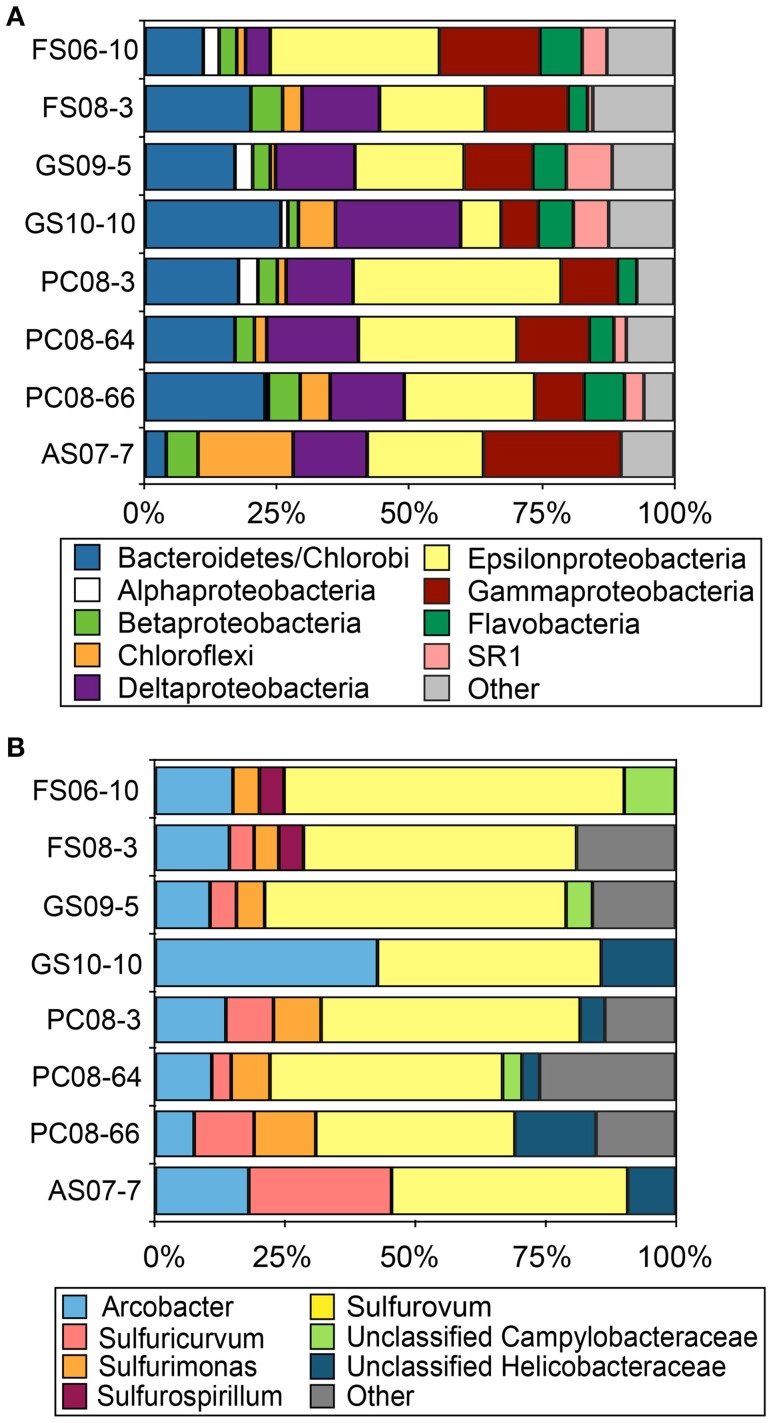
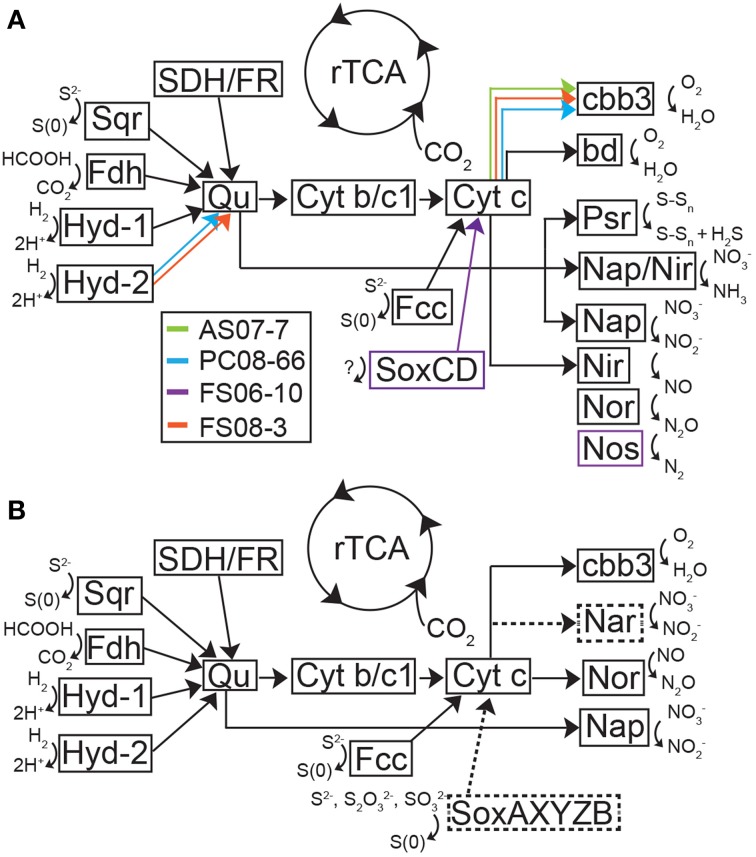
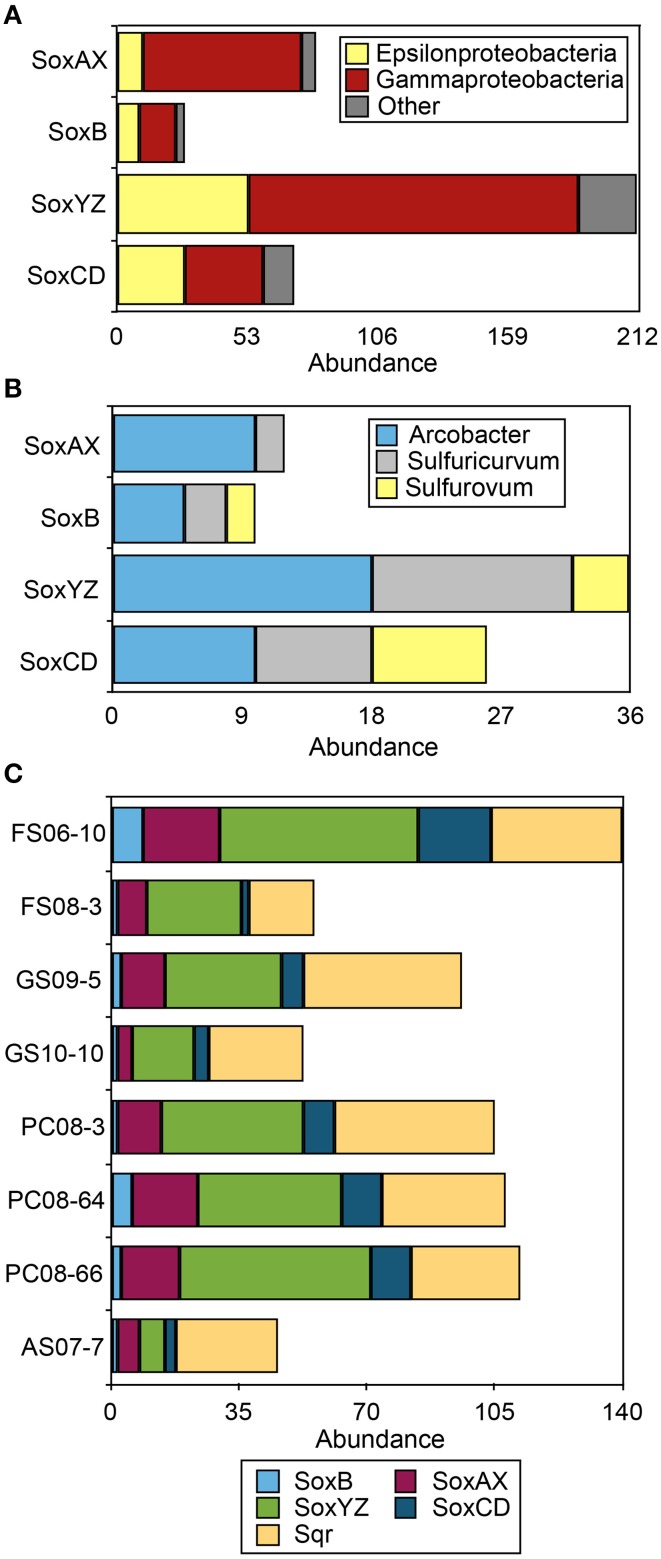
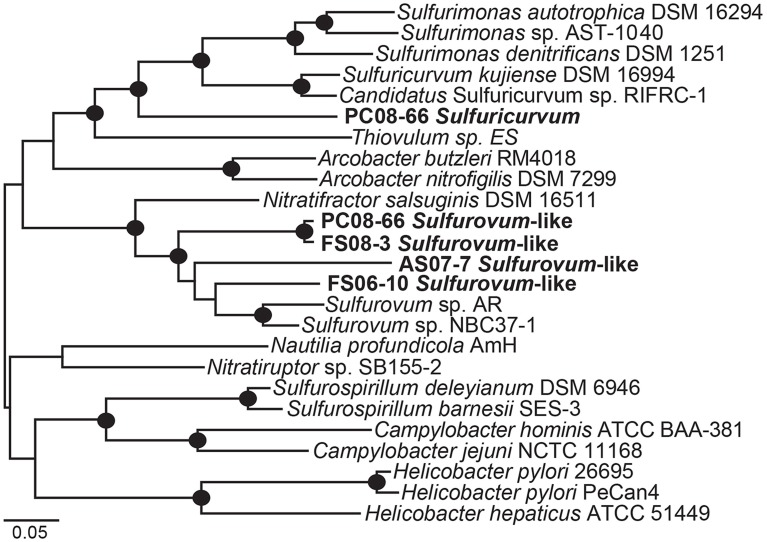
The Frasassi and Acquasanta Terme cave systems in Italy host isolated lithoautotrophic ecosystems characterized by sulfur-oxidizing biofilms with up to 50% S(0) by mass. The net contributions of microbial taxa in the biofilms to production and consumption of S(0) are poorly understood and have implications for understanding the formation of geological sulfur deposits as well as the ecological niches of sulfur-oxidizing autotrophs. Filamentous Epsilonproteobacteria are among the principal biofilm architects in Frasassi and Acquasanta Terme streams, colonizing high-sulfide, low-oxygen niches relative to other major biofilm-forming populations. Metagenomic sequencing of eight biofilm samples indicated the presence of diverse and abundant Epsilonproteobacteria. Populations of Sulfurovum-like organisms were the most abundant Epsilonproteobacteria regardless of differences in biofilm morphology, temperature, or water chemistry. After assembling and binning the metagenomic data, we retrieved four nearly-complete genomes of Sulfurovum-like organisms as well as a Sulfuricurvum spp. Analyses of the binned and assembled metagenomic data indicate that the Epsilonproteobacteria are autotrophic and therefore provide organic carbon to the isolated subsurface ecosystem. Multiple homologs of sulfide-quinone oxidoreductase (Sqr), together with incomplete or absent Sox pathways, suggest that cave Sulfurovum-like Epsilonproteobacteria oxidize sulfide incompletely to S(0) using either O2 or nitrate as a terminal electron acceptor, consistent with previous evidence that they are most successful in niches with high dissolved sulfide to oxygen ratios. In contrast, we recovered homologs of the complete complement of Sox proteins affiliated Gammaproteobacteria and with less abundant Sulfuricurvum spp. and Arcobacter spp., suggesting that these populations are capable of the complete oxidation of sulfide to sulfate. These and other genomic data presented here offer new clues into the physiology and genetic potential of the largely uncultivated and ecologically successful cave Sulfurovum-like populations, and suggest that they play an integral role in subsurface S(0) formation.
意大利的弗拉萨西和阿夸桑塔泰尔梅洞穴系统拥有孤立的岩石自养生态系统,其特征是硫氧化生物膜中硫(0)的质量含量高达50%。生物膜中微生物类群对硫(0)产生和消耗的净贡献尚不清楚,这对于理解地质硫矿床的形成以及硫氧化自养生物的生态位具有重要意义。丝状ε-变形菌是弗拉萨西和阿夸桑塔泰尔梅溪流中主要的生物膜构建者之一,相对于其他主要的生物膜形成种群,它们定殖于高硫化物、低氧的生态位。对八个生物膜样本的宏基因组测序表明存在多样且丰富的ε-变形菌。无论生物膜形态、温度或水化学存在差异,类硫卵菌属生物种群都是最丰富的ε-变形菌。在对宏基因组数据进行组装和分箱后,我们获得了四个类硫卵菌属生物的近乎完整的基因组以及一个硫弯菌属物种。对分箱和组装后的宏基因组数据的分析表明,ε-变形菌是自养型的,因此为孤立的地下生态系统提供有机碳。硫化物-醌氧化还原酶(Sqr)的多个同源物,以及不完整或缺失的Sox途径,表明洞穴类硫卵菌属ε-变形菌以氧气或硝酸盐作为末端电子受体将硫化物不完全氧化为硫(0),这与之前的证据一致,即它们在溶解硫化物与氧气比例高的生态位中最为成功。相比之下,我们在γ-变形菌以及丰度较低的硫弯菌属物种和弓形杆菌属物种中发现了完整Sox蛋白互补物的同源物,这表明这些种群能够将硫化物完全氧化为硫酸盐。本文展示的这些及其他基因组数据为大部分未培养且在生态上成功的洞穴类硫卵菌属种群的生理学和遗传潜力提供了新线索,并表明它们在地下硫(0)的形成中发挥着不可或缺的作用。