Gregor Mendel Institute (GMI), Austrian Academy of Sciences, Vienna Biocenter (VBC), Dr Bohr-Gasse 3, Vienna 1030, Austria.
Salk Institute For Biological Studies, Plant Molecular And Cellular Biology Laboratory, 10010 N Torrey Pines Rd, La Jolla, CA 92037, USA.
Nat Commun. 2017 May 24;8:15603. doi: 10.1038/ncomms15603.
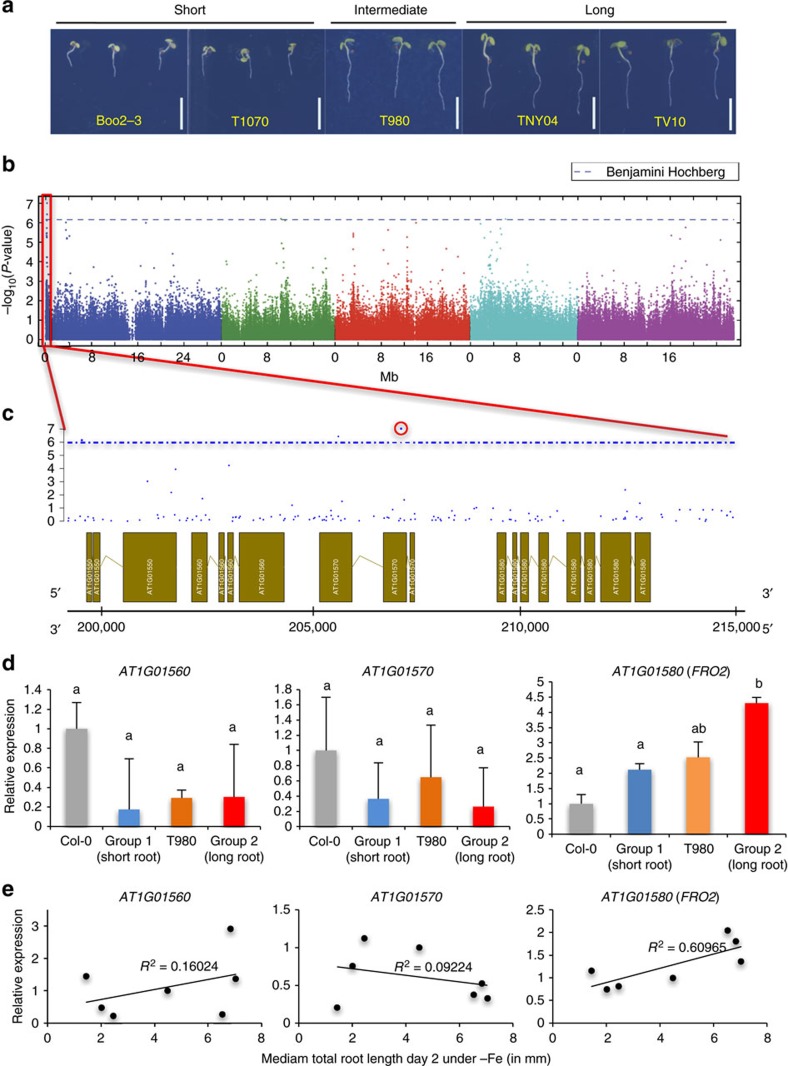
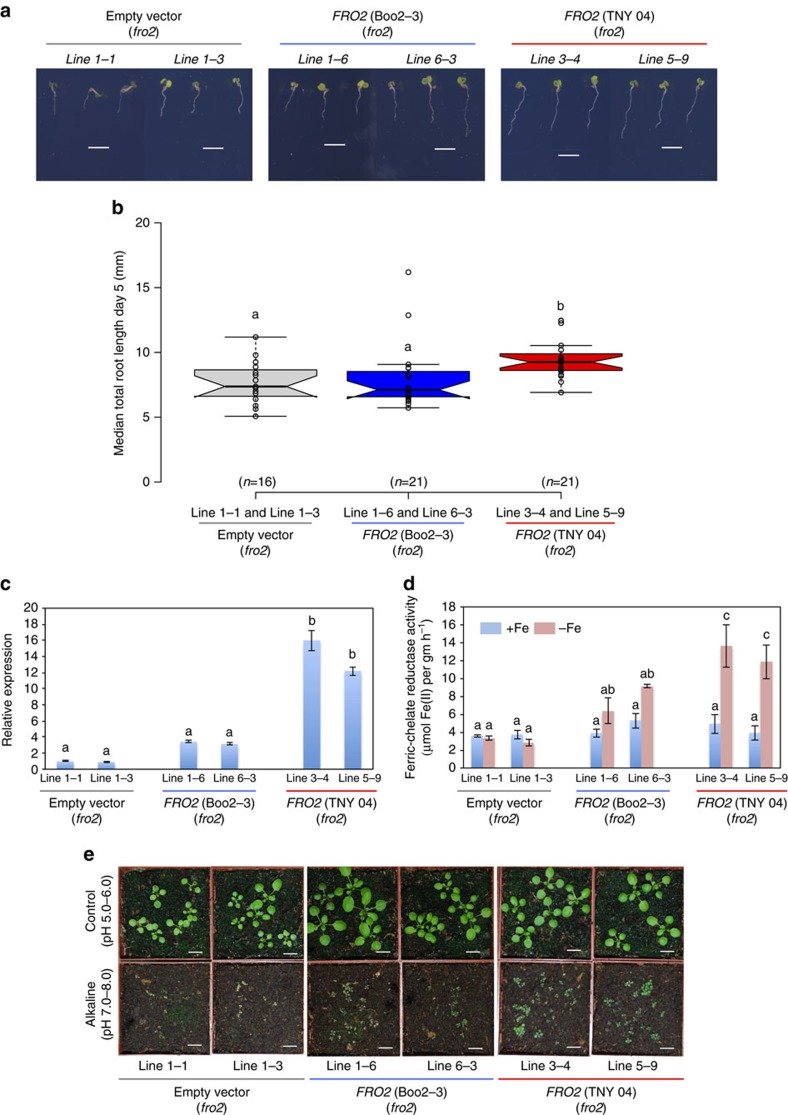
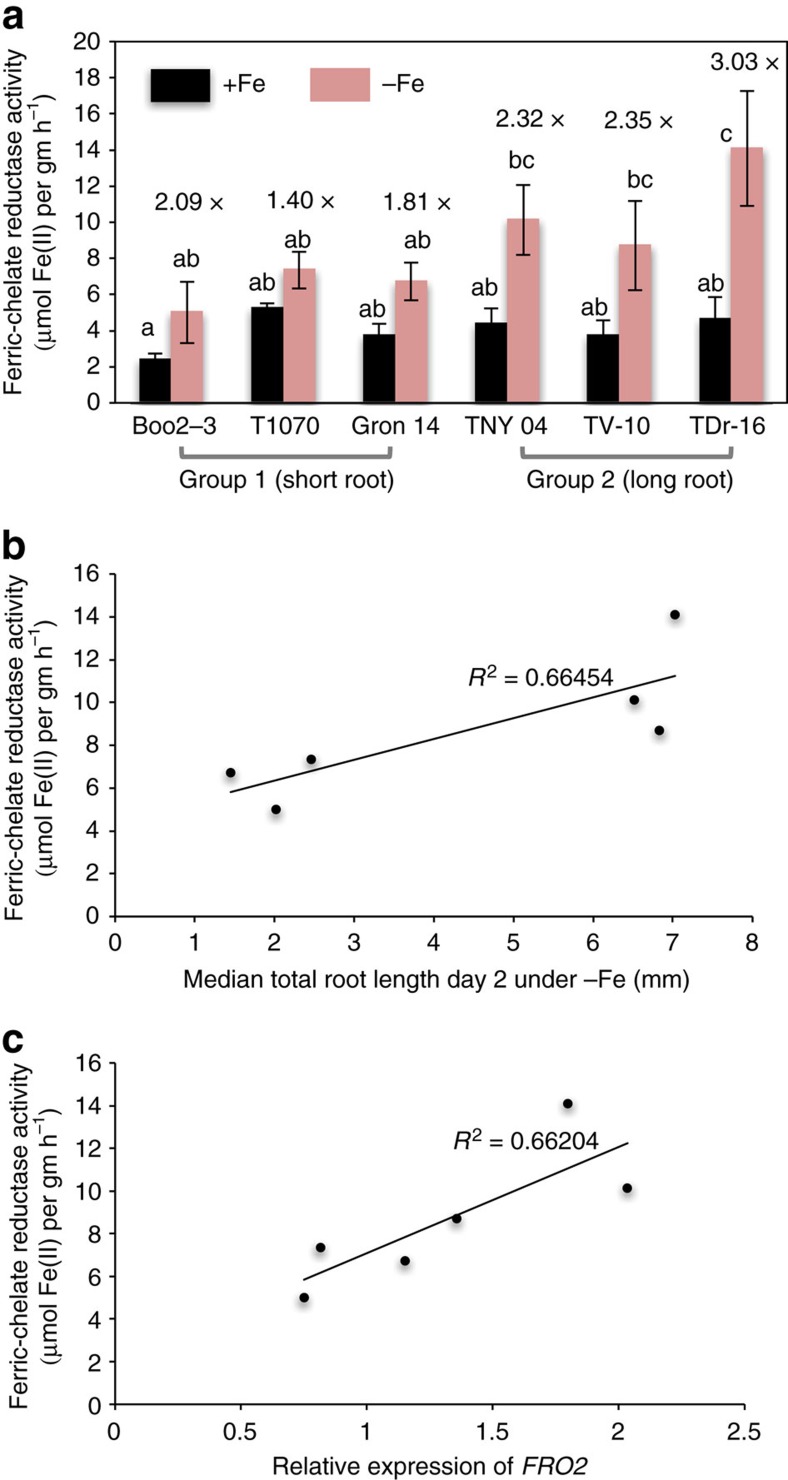
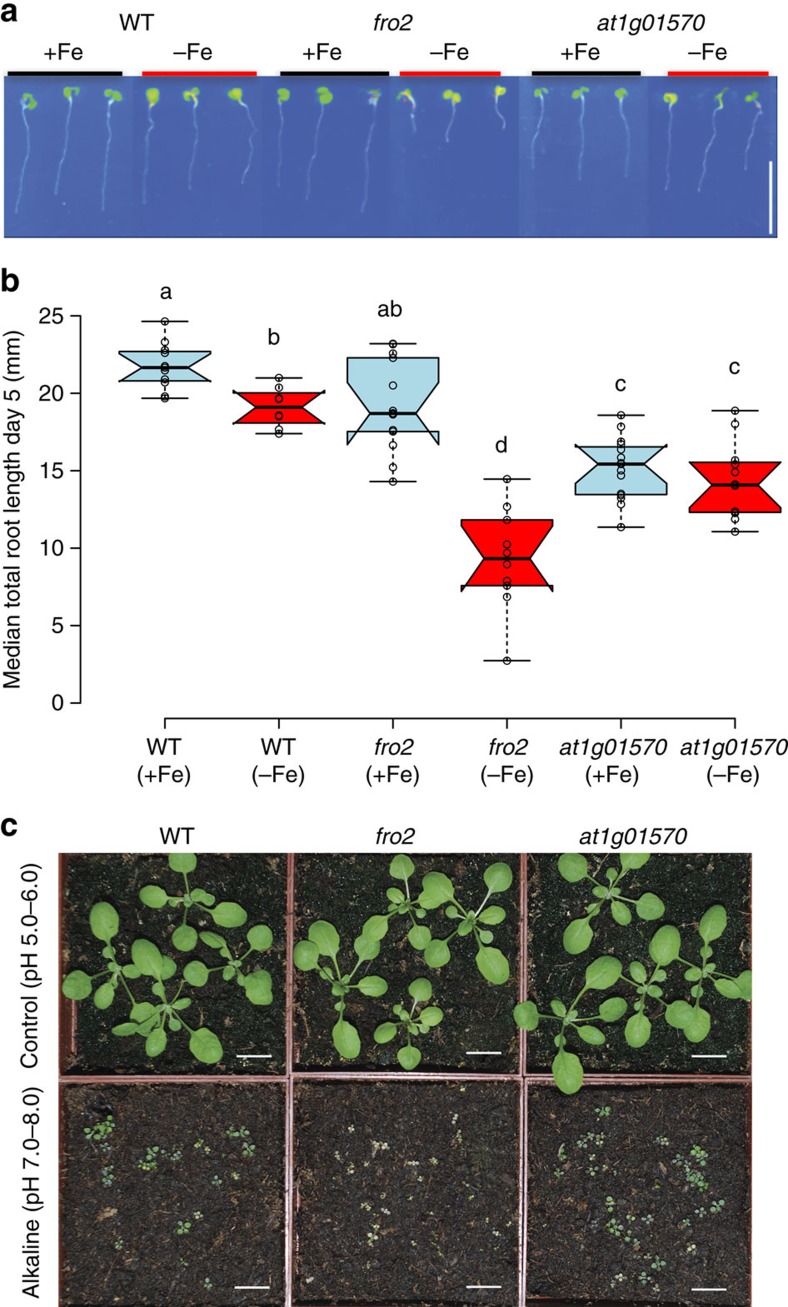
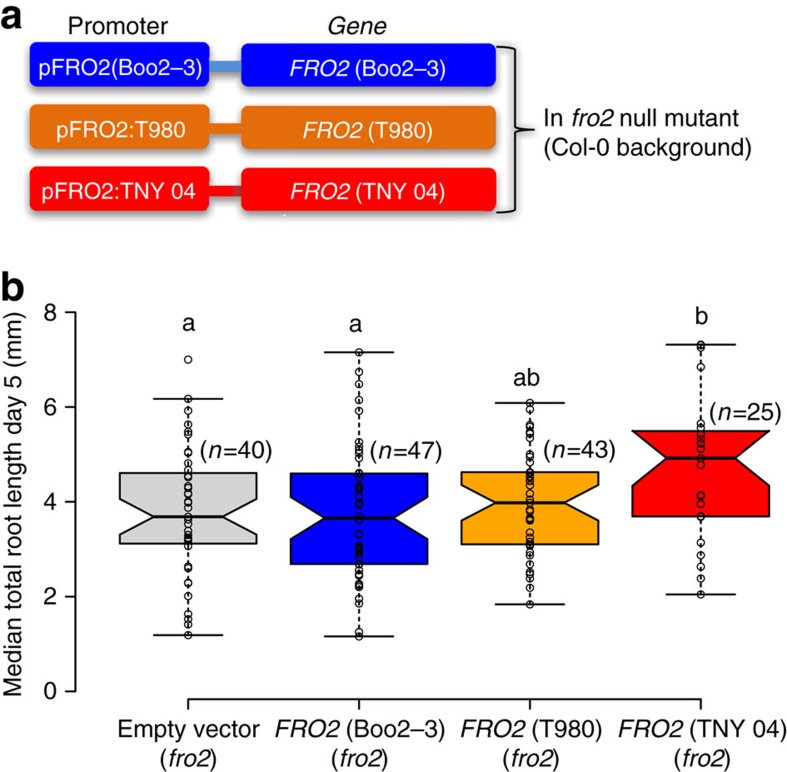
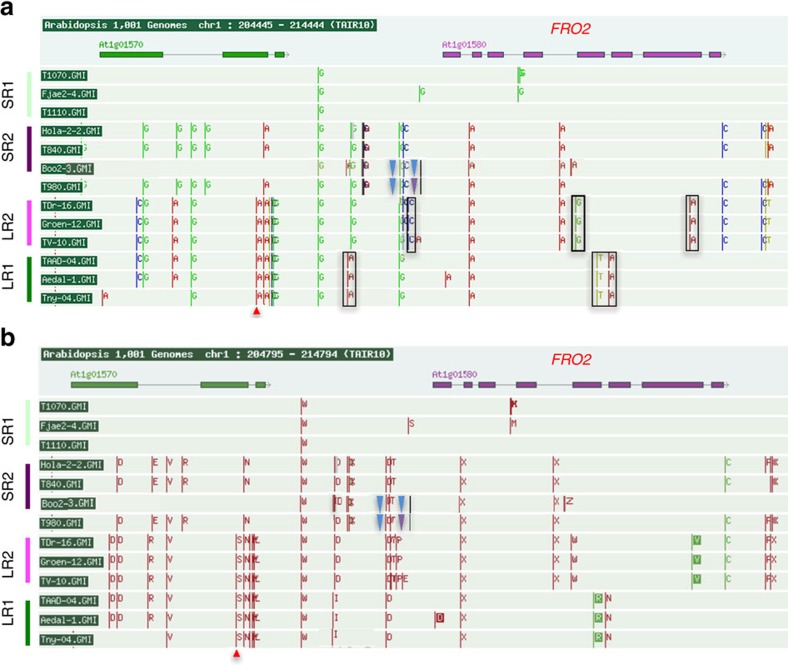
Low availability of Fe significantly limits crop yields in many parts of the world. However, it is largely unknown which genes and alleles adjust plant growth in Fe limited environments. Using natural variation of a geographically restricted panel of Arabidopsis thaliana accessions, we identify allelic variation at the FRO2 locus associated with root length under iron deficiency. We show that non-coding sequence variation at the FRO2 locus leads to variation of FRO2 transcript levels, as well as ferric chelate reductase activity, and is causal for a portion of the observed root length variation. These FRO2 allele dependent differences are coupled with altered seedling phenotypes grown on iron-limited soil. Overall, we show that these natural genetic variants of FRO2 tune its expression. These variants might be useful for improvement of agronomically relevant species under specific environmental conditions, such as in podzols or calcareous soils.
铁元素的供应量不足严重限制了世界上许多地区的作物产量。然而,目前尚不清楚哪些基因和等位基因可以调节植物在缺铁环境下的生长。我们利用拟南芥地理分布受限的自然变异群体,鉴定了与缺铁条件下根长相关的 FRO2 基因座的等位基因变异。我们发现,FRO2 基因座的非编码序列变异导致 FRO2 转录本水平以及三价铁螯合物还原酶活性的变化,这是观察到的部分根长变异的原因。这些 FRO2 等位基因依赖性差异与在缺铁土壤上生长的幼苗表型的改变有关。总的来说,我们表明,FRO2 的这些自然遗传变异调节了其表达。这些变体可能对在特定环境条件下(如在灰壤或石灰性土壤中)改善具有农业意义的物种有用。