Lim Soo Young, Subedi Lalita, Shin Dongyun, Kim Chung Sub, Lee Kang Ro, Kim Sun Yeou
College of Pharmacy, Gachon University, Incheon 21936, Republic of Korea.
Gachon Institute of Pharmaceutical Science, Gachon University, Incheon 21936, Republic of Korea.
Biomol Ther (Seoul). 2017 Sep 1;25(5):519-527. doi: 10.4062/biomolther.2016.224.
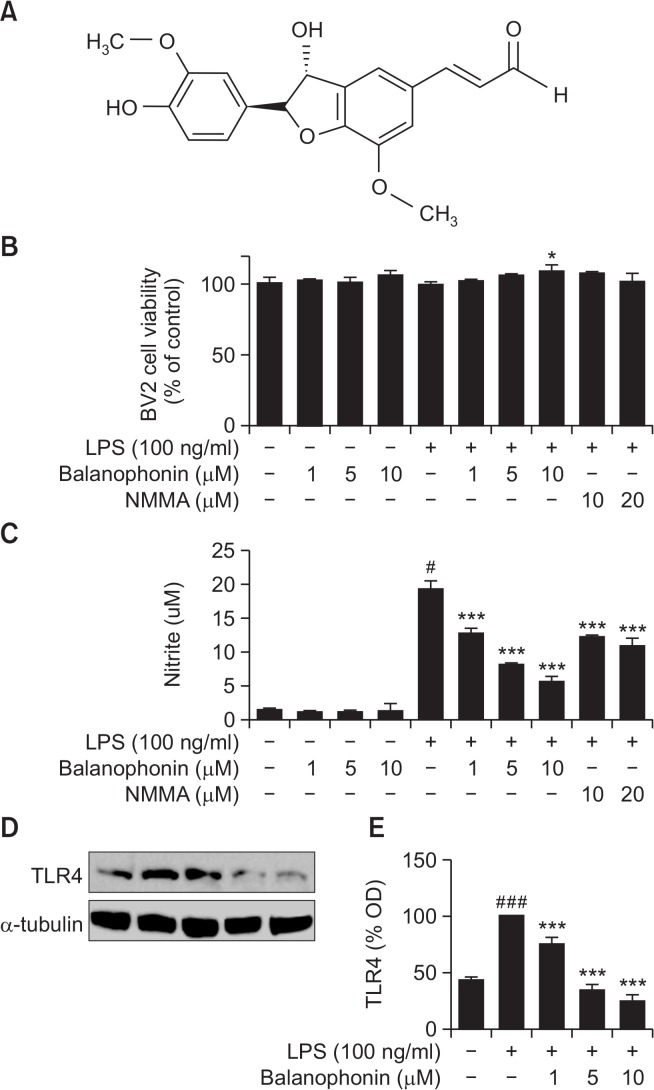
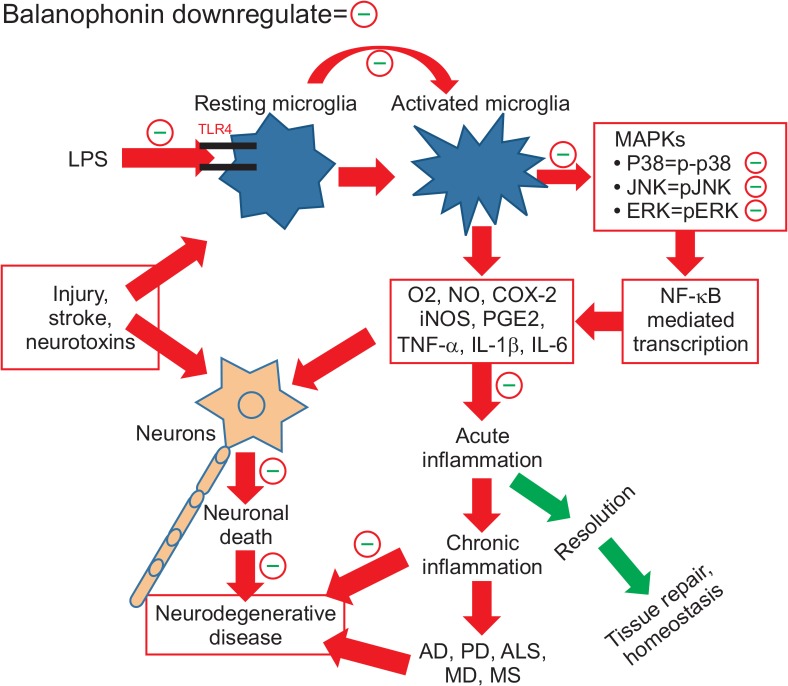
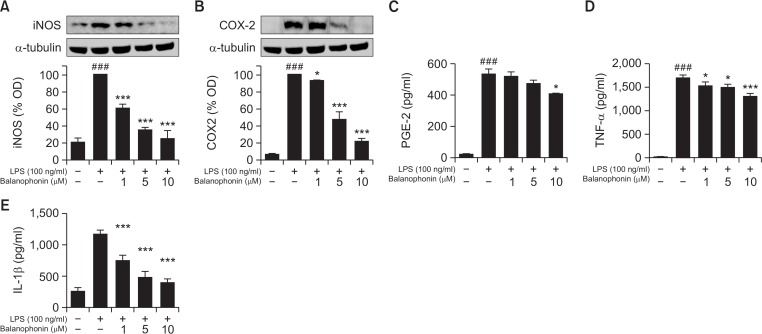
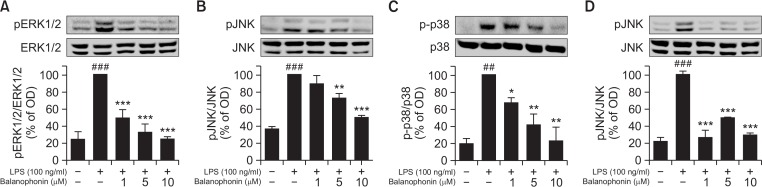
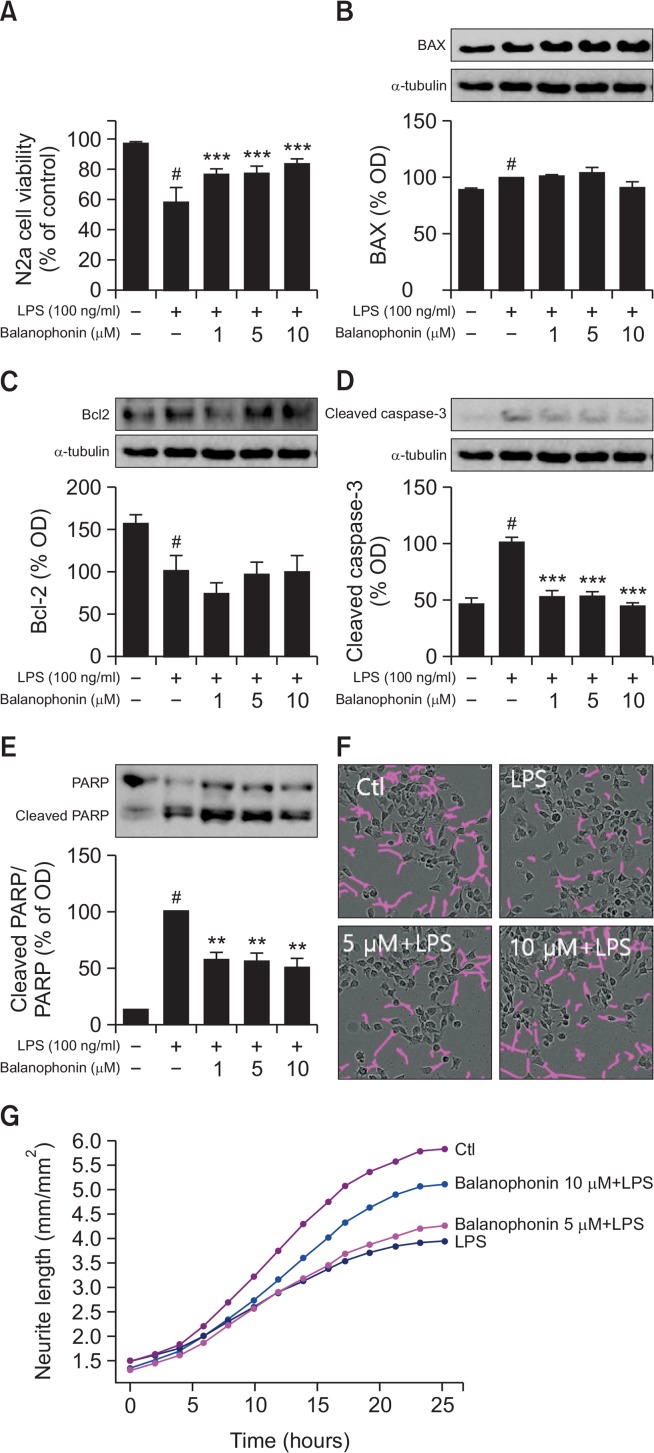
Excessive activation of microglia causes the continuous production of neurotoxic mediators, which further causes neuron degeneration. Therefore, inhibition of microglial activation is a possible target for the treatment of neurodegenerative disorders. Balanophonin, a natural neolignoid from , has been reported to have anti-inflammatory and anti-cancer effects. In this study, we aimed to evaluate the anti-neuroinflammatory effects and mechanism of balanophonin in lipopolysaccharide (LPS)-stimulated BV2 microglia cells. BV2 microglia cells were stimulated with LPS in the presence or absence of balanophonin. The results indicated that balanophonin reduced not only the LPS-mediated TLR4 activation but also the production of inflammatory mediators, such as nitric oxide (NO), prostaglandin E2 (PGE2), Interleukin-1β (IL-1β), and tumor necrosis factor-α (TNF-α), in BV2 cells. Balanophonin also inhibited LPS-induced inducible nitric oxide synthase (iNOS), and cyclooxygenase-2 (COX2) protein expression and mitogen activated protein kinases (MAPKs), including extracellular signal-regulated kinase (ERK1/2), c-Jun N-terminal kinase (JNK), and p38 MAPK. Interestingly, it also inhibited neuronal cell death resulting from LPS-activated microglia by regulating cleaved caspase-3 and poly ADP ribose polymerase (PARP) cleavage in N2a cells. In conclusion, our data indicated that balanophonin may delay the progression of neuronal cell death by inhibiting microglial activation.
小胶质细胞的过度激活会导致神经毒性介质的持续产生,进而导致神经元变性。因此,抑制小胶质细胞激活是治疗神经退行性疾病的一个可能靶点。巴兰诺芬(Balanophonin)是一种从[来源未提及]提取的天然新木脂素,据报道具有抗炎和抗癌作用。在本研究中,我们旨在评估巴兰诺芬在脂多糖(LPS)刺激的BV2小胶质细胞中的抗神经炎症作用及其机制。在有或没有巴兰诺芬的情况下,用LPS刺激BV2小胶质细胞。结果表明,巴兰诺芬不仅降低了LPS介导的Toll样受体4(TLR4)激活,还减少了BV2细胞中炎症介质的产生,如一氧化氮(NO)、前列腺素E2(PGE2)、白细胞介素-1β(IL-1β)和肿瘤坏死因子-α(TNF-α)。巴兰诺芬还抑制了LPS诱导的诱导型一氧化氮合酶(iNOS)和环氧化酶-2(COX2)蛋白表达以及丝裂原活化蛋白激酶(MAPK),包括细胞外信号调节激酶(ERK1/2)、c-Jun氨基末端激酶(JNK)和p38 MAPK。有趣的是,它还通过调节N2a细胞中裂解的半胱天冬酶-3和聚ADP核糖聚合酶(PARP)的裂解来抑制LPS激活的小胶质细胞导致的神经元细胞死亡。总之,我们的数据表明,巴兰诺芬可能通过抑制小胶质细胞激活来延缓神经元细胞死亡的进程。