College of Pharmacy, Gachon University, #191, Hambakmoero, Yeonsu-gu, Incheon 21936, Korea.
Int J Mol Sci. 2021 Apr 30;22(9):4771. doi: 10.3390/ijms22094771.
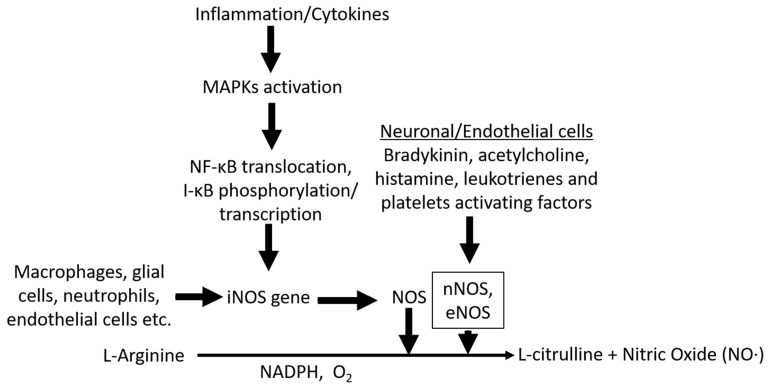
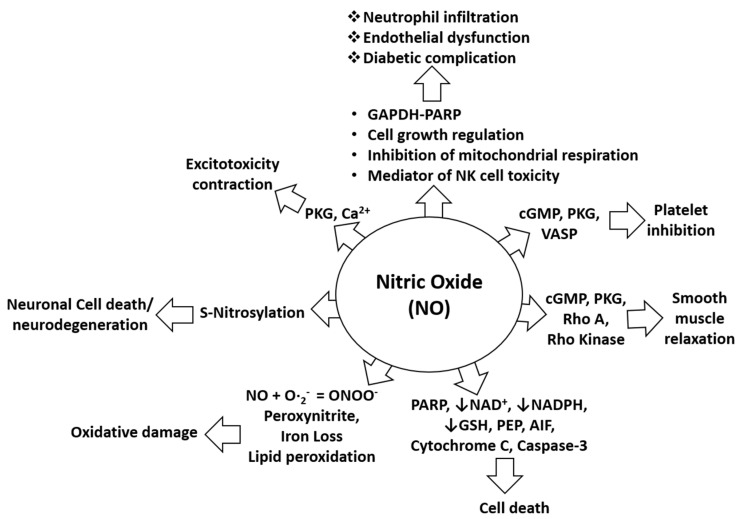
Nitric oxide (NO) is a neurotransmitter that mediates the activation and inhibition of inflammatory cascades. Even though physiological NO is required for defense against various pathogens, excessive NO can trigger inflammatory signaling and cell death through reactive nitrogen species-induced oxidative stress. Excessive NO production by activated microglial cells is specifically associated with neuroinflammatory and neurodegenerative conditions, such as Alzheimer's and Parkinson's disease, amyotrophic lateral sclerosis, ischemia, hypoxia, multiple sclerosis, and other afflictions of the central nervous system (CNS). Therefore, controlling excessive NO production is a desirable therapeutic strategy for managing various neuroinflammatory disorders. Recently, phytochemicals have attracted considerable attention because of their potential to counteract excessive NO production in CNS disorders. Moreover, phytochemicals and nutraceuticals are typically safe and effective. In this review, we discuss the mechanisms of NO production and its involvement in various neurological disorders, and we revisit a number of recently identified phytochemicals which may act as NO inhibitors. This review may help identify novel potent anti-inflammatory agents that can downregulate NO, specifically during neuroinflammation and neurodegeneration.
一氧化氮(NO)是一种神经递质,可调节炎症级联的激活和抑制。尽管生理 NO 是抵御各种病原体所必需的,但过量的 NO 可通过活性氮诱导的氧化应激触发炎症信号和细胞死亡。激活的小胶质细胞产生的过量 NO 特别与神经炎症和神经退行性疾病有关,如阿尔茨海默病和帕金森病、肌萎缩侧索硬化症、缺血、缺氧、多发性硬化症和中枢神经系统(CNS)的其他疾病。因此,控制过量的 NO 产生是治疗各种神经炎症性疾病的理想治疗策略。最近,植物化学物质因其在 CNS 疾病中对抗过量 NO 产生的潜力而引起了相当大的关注。此外,植物化学物质和营养保健品通常是安全有效的。在这篇综述中,我们讨论了 NO 产生的机制及其在各种神经疾病中的作用,并重新审视了一些最近确定的可能作为 NO 抑制剂的植物化学物质。这篇综述可能有助于确定新型有效的抗炎药物,这些药物可以下调 NO,特别是在神经炎症和神经退行性变期间。