Cheng Mary Hongying, Torres-Salazar Delany, Gonzalez-Suarez Aneysis D, Amara Susan G, Bahar Ivet
Department of Computational and Systems Biology, School of Medicine, University of Pittsburgh, Pittsburgh, United States.
Laboratory of Molecular and Cellular Neurobiology, National Institute of Mental Health, National Institutes of Health, Bethesda, United States.
Elife. 2017 Jun 1;6:e25850. doi: 10.7554/eLife.25850.
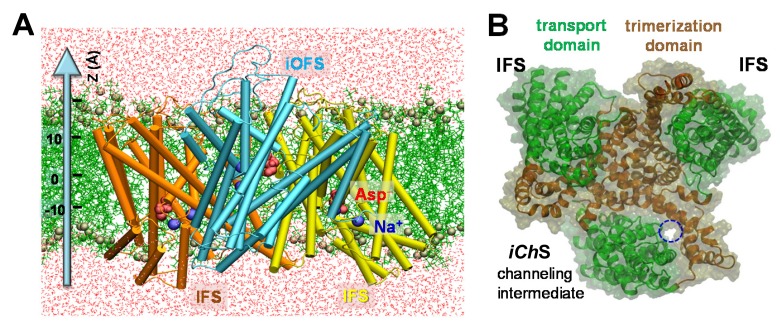
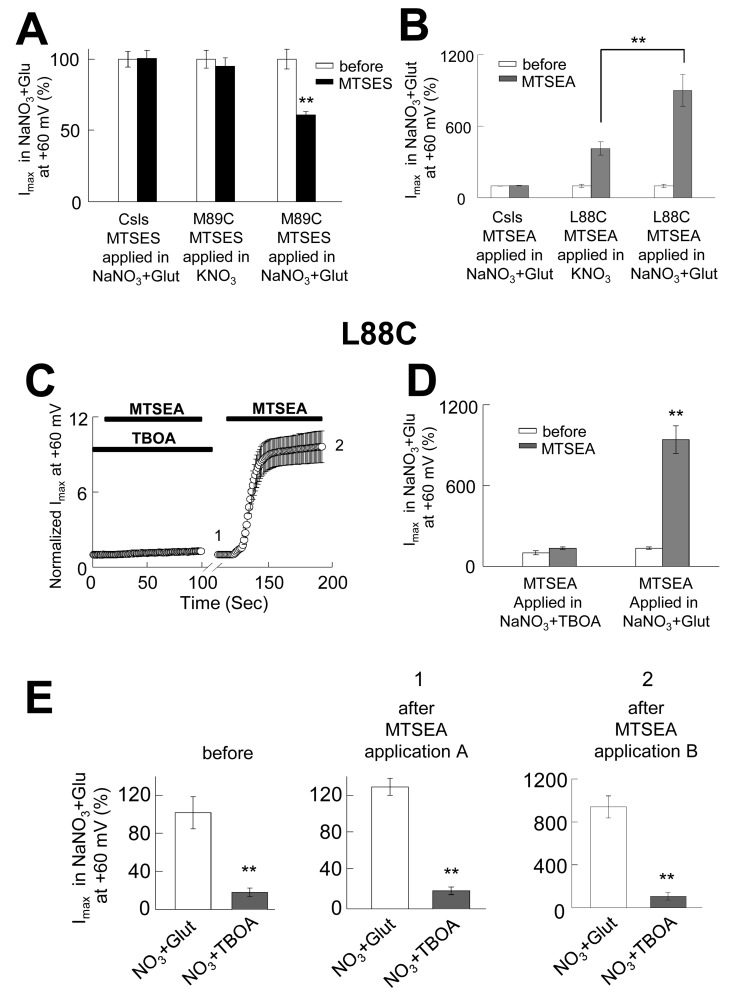
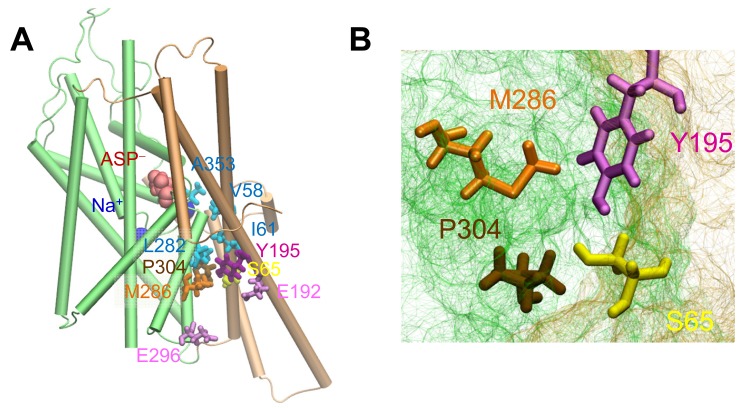
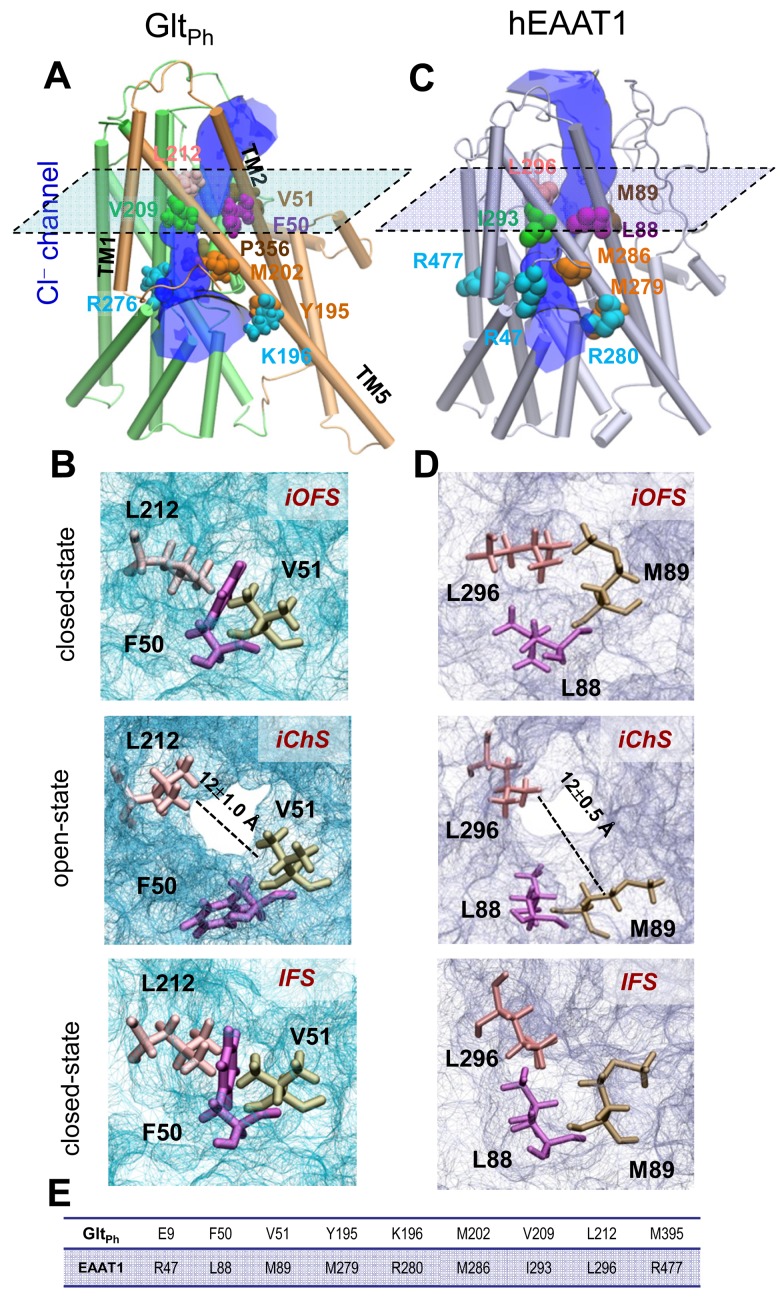
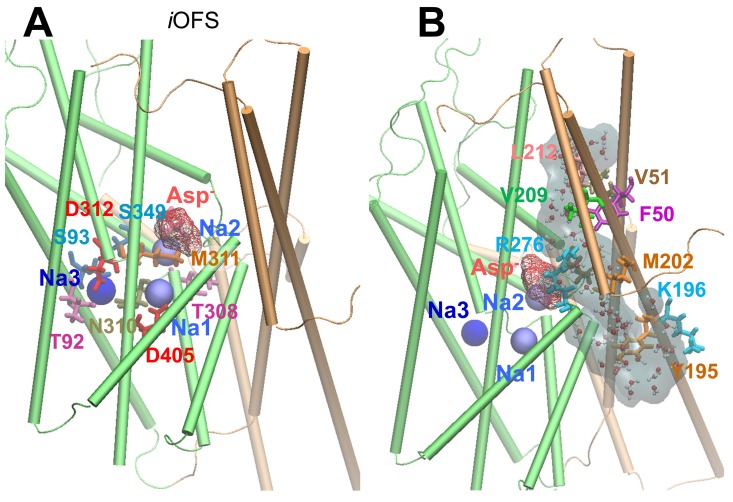
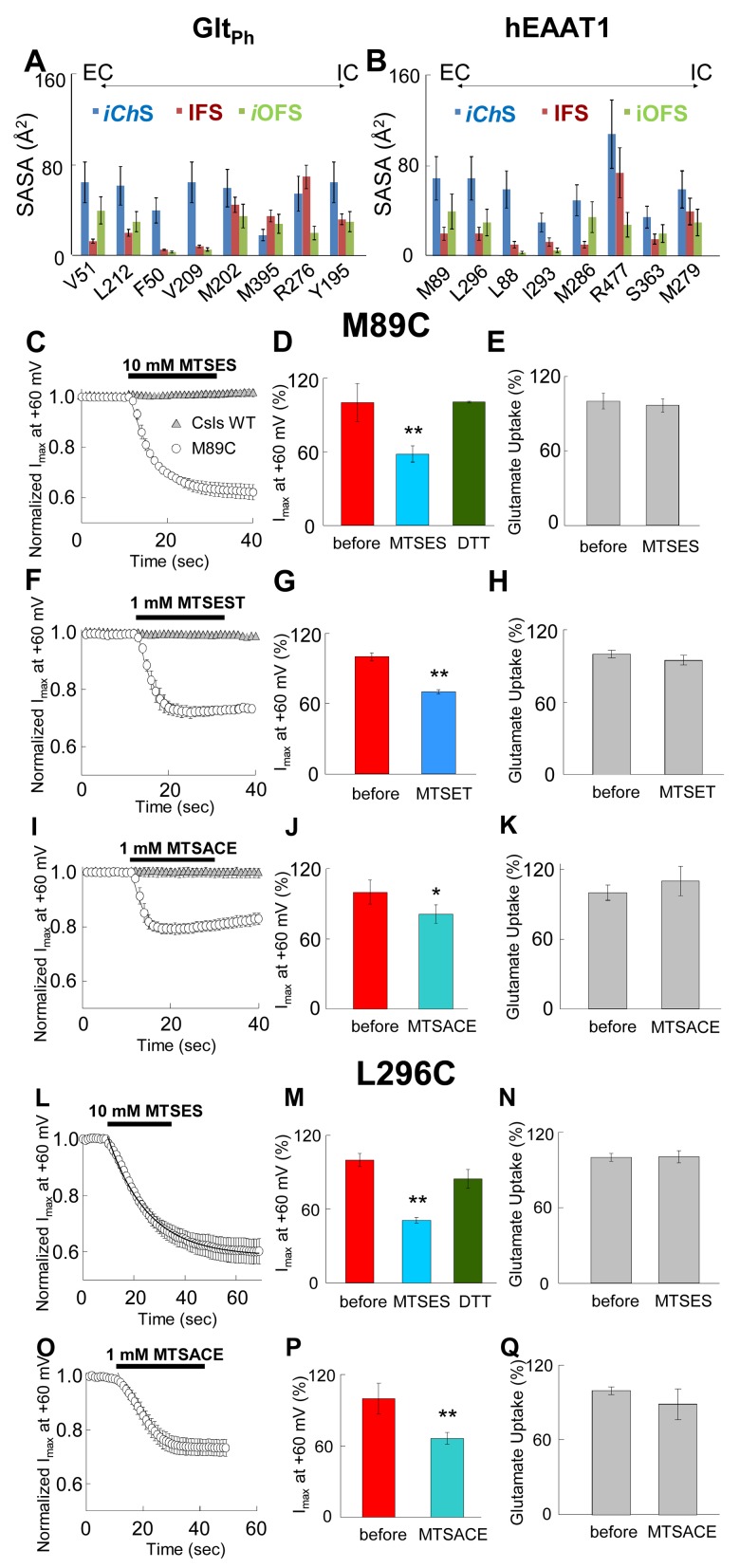
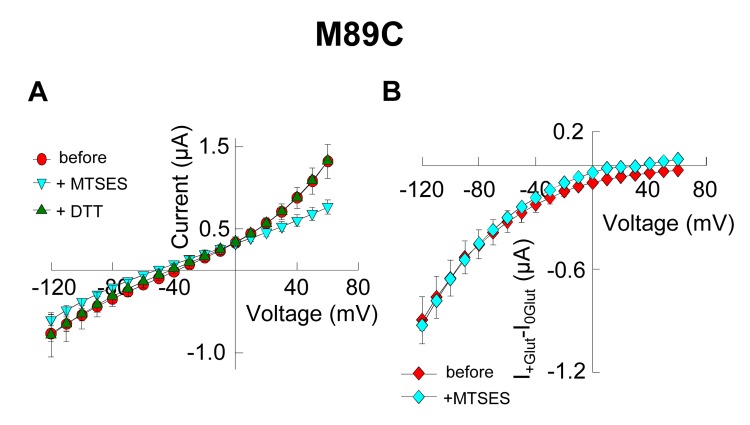
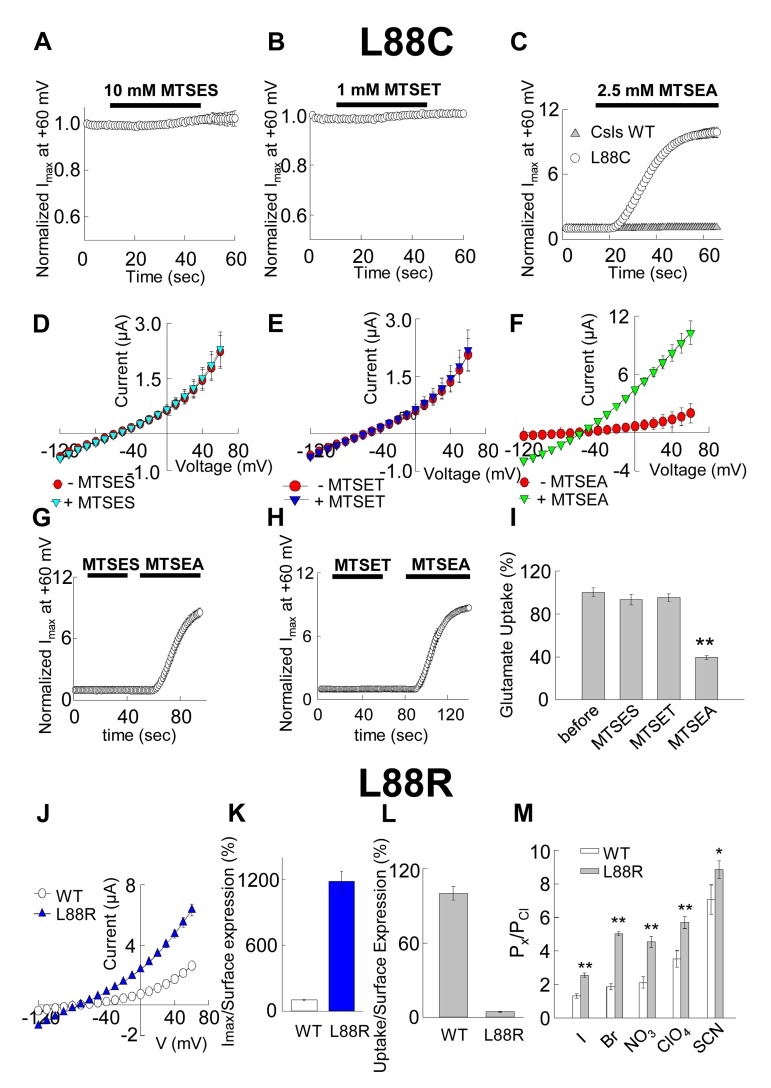
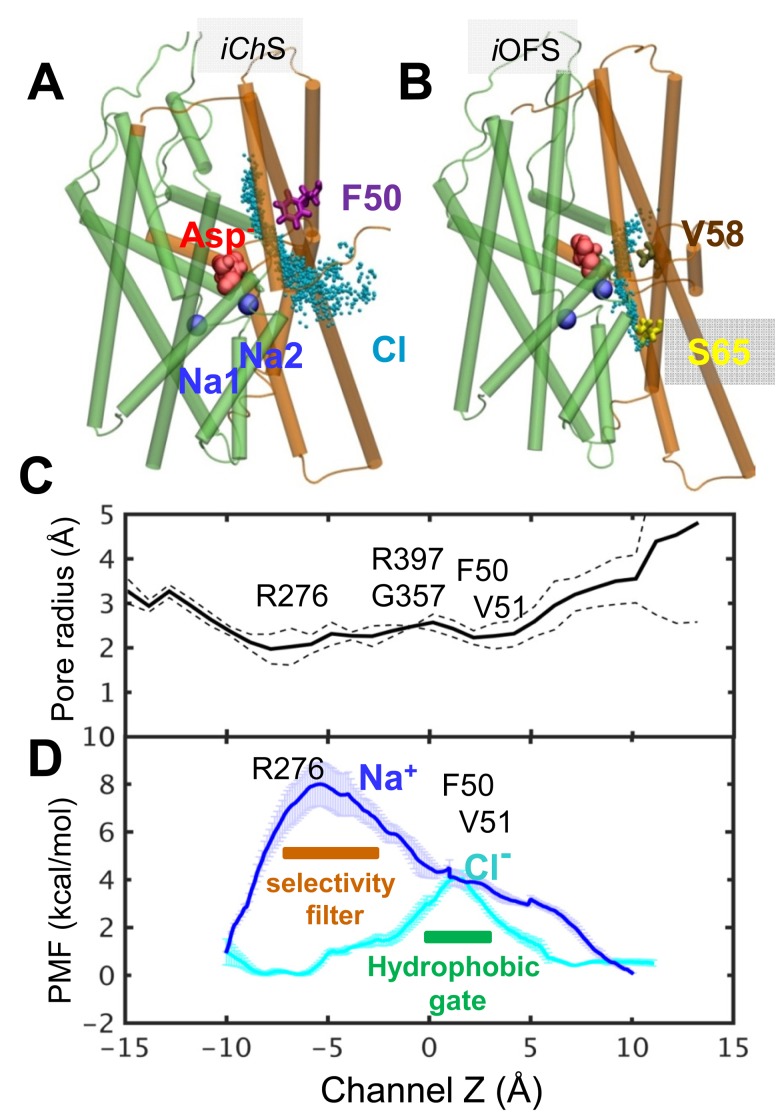
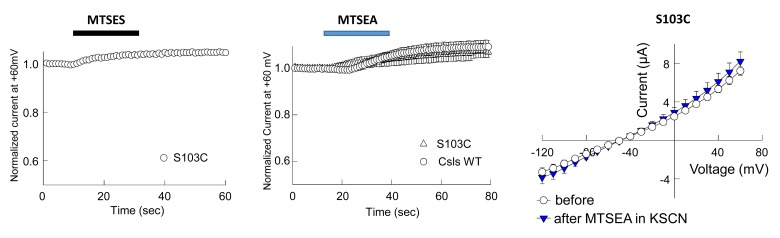
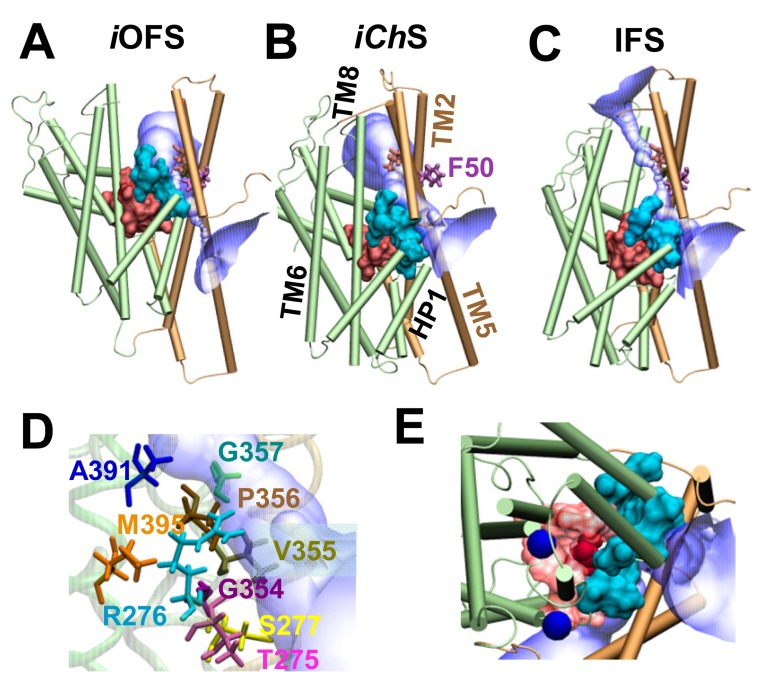
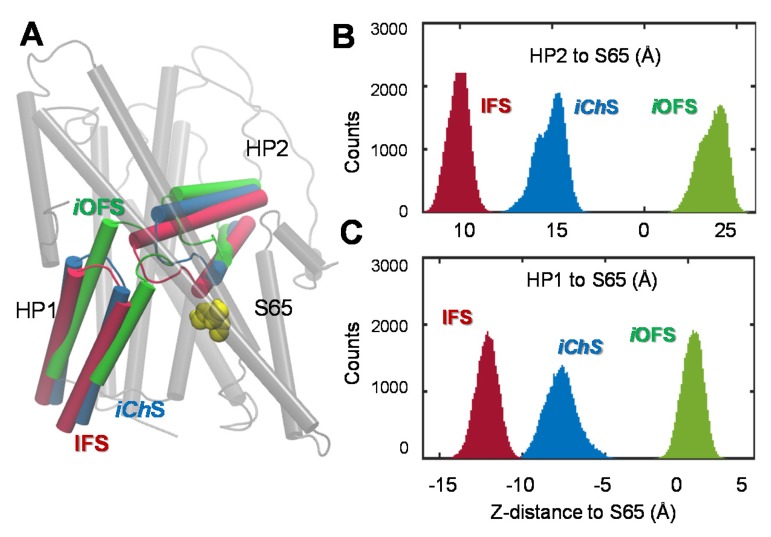
Advances in structure-function analyses and computational biology have enabled a deeper understanding of how excitatory amino acid transporters (EAATs) mediate chloride permeation and substrate transport. However, the mechanism of structural coupling between these functions remains to be established. Using a combination of molecular modeling, substituted cysteine accessibility, electrophysiology and glutamate uptake assays, we identified a chloride-channeling conformer, S, transiently accessible as EAAT1 reconfigures from substrate/ion-loaded into a substrate-releasing conformer. Opening of the anion permeation path in this S is controlled by the elevator-like movement of the substrate-binding core, along with its wall that simultaneously lines the anion permeation path (); and repacking of a cluster of hydrophobic residues near the extracellular vestibule (). Moreover, our results demonstrate that stabilization of S by chemical modifications favors anion channeling at the expense of substrate transport, suggesting a mutually exclusive regulation mediated by the movement of the flexible wall lining the two regions.
结构-功能分析和计算生物学的进展使人们对兴奋性氨基酸转运体(EAATs)如何介导氯离子渗透和底物转运有了更深入的理解。然而,这些功能之间的结构偶联机制仍有待确定。通过结合分子建模、半胱氨酸替代可及性、电生理学和谷氨酸摄取测定,我们鉴定出一种氯离子通道构象体S,当EAAT1从底物/离子负载构象重新配置为底物释放构象时,S构象体短暂可及。该S构象中阴离子渗透通道的开放受底物结合核心及其同时构成阴离子渗透通道壁的类似电梯样运动的控制;以及细胞外前庭附近一群疏水残基的重新排列。此外,我们的结果表明,通过化学修饰稳定S构象有利于阴离子通道形成,但以底物转运为代价,这表明由两个区域柔性壁的运动介导了一种相互排斥的调节。