Barrell Philippa J, Latimer Julie M, Baldwin Samantha J, Thompson Michelle L, Jacobs Jeanne M E, Conner Anthony J
The New Zealand Institute for Plant & Food Research Limited, Private Bag 4704, Christchurch, 8140, New Zealand.
Bio-Protection Research Centre, Lincoln University, PO Box 85084, Lincoln, 7647, New Zealand.
BMC Biotechnol. 2017 Jun 6;17(1):49. doi: 10.1186/s12896-017-0371-4.
Somatic cell selection in plants allows the recovery of spontaneous mutants from cell cultures. When coupled with the regeneration of plants it allows an effective approach for the recovery of novel traits in plants. This study undertook somatic cell selection in the potato (Solanum tuberosum L.) cultivar 'Iwa' using the sulfonylurea herbicide, chlorsulfuron, as a positive selection agent.
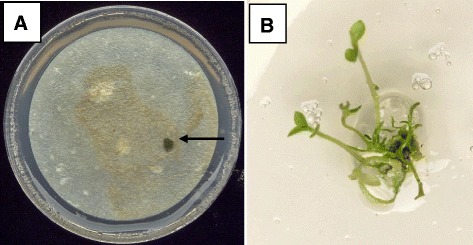
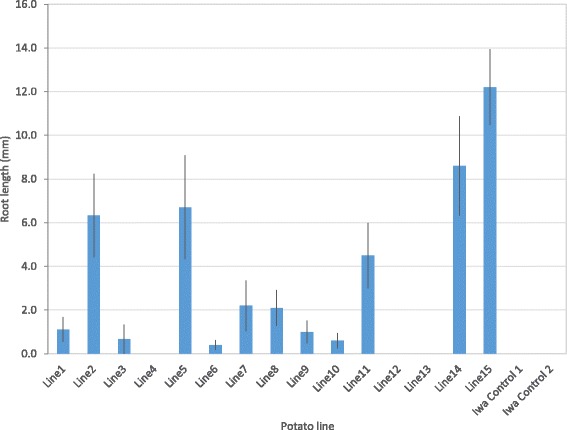
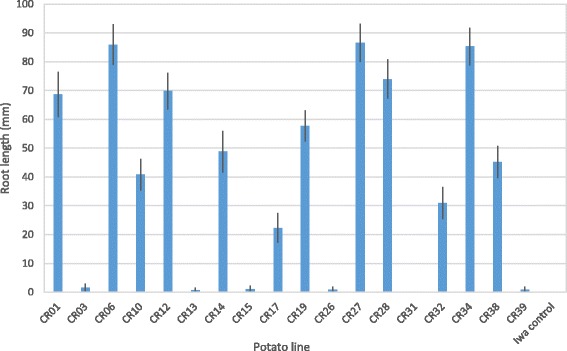
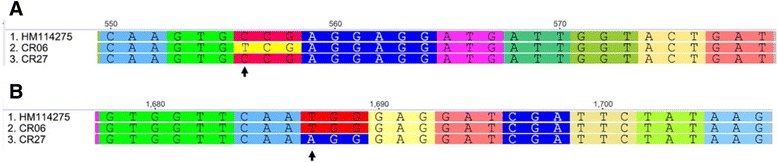
Following 5 days' exposure of potato cell suspension cultures to 20 μg/l chlorsulfuron, rescue selection recovered rare potato cell colonies at a frequency of approximately one event in 2.7 × 10 of plated cells. Plants that were regenerated from these cell colonies retained resistance to chlorsulfuron and two variants were confirmed to have different independent point mutations in the acetohydroxyacid synthase (AHAS) gene. One point mutation involved a transition of cytosine for thymine, which substituted the equivalent of Pro-197 to Ser-197 in the AHAS enzyme. The second point mutation involved a transversion of thymine to adenine, changing the equivalent of Trp-574 to Arg-574. The two independent point mutations recovered were assembled into a chimeric gene and binary vector for Agrobacterium-mediated transformation of wild-type 'Iwa' potato. This confirmed that the mutations in the AHAS gene conferred chlorsulfuron resistance in the resulting transgenic plants.
Somatic cell selection in potato using the sulfonylurea herbicide, chlorsulfuron, recovered resistant variants attributed to mutational events in the AHAS gene. The mutant AHAS genes recovered are therefore good candidates as selectable marker genes for intragenic transformation of potato.
植物中的体细胞选择能够从细胞培养物中获得自发突变体。当与植物再生相结合时,它为植物新性状的恢复提供了一种有效的方法。本研究以磺酰脲类除草剂氯磺隆作为正向选择剂,对马铃薯(Solanum tuberosum L.)品种“Iwa”进行体细胞选择。
将马铃薯细胞悬浮培养物暴露于20μg/l氯磺隆5天后,挽救选择以约2.7×10个接种细胞中出现1次事件的频率获得了罕见的马铃薯细胞集落。从这些细胞集落再生的植株对氯磺隆保持抗性,并且确认有两个变体在乙酰羟酸合酶(AHAS)基因中具有不同的独立点突变。一个点突变涉及胞嘧啶向胸腺嘧啶的转换,使AHAS酶中的第197位脯氨酸替换为第197位丝氨酸。第二个点突变涉及胸腺嘧啶向腺嘌呤的颠换,使第574位色氨酸变为第574位精氨酸。将获得的两个独立点突变组装成嵌合基因和二元载体,用于农杆菌介导的野生型“Iwa”马铃薯转化。这证实了AHAS基因中的突变赋予了所得转基因植株对氯磺隆的抗性。
使用磺酰脲类除草剂氯磺隆对马铃薯进行体细胞选择,获得了归因于AHAS基因突变事件的抗性变体。因此,获得的突变AHAS基因是马铃薯基因内转化的优良选择标记基因候选者。