Dayer Jean-Michel, Oliviero Francesca, Punzi Leonardo
Faculty of Medicine, University of GenevaGeneva, Switzerland.
Department of Medicine, University of PadovaPadova, Italy.
Front Pharmacol. 2017 May 23;8:293. doi: 10.3389/fphar.2017.00293. eCollection 2017.
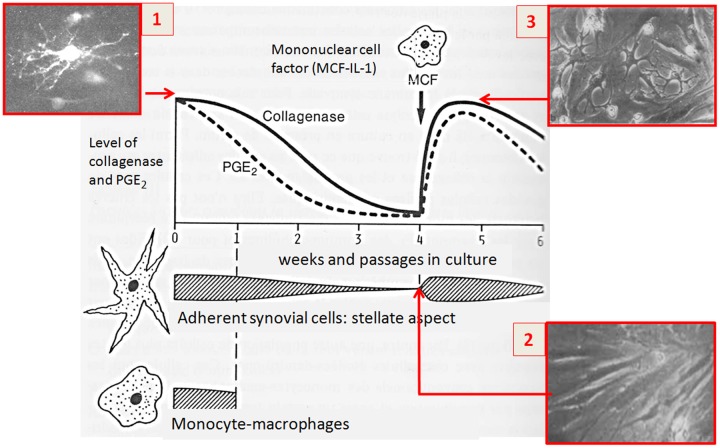
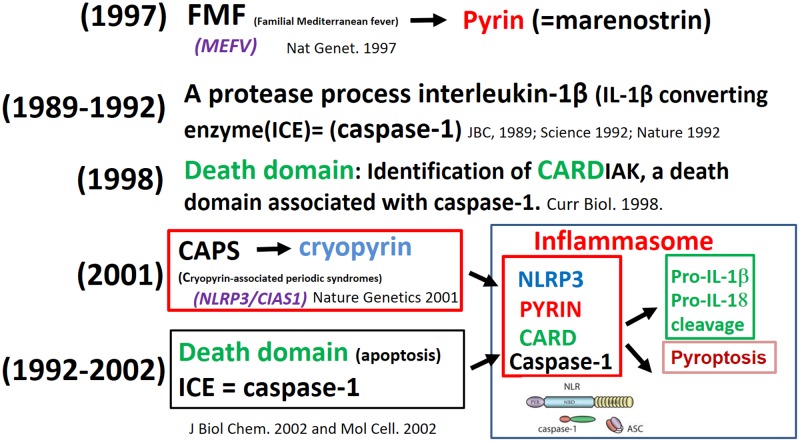
The history of what, in 1979, was called interleukin-1 (IL-1), orchestrator of leukocyte inter-communication, began many years before then, initially by the observation of fever induction via the endogenous pyrogen (EP) (1974) and then in rheumatology on the role in tissue destruction in rheumatoid diseases via the induction of collagenase and PGE in human synovial cells by a mononuclear cell factor (MCF) (1977). Since then, the family has exploded to presently 11 members as well as many membrane-bound and soluble receptor forms. The discovery of a natural Interleukin-1 receptor antagonist (IL-1Ra) in human biological fluids has highlighted the importance of IL-1 and IL-1Ra in human diseases. Evidence delineating its role in autoinflammatory syndromes and the elucidation of the macromolecular complex referred to as "inflammasome" have been instrumental to our understanding of the link with IL-1. At present, the IL-1blockade as therapeutic approach is crucial for many hereditary autoinflammatory diseases, as well as for adult-onset Still's disease, crystal-induced arthropathies, certain skin diseases including neutrophil-triggered skin diseases, Behçet's disease and deficiency of IL-1Ra and other rare fever syndromes. Its role is only marginally important in rheumatoid arthritis and is still under debate with regard to osteoarthritis, type 2 diabetes mellitus, cardiovascular diseases and cancer. This brief historical review focuses on some aspects of IL-1, mainly IL-1β and IL-Ra, in rheumatology. There are many excellent reviews focusing on the IL-1 family in general or with regard to specific diseases or biological discoveries.
1979年被称为白细胞介素-1(IL-1)的物质,作为白细胞相互通讯的协调者,其历史在那之前许多年就已开始。最初是通过对内源性致热原(EP)诱导发热的观察(1974年),随后在风湿病学领域,发现一种单核细胞因子(MCF)可通过诱导人滑膜细胞中的胶原酶和前列腺素E,在类风湿疾病的组织破坏中发挥作用(1977年)。从那时起,这个家族已发展壮大,目前有11个成员,还有许多膜结合型和可溶性受体形式。在人类生物体液中发现天然白细胞介素-1受体拮抗剂(IL-1Ra),凸显了IL-1和IL-1Ra在人类疾病中的重要性。阐明其在自身炎症综合征中的作用以及对被称为“炎性小体”的大分子复合物的解析,有助于我们理解其与IL-1的联系。目前,IL-1阻断作为一种治疗方法,对许多遗传性自身炎症性疾病、成人斯蒂尔病、晶体诱导的关节病、某些皮肤疾病(包括中性粒细胞触发的皮肤病)、贝赫切特病以及IL-1Ra缺乏症和其他罕见发热综合征至关重要。其在类风湿关节炎中的作用仅具有边缘重要性,在骨关节炎、2型糖尿病、心血管疾病和癌症方面仍存在争议。这篇简短的历史综述聚焦于风湿病学中IL-1的某些方面,主要是IL-1β和IL-1Ra。关于IL-1家族整体或特定疾病或生物学发现有许多优秀的综述。