Hoffmann Alexandra, Christmann Corinna A, Bleser Gabriele
Junior research group wearHEALTH, Department of Computer Science, University of Kaiserslautern, Kaiserslautern, Germany.
JMIR Serious Games. 2017 Jun 7;5(2):e13. doi: 10.2196/games.7216.
In today's society, stress is more and more often a cause of disease. This makes stress management an important target of behavior change programs. Gamification has been suggested as one way to support health behavior change. However, it remains unclear to which extend available gamification techniques are integrated in stress management apps, and if their occurrence is linked to the use of elements from behavior change theory.
The aim of this study was to investigate the use of gamification techniques in stress management apps and the cooccurrence of these techniques with evidence-based stress management methods and behavior change techniques.
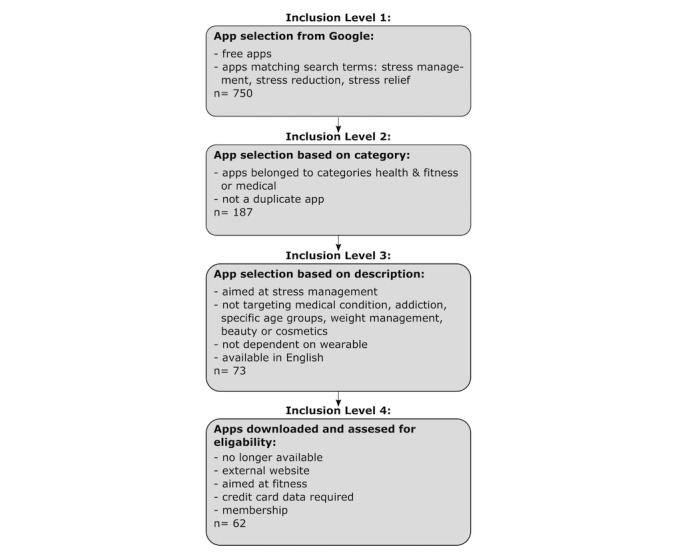
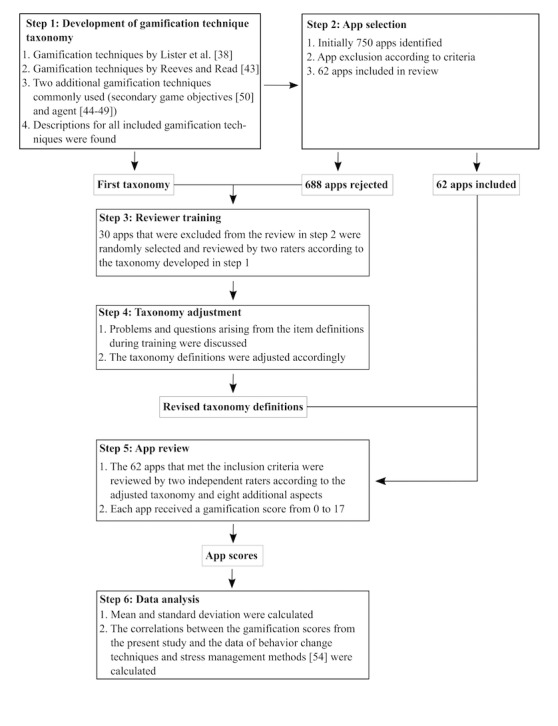
A total of 62 stress management apps from the Google Play Store were reviewed on their inclusion of 17 gamification techniques, 15 stress management methods, and 26 behavior change techniques. For this purpose, an extended taxonomy of gamification techniques was constructed and applied by 2 trained, independent raters.
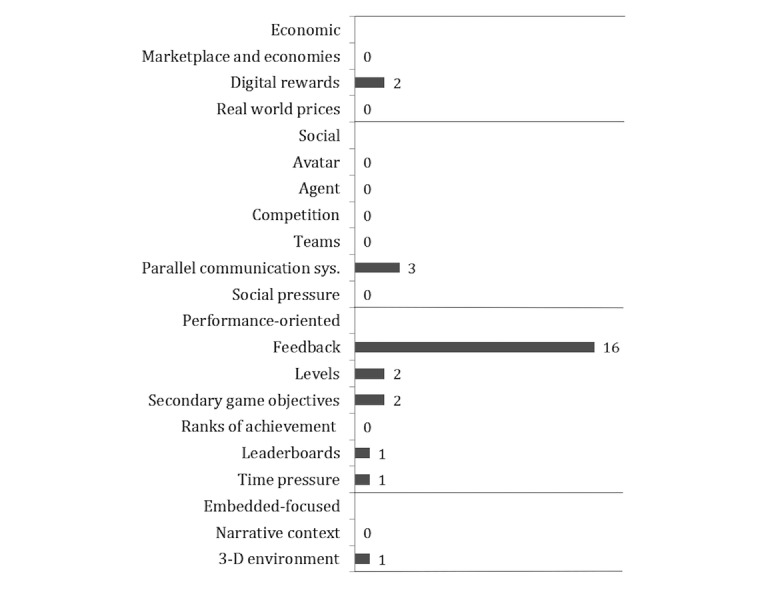
Interrater-reliability was high, with agreement coefficient (AC)=.97. Results show an average of 0.5 gamification techniques for the tested apps and reveal no correlations between the use of gamification techniques and behavior change techniques (r=.17, P=.20), or stress management methods (r=.14, P=.26).
This leads to the conclusion that designers of stress management apps do not use gamification techniques to influence the user's behaviors and reactions. Moreover, app designers do not exploit the potential of combining gamification techniques with behavior change theory.
在当今社会,压力越来越常成为疾病的一个成因。这使得压力管理成为行为改变计划的一个重要目标。游戏化已被提议作为支持健康行为改变的一种方式。然而,尚不清楚现有游戏化技术在压力管理应用程序中的整合程度,以及它们的出现是否与行为改变理论元素的使用相关联。
本研究的目的是调查游戏化技术在压力管理应用程序中的使用情况,以及这些技术与循证压力管理方法和行为改变技术的同时出现情况。
对谷歌应用商店中的62款压力管理应用程序进行了审查,评估它们对17种游戏化技术、15种压力管理方法和26种行为改变技术的纳入情况。为此,构建了一个扩展的游戏化技术分类法,并由两名经过培训的独立评估者应用。
评估者间信度很高,一致性系数(AC)=0.97。结果显示,测试应用程序平均使用0.5种游戏化技术,且未发现游戏化技术的使用与行为改变技术(r=0.17,P=0.20)或压力管理方法(r=0.14,P=0.26)之间存在相关性。
由此得出结论,压力管理应用程序的设计者并未使用游戏化技术来影响用户的行为和反应。此外,应用程序设计者未利用将游戏化技术与行为改变理论相结合的潜力。