Wu Xiaoling, Yang Cheng, Ge Jun
Key Lab for Industrial Biocatalysis, Ministry of Education, Department of Chemical Engineering, Tsinghua University, Beijing, 100084 China.
Bioresour Bioprocess. 2017;4(1):24. doi: 10.1186/s40643-017-0154-8. Epub 2017 May 19.
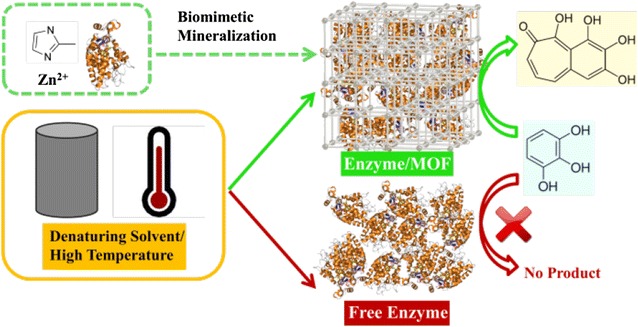
Enzyme/metal-organic framework composites with high stability in protein denaturing solvents were reported in this study.
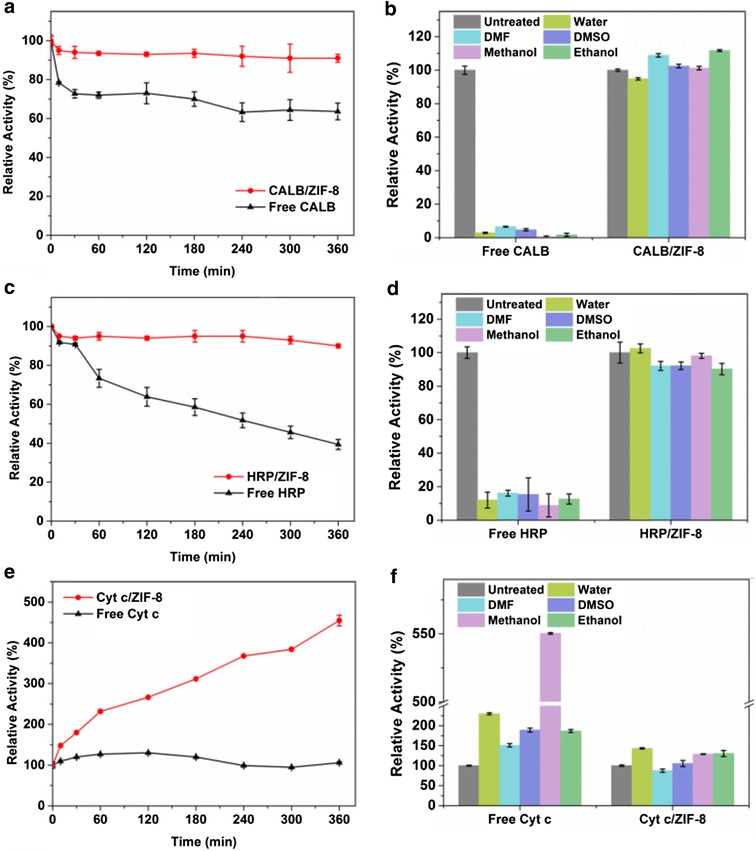
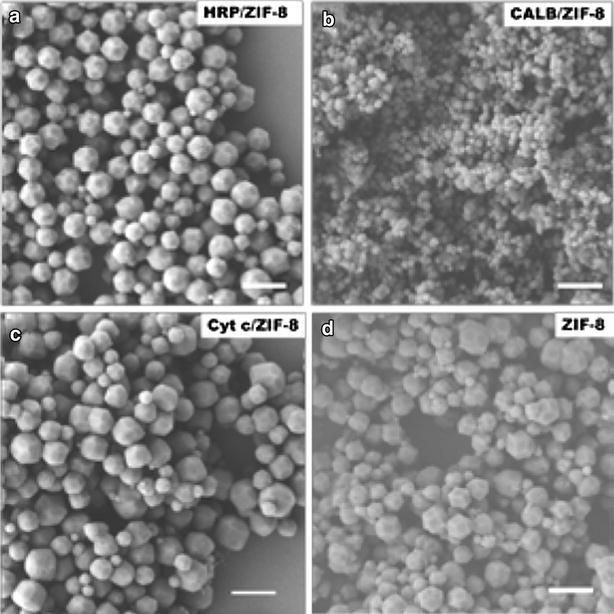
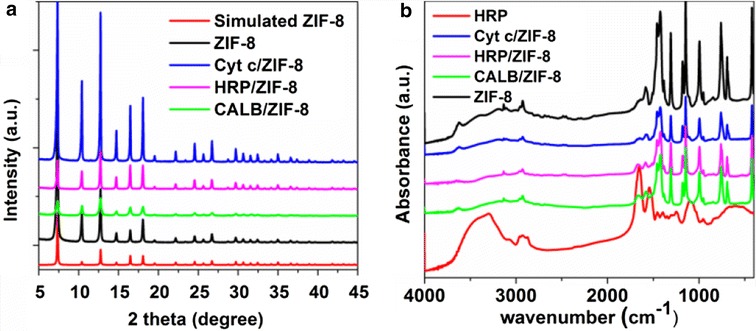
Encapsulation of enzyme in metal-organic frameworks (MOFs) via co-precipitation process was realized, and the generality of the synthesis was validated by using cytochrome c, horseradish peroxidase, and lipase B as model enzymes. The stability of encapsulated enzyme was greatly increased after immobilization on MOFs. Remarkably, when exposed to protein denaturing solvents including dimethyl sulfoxide, dimethyl formamide, methanol, and ethanol, the enzyme/MOF composites still preserved almost 100% of activity. In contrast, free enzymes retained no more than 20% of their original activities at the same condition. This study shows the extraordinary protecting effect of MOF shell on increasing enzyme stability at extremely harsh conditions.
The enzyme immobilized in MOF exhibited enhanced thermal stability and high tolerance towards protein denaturing organic solvents.
本研究报道了在蛋白质变性溶剂中具有高稳定性的酶/金属有机框架复合材料。
通过共沉淀法实现了酶在金属有机框架(MOF)中的包封,以细胞色素c、辣根过氧化物酶和脂肪酶B作为模型酶验证了合成方法的通用性。酶固定在MOF上后稳定性大大提高。值得注意的是,当暴露于包括二甲基亚砜、二甲基甲酰胺、甲醇和乙醇在内的蛋白质变性溶剂中时,酶/MOF复合材料仍保留几乎100%的活性。相比之下,在相同条件下,游离酶保留的原始活性不超过20%。本研究表明MOF外壳在极端苛刻条件下对提高酶稳定性具有非凡的保护作用。
固定在MOF中的酶表现出增强的热稳定性和对蛋白质变性有机溶剂的高耐受性。