• 文献检索
  • 文档翻译
  • 深度研究
  • 学术资讯
  • Suppr Zotero 插件Zotero 插件
  • 邀请有礼
  • 套餐&价格
  • 历史记录
应用&插件
Suppr Zotero 插件Zotero 插件浏览器插件Mac 客户端Windows 客户端微信小程序
定价
高级版会员购买积分包购买API积分包
服务
文献检索文档翻译深度研究API 文档MCP 服务
关于我们
关于 Suppr公司介绍联系我们用户协议隐私条款
关注我们

Suppr 超能文献

核心技术专利:CN118964589B侵权必究
粤ICP备2023148730 号-1Suppr @ 2026

文献检索

告别复杂PubMed语法,用中文像聊天一样搜索,搜遍4000万医学文献。AI智能推荐,让科研检索更轻松。

立即免费搜索

文件翻译

保留排版,准确专业,支持PDF/Word/PPT等文件格式,支持 12+语言互译。

免费翻译文档

深度研究

AI帮你快速写综述,25分钟生成高质量综述,智能提取关键信息,辅助科研写作。

立即免费体验

直接饮用水再利用和事实上的再利用处理方案中微生物风险的驱动因素:源水水质和混合的影响。

Drivers of Microbial Risk for Direct Potable Reuse and de Facto Reuse Treatment Schemes: The Impacts of Source Water Quality and Blending.

作者信息

Chaudhry Rabia M, Hamilton Kerry A, Haas Charles N, Nelson Kara L

机构信息

Civil and Environmental Engineering, University of California, Berkeley, CA 94720, USA.

Engineering Research Center for Re-Inventing the Nation's Urban Water Infrastructure (ReNUWIt), Berkeley, CA 94720-1710, USA.

出版信息

Int J Environ Res Public Health. 2017 Jun 13;14(6):635. doi: 10.3390/ijerph14060635.

DOI:10.3390/ijerph14060635
PMID:28608808
原文链接:https://pmc.ncbi.nlm.nih.gov/articles/PMC5486321/
Abstract

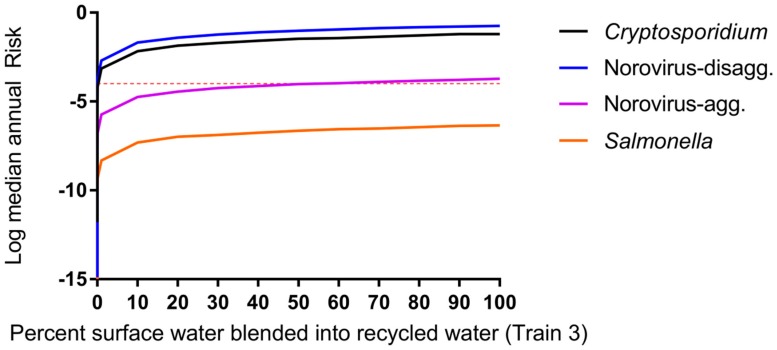
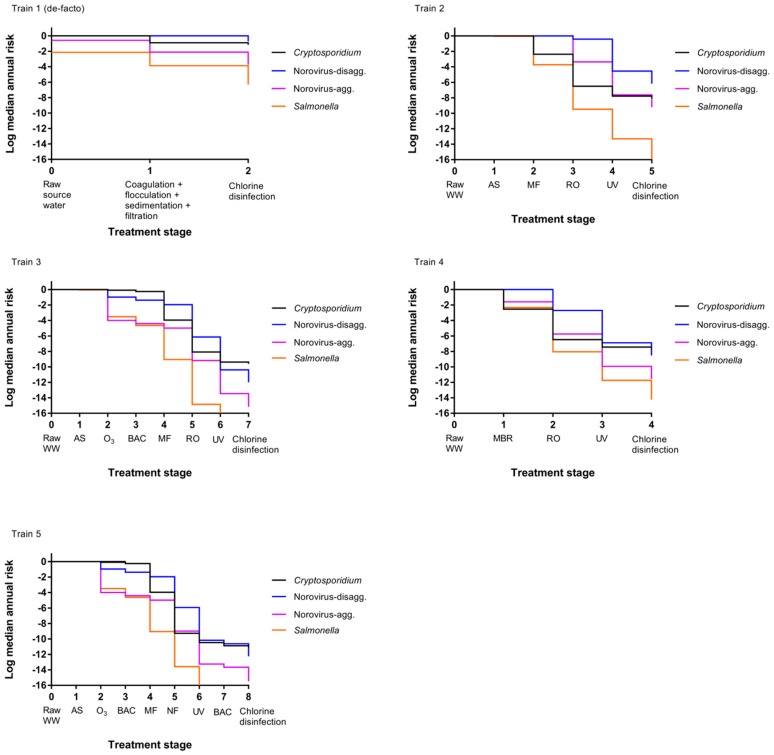
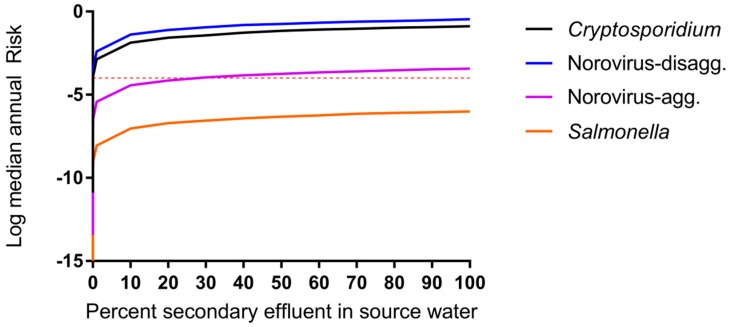
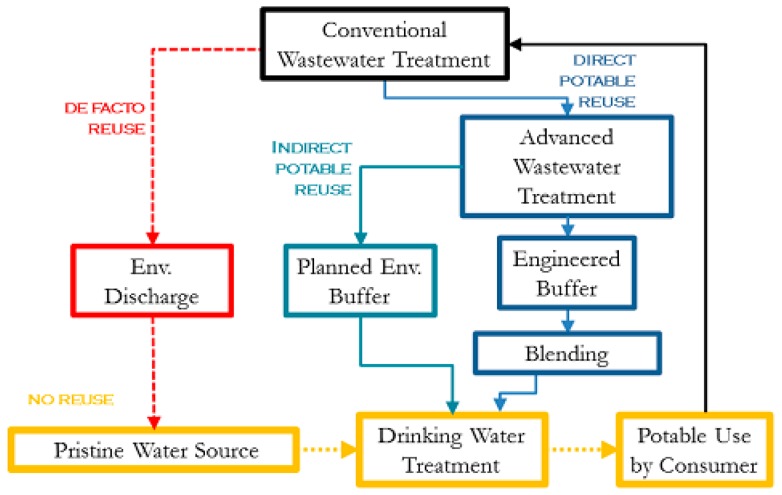
Although reclaimed water for potable applications has many potential benefits, it poses concerns for chemical and microbial risks to consumers. We present a quantitative microbial risk assessment (QMRA) Monte Carlo framework to compare a de facto water reuse scenario (treated wastewater-impacted surface water) with four hypothetical Direct Potable Reuse (DPR) scenarios for Norovirus, , and . Consumer microbial risks of surface source water quality (impacted by 0-100% treated wastewater effluent) were assessed. Additionally, we assessed risks for different blending ratios (0-100% surface water blended into advanced-treated DPR water) when source surface water consisted of 50% wastewater effluent. De facto reuse risks exceeded the yearly 10 infections risk benchmark while all modeled DPR risks were significantly lower. Contamination with 1% or more wastewater effluent in the source water, and blending 1% or more wastewater-impacted surface water into the advanced-treated DPR water drove the risk closer to the 10 benchmark. We demonstrate that de facto reuse by itself, or as an input into DPR, drives microbial risks more so than the advanced-treated DPR water. When applied using location-specific inputs, this framework can contribute to project design and public awareness campaigns to build legitimacy for DPR.

摘要

尽管用于饮用水用途的再生水有许多潜在益处,但它也引发了消费者对化学和微生物风险的担忧。我们提出了一个定量微生物风险评估(QMRA)蒙特卡洛框架,以比较一种实际的水再利用情景(受处理后废水影响的地表水)与四种诺如病毒、[此处原文缺失两种病原体名称]的假设直接饮用水再利用(DPR)情景。评估了地表水源水质(受0 - 100%处理后废水排放影响)对消费者的微生物风险。此外,当源地表水由50%的废水排放组成时,我们评估了不同混合比例(0 - 100%地表水混入深度处理的DPR水中)的风险。实际再利用风险超过了每年10次感染的风险基准,而所有模拟的DPR风险都显著更低。源水中含有1%或更多的废水排放,以及将1%或更多受废水影响的地表水混入深度处理的DPR水中,会使风险更接近10次感染的基准。我们证明,实际再利用本身,或作为DPR的一种输入,比深度处理的DPR水更能推动微生物风险。当使用特定地点的输入进行应用时,这个框架可以为项目设计和公众宣传活动做出贡献,以建立对DPR的认可。
https://cdn.ncbi.nlm.nih.gov/pmc/blobs/7d1c/5486321/ba9b2d2b1d54/ijerph-14-00635-g005.jpg
https://cdn.ncbi.nlm.nih.gov/pmc/blobs/7d1c/5486321/2b2dc4fe8dc2/ijerph-14-00635-g001.jpg
https://cdn.ncbi.nlm.nih.gov/pmc/blobs/7d1c/5486321/7c57f7d8cf2f/ijerph-14-00635-g002.jpg
https://cdn.ncbi.nlm.nih.gov/pmc/blobs/7d1c/5486321/cdceeab0a156/ijerph-14-00635-g003.jpg
https://cdn.ncbi.nlm.nih.gov/pmc/blobs/7d1c/5486321/762a8592d9ac/ijerph-14-00635-g004.jpg
https://cdn.ncbi.nlm.nih.gov/pmc/blobs/7d1c/5486321/ba9b2d2b1d54/ijerph-14-00635-g005.jpg
https://cdn.ncbi.nlm.nih.gov/pmc/blobs/7d1c/5486321/2b2dc4fe8dc2/ijerph-14-00635-g001.jpg
https://cdn.ncbi.nlm.nih.gov/pmc/blobs/7d1c/5486321/7c57f7d8cf2f/ijerph-14-00635-g002.jpg
https://cdn.ncbi.nlm.nih.gov/pmc/blobs/7d1c/5486321/cdceeab0a156/ijerph-14-00635-g003.jpg
https://cdn.ncbi.nlm.nih.gov/pmc/blobs/7d1c/5486321/762a8592d9ac/ijerph-14-00635-g004.jpg
https://cdn.ncbi.nlm.nih.gov/pmc/blobs/7d1c/5486321/ba9b2d2b1d54/ijerph-14-00635-g005.jpg

相似文献

1
Drivers of Microbial Risk for Direct Potable Reuse and de Facto Reuse Treatment Schemes: The Impacts of Source Water Quality and Blending.直接饮用水再利用和事实上的再利用处理方案中微生物风险的驱动因素:源水水质和混合的影响。
Int J Environ Res Public Health. 2017 Jun 13;14(6):635. doi: 10.3390/ijerph14060635.
2
Comparison of Predicted Microbiological Human Health Risks Associated with de Facto, Indirect, and Direct Potable Water Reuse.与实际、间接和直接饮用水再利用相关的预测微生物人类健康风险比较。
Environ Sci Technol. 2019 Nov 19;53(22):13382-13389. doi: 10.1021/acs.est.9b02002. Epub 2019 Oct 28.
3
Potable Water Reuse: What Are the Microbiological Risks?饮用水再利用:存在哪些微生物风险?
Curr Environ Health Rep. 2018 Jun;5(2):283-292. doi: 10.1007/s40572-018-0195-y.
4
Quantifying pathogen risks associated with potable reuse: A risk assessment case study for Cryptosporidium.量化与饮用水再利用相关的病原体风险:以隐孢子虫为例的风险评估案例研究。
Water Res. 2017 Aug 1;119:252-266. doi: 10.1016/j.watres.2017.04.048. Epub 2017 Apr 19.
5
Pilot testing of direct and indirect potable water reuse using multi-stage ozone-biofiltration without reverse osmosis.采用多级臭氧生物过滤(无反渗透)进行直接和间接饮用水再利用的初步试验。
Water Res. 2020 Feb 1;169:115178. doi: 10.1016/j.watres.2019.115178. Epub 2019 Oct 14.
6
Pathogen infection risk to recreational water users, associated with surface waters impacted by de facto and indirect potable reuse activities.与受实际和间接饮用水再利用活动影响的地表水体相关的娱乐用水者的病原体感染风险。
Sci Total Environ. 2020 Jun 20;722:137799. doi: 10.1016/j.scitotenv.2020.137799. Epub 2020 Mar 8.
7
Pathogen reduction requirements for direct potable reuse in Antarctica: evaluating human health risks in small communities.南极直接饮用水再利用的病原体减少要求:评估小型社区的人类健康风险。
Sci Total Environ. 2013 Sep 1;461-462:723-33. doi: 10.1016/j.scitotenv.2013.05.059. Epub 2013 Jun 14.
8
Human health impact of non-potable reuse of distributed wastewater and greywater treated by membrane bioreactors.膜生物反应器处理的分布式废水和中水非饮用水回用对人体健康的影响。
Microb Risk Anal. 2018 Aug;9:72-81. doi: 10.1016/j.mran.2018.01.003.
9
Application of a fluorescence EEM-PARAFAC model for direct and indirect potable water reuse monitoring: Multi-stage ozone-biofiltration without reverse osmosis at Gwinnett County, Georgia, USA.应用荧光 EEM-PARAFAC 模型直接和间接监测饮用水再利用:美国佐治亚州格温内特县多级臭氧生物过滤,无需反渗透。
Sci Total Environ. 2023 Aug 15;886:163937. doi: 10.1016/j.scitotenv.2023.163937. Epub 2023 May 5.
10
Direct potable reuse microbial risk assessment methodology: Sensitivity analysis and application to State log credit allocations.直接饮用水再利用微生物风险评估方法学:敏感性分析及其在州立水源信用额度分配中的应用。
Water Res. 2018 Jan 1;128:286-292. doi: 10.1016/j.watres.2017.10.034. Epub 2017 Oct 27.

引用本文的文献

1
Microbial Treatment Targets for Potable and Nonpotable Water Reuse - A Comprehensive Update and Harmonization.饮用水和非饮用水回用的微生物处理目标——全面更新与协调
Environ Sci Technol Lett. 2024 Oct;11(11):1175-1181. doi: 10.1021/acs.estlett.4c00512.
2
The Minus Approach Can Redefine the Standard of Practice of Drinking Water Treatment.“负”处理方法可以重新定义饮用水处理的标准。
Environ Sci Technol. 2023 May 9;57(18):7150-7161. doi: 10.1021/acs.est.2c09389. Epub 2023 Apr 19.
3
Understanding Microbial Loads in Wastewater Treatment Works as Source Water for Water Reuse.

本文引用的文献

1
Effect of Filtration Conditions On Removal of Emerging waterborne pathogens.过滤条件对去除新出现的水传播病原体的影响。
J Am Water Works Assoc. 2003 Dec;95(12):95-104. doi: 10.1002/j.1551-8833.2003.tb10514.x. Epub 2003 Dec 1.
2
Occurrence of norovirus in raw sewage - A systematic literature review and meta-analysis.污水中诺如病毒的检出情况——系统文献综述和荟萃分析。
Water Res. 2017 Mar 15;111:366-374. doi: 10.1016/j.watres.2017.01.017. Epub 2017 Jan 9.
3
Comparison of Risk Predicted by Multiple Norovirus Dose-Response Models and Implications for Quantitative Microbial Risk Assessment.
了解污水处理厂作为回用水源的微生物负荷。
Water (Basel). 2021 May 21;13(11). doi: 10.3390/w13111452.
4
Quantitative Microbial Risk Assessment of Pediatric Infections Attributable to Ingestion of Fecally Contaminated Domestic Soils in Low-Income Urban Maputo, Mozambique.莫桑比克马普托低收入城区经粪口途径摄入污染家庭土壤导致的儿童感染定量微生物风险评估
Environ Sci Technol. 2021 Feb 2;55(3):1941-1952. doi: 10.1021/acs.est.0c06972. Epub 2021 Jan 20.
5
Public health risks associated with food-borne parasites.与食源性寄生虫相关的公共卫生风险。
EFSA J. 2018 Dec 4;16(12):e05495. doi: 10.2903/j.efsa.2018.5495. eCollection 2018 Dec.
6
Evaluating the sustainability of indirect potable reuse and direct potable reuse: a southern Nevada case study.评估间接饮用水再利用和直接饮用水再利用的可持续性:内华达州南部案例研究。
AWWA Water Sci. 2019 Jul-Aug;1(4):e1153. doi: 10.1002/aws2.1153. Epub 2019 Aug 27.
7
Comparison of Predicted Microbiological Human Health Risks Associated with de Facto, Indirect, and Direct Potable Water Reuse.与实际、间接和直接饮用水再利用相关的预测微生物人类健康风险比较。
Environ Sci Technol. 2019 Nov 19;53(22):13382-13389. doi: 10.1021/acs.est.9b02002. Epub 2019 Oct 28.
8
Conceptual environmental impact assessment of a novel self-sustained sanitation system incorporating a quantitative microbial risk assessment approach.新概念环境卫生影响评估:一种新型自维持卫生系统,结合了定量微生物风险评估方法。
Sci Total Environ. 2018 Oct 15;639:657-672. doi: 10.1016/j.scitotenv.2018.05.062. Epub 2018 May 26.
9
Potable Water Reuse: What Are the Microbiological Risks?饮用水再利用:存在哪些微生物风险?
Curr Environ Health Rep. 2018 Jun;5(2):283-292. doi: 10.1007/s40572-018-0195-y.
10
Quantitative Microbial Risk Assessment and Infectious Disease Transmission Modeling of Waterborne Enteric Pathogens.基于定量微生物风险评估和水传播肠道病原体传染病传播模型的研究
Curr Environ Health Rep. 2018 Jun;5(2):293-304. doi: 10.1007/s40572-018-0196-x.
多种诺如病毒剂量反应模型预测风险的比较及其对定量微生物风险评估的意义。
Risk Anal. 2017 Feb;37(2):245-264. doi: 10.1111/risa.12616. Epub 2016 Jun 10.
4
Implications of Transitioning from De Facto to Engineered Water Reuse for Power Plant Cooling.从实际到工程化的过渡对电厂冷却用水再利用的影响。
Environ Sci Technol. 2016 May 17;50(10):5379-88. doi: 10.1021/acs.est.5b05753. Epub 2016 Apr 28.
5
Cryptosporidium and Giardia removal by secondary and tertiary wastewater treatment.二级和三级废水处理对隐孢子虫和贾第虫的去除效果
J Environ Sci Health A Tox Hazard Subst Environ Eng. 2015;50(12):1265-73. doi: 10.1080/10934529.2015.1055152.
6
Impact of virus surface characteristics on removal mechanisms within membrane bioreactors.病毒表面特性对膜生物反应器内去除机制的影响。
Water Res. 2015 Nov 1;84:144-52. doi: 10.1016/j.watres.2015.07.020. Epub 2015 Jul 15.
7
Meta-Analysis of the Reduction of Norovirus and Male-Specific Coliphage Concentrations in Wastewater Treatment Plants.污水处理厂中诺如病毒和雄性特异性大肠杆菌噬菌体浓度降低的Meta分析。
Appl Environ Microbiol. 2015 Jul;81(14):4669-81. doi: 10.1128/AEM.00509-15. Epub 2015 May 1.
8
Mechanisms of pathogenic virus removal in a full-scale membrane bioreactor.规模化膜生物反应器中致病性病毒去除的机理。
Environ Sci Technol. 2015 Mar 3;49(5):2815-22. doi: 10.1021/es505332n. Epub 2015 Feb 19.
9
Source identification of bacterial and viral pathogens and their survival/fading in the process of wastewater treatment, reclamation, and environmental reuse.细菌和病毒病原体的来源鉴定及其在废水处理、回收利用和环境再利用过程中的存活/衰减情况。
World J Microbiol Biotechnol. 2015 Jan;31(1):109-20. doi: 10.1007/s11274-014-1770-5. Epub 2014 Nov 6.
10
Fractional poisson--a simple dose-response model for human norovirus.分数泊松分布——一种针对人诺如病毒的简单剂量反应模型。
Risk Anal. 2014 Oct;34(10):1820-9. doi: 10.1111/risa.12207. Epub 2014 Apr 11.