Diagne Moussa M, Faye Martin, Faye Oumar, Sow Abdourahmane, Balique Fanny, Sembène Mbacké, Granjon Laurent, Handschumacher Pascal, Faye Ousmane, Diallo Mawlouth, Sall Amadou A
Institut Pasteur de Dakar, Dakar, Sénégal.
Université Cheikh Anta Diop de Dakar, Dakar, Sénégal.
One Health. 2017 Feb 9;3:23-28. doi: 10.1016/j.onehlt.2017.02.001. eCollection 2017 Jun.
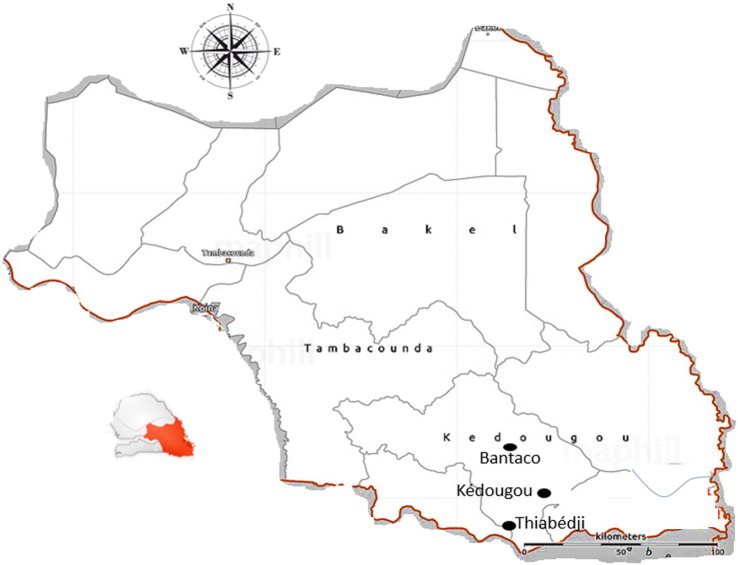
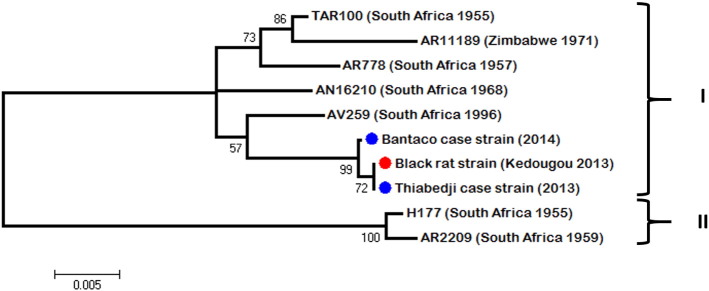
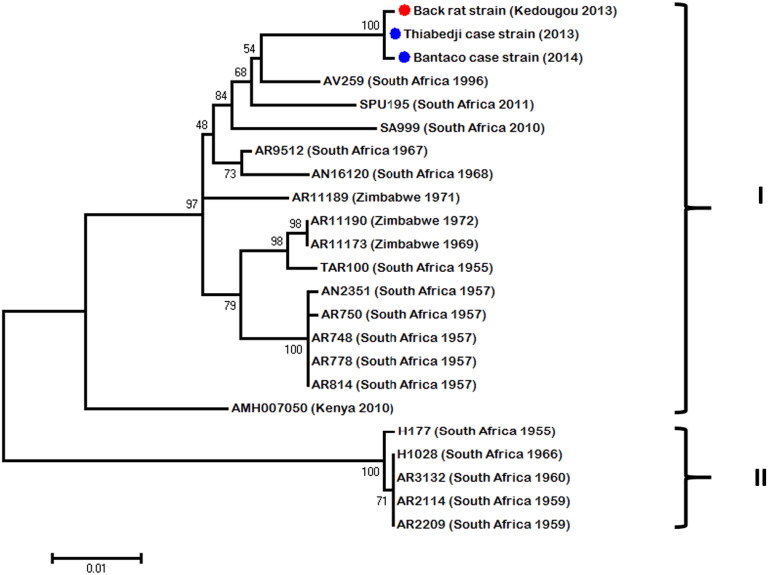
Wesselsbron disease is a neglected mosquito transmitted infection that causes abortions and has teratogenic effects on sheep and cattle in Africa. Human can also be infected. The detection of human or animal cases is complicated by the non-specific symptoms close to Rift Valley Fever (RVF) in domestic livestock species or Dengue like syndrome in humans. Then, these detections are usually made during RVF investigations in sheep. These domestic animals should take a role in the life cycle of the virus but some evidences of virus (WSLV) presence in wild animals suggest that the latter may be involved in the virus maintenance in nature. However, the reservoir status of wild vertebrate in general and rodents particularly for WSLV is only based on an isolation from a Cape short-eared gerbil in southern Africa. Most of WSLV isolations are from southern parts of Africa even if it has been found in western and central Africa or Madagascar. In Senegal, there are serological evidences of WSLV circulation in human since the 1970s and some isolations, the last one of which dates back in 1992. Despite the detection of the virus on mosquitoes until the 2000s in different parts of the country, no new human case has been noted. In this paper, we report the WSLV re-emergence in eastern Senegal in 2013 with 2 human cases and its first isolation from a black rat . Sequencing analyses show the circulation of the same strain between these humans and the commensal rodent. The putative impact on WSLV transmission to human populations could be more important if the reservoir status of the black rat is confirmed. Focused survey in human populations, specific entomological and mammalogical investigations would permit a better understanding of the life cycle of the virus and its impact on public health.
韦塞尔斯布朗病是一种被忽视的由蚊子传播的感染病,会导致流产,并对非洲的绵羊和牛产生致畸作用。人类也可能被感染。由于家畜出现类似裂谷热(RVF)的非特异性症状,或者人类出现类似登革热的综合征,使得人类或动物病例的检测变得复杂。因此,这些检测通常是在对绵羊进行裂谷热调查期间进行的。这些家畜应该在病毒的生命周期中发挥作用,但野生动物中存在病毒(韦塞尔斯布朗病毒,WSLV)的一些证据表明,后者可能参与了病毒在自然界中的维持。然而,一般野生脊椎动物,特别是啮齿动物作为WSLV储存宿主的地位仅基于从非洲南部的一只开普短耳沙鼠身上分离出病毒。即使在西非、中非或马达加斯加发现了WSLV,但大多数病毒分离株都来自非洲南部。在塞内加尔,自20世纪70年代以来就有WSLV在人类中传播的血清学证据,并且有一些病毒分离株,最后一次分离可追溯到1992年。尽管在2000年代之前在该国不同地区的蚊子身上检测到了该病毒,但没有发现新的人类病例。在本文中,我们报告了2013年在塞内加尔东部WSLV再次出现,有2例人类病例,并且首次从一只黑鼠身上分离出该病毒。测序分析表明,这些人类和共生啮齿动物之间传播的是同一毒株。如果黑鼠作为储存宿主的地位得到证实,那么对WSLV向人类传播的潜在影响可能会更大。对人群进行重点调查、开展特定的昆虫学和哺乳动物学研究,将有助于更好地了解该病毒的生命周期及其对公共卫生的影响。