Nelson Amy N, Ploss Alexander
Department of Molecular Biology, Princeton University, Princeton, New Jersey, USA.
mBio. 2024 Dec 11;15(12):e0294624. doi: 10.1128/mbio.02946-24. Epub 2024 Oct 31.
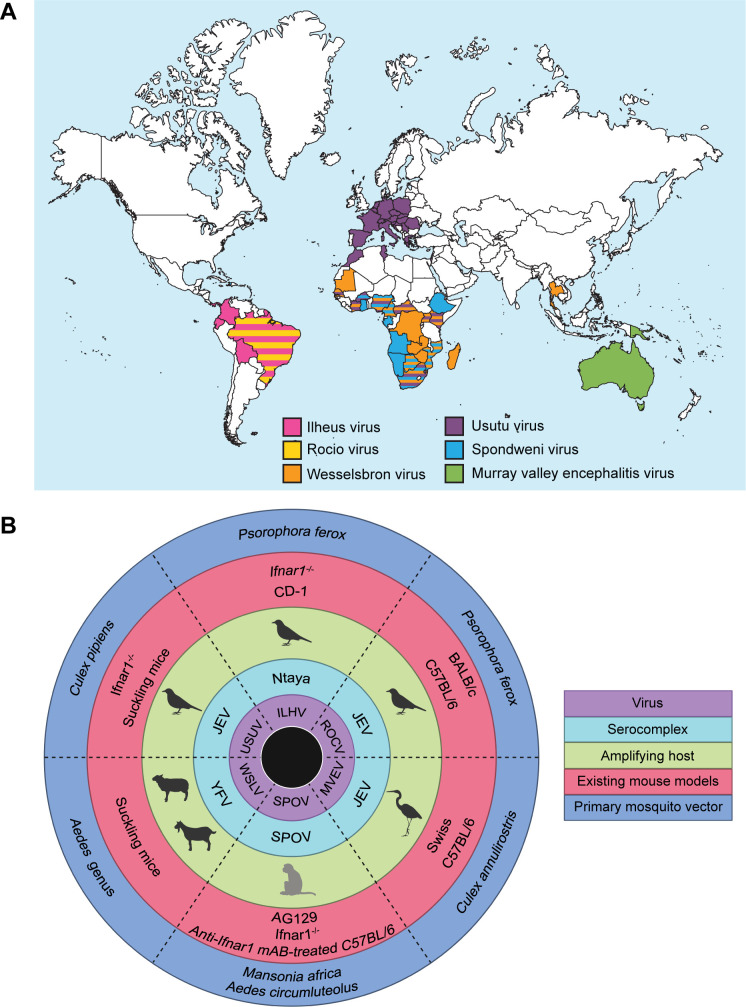
Flaviviruses comprise a genus of enveloped, positive-sense, single-stranded RNA viruses typically transmitted between susceptible and permissive hosts by arthropod vectors. Established flavivirus threats include dengue viruses (DENV), yellow fever virus (YFV), Zika virus (ZIKV), and West Nile virus (WNV), which continue to cause over 400 million infections annually and are significant global health and economic burdens. Additionally, numerous closely related but largely understudied viruses circulate in animals and can conceivably emerge in human populations. Previous flaviviruses that were recognized to have this potential include ZIKV and WNV, which only became extensively studied after causing major outbreaks in humans. More than 50 species exist within the flavivirus genus, which can be further classified as mosquito-borne, tick-borne, insect-specific, or with no known vector. Historically, many of these flaviviruses originated in Africa and have mainly affected tropical and subtropical regions due to the ecological niche of mosquitoes. However, climate change, as well as vector and host migration, has contributed to geographical expansion, thereby posing a potential risk to global populations. For the purposes of this minireview, we focus on the mosquito-borne subgroup and highlight viruses that cause significant pathology or lethality in at least one animal species and/or have demonstrated an ability to infect humans. We discuss current knowledge of these viruses, existing animal models to study their pathogenesis, and potential future directions. Emerging viruses discussed include Usutu virus (USUV), Wesselsbron virus (WSLV), Spondweni virus (SPOV), Ilheus virus (ILHV), Rocio virus (ROCV), Murray Valley encephalitis virus (MVEV), and Alfuy virus (ALFV).
黄病毒属包含一类有包膜的、正义单链RNA病毒,通常由节肢动物媒介在易感宿主和允许宿主之间传播。已确定的黄病毒威胁包括登革病毒(DENV)、黄热病毒(YFV)、寨卡病毒(ZIKV)和西尼罗河病毒(WNV),它们每年继续导致超过4亿人感染,是全球重大的健康和经济负担。此外,许多密切相关但大多未被充分研究的病毒在动物中传播,并且有可能在人群中出现。之前被认为有这种潜力的黄病毒包括寨卡病毒和西尼罗河病毒,它们在导致人类大规模疫情后才得到广泛研究。黄病毒属中有50多个物种,可进一步分为蚊媒、蜱媒、昆虫特异性或无已知传播媒介的病毒。从历史上看,这些黄病毒中的许多起源于非洲,由于蚊子的生态位,主要影响热带和亚热带地区。然而,气候变化以及传播媒介和宿主的迁移导致了地理范围的扩大,从而对全球人口构成潜在风险。在本综述中,我们重点关注蚊媒亚组,并强调那些在至少一种动物物种中引起严重病理或致死性和/或已证明有感染人类能力的病毒。我们讨论了这些病毒的现有知识、用于研究其发病机制的现有动物模型以及未来潜在的研究方向。讨论的新兴病毒包括乌苏图病毒(USUV)、韦塞尔斯布朗病毒(WSLV)、斯庞德温尼病毒(SPOV)、伊列乌斯病毒(ILHV)、罗西奥病毒(ROCV)、墨累河谷脑炎病毒(MVEV)和阿尔富伊病毒(ALFV)。