Curtis Daniel R, Roosen Joris
Room 1.70, Doelensteeg 16, Leiden University, Institute for History, Leiden, 2311VL, Netherlands.
Wittevrouwen 7bis, Utrecht University, Research Institute for History and Art History, Utrecht, 3512CS, Netherlands.
Am J Phys Anthropol. 2017 Oct;164(2):246-259. doi: 10.1002/ajpa.23266. Epub 2017 Jun 15.
Although recent work has begun to establish that early modern plagues had selective mortality effects, it was generally accepted that the initial outbreak of Black Death in 1347-52 was a "universal killer." Recent bioarchaeological work, however, has argued that the Black Death was also selective with regard to age and pre-plague health status. The issue of the Black Death's potential sex selectivity is less clear. Bioarchaeological research hypothesizes that sex-selection in mortality was possible during the initial Black Death outbreak, and we present evidence from historical sources to test this notion.
To determine whether the Black Death and recurring plagues in the period 1349-1450 had a sex-selective mortality effect.
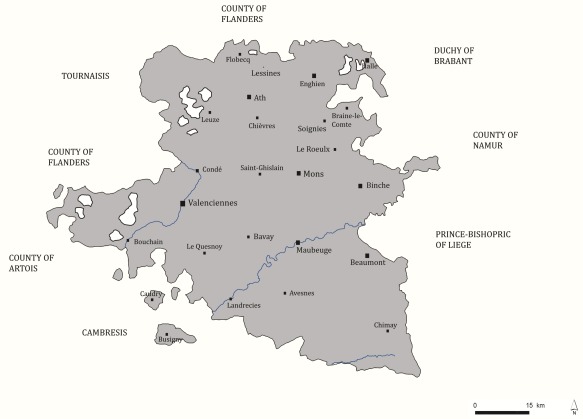
We present a newly compiled database of mortality information taken from mortmain records in Hainaut, Belgium, in the period 1349-1450, which not only is an important new source of information on medieval mortality, but also allows for sex-disaggregation.
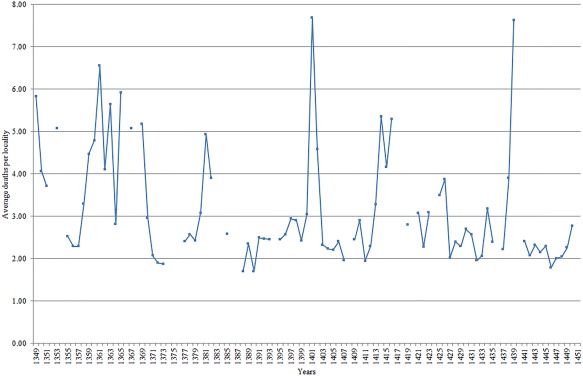
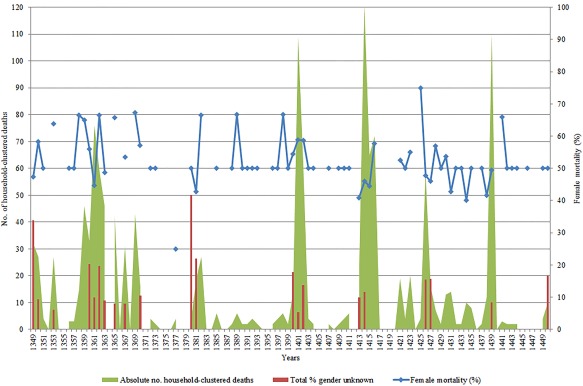
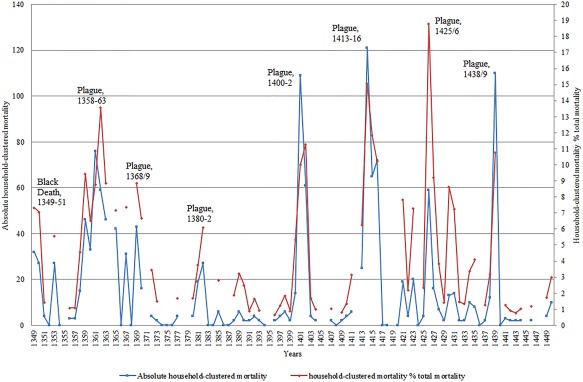
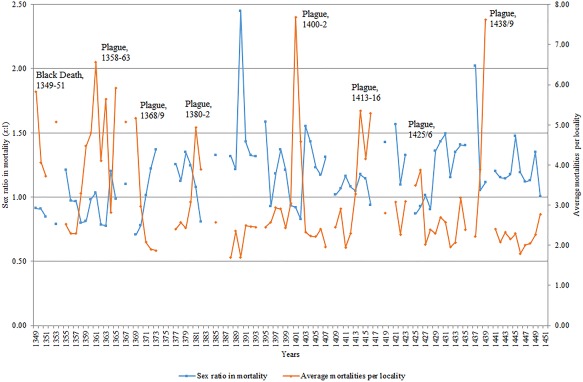
We find that the Black Death period of 1349-51, as well as recurring plagues in the 100 years up to 1450, often had a sex-selective effect-killing more women than in "non-plague years."
Although much research tends to suggest that men are more susceptible to a variety of diseases caused by bacteria, viruses and parasites, we cannot assume that the same direction of sex-selection in mortality applied to diseases in the distant past such as Second Pandemic plagues. While the exact reasons for the sex-selective effect of late-medieval plague are unclear in the absence of further data, we suggest that simple inequities between the sexes in exposure to the disease may not have been a key driver.
尽管最近的研究已开始证实近代早期的瘟疫具有选择性的死亡影响,但人们普遍认为1347年至1352年黑死病的首次爆发是一种“普遍杀手”。然而,最近的生物考古学研究认为,黑死病在年龄和瘟疫前健康状况方面也具有选择性。黑死病潜在的性别选择性问题则不太明确。生物考古学研究推测,在黑死病首次爆发期间,死亡存在性别选择的可能性,我们提供历史资料中的证据来验证这一观点。
确定1349年至1450年期间的黑死病及反复出现的瘟疫是否具有性别选择性的死亡影响。
我们展示了一个新编制的死亡率信息数据库,该数据库取自1349年至1450年比利时埃诺省的永久管业记录,它不仅是中世纪死亡率重要的新信息来源,还能按性别分类。
我们发现,1349年至1351年的黑死病时期以及到1450年的100年里反复出现的瘟疫,通常具有性别选择效应——比“非瘟疫年份”杀死更多女性。
尽管许多研究倾向于表明男性更容易感染由细菌、病毒和寄生虫引起的多种疾病,但我们不能假定过去诸如第二次大流行瘟疫等疾病在死亡方面的性别选择方向与之相同。虽然在缺乏更多数据的情况下,中世纪晚期瘟疫性别选择效应的确切原因尚不清楚,但我们认为,两性在接触该疾病方面的简单不平等可能并非关键驱动因素。