Gainesville, University of Florida College of Medicine, po 100244, Gainesville, 32610, FL, USA.
Department of Neurological Sciences, Rush University Medical Center, 1735 West Harrison Street, Chicago, IL, 60611, USA.
Acta Neuropathol Commun. 2017 Jun 16;5(1):47. doi: 10.1186/s40478-017-0451-7.
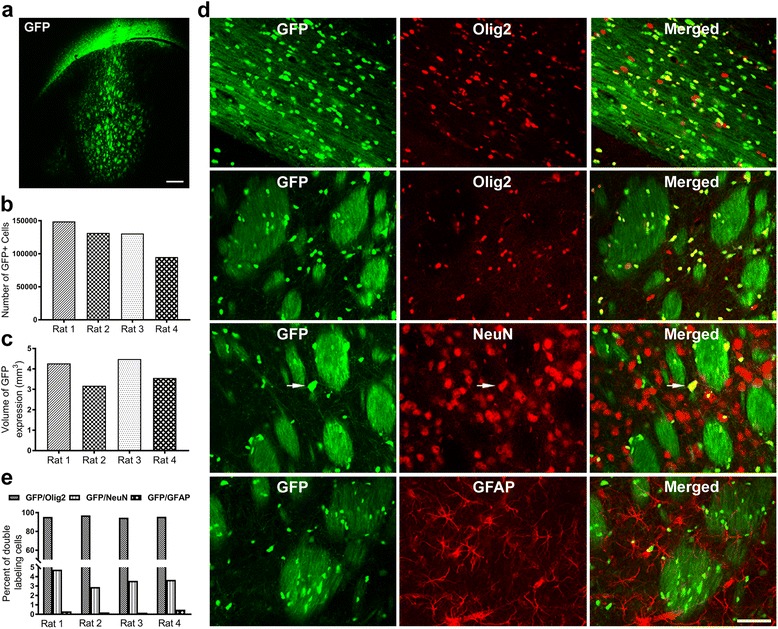
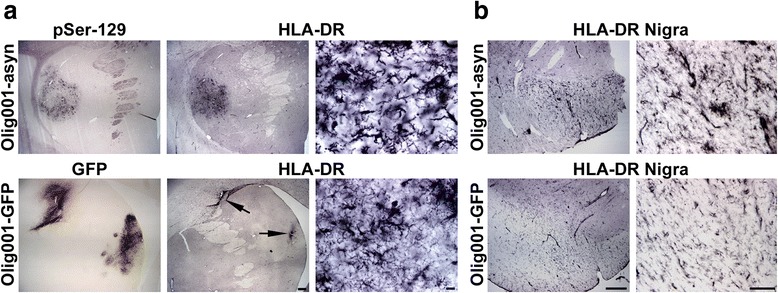
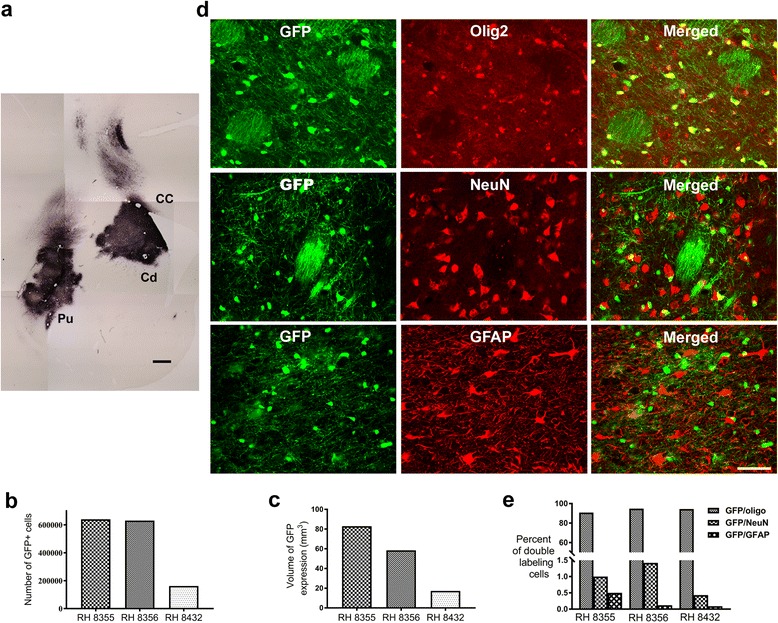
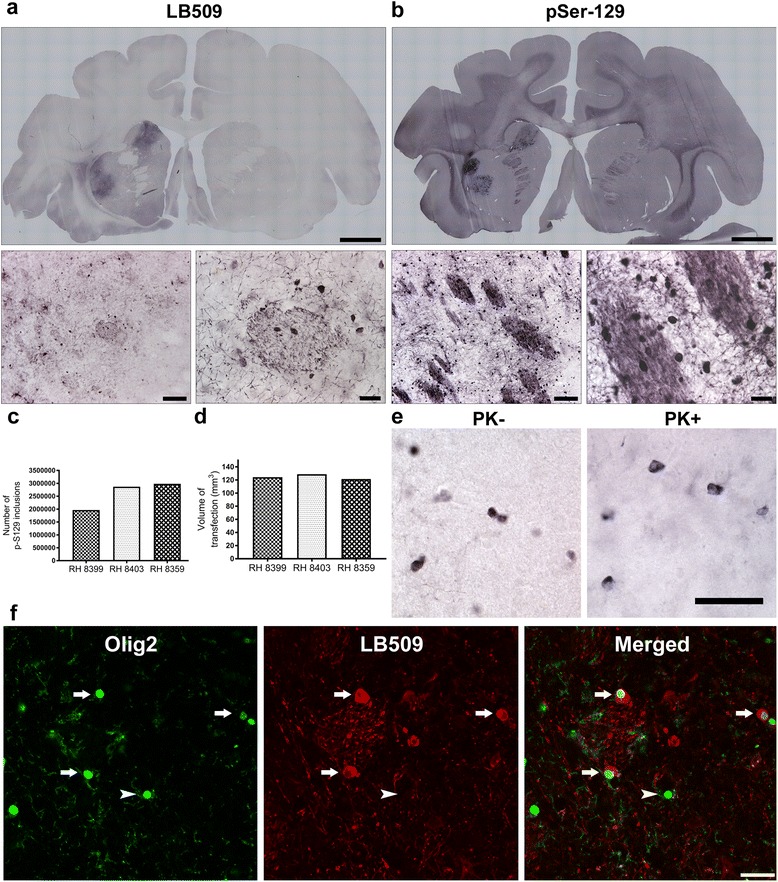
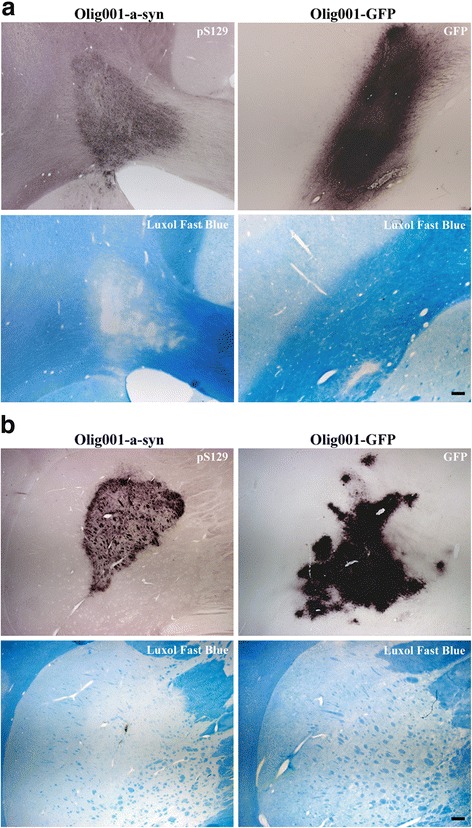
Multiple system atrophy (MSA) is a horrible and unrelenting neurodegenerative disorder with an uncertain etiology and pathophysiology. MSA is a unique proteinopathy in which alpha-synuclein (α-syn) accumulates preferentially in oligodendroglia rather than neurons. Glial cytoplasmic inclusions (GCIs) of α-syn are thought to elicit changes in oligodendrocyte function, such as reduced neurotrophic support and demyelination, leading to neurodegeneration. To date, only a murine model using one of three promoters exist to study this disease. We sought to develop novel rat and nonhuman primate (NHP) models of MSA by overexpressing α-syn in oligodendroglia using a novel oligotrophic adeno-associated virus (AAV) vector, Olig001. To establish tropism, rats received intrastriatal injections of Olig001 expressing GFP. Histological analysis showed widespread expression of GFP throughout the striatum and corpus callosum with >95% of GFP+ cells co-localizing with oligodendroglia and little to no expression in neurons or astrocytes. We next tested the efficacy of this vector in rhesus macaques with intrastriatal injections of Olig001 expressing GFP. As in rats, we observed a large number of GFP+ cells in gray matter and white matter tracts of the striatum and the corpus callosum, with 90-94% of GFP+ cells co-localizing with an oligodendroglial marker. To evaluate the potential of our vector to elicit MSA-like pathology in NHPs, we injected rhesus macaques intrastriatally with Olig001 expressing the α-syn transgene. Histological analysis 3-months after injection demonstrated widespread α-syn expression throughout the striatum as determined by LB509 and phosphorylated serine-129 α-syn immunoreactivity, all of which displayed as tropism similar to that seen with GFP. As in MSA, Olig001-α-syn GCIs in our model were resistant to proteinase K digestion and caused microglial activation. Critically, demyelination was observed in the white matter tracts of the corpus callosum and striatum of Olig001-α-syn but not Olig001-GFP injected animals, similar to the human disease. These data support the concept that this vector can provide novel rodent and nonhuman primate models of MSA.
多系统萎缩症(MSA)是一种可怕且无法治愈的神经退行性疾病,其病因和发病机制尚不清楚。MSA 是一种独特的蛋白质病,其中 α-突触核蛋白(α-syn)优先在少突胶质细胞中积累,而不是神经元中。人们认为,α-syn 的神经胶质细胞质包涵体(GCIs)会引起少突胶质细胞功能的改变,例如减少神经营养支持和脱髓鞘,从而导致神经退行性变。迄今为止,仅存在使用三种启动子之一的一种用于研究该疾病的鼠模型。我们试图通过使用新型寡营养腺相关病毒(AAV)载体 Olig001 在少突胶质细胞中过表达 α-syn 来开发新型大鼠和非人灵长类动物(NHP)MSA 模型。为了确定其靶向性,大鼠接受了 Olig001 表达 GFP 的纹状体内注射。组织学分析显示 GFP 在纹状体和胼胝体中广泛表达,>95%的 GFP+细胞与少突胶质细胞共定位,而在神经元或星形胶质细胞中几乎没有表达。接下来,我们在纹状体中接受 Olig001 表达 GFP 的 NHP 中测试了该载体的功效。与大鼠一样,我们在纹状体和胼胝体的灰质和白质束中观察到大量 GFP+细胞,90-94%的 GFP+细胞与少突胶质细胞标志物共定位。为了评估我们的载体在 NHP 中引发 MSA 样病理学的潜力,我们将 Olig001 表达 α-syn 转基因物通过纹状体内注射到恒河猴中。注射后 3 个月的组织学分析表明,在纹状体中广泛表达 α-syn,这是由 LB509 和磷酸化丝氨酸-129 α-syn 免疫反应性确定的,所有这些都表现出与 GFP 相似的靶向性。与 MSA 一样,我们模型中的 Olig001-α-syn GCIs 对蛋白酶 K 消化具有抗性,并引起小胶质细胞活化。至关重要的是,在 Olig001-α-syn 但不在 Olig001-GFP 注射动物的胼胝体和纹状体的白质束中观察到脱髓鞘,类似于人类疾病。这些数据支持这样一种观点,即该载体可以为 MSA 提供新型的啮齿动物和非人灵长类动物模型。