Qian Li-Juan, Kang Shu-Min, Xie Jia-Li, Huang Li, Wen Quan, Fan Yuan-Yuan, Lu Li-Jun, Jiang Li
Department of Pediatrics, Zhongda Hospital, Southeast University, 87 Dingjiaqiao, Gulou District, Nanjing, Jiangsu, 210009, China.
Department of Pediatrics, Zhangjiagang First Peoples Hospital, Suzhou, Jiangsu, 100142, China.
BMC Microbiol. 2017 Jun 17;17(1):135. doi: 10.1186/s12866-017-1044-0.
We aimed to investigate the effect of early-life diverse microbial exposures on gut microbial colonization in an OVA-induced asthma model in BALB/c mice.
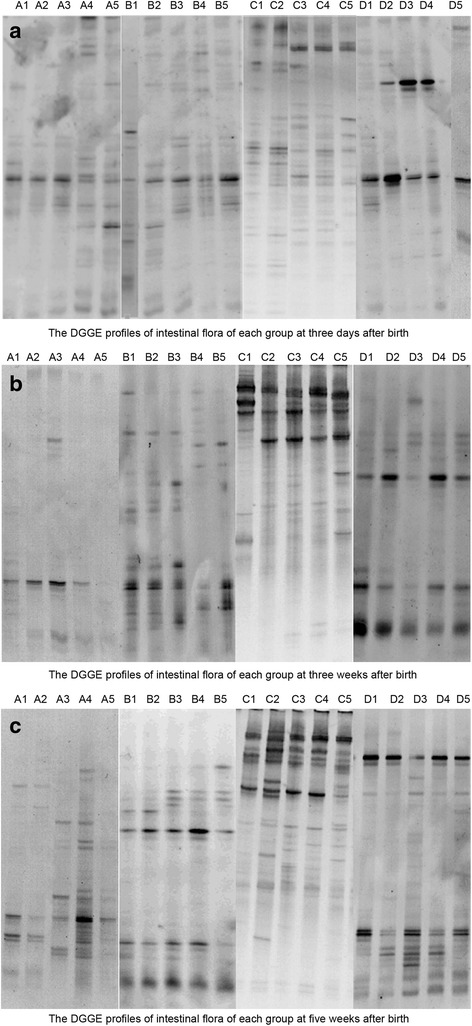
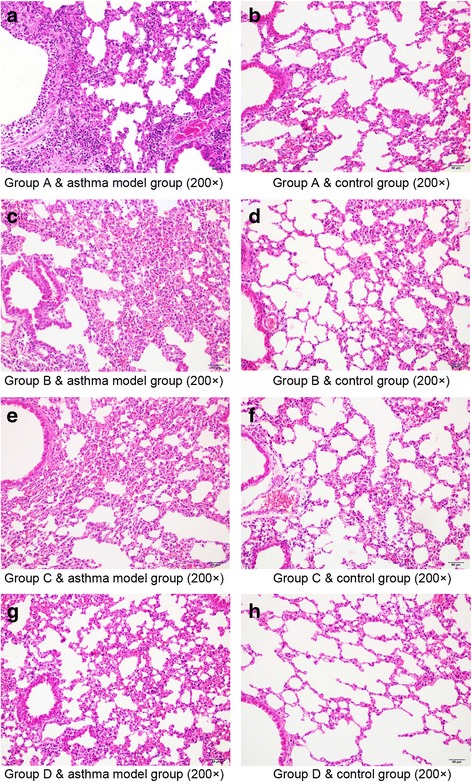
BALB/c mice were divided into 4 groups: A, offsprings were kept in a SPF environment during fetal, lactation, and childhood periods; B, offsprings were kept in the SPF environment during fetal and lactation periods, and kept in the general environment during childhood; C, offsprings were kept in the SPF environment only during fetal period, and then kept in the general environment; and D, offsprings were kept in the general environment during whole periods. The diversity of intestinal flora was analyzed using denaturing gradient gel electrophoresis. Mice were sensitized with OVA to establish an animal model of asthma. Then asthma-related inflammatory cytokines and histological analysis were performed.
The diversity of intestinal microflora in group D was significantly higher than groups A, B and C at three days and three weeks after birth, and the diversity of intestinal microflora in groups C and D were significantly higher than groups A and B at five weeks after birth. The pathologic scores of OVA-induced asthmatic mice in group D were significantly lower than group A, and serum IFN-γ levels and the IFN-γ/IL-4 ratio in group D were significantly higher than group A.
Exposure to diverse microbial environments in early life affects gut microbial colonization in BALB/c mice. The diversity of the intestinal flora in early life may prevent airway inflammation in asthma via regulating the Th1/Th2 balance.
我们旨在研究早期多样化的微生物暴露对BALB/c小鼠卵清蛋白诱导的哮喘模型中肠道微生物定植的影响。
将BALB/c小鼠分为4组:A组,子代在胎儿期、哺乳期和童年期饲养于无特定病原体(SPF)环境中;B组,子代在胎儿期和哺乳期饲养于SPF环境中,在童年期饲养于普通环境中;C组,子代仅在胎儿期饲养于SPF环境中,然后饲养于普通环境中;D组,子代在整个时期都饲养于普通环境中。使用变性梯度凝胶电泳分析肠道菌群的多样性。用卵清蛋白致敏小鼠以建立哮喘动物模型。然后进行哮喘相关炎性细胞因子检测和组织学分析。
出生后3天和3周时,D组肠道微生物群的多样性显著高于A、B和C组,出生后5周时,C组和D组肠道微生物群的多样性显著高于A组和B组。D组卵清蛋白诱导的哮喘小鼠的病理评分显著低于A组,D组血清干扰素-γ(IFN-γ)水平和IFN-γ/白细胞介素-4(IL-4)比值显著高于A组。
生命早期暴露于多样化的微生物环境会影响BALB/c小鼠的肠道微生物定植。生命早期肠道菌群的多样性可能通过调节Th1/Th2平衡预防哮喘中的气道炎症。