Hinthong Woranich, Pumipuntu Natapol, Santajit Sirijan, Kulpeanprasit Suphang, Buranasinsup Shutipen, Sookrung Nitat, Chaicumpa Wanpen, Aiumurai Pisinee, Indrawattana Nitaya
Faculty of Medicine and Allied Health, HRH Princess Chulabhorn College of Medical Science, Bangkok, Thailand.
Department of Microbiology and Immunology, Faculty of Tropical Medicine, Mahidol University, Bangkok, Thailand.
PeerJ. 2017 Jun 13;5:e3431. doi: 10.7717/peerj.3431. eCollection 2017.
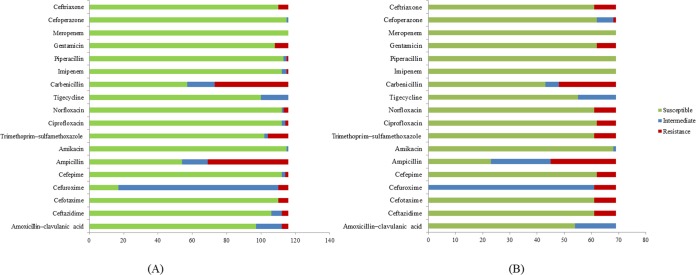
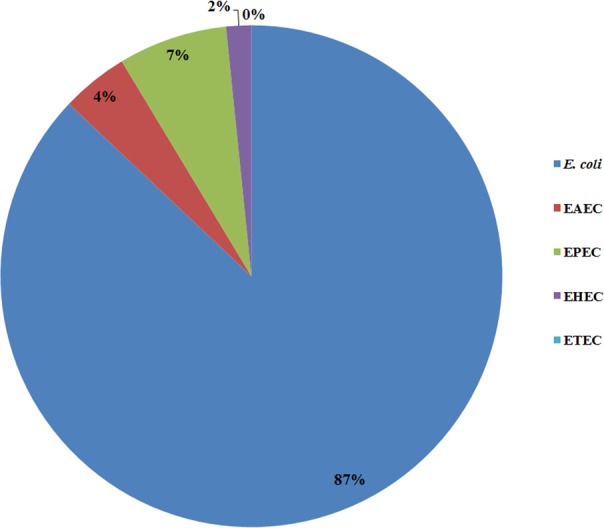
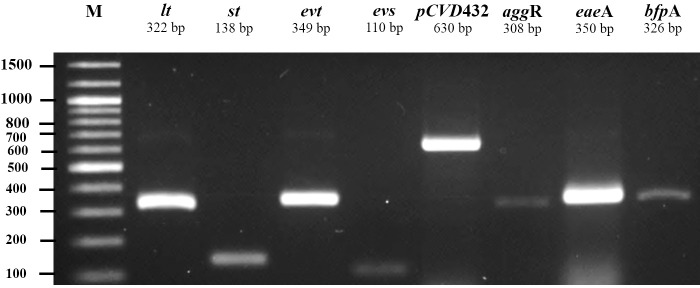
Subclinical mastitis is a persistent problem in dairy farms worldwide. Environmental is the bacterium predominantly responsible for this condition. In Thailand, subclinical mastitis in dairy cows is usually treated with various antibiotics, which could lead to antibiotic resistance in bacteria. is also a reservoir of many antibiotic resistance genes, which can be conveyed to other bacteria. In this study, the presence of in milk and water samples was reported, among which enteropathogenic was predominant, followed by enteroaggregative and enterohemorrhagic , which was found only in milk samples. Twenty-one patterns of antibiotic resistance were identified in this study. Ampicillin- and carbenicillin-resistant was the most common among the bacterial isolates from water samples. Meanwhile, resistance to ampicillin, carbenicillin, and sulfamethoxazole-trimethoprim was the pattern found most commonly in the from milk samples. Notably, only the from water samples possessed ESBL phenotype and carried antibiotic resistance genes, and . This indicates that pathogenic in dairy farms is also exposed to antibiotics and could potentially transfer these genes to other pathogenic bacteria under certain conditions.
亚临床型乳腺炎是全球奶牛场持续存在的问题。环境[细菌名称未给出]是导致这种情况的主要细菌。在泰国,奶牛的亚临床型乳腺炎通常用各种抗生素治疗,这可能导致细菌产生抗生素耐药性。[细菌名称未给出]也是许多抗生素耐药基因的储存库,这些基因可以传递给其他细菌。在本研究中,报告了牛奶和水样中[细菌名称未给出]的存在情况,其中致病性[细菌名称未给出]占主导,其次是聚集性[细菌名称未给出]和出血性[细菌名称未给出](仅在牛奶样本中发现)。本研究确定了21种抗生素耐药模式。对氨苄青霉素和羧苄青霉素耐药的[细菌名称未给出]在水样分离出的细菌中最为常见。同时,对氨苄青霉素、羧苄青霉素和磺胺甲恶唑 - 甲氧苄啶耐药是牛奶样本中[细菌名称未给出]最常见的耐药模式。值得注意的是,只有水样中的[细菌名称未给出]具有超广谱β-内酰胺酶(ESBL)表型并携带抗生素耐药基因[基因名称未给出]和[基因名称未给出]。这表明奶牛场中的致病性[细菌名称未给出]也接触到了抗生素,并且在某些条件下可能将这些基因转移给其他致病细菌。