Cao Sha, Huseby Douglas L, Brandis Gerrit, Hughes Diarmaid
Department of Medical Biochemistry and Microbiology, Biomedical Center, Uppsala University, Uppsala, Sweden.
Department of Medical Biochemistry and Microbiology, Biomedical Center, Uppsala University, Uppsala, Sweden
mBio. 2017 Jun 20;8(3):e00358-17. doi: 10.1128/mBio.00358-17.
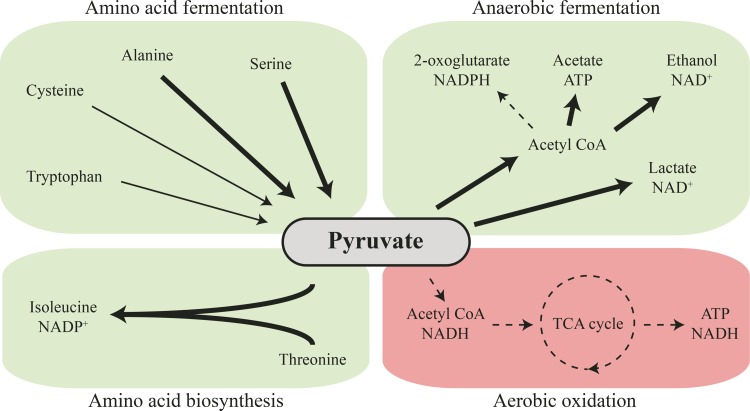
is known to generate small colony variants (SCVs) that are resistant to aminoglycoside antibiotics and can cause persistent and recurrent infections. The SCV phenotype is unstable, and compensatory mutations lead to restored growth, usually with loss of resistance. However, the evolution of improved growth, by mechanisms that avoid loss of antibiotic resistance, is very poorly understood. By selection with serial passaging, we isolated and characterized different classes of extragenic suppressor mutations that compensate for the slow growth of small colony variants. Compensation occurs by two distinct bypass mechanisms: (i) translational suppression of the initial SCV mutation by mutant tRNAs, ribosomal protein S5, or release factor 2 and (ii) mutations that cause the constitutive activation of the SrrAB global transcriptional regulation system. Although compensation by translational suppression increases growth rate, it also reduces antibiotic susceptibility, thus restoring a pseudo-wild-type phenotype. In contrast, an evolutionary pathway that compensates for the SCV phenotype by activation of SrrAB increases growth rate without loss of antibiotic resistance. RNA sequence analysis revealed that mutations activating the SrrAB pathway cause upregulation of genes involved in peptide transport and in the fermentation pathways of pyruvate to generate ATP and NAD, thus explaining the increased growth. By increasing the growth rate of SCVs without the loss of aminoglycoside resistance, compensatory evolution via the SrrAB activation pathway represents a threat to effective antibiotic therapy of staphylococcal infections. Small colony variants (SCVs) of are a significant clinical problem, causing persistent and antibiotic-resistant infections. However, SCVs are unstable and can rapidly evolve growth-compensated mutants. Previous data suggested that growth compensation only occurred with the loss of antibiotic resistance. We have used selection with serial passaging to uncover four distinct pathways of growth compensation accessible to SCVs. Three of these paths (reversion, intragenic suppression, and translational suppression) increase growth at the expense of losing antibiotic resistance. The fourth path activates an alternative transcriptional program and allows the bacteria to produce the extra ATP required to support faster growth, without losing antibiotic resistance. The importance of this work is that it shows that drug-resistant SCVs can evolve faster growth without losing antibiotic resistance.
已知其会产生对氨基糖苷类抗生素耐药的小菌落变体(SCV),并可导致持续性和复发性感染。SCV表型不稳定,补偿性突变会导致生长恢复,通常伴随着耐药性的丧失。然而,通过避免抗生素耐药性丧失的机制实现生长改善的进化过程却鲜为人知。通过连续传代选择,我们分离并鉴定了不同类型的基因外抑制突变,这些突变可补偿小菌落变体的生长缓慢。补偿通过两种不同的旁路机制发生:(i)突变型tRNA、核糖体蛋白S5或释放因子2对初始SCV突变的翻译抑制,以及(ii)导致SrrAB全局转录调控系统组成型激活的突变。虽然通过翻译抑制进行的补偿提高了生长速率,但也降低了抗生素敏感性,从而恢复了假野生型表型。相比之下,通过激活SrrAB来补偿SCV表型的进化途径在不丧失抗生素耐药性的情况下提高了生长速率。RNA序列分析表明,激活SrrAB途径的突变会导致参与肽转运以及丙酮酸发酵途径以产生ATP和NAD的基因上调,从而解释了生长的增加。通过在不丧失氨基糖苷类耐药性的情况下提高SCV的生长速率,经由SrrAB激活途径的补偿性进化对葡萄球菌感染的有效抗生素治疗构成了威胁。金黄色葡萄球菌的小菌落变体(SCV)是一个重大的临床问题,会导致持续性和耐药性感染。然而,SCV不稳定,可迅速进化出生长补偿突变体。先前的数据表明,生长补偿仅在抗生素耐药性丧失时发生。我们通过连续传代选择揭示了SCV可利用的四种不同的生长补偿途径。其中三条途径(回复突变、基因内抑制和翻译抑制)以丧失抗生素耐药性为代价提高生长。第四条途径激活了一个替代转录程序,使细菌能够产生支持更快生长所需的额外ATP,而不丧失抗生素耐药性。这项工作的重要性在于它表明耐药性SCV可以在不丧失抗生素耐药性的情况下更快地进化生长。