Zhang Huajun, Wang Hui, Zheng Wei, Yao Zhiyuan, Peng Yun, Zhang Su, Hu Zhong, Tao Zhen, Zheng Tianling
School of Marine Sciences, Ningbo UniversityNingbo, China.
Biology Department, College of Life Science, Shantou UniversityShantou, China.
Front Microbiol. 2017 Jun 6;8:999. doi: 10.3389/fmicb.2017.00999. eCollection 2017.
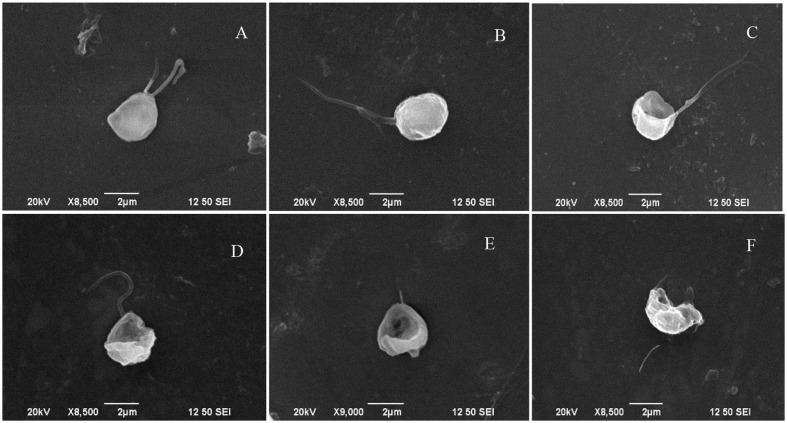
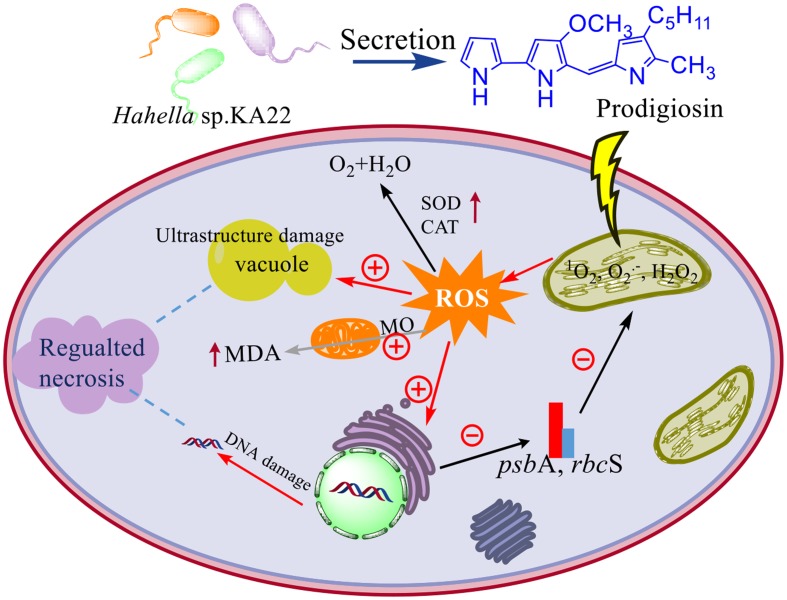
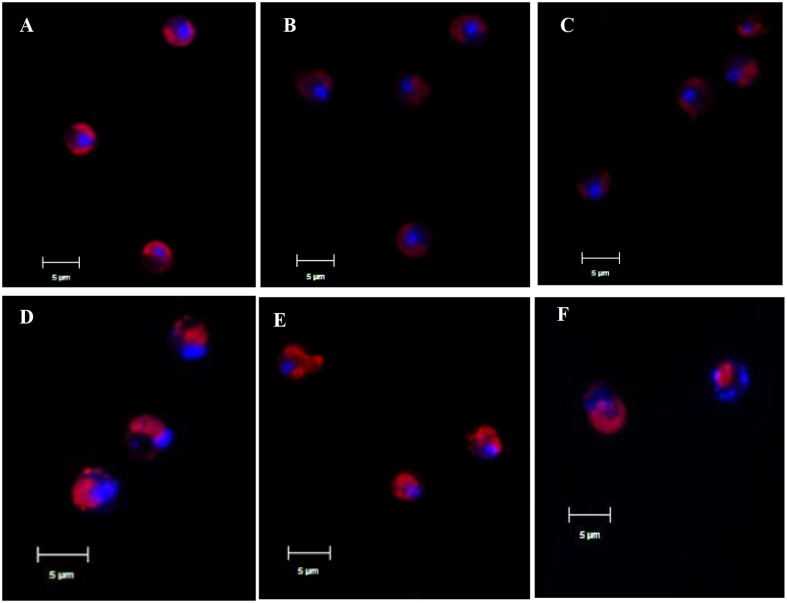
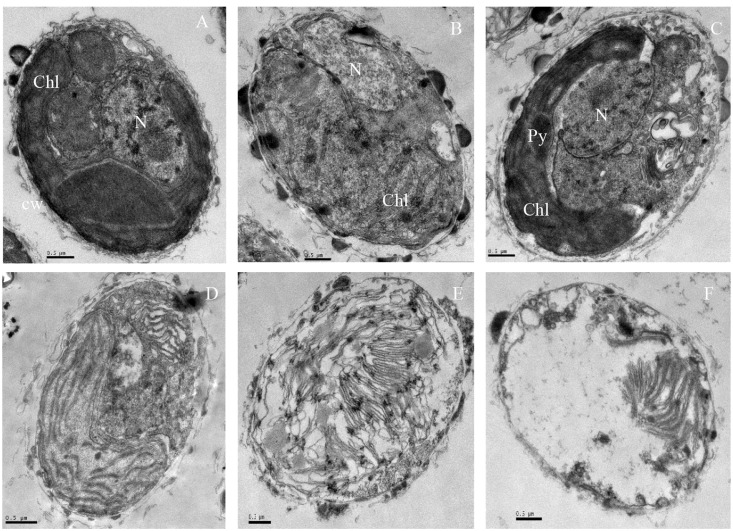
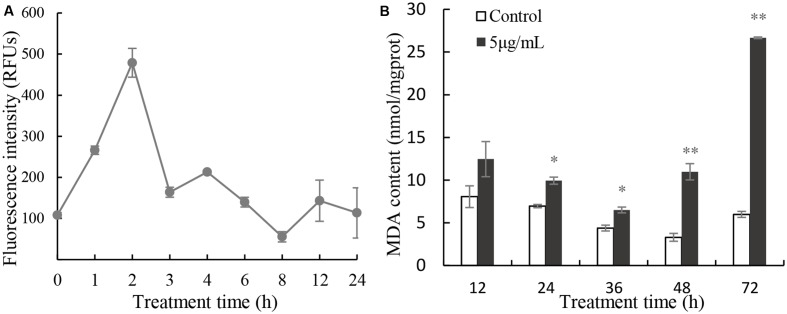
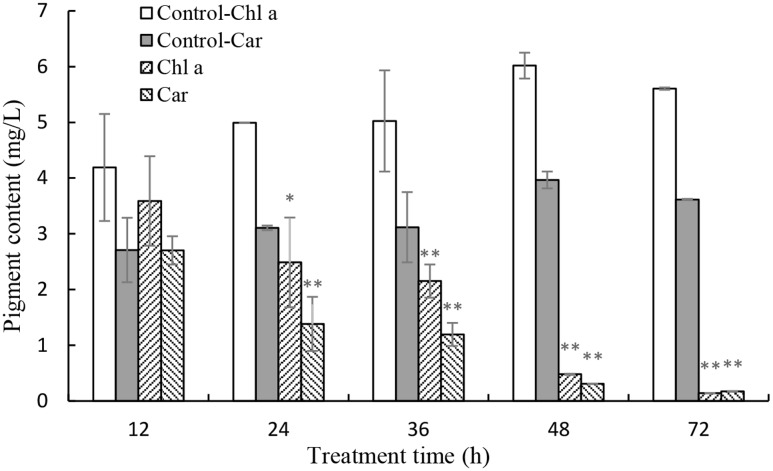
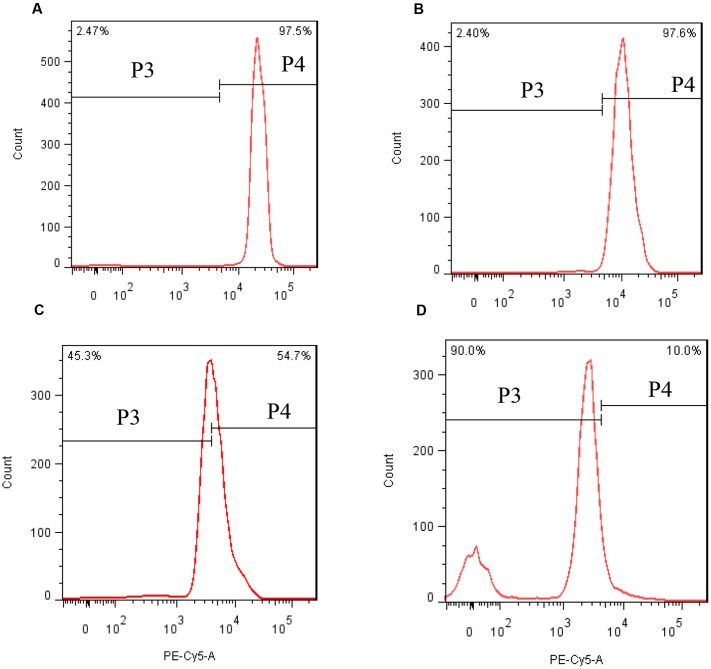
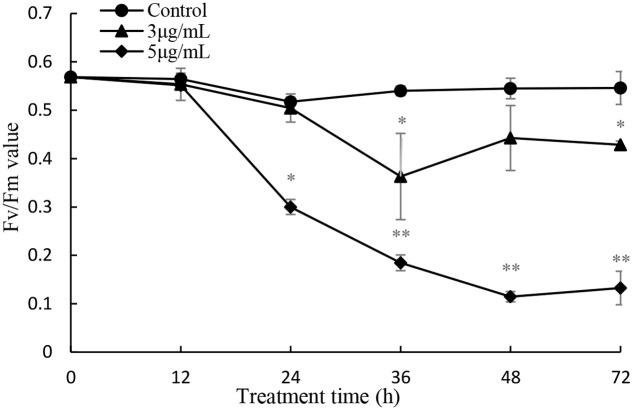
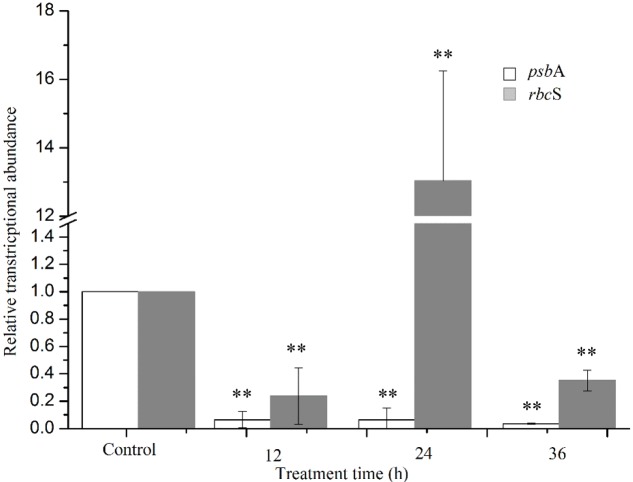
Application of algicidal compounds secreted by bacteria is a promising and environmentally friendly strategy to control harmful algal blooms (HABs). Years ago prodigiosin was described as an efficient algicidal compound, but the details about the effect of prodigiosin on algal cells are still elusive. Prodigiosin shows high algicidal activity on , making it a potential algicide in HAB control. When were treated with prodigiosin at 5 μg/mL, algae cells showed cytoplasmic hypervacuolization, chloroplast and nucleus rupture, flagella missing, and cell fracture, when observed by scanning electron microscope and transmission electron microscopy. Prodigiosin induced a reactive oxygen species (ROS) burst in at 2 h, which could result in severe oxidative damage to algal cells. Chlorophyll (Chl ) fluorescence decreased significantly after prodigiosin treatment; about 45.3 and 90.0% of algal cells lost Chl fluorescence at 24 and 48 h. The / value, reflecting the status of the photosystem II electron flow also decreased after prodigiosin treatment. Quantitative polymerase chain reaction (PCR) analysis A and S expression indicated that photosynthesis process was remarkably inhibited by prodigiosin. The results indicated that the inhibition of photosynthesis may produce excessive ROS causing cell necrosis. This study is the first report about algal lysis mechanism of prodigiosin on harmful algae. Our results could increase our knowledge on the interaction between algicidal compounds and harmful algae, which could lead to further studies in the microcosm.
应用细菌分泌的杀藻化合物是一种控制有害藻华(HABs)的有前景且环保的策略。多年前,灵菌红素被描述为一种有效的杀藻化合物,但关于灵菌红素对藻类细胞作用的细节仍不清楚。灵菌红素对[具体藻类名称未给出]表现出高杀藻活性,使其成为控制有害藻华的潜在杀藻剂。当[具体藻类名称未给出]用5μg/mL的灵菌红素处理时,通过扫描电子显微镜和透射电子显微镜观察,藻类细胞出现细胞质过度空泡化、叶绿体和细胞核破裂、鞭毛缺失以及细胞破碎。灵菌红素在2小时时诱导[具体藻类名称未给出]中活性氧(ROS)爆发,这可能导致藻类细胞受到严重氧化损伤。灵菌红素处理后叶绿素(Chl )荧光显著降低;在24和48小时时,约45.3%和90.0%的藻类细胞失去Chl 荧光。反映光系统II电子流状态的/值在灵菌红素处理后也降低。定量聚合酶链反应(PCR)分析A和S表达表明光合作用过程受到灵菌红素的显著抑制。结果表明光合作用的抑制可能产生过量ROS导致细胞坏死。本研究是关于灵菌红素对有害藻类的溶藻机制的首次报道。我们的结果可以增加我们对杀藻化合物与有害藻类之间相互作用的了解,这可能会引发在微观世界的进一步研究。