Nisticò Robert, Salter Eric, Nicolas Celine, Feligioni Marco, Mango Dalila, Bortolotto Zuner A, Gressens Pierre, Collingridge Graham L, Peineau Stephane
Department of Biology, University of Rome Tor Vergata, 00133, Rome, Italy.
Pharmacology of Synaptic Disease Lab, European Brain Research Institute, 00143, Rome, Italy.
Mol Brain. 2017 Jun 20;10(1):26. doi: 10.1186/s13041-017-0308-9.
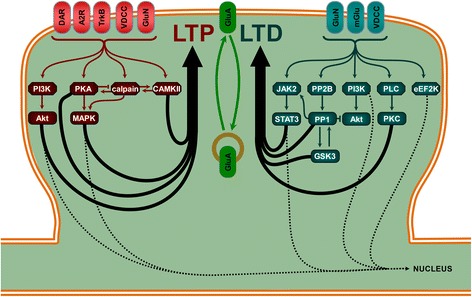
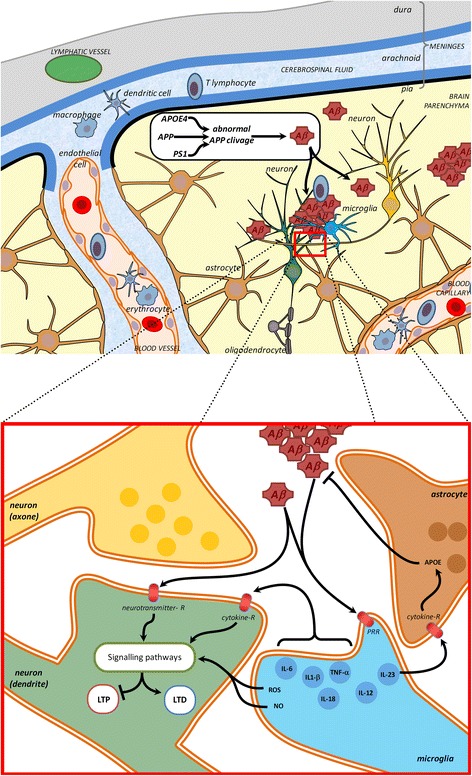
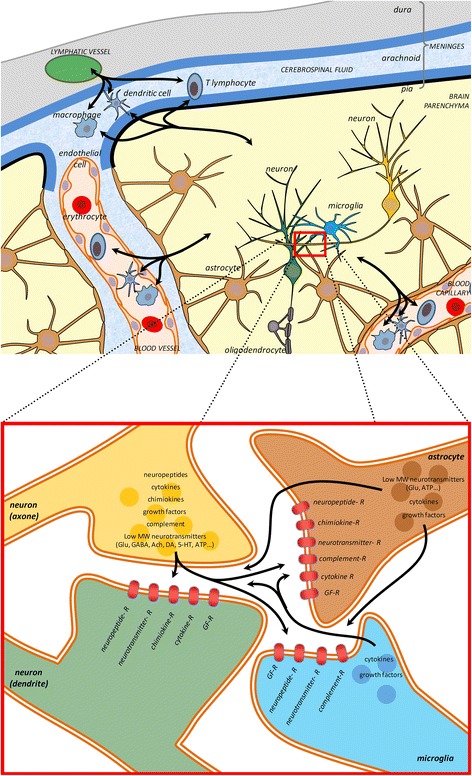
Mounting evidence suggests that the nervous and immune systems are intricately linked. Many proteins first identified in the immune system have since been detected at synapses, playing different roles in normal and pathological situations. In addition, novel immunological functions are emerging for proteins typically expressed at synapses. Under normal conditions, release of inflammatory mediators generally represents an adaptive and regulated response of the brain to immune signals. On the other hand, when immune challenge becomes prolonged and/or uncontrolled, the consequent inflammatory response leads to maladaptive synaptic plasticity and brain disorders. In this review, we will first provide a summary of the cell signaling pathways in neurons and immune cells. We will then examine how immunological mechanisms might influence synaptic function, and in particular synaptic plasticity, in the healthy and pathological CNS. A better understanding of neuro-immune system interactions in brain circuitries relevant to neuropsychiatric and neurological disorders should provide specific biomarkers to measure the status of the neuroimmunological response and help design novel neuroimmune-targeted therapeutics.
越来越多的证据表明,神经系统和免疫系统有着复杂的联系。许多最初在免疫系统中发现的蛋白质后来在突触中被检测到,在正常和病理情况下发挥着不同的作用。此外,通常在突触处表达的蛋白质也出现了新的免疫功能。在正常情况下,炎症介质的释放通常代表大脑对免疫信号的适应性和调节性反应。另一方面,当免疫挑战持续时间延长和/或失去控制时,随之而来的炎症反应会导致适应性不良的突触可塑性和脑部疾病。在这篇综述中,我们将首先总结神经元和免疫细胞中的细胞信号通路。然后,我们将研究免疫机制如何影响健康和病理中枢神经系统中的突触功能,特别是突触可塑性。更好地理解与神经精神和神经疾病相关的脑回路中的神经免疫系统相互作用,应该能提供特定的生物标志物来测量神经免疫反应的状态,并有助于设计新的针对神经免疫的治疗方法。