Youkhana Esho Qasho, Feltis Bryce, Blencowe Anton, Geso Moshi
Discipline of Medical Radiations, School of Health and Biomedical Sciences, RMIT University, Bundoora, Victoria, Australia.
Pharmaceutical Sciences Discipline, School of Health and Biomedical Sciences, RMIT University, Bundoora, Victoria, Australia.
Int J Med Sci. 2017 May 15;14(6):602-614. doi: 10.7150/ijms.19058. eCollection 2017.
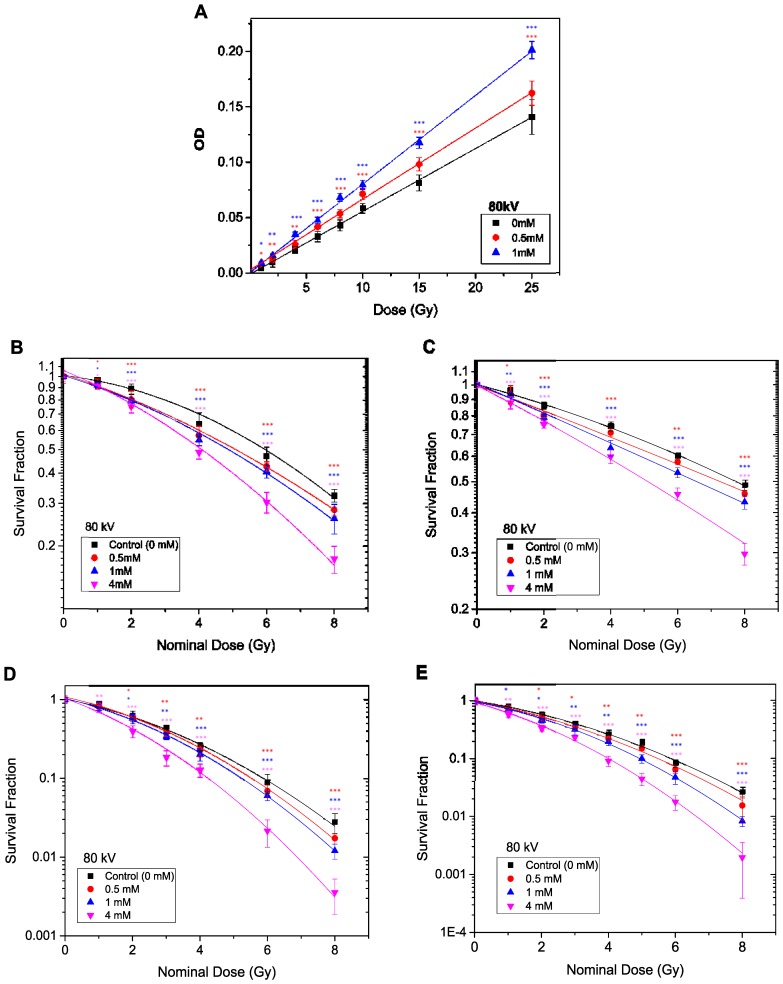
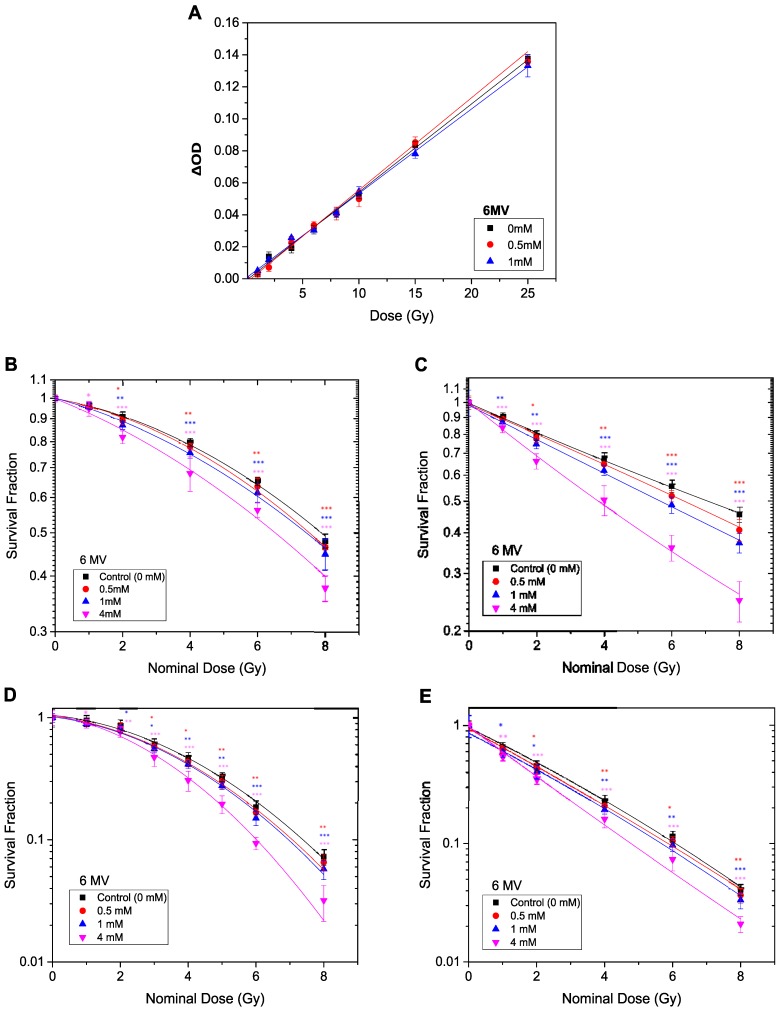
Radiosensitisation caused by titanium dioxide nanoparticles (TiO-NPs) is investigated using phantoms (PRESAGE dosimeters) and using two types of cell lines, cultured human keratinocyte (HaCaT) and prostate cancer (DU145) cells. Anatase TiO-NPs were synthesised, characterised and functionalised to allow dispersion in culture-medium for studies and halocarbons (PRESAGE chemical compositions). PRESAGE dosimeters were scanned with spectrophotometer to determine the radiation dose enhancement. Clonogenic and cell viability assays were employed to determine cells survival curves from which the dose enhancement levels "radiosensitisation" are deduced. Comparable levels of radiosensitisation were observed in both phantoms and cells at kilovoltage ranges of x-ray energies (slightly higher . Significant radiosensitisation (~67 %) of control was also noted in cells at megavoltage energies (commonly used in radiotherapy), compared to negligible levels detected by phantoms. This difference is attributed to biochemical effects, specifically the generation of reactive oxygen species (ROS) such as hydroxyl radicals (OH), which are only manifested in aqueous environments of cells and are non-existent in case of phantoms. This research shows that TiO-NPs improve the efficiency of dose delivery, which has implications for future radiotherapy treatments. Literature shows that TiO-NPs can be used as imaging agents hence with these findings renders these NPs as theranostic agents.
使用体模(PRESAGE剂量计)以及两种细胞系,即培养的人角质形成细胞(HaCaT)和前列腺癌细胞(DU145),研究了二氧化钛纳米颗粒(TiO-NPs)引起的放射增敏作用。合成、表征并功能化了锐钛矿型TiO-NPs,使其能够分散在培养基中用于研究以及卤代烃(PRESAGE化学成分)。用分光光度计扫描PRESAGE剂量计以确定辐射剂量增强情况。采用克隆形成和细胞活力测定法来确定细胞存活曲线,从中推导出剂量增强水平“放射增敏作用”。在千伏级X射线能量范围内,在体模和细胞中均观察到了相当水平的放射增敏作用(略高)。与体模检测到的可忽略不计的水平相比,在兆伏级能量(常用于放射治疗)下,细胞中也观察到了对照的显著放射增敏作用(约67%)。这种差异归因于生化效应,特别是活性氧(ROS)如羟基自由基(OH)的产生,其仅在细胞的水性环境中表现出来,而在体模中不存在。这项研究表明,TiO-NPs提高了剂量传递效率,这对未来的放射治疗有影响。文献表明,TiO-NPs可用作成像剂,因此基于这些发现,这些纳米颗粒可作为治疗诊断剂。