Babaye Abdollahi Behnaz, Malekzadeh Reza, Pournaghi Azar Fatemeh, Salehnia Fatemeh, Naseri Ali Reza, Ghorbani Marjan, Hamishehkar Hamed, Farajollahi Ali Reza
Drug Applied Research Center, Tabriz University of Medical Sciences, Tabriz, Iran.
Department of Medical Physics, School of Medicine, Tabriz University of Medical Sciences, Tabriz, Iran.
Adv Pharm Bull. 2021 Feb;11(2):212-223. doi: 10.34172/apb.2021.025. Epub 2020 Jul 13.
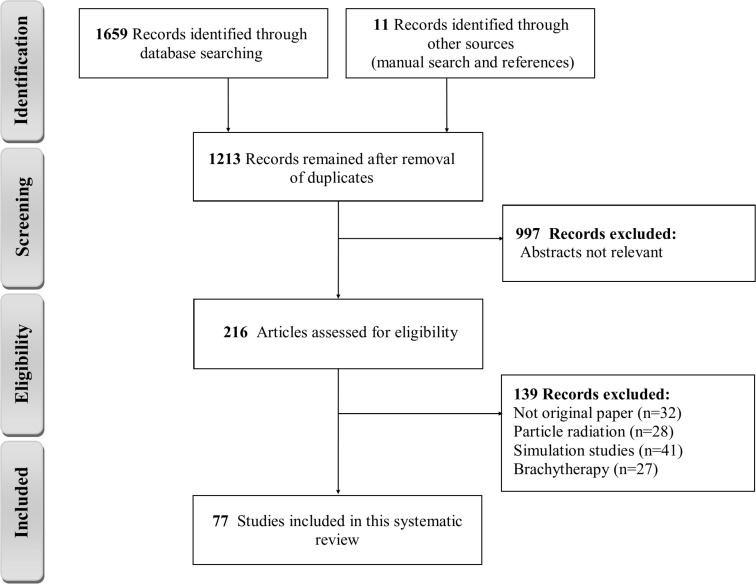
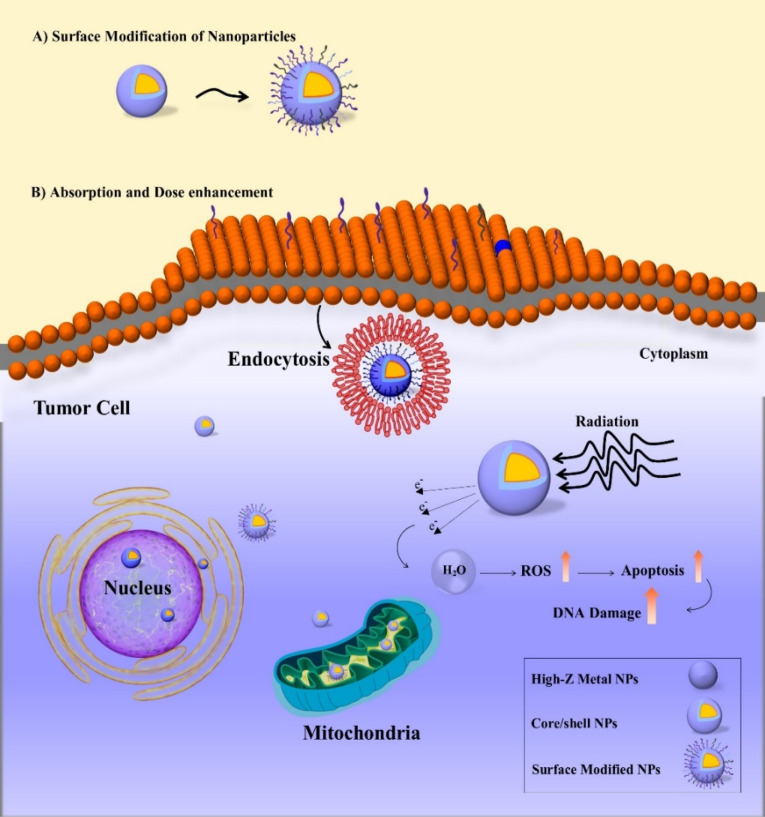
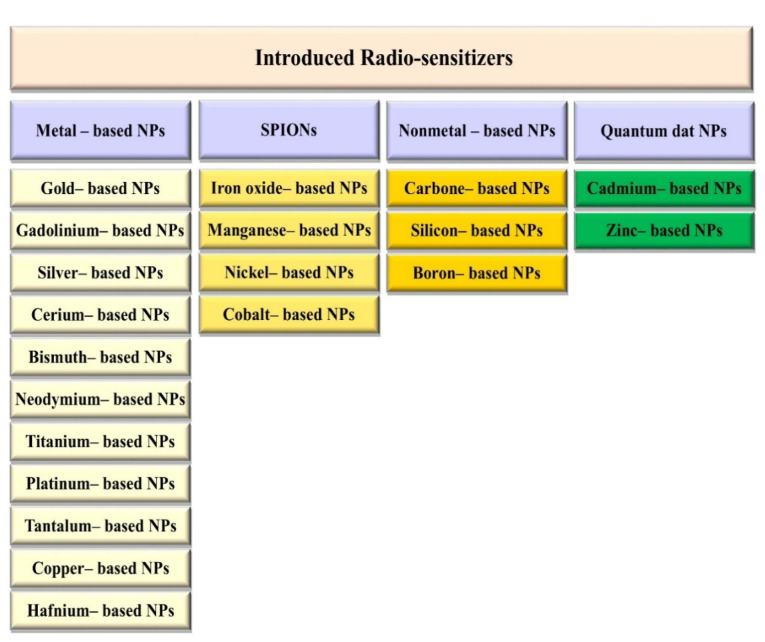
In recent years, high atomic number nanoparticles (NPs) have emerged as promising radio-enhancer agents for cancer radiation therapy due to their unique properties. Multi-disciplinary studies have demonstrated the potential of NPs-based radio-sensitizers to improve cancer therapy and tumor control at cellular and molecular levels. However, studies have shown that the dose enhancement effect of the NPs depends on the beam energy, NPs type, NPs size, NPs concentration, cell lines, and NPs delivery system. It has been believed that radiation dose enhancement of NPs is due to the three main mechanisms, but the results of some simulation studies failed to comply well with the experimental findings. Thus, this study aimed to quantitatively evaluate the physical, chemical, and biological factors of the NPs. An organized search of PubMed/Medline, Embase, ProQuest, Scopus, Cochrane and Google Scholar was performed. In total, 77 articles were thoroughly reviewed and analyzed. The studies investigated 44 different cell lines through 70 and 4 studies. A total of 32 different types of single or core-shell NPs in different sizes and concentrations have been used in the studies.
近年来,高原子序数纳米粒子(NPs)因其独特性质,已成为癌症放射治疗中颇具前景的放射增强剂。多学科研究已证明基于纳米粒子的放射增敏剂在细胞和分子水平上改善癌症治疗及肿瘤控制的潜力。然而,研究表明纳米粒子的剂量增强效应取决于束流能量、纳米粒子类型、纳米粒子大小、纳米粒子浓度、细胞系以及纳米粒子递送系统。人们认为纳米粒子的辐射剂量增强归因于三种主要机制,但一些模拟研究结果与实验发现并不完全相符。因此,本研究旨在定量评估纳米粒子的物理、化学和生物学因素。对PubMed/Medline、Embase、ProQuest、Scopus、Cochrane和谷歌学术进行了系统检索。总共对77篇文章进行了全面审查和分析。这些研究通过70项研究和4项研究调查了44种不同的细胞系。研究中总共使用了32种不同类型的不同大小和浓度的单纳米粒子或核壳纳米粒子。