Rosemann Stephanie, Gießing Carsten, Özyurt Jale, Carroll Rebecca, Puschmann Sebastian, Thiel Christiane M
Biological Psychology, Department of Psychology, European Medical School, Carl von Ossietzky Universität OldenburgOldenburg, Germany.
Cluster of Excellence "Hearing4all", Carl von Ossietzky Universität OldenburgOldenburg, Germany.
Front Hum Neurosci. 2017 Jun 7;11:294. doi: 10.3389/fnhum.2017.00294. eCollection 2017.
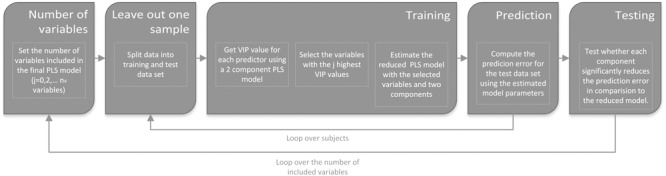
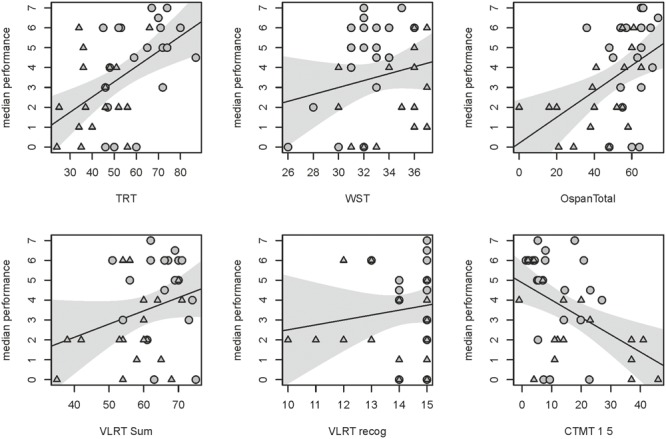
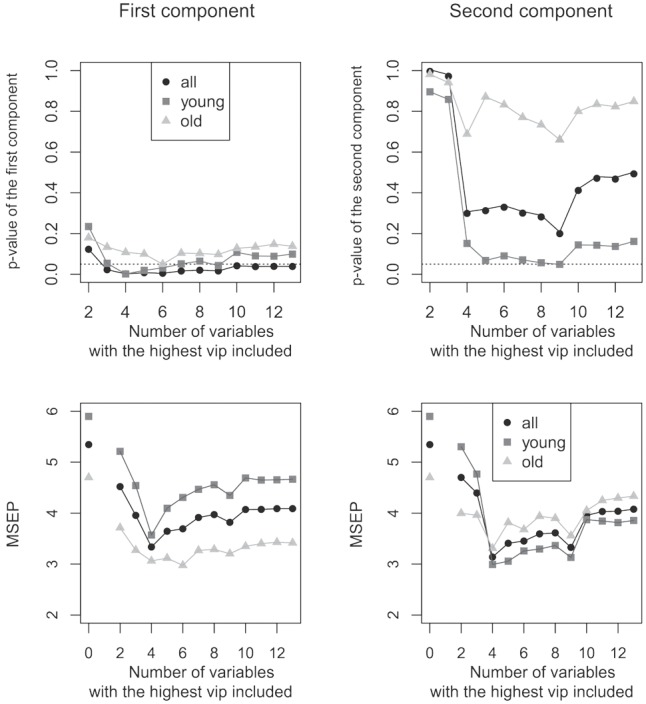
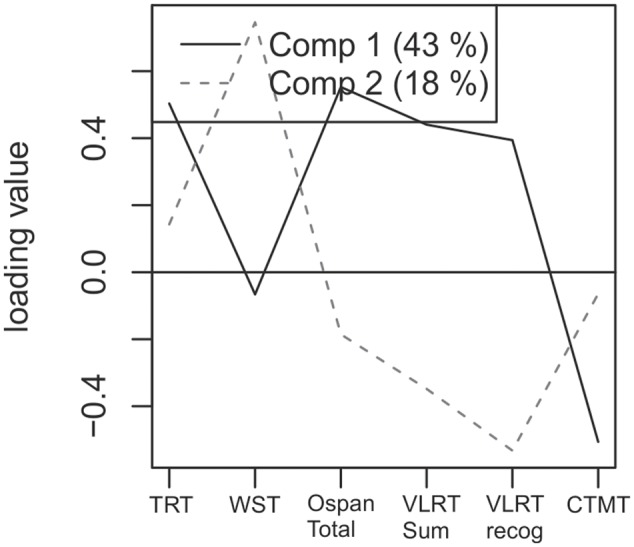
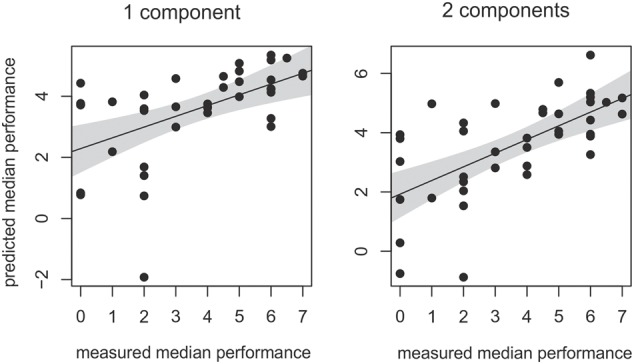
Noise-vocoded speech is commonly used to simulate the sensation after cochlear implantation as it consists of spectrally degraded speech. High individual variability exists in learning to understand both noise-vocoded speech and speech perceived through a cochlear implant (CI). This variability is partly ascribed to differing cognitive abilities like working memory, verbal skills or attention. Although clinically highly relevant, up to now, no consensus has been achieved about which cognitive factors exactly predict the intelligibility of speech in noise-vocoded situations in healthy subjects or in patients after cochlear implantation. We aimed to establish a test battery that can be used to predict speech understanding in patients prior to receiving a CI. Young and old healthy listeners completed a noise-vocoded speech test in addition to cognitive tests tapping on verbal memory, working memory, lexicon and retrieval skills as well as cognitive flexibility and attention. Partial-least-squares analysis revealed that six variables were important to significantly predict vocoded-speech performance. These were the ability to perceive visually degraded speech tested by the Text Reception Threshold, vocabulary size assessed with the Multiple Choice Word Test, working memory gauged with the Operation Span Test, verbal learning and recall of the Verbal Learning and Retention Test and task switching abilities tested by the Comprehensive Trail-Making Test. Thus, these cognitive abilities explain individual differences in noise-vocoded speech understanding and should be considered when aiming to predict hearing-aid outcome.
噪声编码语音通常用于模拟人工耳蜗植入后的感觉,因为它由频谱退化的语音组成。在学习理解噪声编码语音和通过人工耳蜗(CI)感知的语音方面,个体差异很大。这种差异部分归因于不同的认知能力,如工作记忆、语言技能或注意力。尽管在临床上具有高度相关性,但到目前为止,对于哪些认知因素能准确预测健康受试者或人工耳蜗植入患者在噪声编码情况下的语音可懂度,尚未达成共识。我们旨在建立一套测试组合,用于在患者接受人工耳蜗植入之前预测其语音理解能力。年轻和年长的健康受试者除了完成认知测试外,还完成了一项噪声编码语音测试,这些认知测试涉及言语记忆、工作记忆、词汇和检索技能以及认知灵活性和注意力。偏最小二乘分析表明,六个变量对于显著预测编码语音表现很重要。这些变量包括通过文本接收阈值测试的视觉退化语音感知能力、用多项选择单词测试评估的词汇量、用操作广度测试测量的工作记忆、言语学习与记忆测试中的言语学习和回忆以及通过综合连线测试测试的任务转换能力。因此,这些认知能力解释了噪声编码语音理解中的个体差异,在旨在预测助听器效果时应予以考虑。