Yang Jian-Fei, Chen Yun-Zhu, Kawabata Saneyuki, Li Yu-Hua, Wang Yu
College of Life Science, Northeast Forestry University, Harbin 150040, China.
Graduate School of Agricultural and Life Sciences, The University of Tokyo, Yayoi, Bunkyo Tokyo 113-8654, Japan.
Int J Mol Sci. 2017 Jun 22;18(7):1288. doi: 10.3390/ijms18071288.
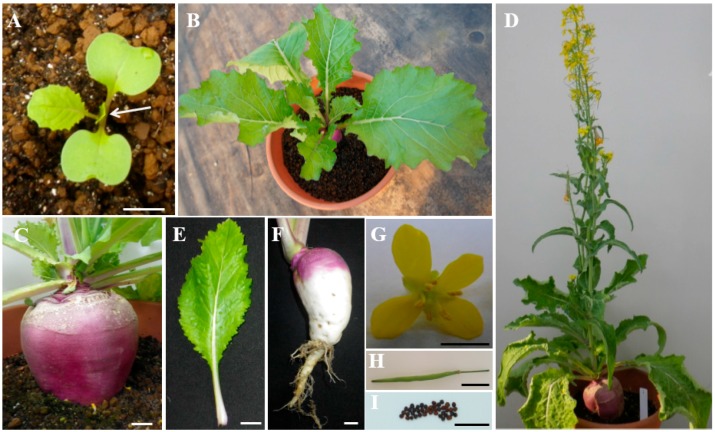
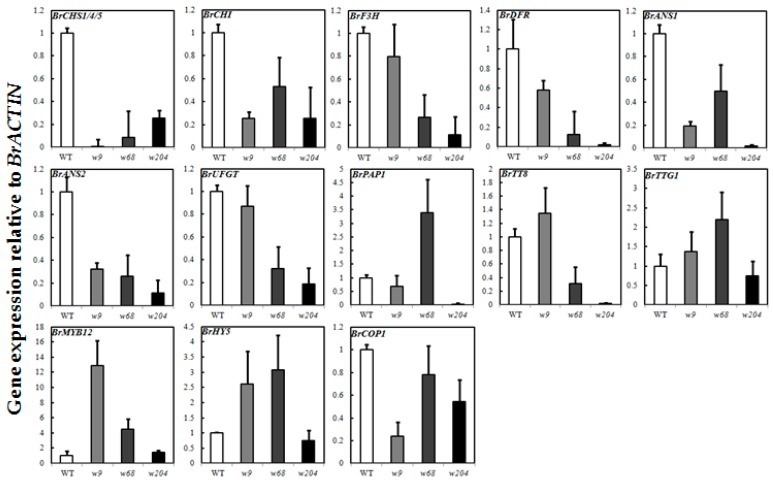
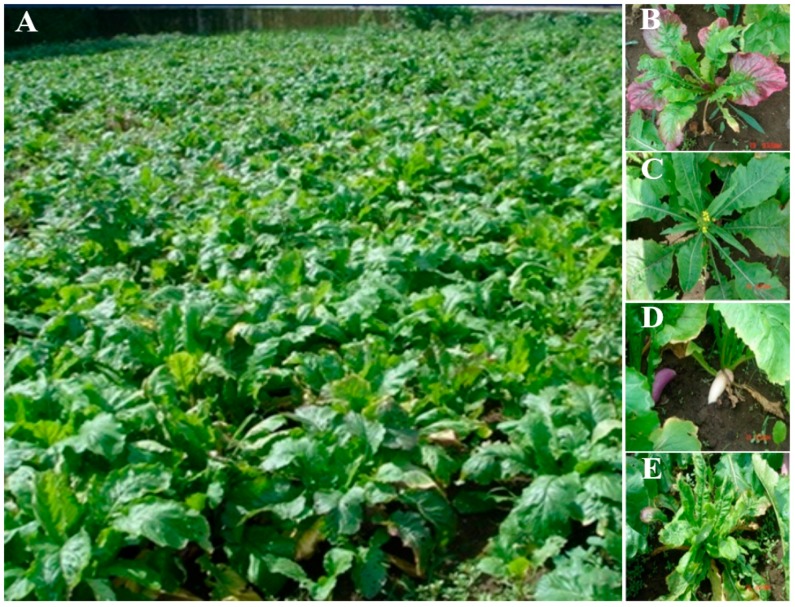
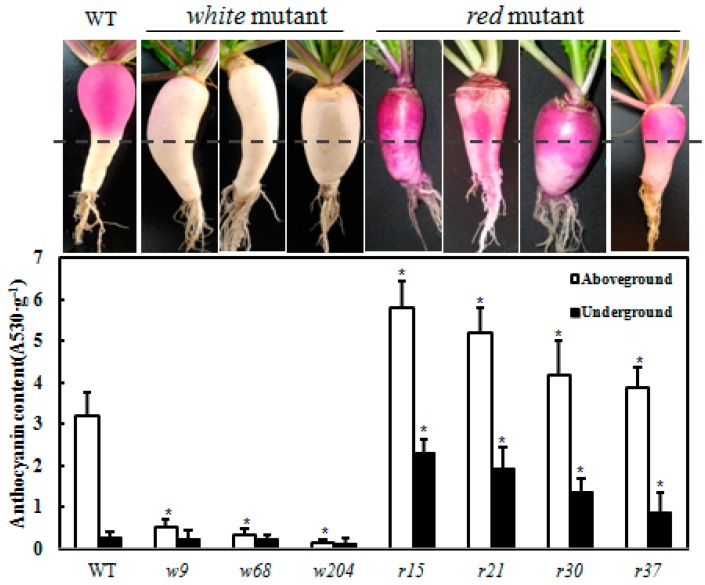
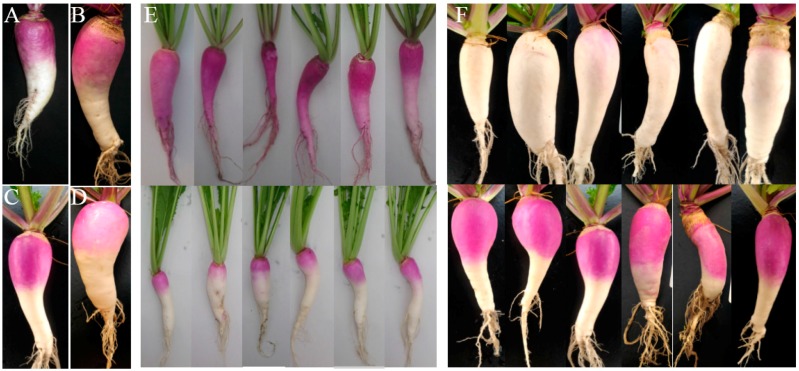
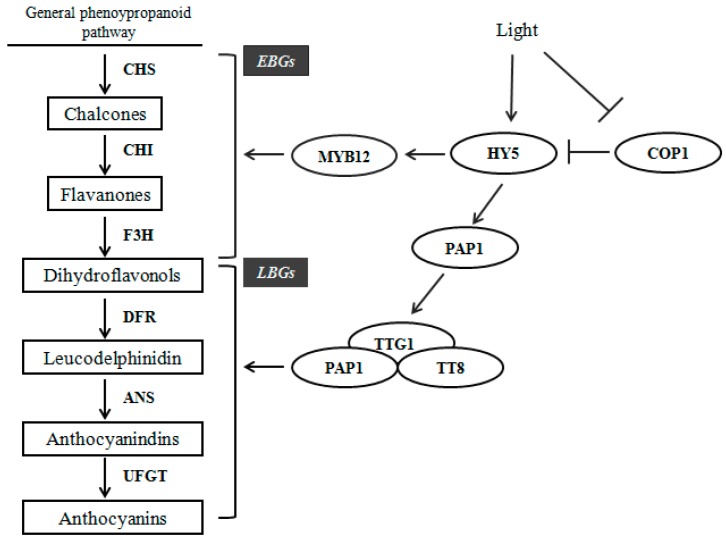
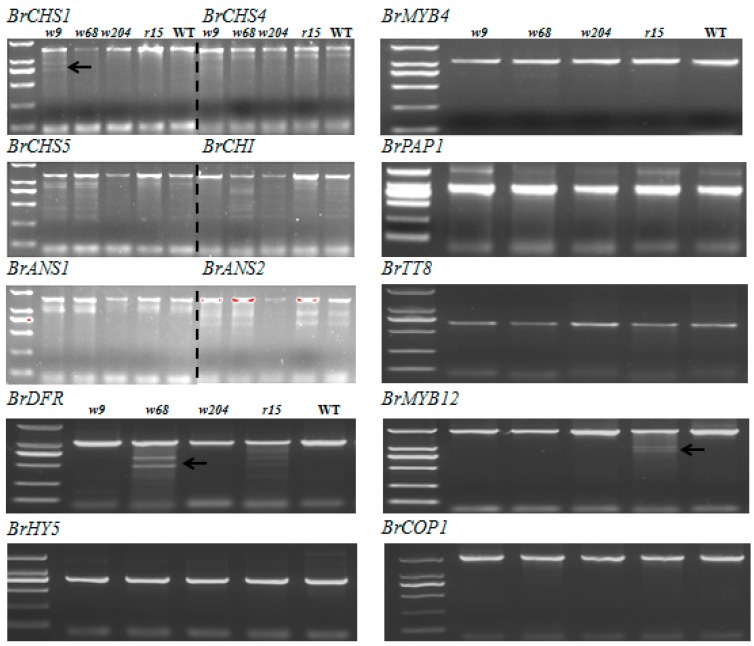
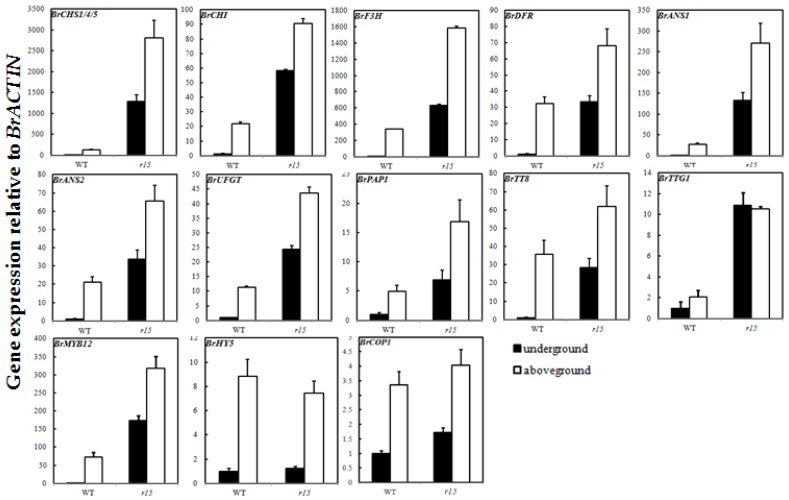
The epidermis of swollen storage roots in purple cultivars of turnip "Tsuda" () accumulates anthocyanin in a light-dependent manner, especially in response to UV-A light, of which the mechanism is unclear. In this study, we mutagenized 15,000 seeds by 0.5% (/) ethyl methane sulfonate (EMS) and obtained 14 mutants with abnormal anthocyanin production in their epidermis of swollen storage roots. These mutants were classified into two groups: the mutants with constitutive anthocyanin accumulation in their epidermis of storage roots even in underground parts in darkness and the mutants without anthocyanin accumulation in the epidermis of storage roots in aboveground parts exposed to sunlight. Test cross analysis demonstrated that , , , , , and contained different mutations responsible for their phenotypic variations. Further genetic analysis of four target mutants (, , and ) indicated that each of them was controlled by a different recessive gene. Intriguingly, the expression profiles of anthocyanin biosynthesis genes, including structural and regulatory genes, coincided with their anthocyanin levels in the epidermis of storage roots in the four target mutants. We proposed that potential genes responsible for the mutations should be upstream factors of the anthocyanin biosynthesis pathway in turnips, which provided resources to further investigate the mechanisms of light-induced anthocyanin accumulation.
芜菁“津田”紫色品种的膨大贮藏根表皮以光依赖方式积累花青素,尤其是对UV-A光的响应,但其机制尚不清楚。在本研究中,我们用0.5%(/)甲磺酸乙酯(EMS)诱变了15000粒种子,获得了14个在膨大贮藏根表皮花青素产生异常的突变体。这些突变体分为两组:一组是即使在黑暗中的地下部分,贮藏根表皮也组成型积累花青素的突变体;另一组是在暴露于阳光下的地上部分,贮藏根表皮不积累花青素的突变体。测交分析表明,、、、、、和含有导致其表型变异的不同突变。对四个目标突变体(、、和)的进一步遗传分析表明,它们各自受一个不同的隐性基因控制。有趣的是,包括结构基因和调控基因在内的花青素生物合成基因的表达谱与其在四个目标突变体贮藏根表皮中的花青素水平一致。我们推测,导致这些突变的潜在基因应该是芜菁花青素生物合成途径的上游因子,这为进一步研究光诱导花青素积累的机制提供了资源。