Applied Sports Science Technology and Medicine Research Centre (A-STEM), College of Engineering, Swansea University, A101 Engineering East, Bay Campus, Fabian Way, Swansea, SA1 8EN, UK.
School of Sport Health and Exercise Science, University of Western Australia, Perth, WA, Australia.
Sports Med. 2017 Nov;47(11):2363-2374. doi: 10.1007/s40279-017-0753-8.
Whilst there is increasing interest in the efficacy of high-intensity interval training in children and adolescents as a time-effective method of eliciting health benefits, there remains little consensus within the literature regarding the most effective means for delivering a high-intensity interval training intervention. Given the global health issues surrounding childhood obesity and associated health implications, the identification of effective intervention strategies is imperative.
The aim of this review was to examine high-intensity interval training as a means of influencing key health parameters and to elucidate the most effective high-intensity interval training protocol.
Studies were included if they: (1) studied healthy children and/or adolescents (aged 5-18 years); (2) prescribed an intervention that was deemed high intensity; and (3) reported health-related outcome measures.
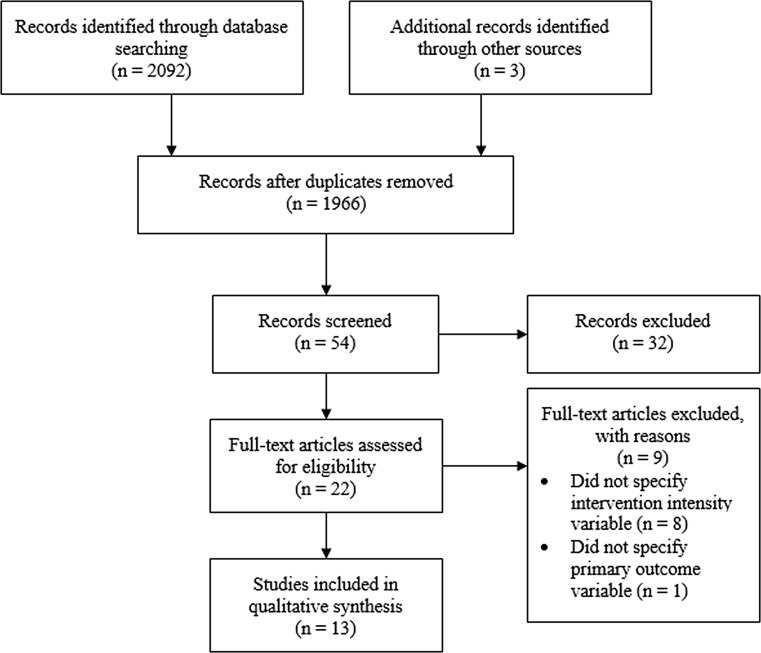
A total of 2092 studies were initially retrieved from four databases. Studies that were deemed to meet the criteria were downloaded in their entirety and independently assessed for relevance by two authors using the pre-determined criteria. From this, 13 studies were deemed suitable. This review found that high-intensity interval training in children and adolescents is a time-effective method of improving cardiovascular disease biomarkers, but evidence regarding other health-related measures is more equivocal. Running-based sessions, at an intensity of >90% heart rate maximum/100-130% maximal aerobic velocity, two to three times a week and with a minimum intervention duration of 7 weeks, elicit the greatest improvements in participant health.
While high-intensity interval training improves cardiovascular disease biomarkers, and the evidence supports the effectiveness of running-based sessions, as outlined above, further recommendations as to optimal exercise duration and rest intervals remain ambiguous owing to the paucity of literature and the methodological limitations of studies presently available.
高强度间歇训练作为一种有效且省时的方法,可以在儿童和青少年中产生健康益处,因此越来越受到关注,但在文献中,对于实施高强度间歇训练干预的最有效方法,仍然没有达成共识。鉴于儿童肥胖及其相关健康影响所带来的全球健康问题,确定有效的干预策略至关重要。
本综述的目的是检查高强度间歇训练作为影响关键健康参数的一种手段,并阐明最有效的高强度间歇训练方案。
如果研究符合以下标准,则将其纳入研究:(1)研究健康的儿童和/或青少年(年龄 5-18 岁);(2)规定了被认为是高强度的干预措施;(3)报告了与健康相关的测量结果。
最初从四个数据库中检索到 2092 项研究。将被认为符合标准的研究全部下载,并由两位作者使用预先确定的标准独立评估其相关性。从中,有 13 项研究被认为是合适的。本综述发现,高强度间歇训练在儿童和青少年中是一种有效改善心血管疾病生物标志物的方法,但关于其他健康相关指标的证据则更为模棱两可。基于跑步的训练,强度>90%最大心率/100-130%最大有氧速度,每周 2-3 次,干预时间至少 7 周,可以最大程度地提高参与者的健康水平。
虽然高强度间歇训练可以改善心血管疾病生物标志物,并且上述证据支持基于跑步的训练的有效性,但由于文献匮乏以及目前可用研究的方法学限制,关于最佳运动持续时间和休息间隔的进一步建议仍然不够明确。