Department of Neuroscience, Mayo Clinic, 4500 San Pablo Rd, Jacksonville, FL, 32224, USA.
Neurobiology of Disease Graduate Program, Mayo Clinic Graduate School of Biomedical Sciences, Jacksonville, FL, USA.
Acta Neuropathol Commun. 2017 Jun 23;5(1):51. doi: 10.1186/s40478-017-0455-3.
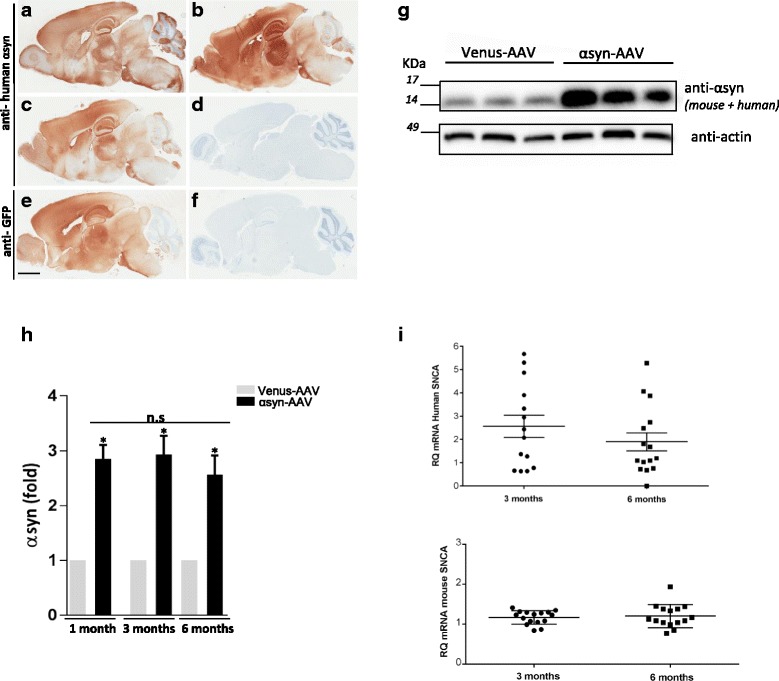
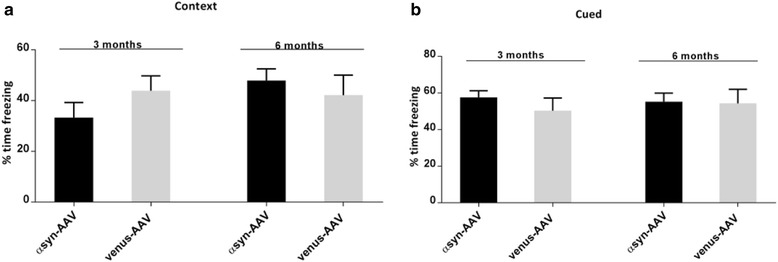
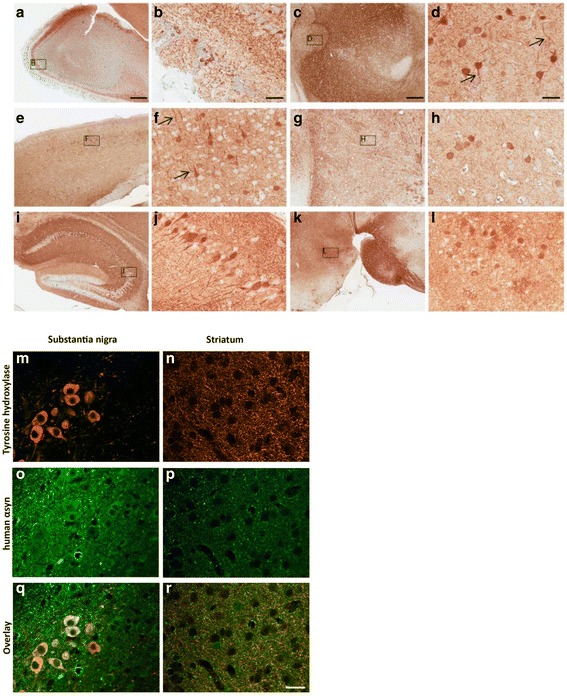
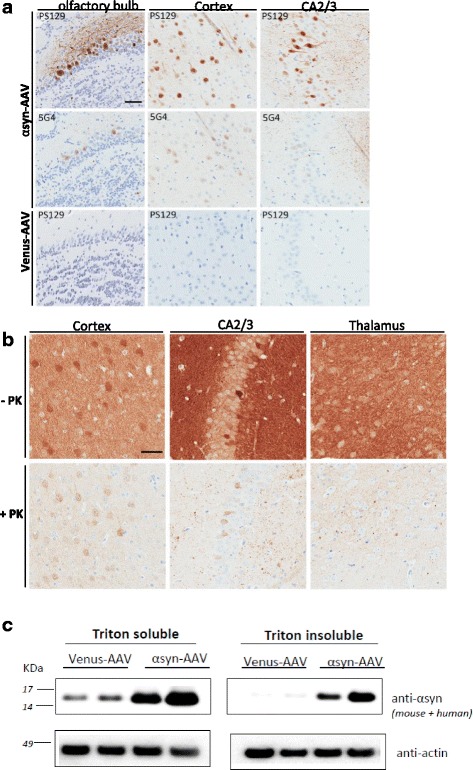
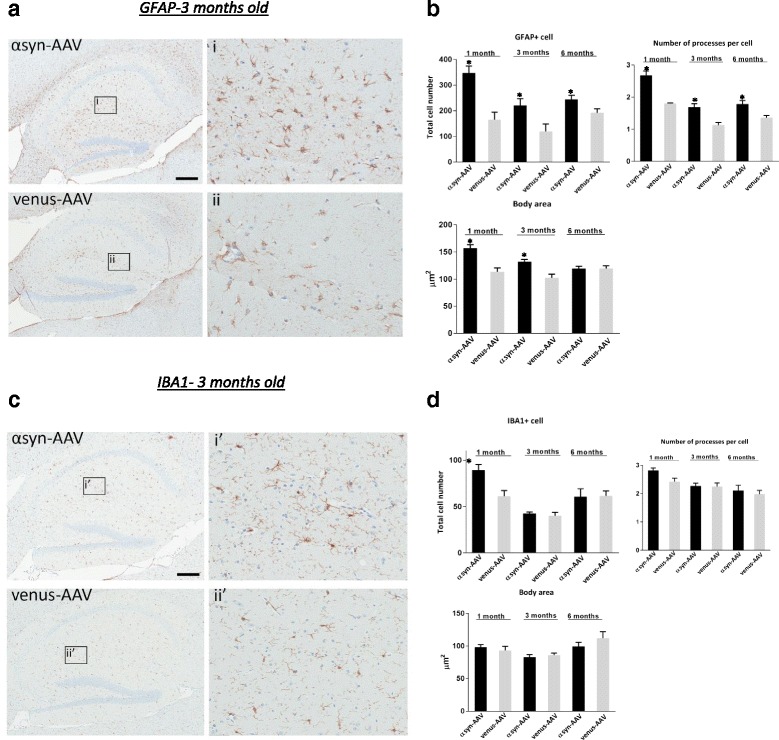
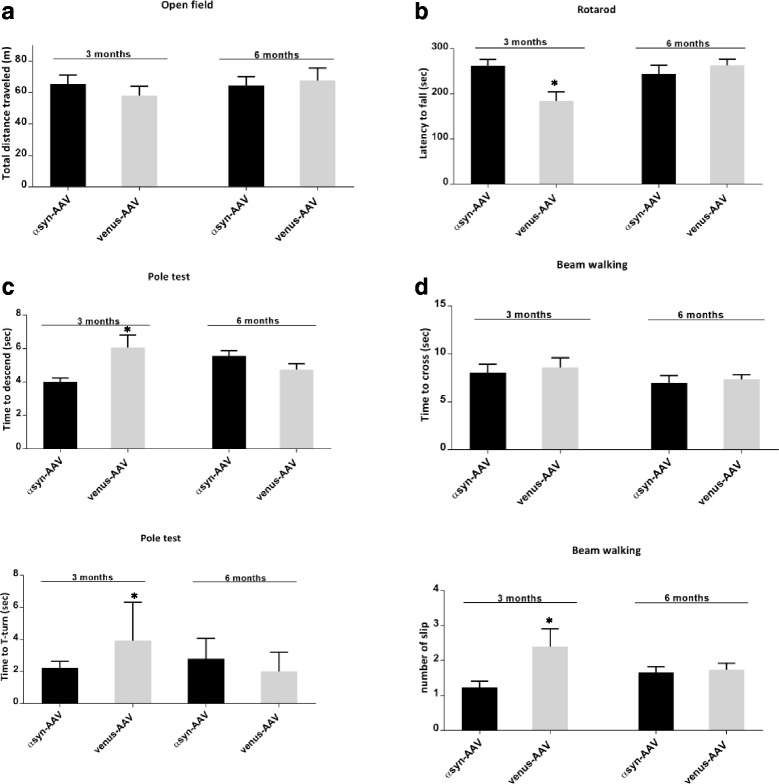
Abnormal accumulation of alpha-synuclein (αsyn) is a pathological hallmark of Lewy body related disorders such as Parkinson's disease and Dementia with Lewy body disease. During the past two decades, a myriad of animal models have been developed to mimic pathological features of synucleinopathies by over-expressing human αsyn. Although different strategies have been used, most models have little or no reliable and predictive phenotype. Novel animal models are a valuable tool for understanding neuronal pathology and to facilitate development of new therapeutics for these diseases. Here, we report the development and characterization of a novel model in which mice rapidly express wild-type αsyn via somatic brain transgenesis mediated by adeno-associated virus (AAV). At 1, 3, and 6 months of age following intracerebroventricular (ICV) injection, mice were subjected to a battery of behavioral tests followed by pathological analyses of the brains. Remarkably, significant levels of αsyn expression are detected throughout the brain as early as 1 month old, including olfactory bulb, hippocampus, thalamic regions and midbrain. Immunostaining with a phospho-αsyn (pS129) specific antibody reveals abundant pS129 expression in specific regions. Also, pathologic αsyn is detected using the disease specific antibody 5G4. However, this model did not recapitulate behavioral phenotypes characteristic of rodent models of synucleinopathies. In fact no deficits in motor function or cognition were observed at 3 or 6 months of age. Taken together, these findings show that transduction of neonatal mouse with AAV-αsyn can successfully lead to rapid, whole brain transduction of wild-type human αsyn, but increased levels of wildtype αsyn do not induce behavior changes at an early time point (6 months), despite pathological changes in several neurons populations as early as 1 month.
异常积聚的α-突触核蛋白(αsyn)是路易体相关疾病(如帕金森病和路易体痴呆)的病理标志。在过去的二十年中,已经开发了许多动物模型,通过过度表达人类αsyn 来模拟突触核蛋白病的病理特征。尽管使用了不同的策略,但大多数模型几乎没有可靠的、可预测的表型。新型动物模型是了解神经元病理学和为这些疾病开发新疗法的有价值的工具。在这里,我们报告了一种新型模型的开发和特征描述,该模型通过腺相关病毒(AAV)介导的体细胞核移植使小鼠快速表达野生型αsyn。在脑室内(ICV)注射后 1、3 和 6 个月,对小鼠进行一系列行为测试,然后对大脑进行病理分析。值得注意的是,早在 1 个月大时,就可以在整个大脑中检测到明显水平的αsyn 表达,包括嗅球、海马体、丘脑区域和中脑。用磷酸化αsyn(pS129)特异性抗体进行免疫染色显示在特定区域有大量的 pS129 表达。此外,使用疾病特异性抗体 5G4 检测到病理性αsyn。然而,该模型没有重现突触核蛋白病啮齿动物模型的特征性行为表型。事实上,在 3 或 6 个月大时,没有观察到运动功能或认知缺陷。总之,这些发现表明,用 AAV-αsyn 转导新生小鼠可以成功地导致野生型人类αsyn 的快速、全脑转导,但在早期(6 个月),即使在 1 个月大时就已经出现了几个神经元群体的病理变化,高水平的野生型αsyn 并没有引起行为变化。