Shanghai Huashan Hospital, Fudan University, Shanghai, China; MassGeneral Institute for Neurodegenerative Disease, Department of Neurology, Massachusetts General Hospital, Harvard Medical School, Boston, USA.
MassGeneral Institute for Neurodegenerative Disease, Department of Neurology, Massachusetts General Hospital, Harvard Medical School, Boston, USA.
EBioMedicine. 2018 Mar;29:13-22. doi: 10.1016/j.ebiom.2018.01.035. Epub 2018 Jan 31.
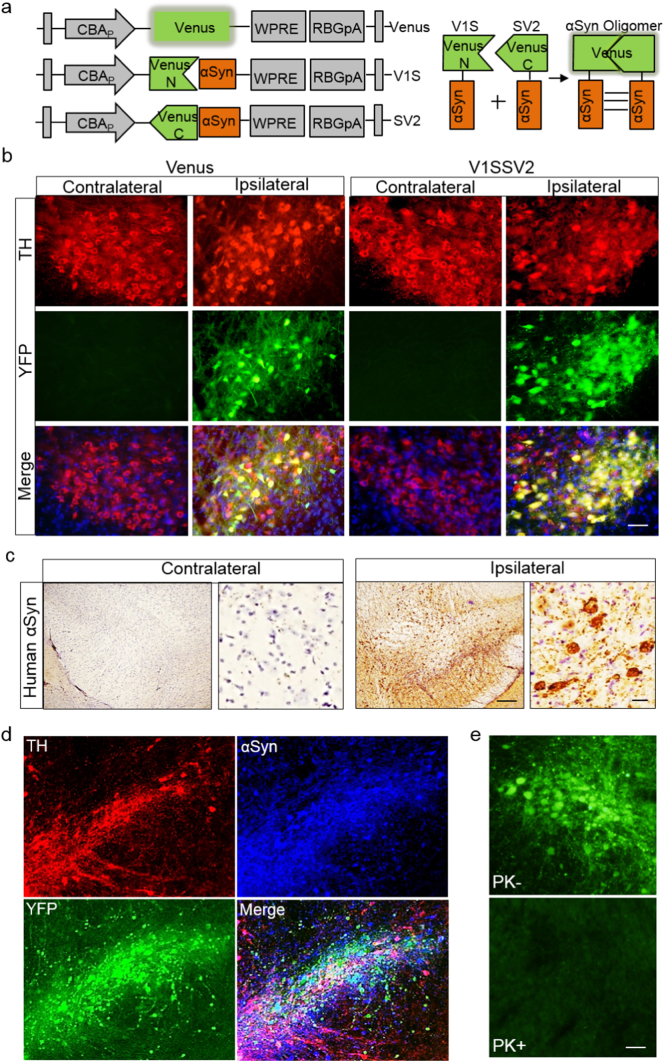
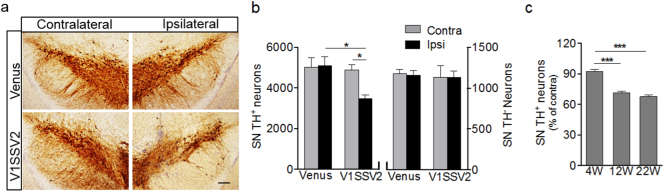
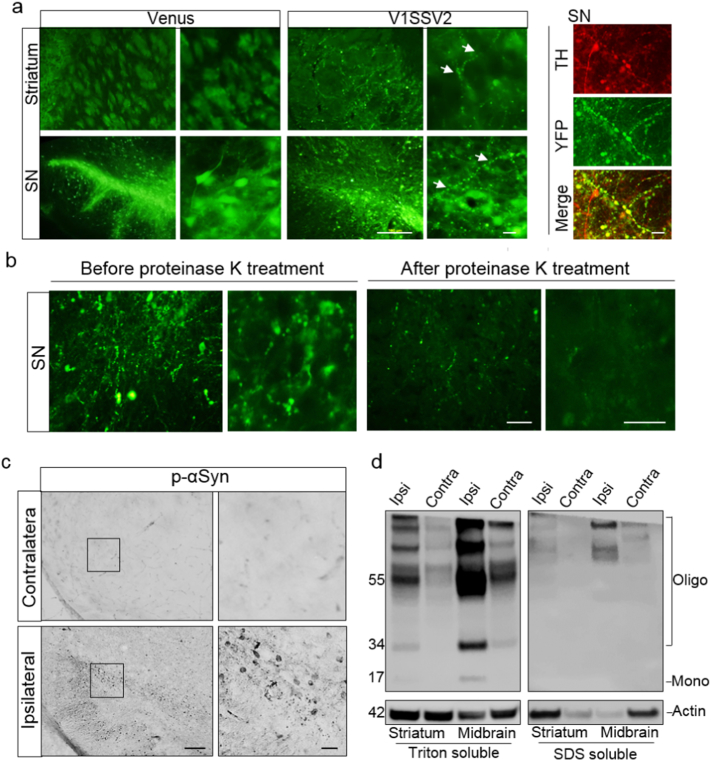
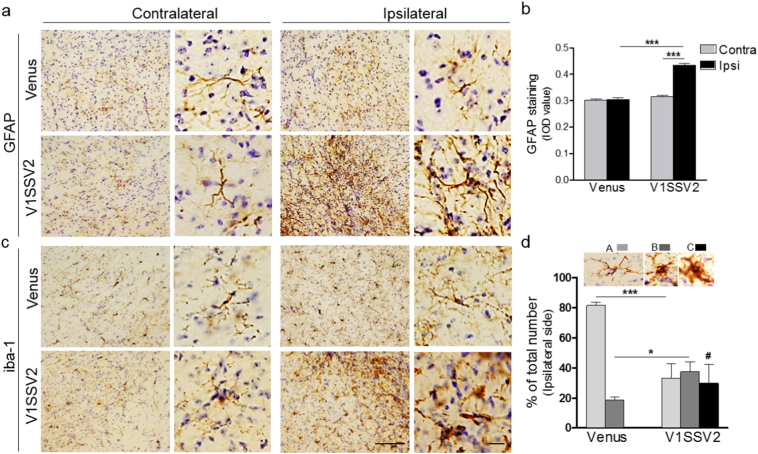
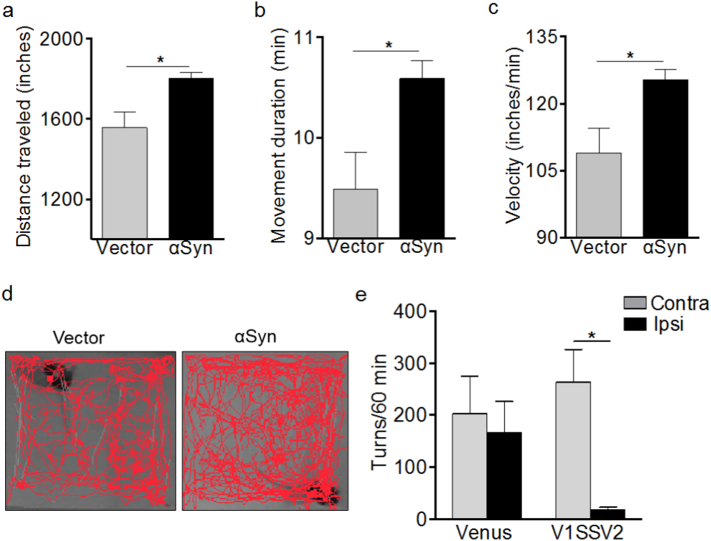
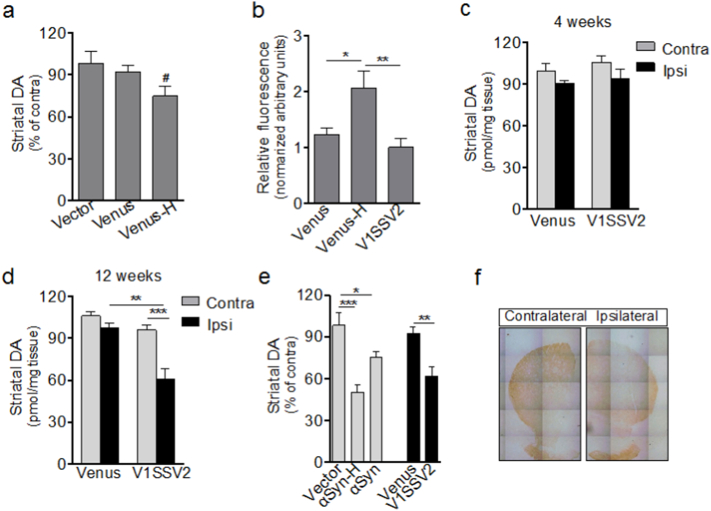
Alpha-synuclein (αSyn) is encoded by the first causal gene identified in Parkinson's disease (PD) and is the main component of Lewy bodies, a pathological hallmark of PD. aSyn-based animal models have contributed to our understanding of PD pathophysiology and to the development of therapeutics. Overexpression of human wildtype αSyn by viral vectors in rodents recapitulates the loss of dopaminergic neurons from the substantia nigra, another defining pathological feature of the disease. The development of a rat model exhibiting bimolecular fluorescence complementation (BiFC) of αSyn by recombinant adeno-associated virus facilitates detection of the toxic αSyn oligomers species. We report here neurochemical, neuropathological and behavioral characterization of BiFC of αSyn in mice. Overexpression and oligomerization of αSyn through BiFC is detected by conjugated fluorescence. Reduced striatal dopamine and loss of nigral dopaminergic neurons are accompanied neuroinflammation and abnormal motor activities. Our mouse model may provide a valuable tool to study the role of αSyn in PD and to explore therapeutic approaches.
α-突触核蛋白(αSyn)是帕金森病(PD)中首个被确定的致病基因所编码,也是路易体的主要成分,路易体是 PD 的一种病理标志。基于 αSyn 的动物模型有助于我们理解 PD 的病理生理学,并为治疗方法的发展做出贡献。通过病毒载体在啮齿动物中过表达人类野生型 αSyn,可重现黑质多巴胺能神经元的丧失,这是该疾病的另一个明确的病理特征。通过重组腺相关病毒实现 αSyn 双分子荧光互补(BiFC)的大鼠模型的发展,有助于检测到有毒的 αSyn 寡聚物。我们在此报告 BiFC 的 αSyn 在小鼠中的神经化学、神经病理学和行为特征。通过共轭荧光检测到 BiFC 中 αSyn 的过表达和寡聚化。纹状体多巴胺减少和黑质多巴胺能神经元丧失伴随着神经炎症和异常运动活动。我们的小鼠模型可能为研究 αSyn 在 PD 中的作用和探索治疗方法提供了有价值的工具。