Healthy Aging Research Center, Graduate Institute of Rehabilitation Science, Medical Collage, Chang Gung University, Tao-Yuan, Taiwan.
Heart Failure Center, Department of Physical Medicine and Rehabilitation, Chang Gung Memorial Hospital, Keelung, Taiwan.
Sci Rep. 2017 Jun 23;7(1):4191. doi: 10.1038/s41598-017-04035-7.
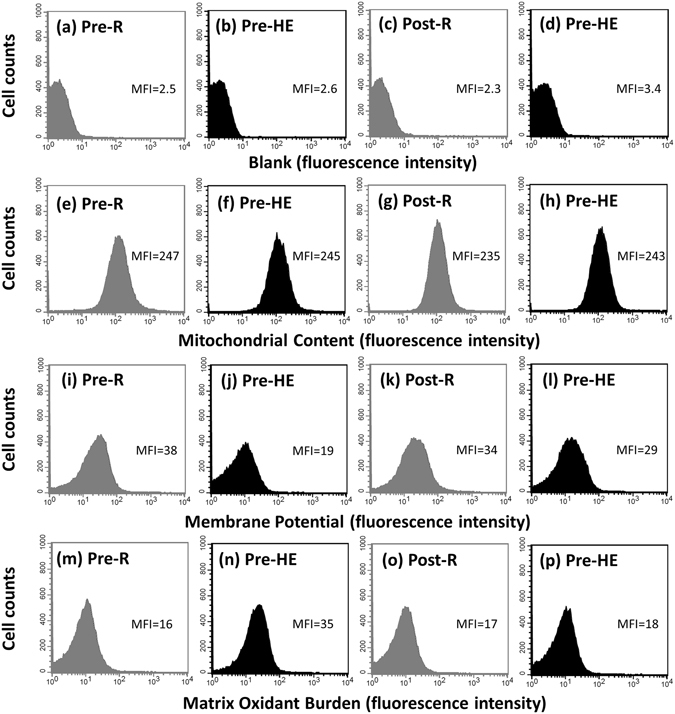
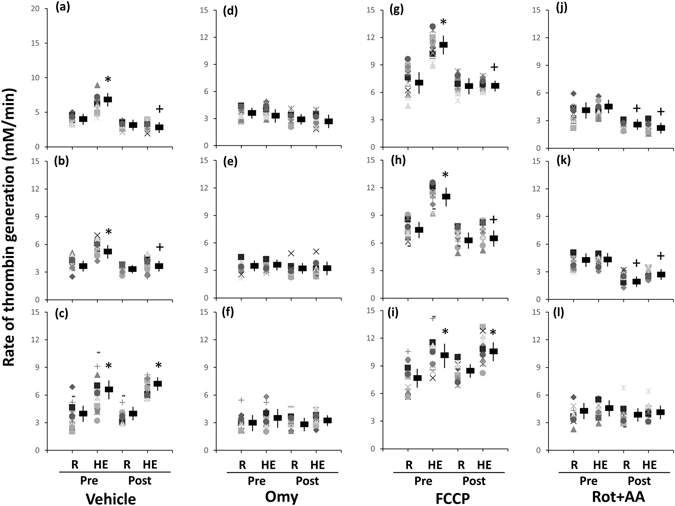
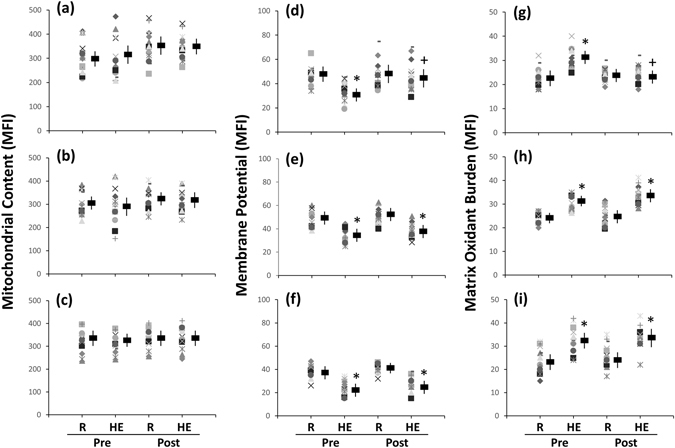
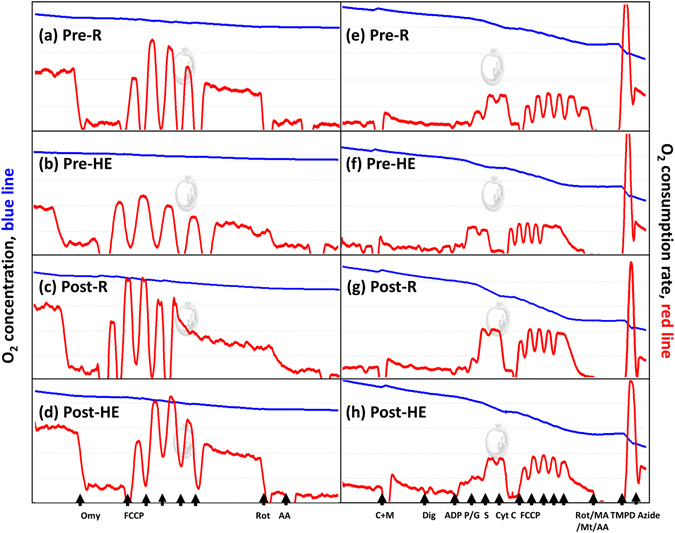
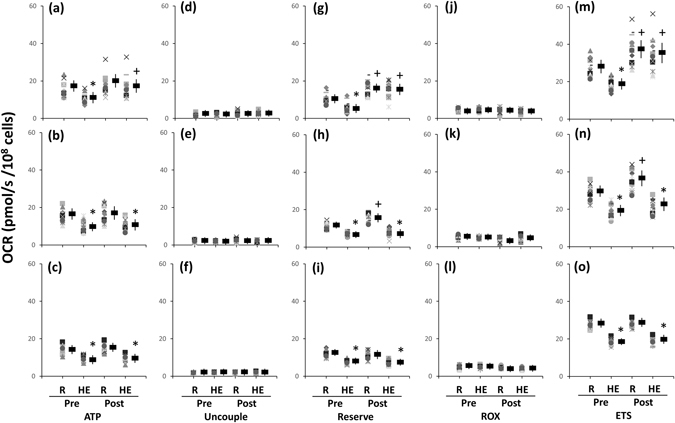
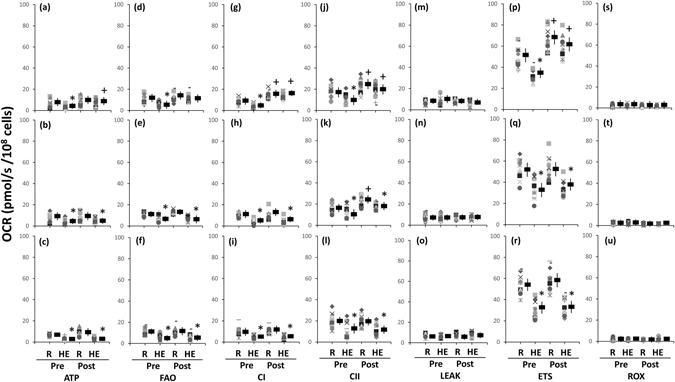
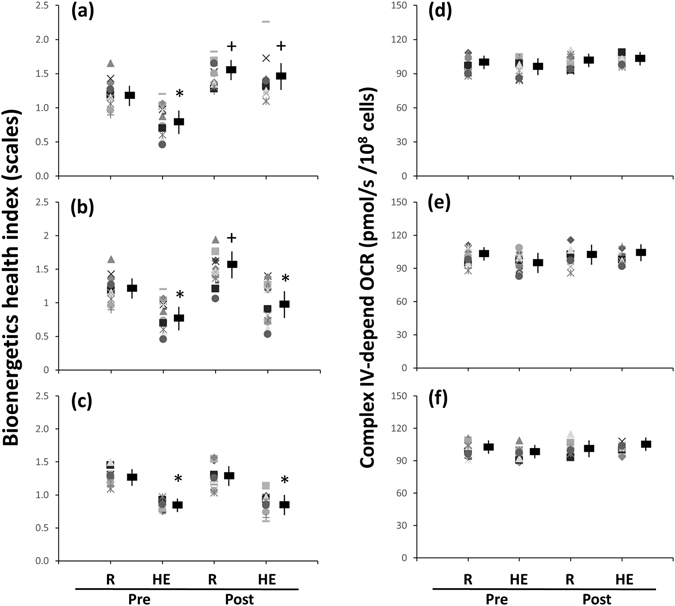
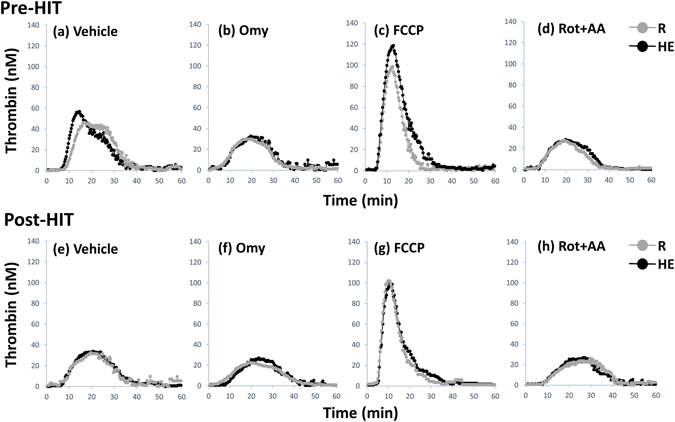
This study elucidates how high-intensity interval training (HIT) and moderate-intensity continuous training (MCT) affect mitochondrial functionality and thrombin generation (TG) in platelets following hypoxic exercise (HE, 100 W under 12% O for 30 min). Forty-five healthy sedentary males were randomized to engage either HIT (3-minute intervals at 40% and 80%VO, n = 15) or MCT (sustained 60%VO, n = 15) for 30 minutes/day, 5 days/week for 6 weeks, or to a control group (CTL, n = 15) that did not received exercise intervention. Before the intervention, HE (i) reduced the ATP-linked O consumption rate (OCR), the reserve capacity of OCR, and the activities of citrate synthase (CS) and succinate dehydrogenase (SDH), (ii) lowered mitochondrial membrane potential (MP) and elevated matrix oxidant burden (MOB) in platelets, and (iii) enhanced dynamic TG in platelet-rich plasma (PRP), which responses were attenuated by pretreating PRP with oligomycin or rotenone/antimycin A. However, 6-week HIT (i) increased mitochondrial OCR capacity with enhancing the CS and SDH activities and (ii) heightened mitochondrial MP with depressing MOB in platelets following HE, compared to those of MCT and CTL. Moreover, the HIT suppressed the HE-promoted dynamic TG in PRP. Hence, we conclude that the HIT simultaneously improves mitochondrial bioenergetics and suppresses dynamic TG in platelets undergoing hypoxia.
本研究阐明了高强度间歇训练(HIT)和中等强度持续训练(MCT)如何影响缺氧运动(HE,在 12%O 下以 100 W 运动 30 分钟)后血小板中的线粒体功能和凝血酶生成(TG)。45 名健康的久坐男性被随机分为 HIT 组(3 分钟间隔,40%和 80%VO,n = 15)、MCT 组(持续 60%VO,n = 15)或对照组(CTL,n = 15),分别接受 30 分钟/天、每周 5 天的训练,或不进行运动干预。在干预之前,HE 降低了(i)ATP 连接的耗氧率(OCR)、OCR 的储备能力、柠檬酸合酶(CS)和琥珀酸脱氢酶(SDH)的活性,(ii)降低了血小板中的线粒体膜电位(MP)并增加了基质氧化剂负荷(MOB),(iii)增强了富含血小板的血浆(PRP)中的动态 TG,而 PRP 中用寡霉素或鱼藤酮/抗霉素 A 预处理可以减弱这些反应。然而,与 MCT 和 CTL 相比,6 周的 HIT 增强了(i)CS 和 SDH 活性,增加了线粒体 OCR 能力,(ii)降低了 MOB,提高了血小板中的线粒体 MP。此外,HIT 抑制了 HE 促进的 PRP 中的动态 TG。因此,我们得出结论,HIT 同时改善了缺氧后血小板的线粒体生物能学和抑制了动态 TG。