Jiang Honglei, Wu Dan, Xu Dong, Yu Hao, Zhao Zheming, Ma Dongyan, Jin Junzhe
General Surgery department, the fourth affiliated hospital of China medical university, Shenyang, China.
Infectious disease department, Shengjing hospital of China medical university, Shenyang, China.
Int J Biol Sci. 2017 May 16;13(6):701-711. doi: 10.7150/ijbs.17534. eCollection 2017.
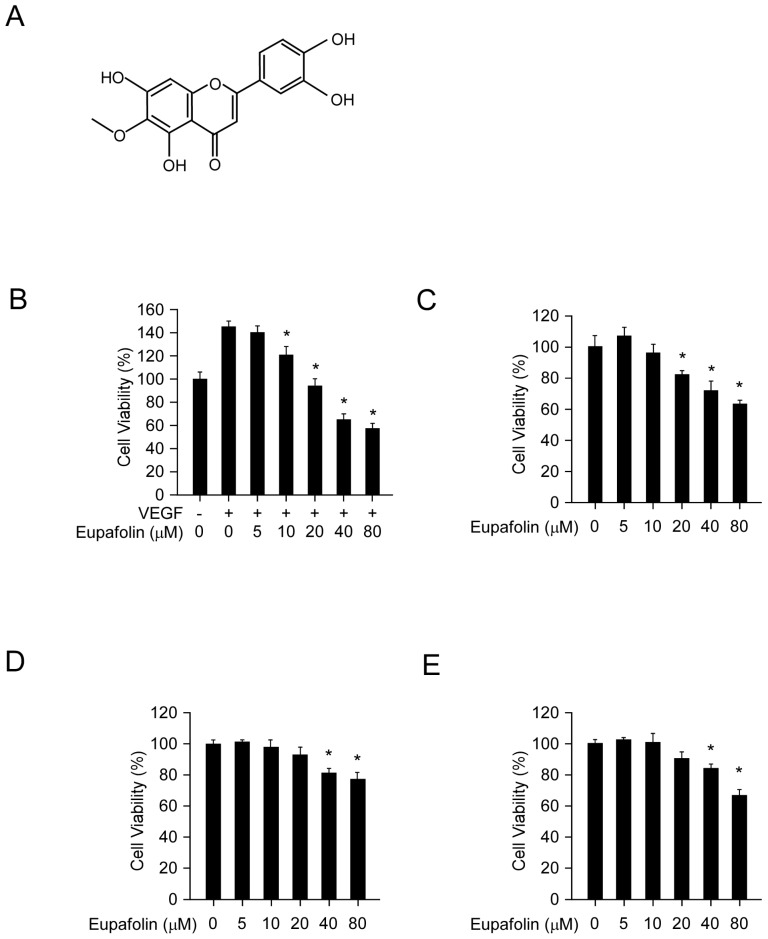
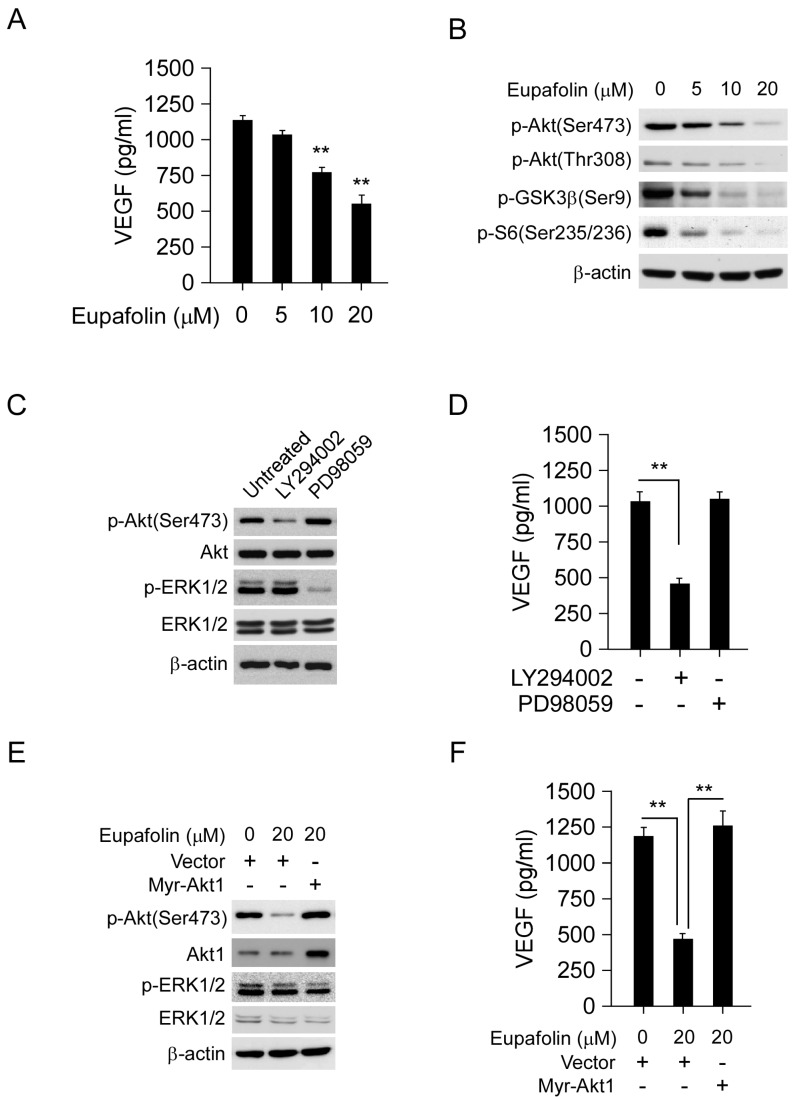
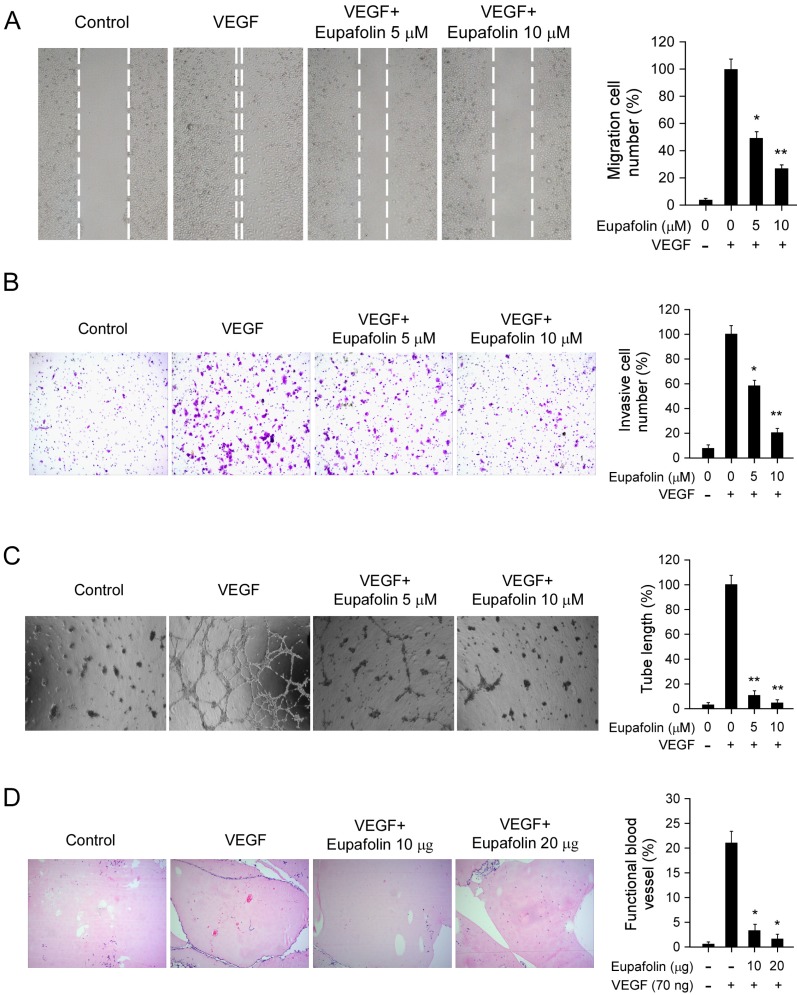
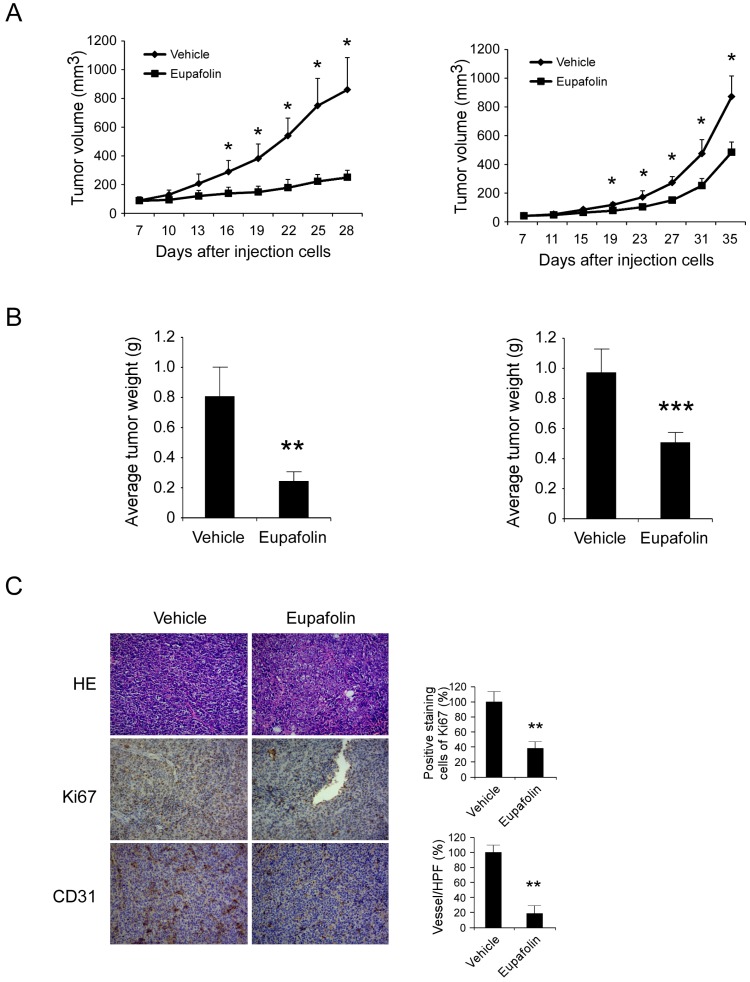
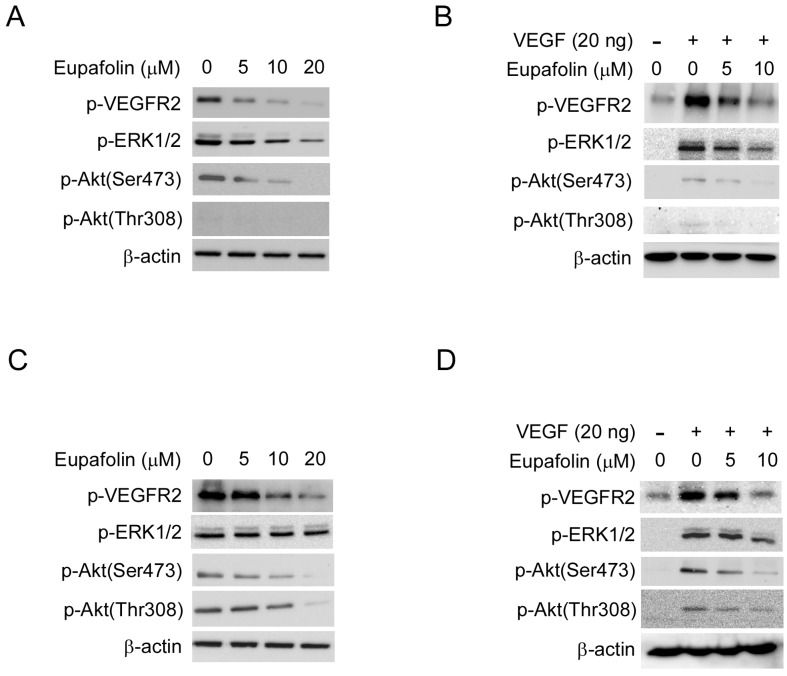
Eupafolin is a flavonoid extracted from the common sage herb which has been used in China as traditional medicine. Previous studies had reported that eupafolin had antioxidative, anti-inflammatory and antitumor effects. However, the function and the mechanism of eupafolin to exert its antitumor activity, especially its effect on tumor angiogenesis, have not been elucidated. Herein, we showed that eupafolin significantly inhibited vascular endothelial growth factor (VEGF)-induced cell proliferation, migration and tube formation of human umbilical vascular endothelial cells (HUVECs) in a dose-dependent manner. Meanwhile, the new blood microvessels induced by VEGF in the matrigel plug were also substantially suppressed by eupafolin. The results of HCC xenograft experiments demonstrated eupafolin remarkably inhibited tumor growth and tumor angiogenesis , suggesting the antitumor activity exerted by eupafolin was closely correlated with its potency on tumor angiogenesis. Mechanism investigations revealed that eupafolin significantly blocked VEGF-induced activation of VEGFR2 in HUVEC cells as well as its downstream signaling pathway. In addition to the effect on endothelial cells, through inhibiting Akt activity in tumor cells, VEGF secretion in HepG2 was dramatically decreased after eupafolin treatment. Our study was the first to report the activity of eupafolin against tumor angiogenesis as well as the underlying mechanism by which eupafolin to exert its anti-angiogenic activity.
灯盏乙素是从鼠尾草中提取的一种黄酮类化合物,在中国已被用作传统药物。先前的研究报道,灯盏乙素具有抗氧化、抗炎和抗肿瘤作用。然而,灯盏乙素发挥其抗肿瘤活性的功能和机制,尤其是其对肿瘤血管生成的影响,尚未阐明。在此,我们表明灯盏乙素以剂量依赖的方式显著抑制血管内皮生长因子(VEGF)诱导的人脐静脉血管内皮细胞(HUVECs)的细胞增殖、迁移和管形成。同时,灯盏乙素也显著抑制了基质胶塞中由VEGF诱导的新生血管。肝癌异种移植实验结果表明,灯盏乙素显著抑制肿瘤生长和肿瘤血管生成,提示灯盏乙素发挥的抗肿瘤活性与其对肿瘤血管生成的作用密切相关。机制研究表明,灯盏乙素显著阻断VEGF诱导的HUVEC细胞中VEGFR2的激活及其下游信号通路。除了对内皮细胞的作用外,通过抑制肿瘤细胞中的Akt活性,灯盏乙素处理后HepG2中的VEGF分泌显著减少。我们的研究首次报道了灯盏乙素对肿瘤血管生成的活性以及灯盏乙素发挥其抗血管生成活性的潜在机制。