LaBerge David, Kasevich Ray S
Department of Cognitive Sciences, University of California, Irvine, IrvineCA, United States.
Stanley Laboratory of Electrical Physics, Great BarringtonMA, United States.
Front Syst Neurosci. 2017 Jun 14;11:37. doi: 10.3389/fnsys.2017.00037. eCollection 2017.
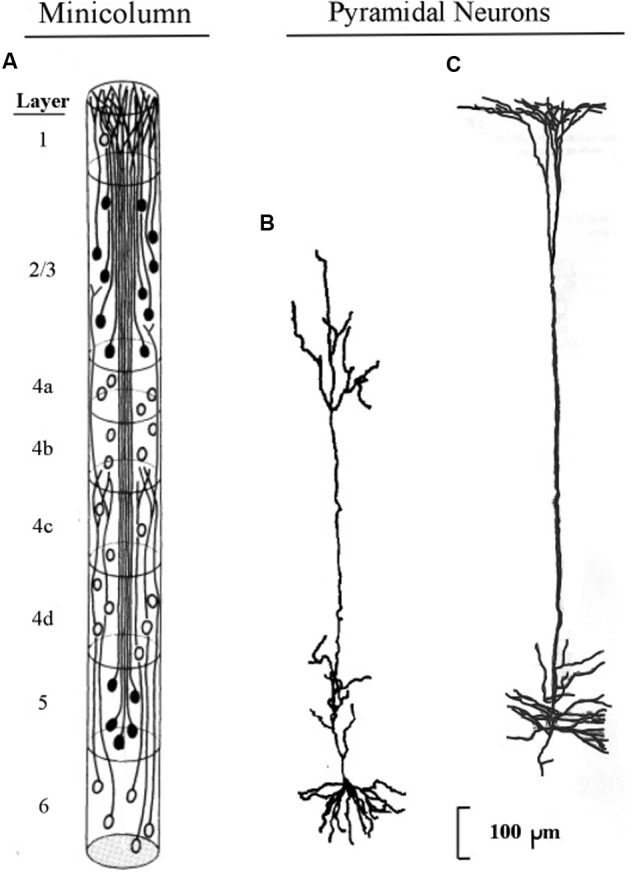
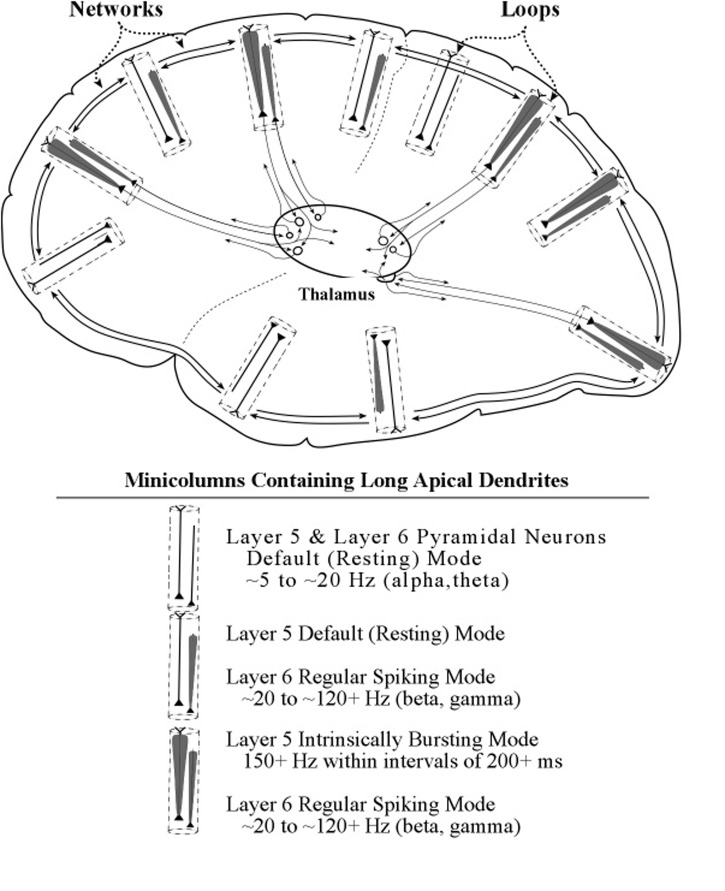
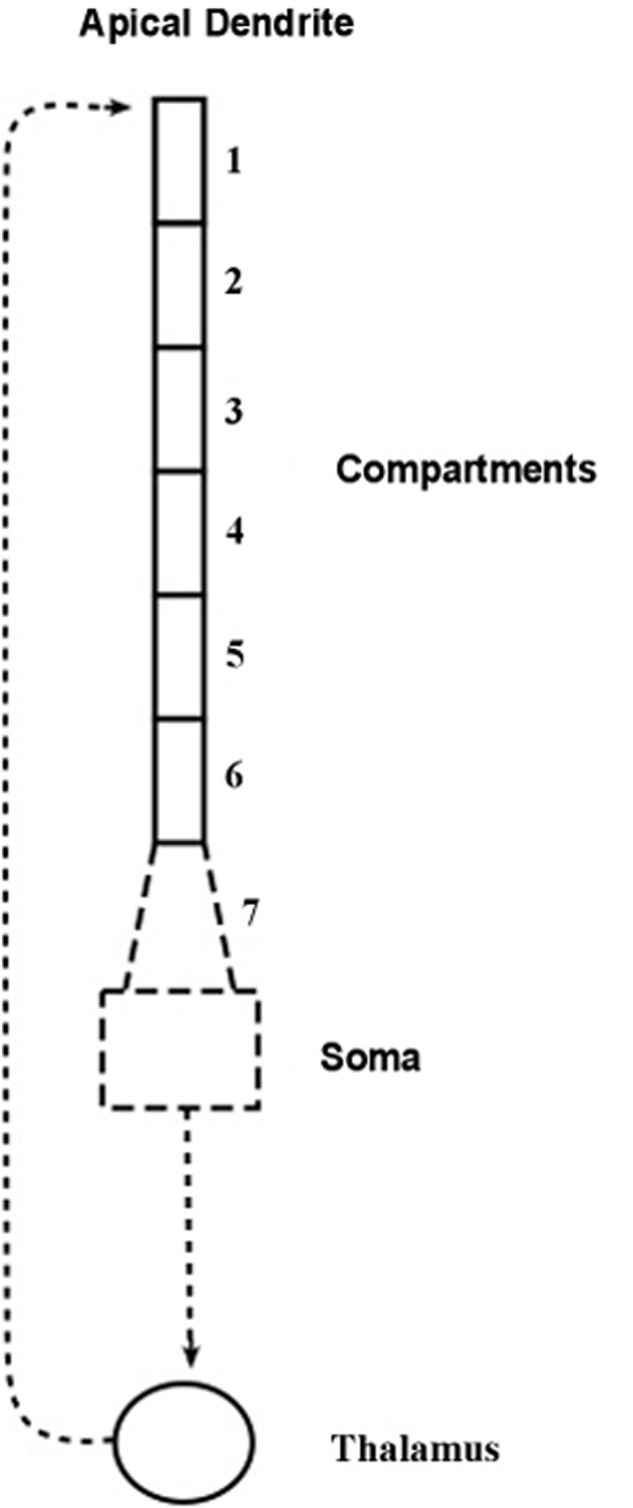
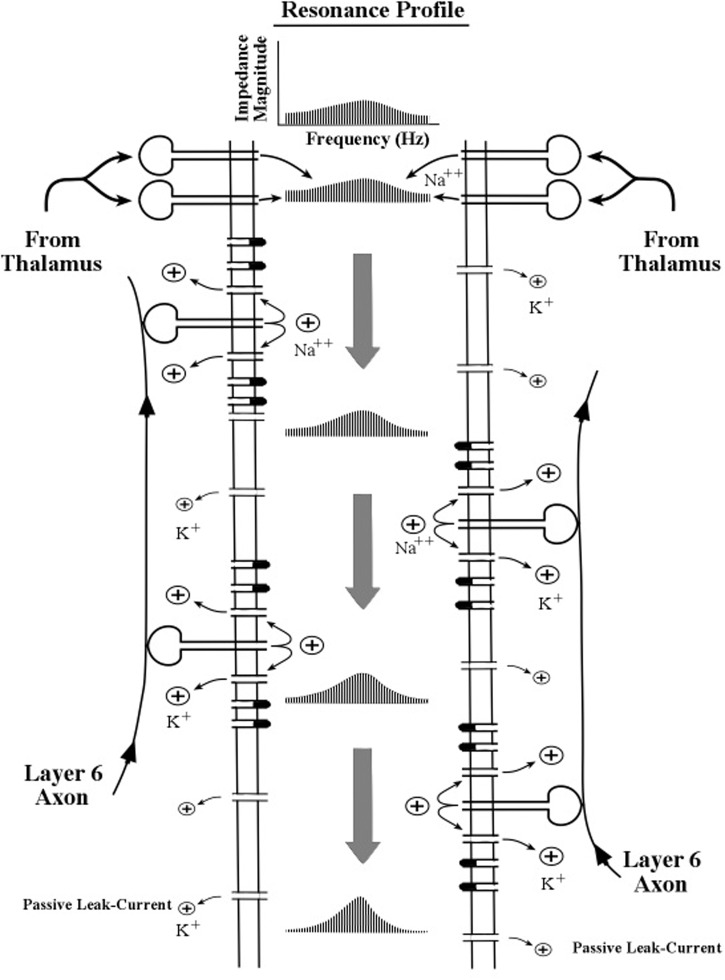
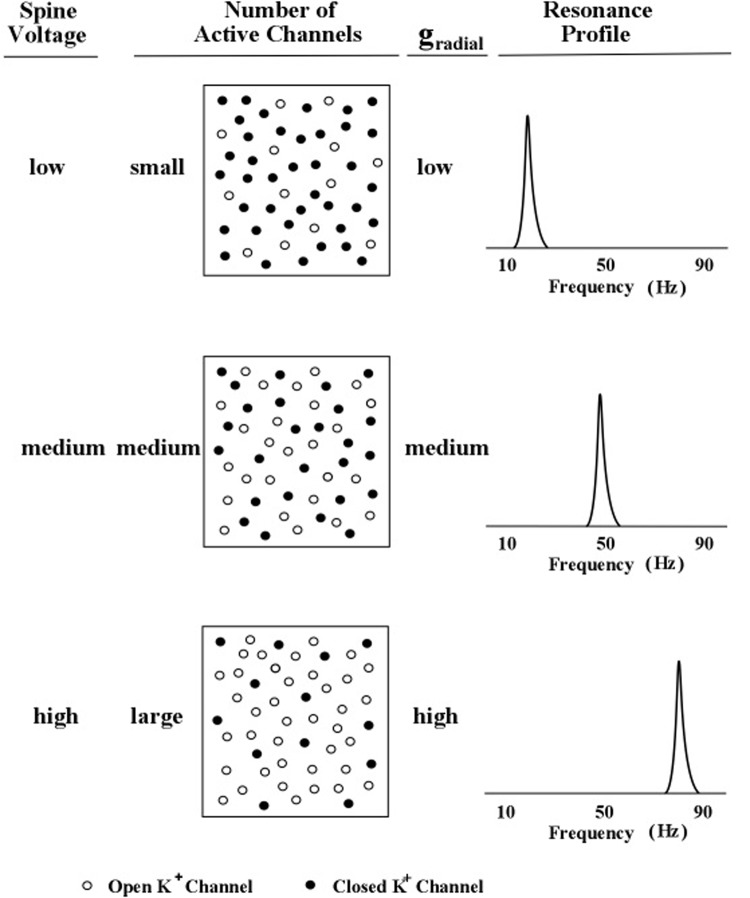
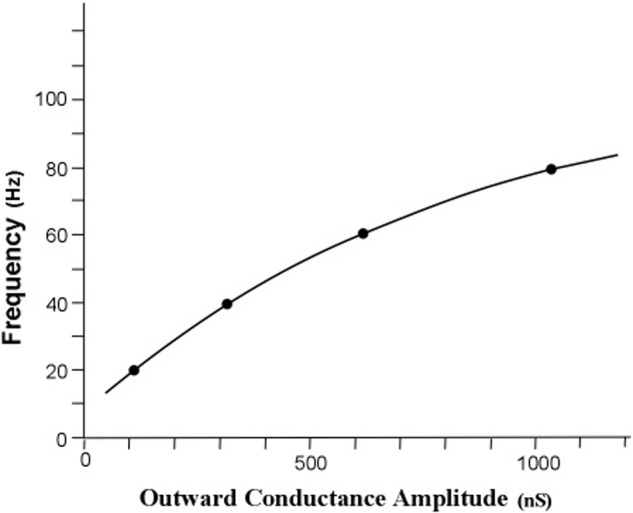
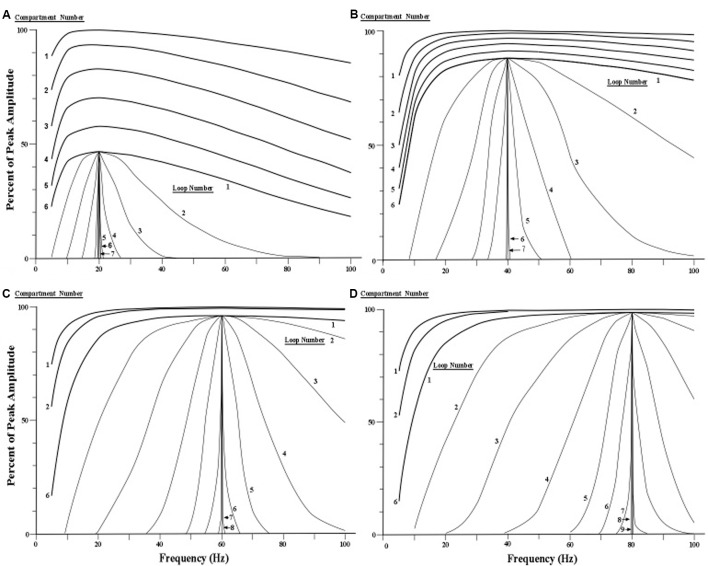
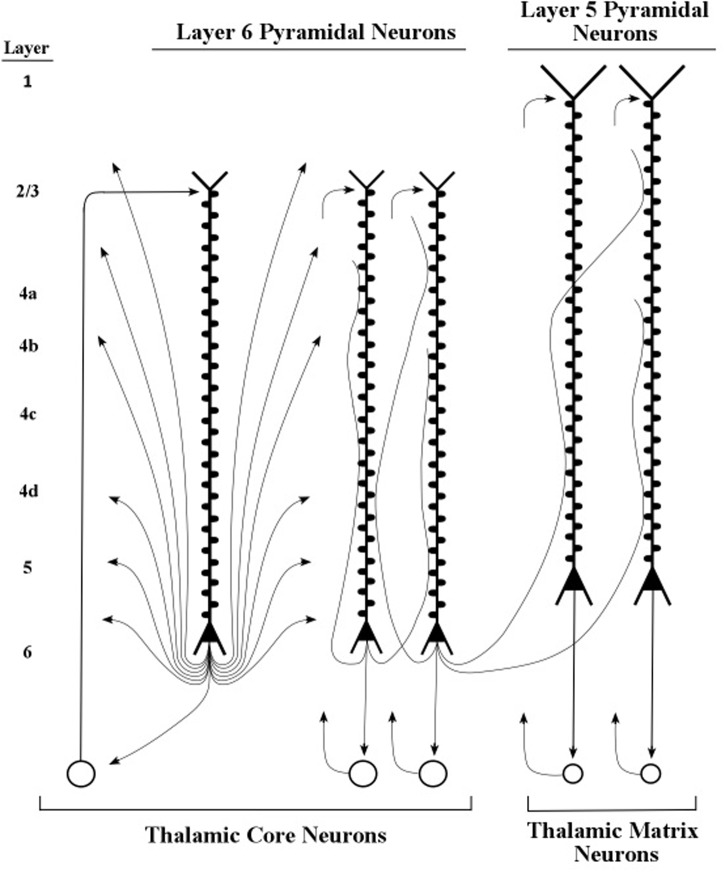
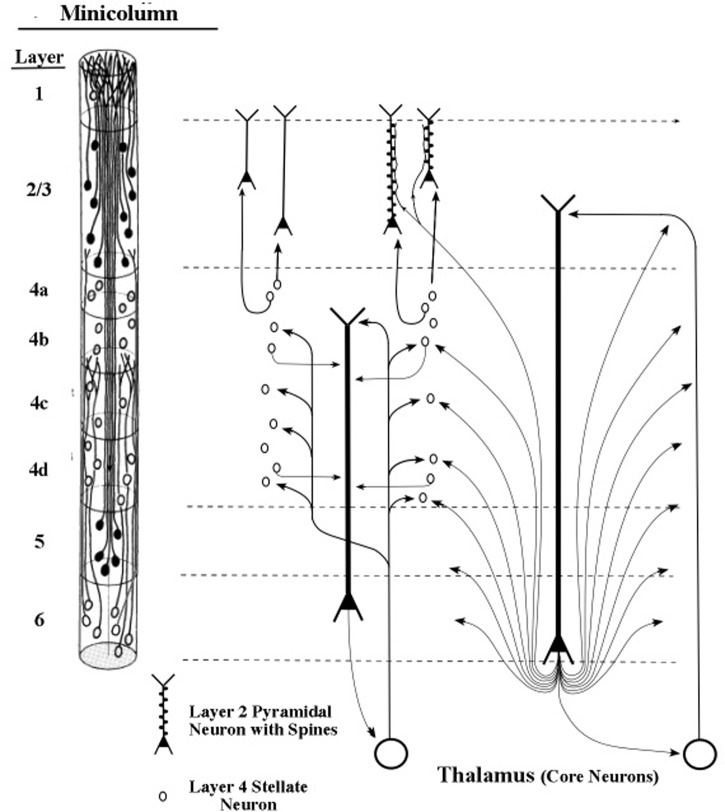
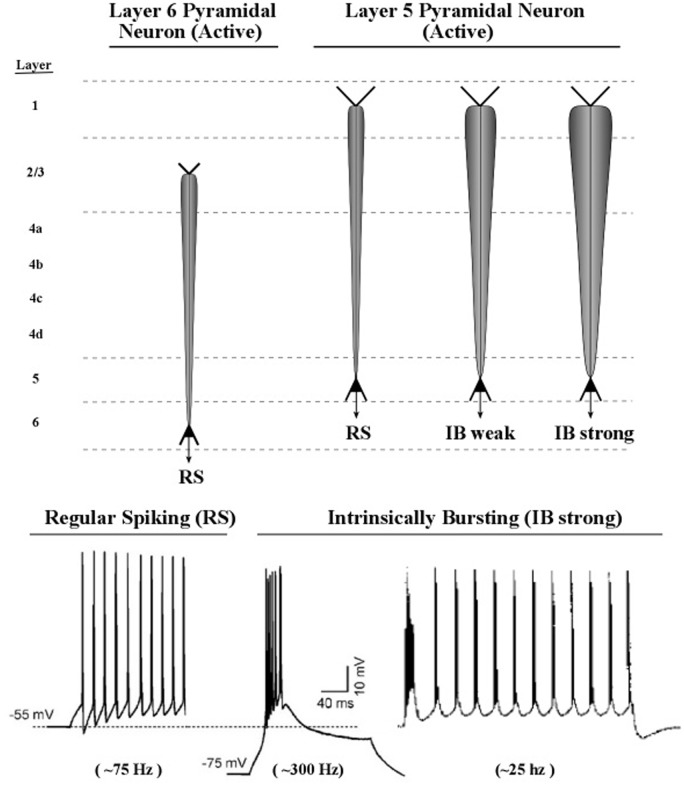
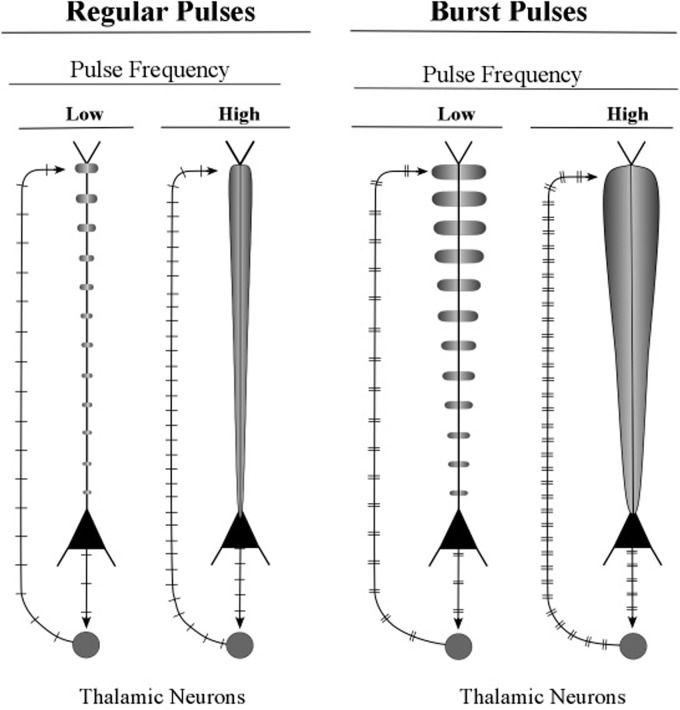
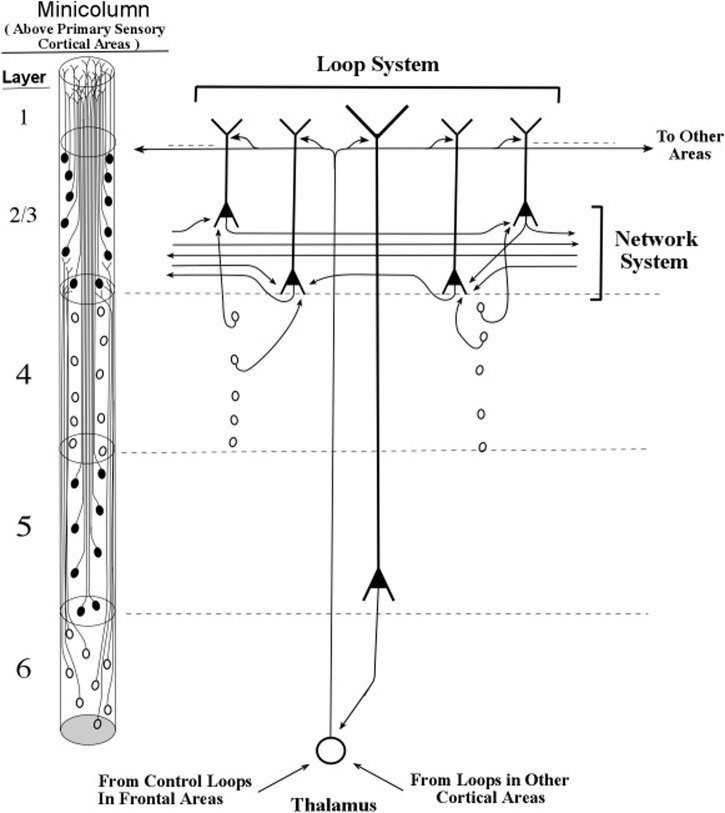
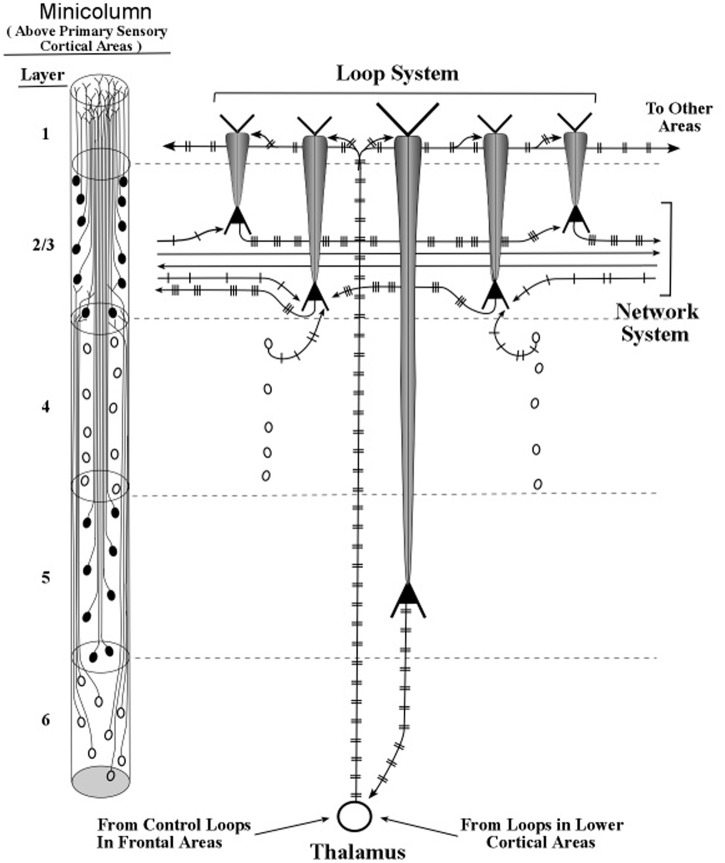
Bundles of relatively long apical dendrites dominate the neurons that make up the thickness of the cerebral cortex. It is proposed that a major function of the apical dendrite is to produce sustained oscillations at a specific frequency that can serve as a common timing unit for the processing of information in circuits connected to that apical dendrite. Many layer 5 and 6 pyramidal neurons are connected to thalamic neurons in loop circuits. A model of the apical dendrites of these pyramidal neurons has been used to simulate the electric activity of the apical dendrite. The results of that simulation demonstrated that subthreshold electric pulses in these apical dendrites can be tuned to specific frequencies and also can be fine-tuned to narrow bandwidths of less than one Hertz (1 Hz). Synchronous pulse outputs from the circuit loops containing apical dendrites can tune subthreshold membrane oscillations of neurons they contact. When the pulse outputs are finely tuned, they function as a local "clock," which enables the contacted neurons to synchronously communicate with each other. Thus, a shared tuning frequency can select neurons for membership in a circuit. Unlike layer 6 apical dendrites, layer 5 apical dendrites can produce burst firing in many of their neurons, which increases the amplitude of signals in the neurons they contact. This difference in amplitude of signals serves as basis of selecting a sub-circuit for specialized processing (e.g., sustained attention) within the typically larger layer 6-based circuit. After examining the sustaining of oscillations in loop circuits and the processing of spikes in network circuits, we propose that cortical functioning can be globally viewed as two systems: a loop system and a network system. The loop system oscillations influence the network system's timing and amplitude of pulse signals, both of which can select circuits that are momentarily dominant in cortical activity.
相对较长的顶端树突束主导着构成大脑皮质厚度的神经元。有人提出,顶端树突的一个主要功能是产生特定频率的持续振荡,该振荡可作为与该顶端树突相连的回路中信息处理的共同计时单元。许多第5层和第6层的锥体神经元在环路中与丘脑神经元相连。已使用这些锥体神经元顶端树突的模型来模拟顶端树突的电活动。该模拟结果表明,这些顶端树突中的阈下电脉冲可被调谐至特定频率,也可被微调至小于1赫兹(Hz)的窄带宽。包含顶端树突的回路的同步脉冲输出可调节它们所接触神经元的阈下膜振荡。当脉冲输出被精细调谐时,它们起到局部“时钟”的作用,使被接触的神经元能够相互同步通信。因此,共享的调谐频率可选择神经元以加入某个回路。与第6层顶端树突不同,第5层顶端树突可使其许多神经元产生爆发式放电,这会增加它们所接触神经元中的信号幅度。信号幅度的这种差异是在通常基于第6层的较大回路中选择用于专门处理(如持续注意力)的子回路的基础。在研究了环路中振荡的维持以及网络回路中尖峰的处理之后,我们提出,皮质功能可从整体上视为两个系统:一个环路系统和一个网络系统。环路系统振荡影响网络系统脉冲信号的计时和幅度,这两者均可选择在皮质活动中瞬间占主导地位的回路。