Ricoldi Milla S T, Furlaneto Flávia A C, Oliveira Luiz F F, Teixeira Gustavo C, Pischiotini Jéssica P, Moreira André L G, Ervolino Edilson, de Oliveira Maricê N, Bogsan Cristina S B, Salvador Sérgio L, Messora Michel R
Department of Oral and Maxillofacial Surgery and Periodontology, School of Dentistry of Ribeirao Preto, University of Sao Paulo-USP, Ribeirao Preto/ SP, Brazil.
Private Practice, Salvador/ BA, Brazil.
PLoS One. 2017 Jun 29;12(6):e0179946. doi: 10.1371/journal.pone.0179946. eCollection 2017.
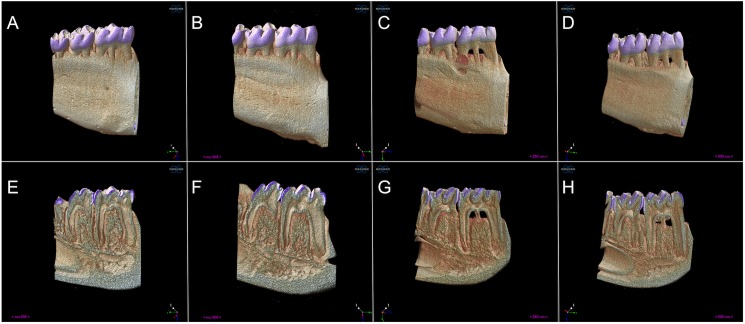
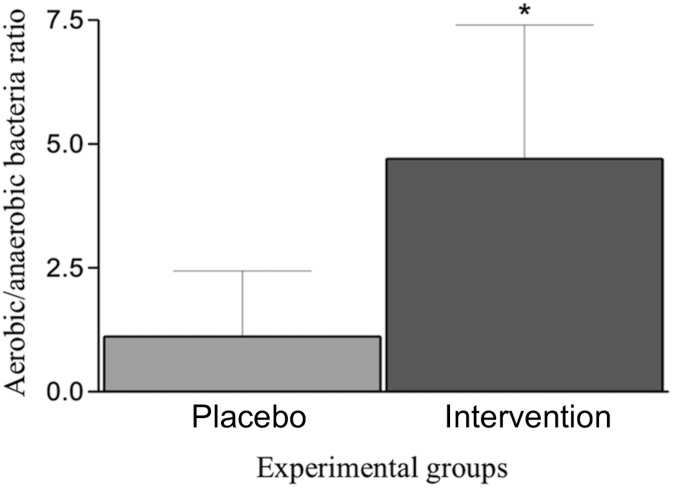
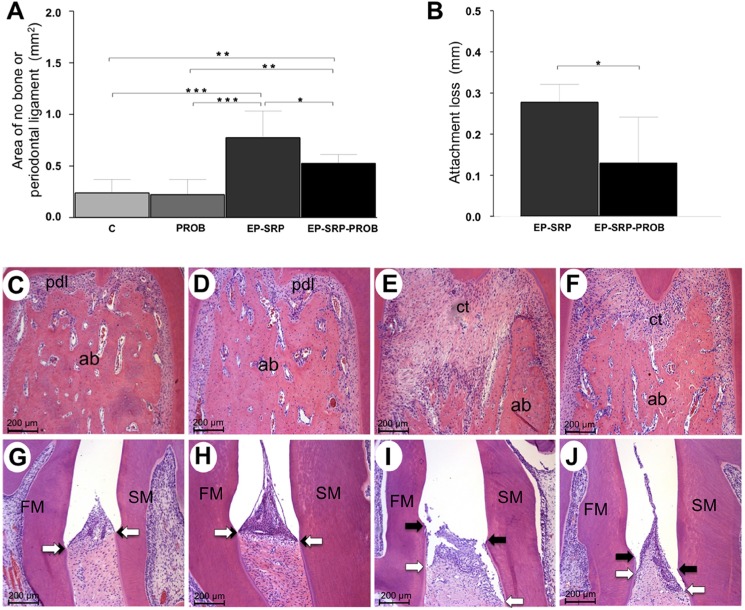
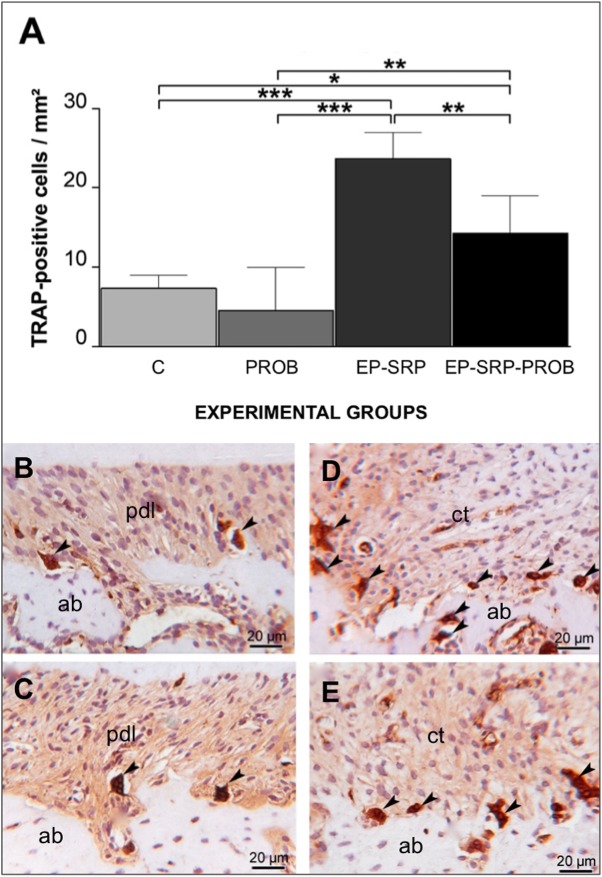
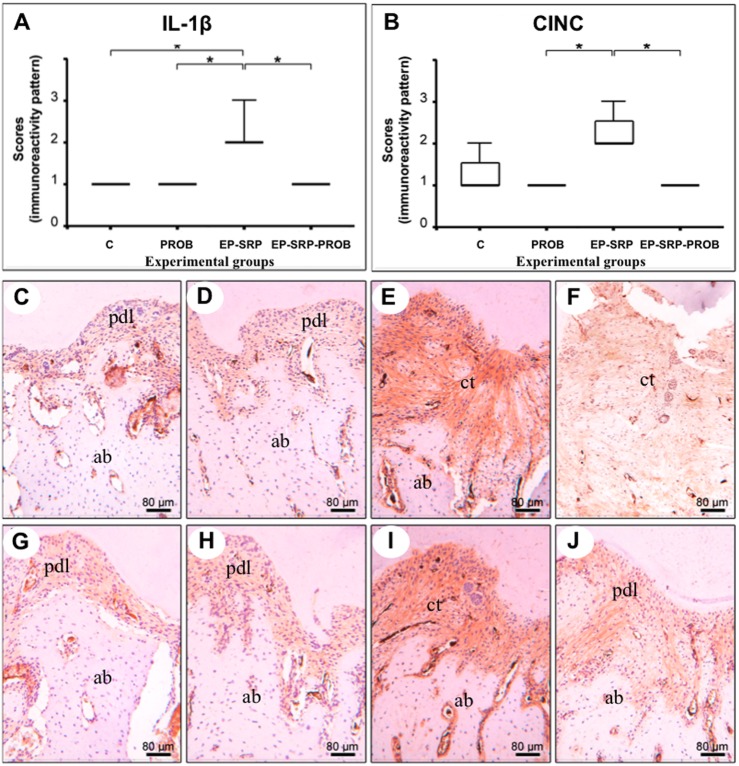
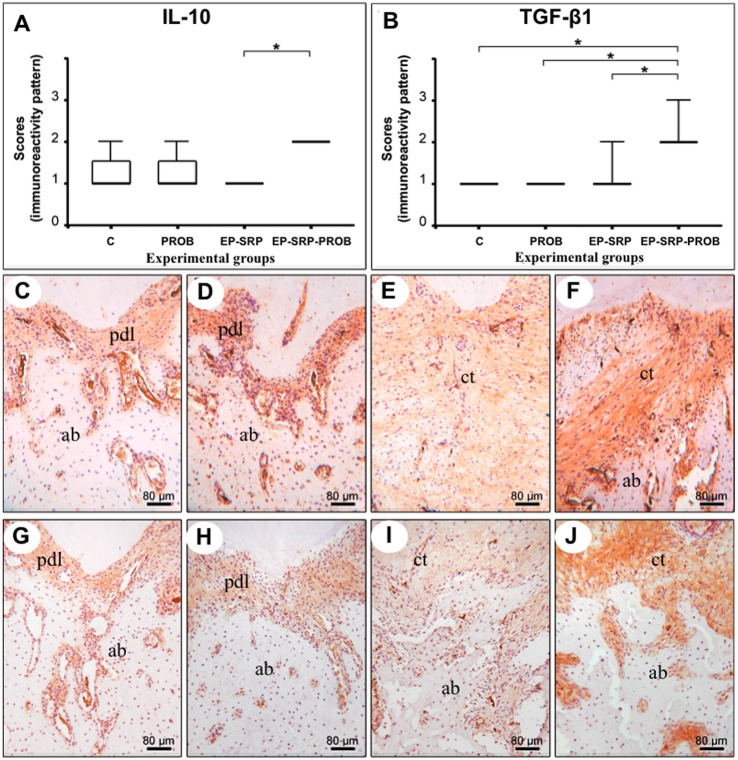
Lactobacillus probiotics have been investigated in periodontitis. However, the effects of the genus Bifidobacterium on periodontitis are hardly known. This study evaluated the effects of the probiotic (PROB) Bifidobacterium animalis subsp. lactis (B. lactis) HN019 as an adjunct to scaling and root planing (SRP) in rats with experimental periodontitis (EP). At baseline, 32 rats were assigned to 4 groups: C (control), PROB, EP-SRP and EP-SRP-PROB. In groups EP-SRP and EP-SRP-PROB, the mandibular first molars of the animals received a ligature. At day 14, the ligatures were removed and SRP was performed. Animals of groups PROB and EP-SRP-PROB were orally administered with 10 mL/day of 109 colony forming units of B. lactis HN019 for 15 days, starting at day 14. Animals were euthanized at day 29. Histomorphometric, microtomographic and immunohistochemical analyses were performed. Microbiological effects of B. lactis on biofilm were also evaluated. Data were statistically analyzed (ANOVA, Tukey; Kruskal-Wallis, Dunn's; Two-tailed t-test; p<0.05). Group EP-SRP-PROB presented reduced alveolar bone resorption and attachment loss when compared with Group EP-SRP (p<0.05). Group EP-SRP-PROB showed significantly fewer osteoclasts, increased expression of anti-inflammatory cytokines and reduced expression of proinflammatory cytokines compared with Group EP-SRP (p<0.05). B. lactis promoted a higher ratio between aerobic and anaerobic bacteria in biofilm samples (p<0.05). B. lactis HN019 may have a role in the treatment of EP in rats, as an adjunct to SRP.
已对乳杆菌属益生菌在牙周炎中的作用进行了研究。然而,双歧杆菌属对牙周炎的影响却鲜为人知。本研究评估了益生菌动物双歧杆菌乳酸亚种(B. lactis)HN019作为辅助手段,在患有实验性牙周炎(EP)的大鼠中与龈下刮治和根面平整术(SRP)联合使用的效果。在基线时,将32只大鼠分为4组:C组(对照组)、PROB组、EP-SRP组和EP-SRP-PROB组。在EP-SRP组和EP-SRP-PROB组中,对动物的下颌第一磨牙进行结扎。在第14天,移除结扎线并进行龈下刮治和根面平整术。从第14天开始,PROB组和EP-SRP-PROB组的动物每天口服10 mL含10⁹菌落形成单位的乳酸双歧杆菌HN019,持续15天。在第29天对动物实施安乐死。进行了组织形态计量学、显微断层扫描和免疫组织化学分析。还评估了乳酸双歧杆菌对生物膜的微生物学影响。对数据进行了统计分析(方差分析、Tukey检验;Kruskal-Wallis检验、Dunn检验;双尾t检验;p<0.05)。与EP-SRP组相比,EP-SRP-PROB组的牙槽骨吸收和附着丧失减少(p<0.05)。与EP-SRP组相比,EP-SRP-PROB组的破骨细胞明显减少,抗炎细胞因子表达增加,促炎细胞因子表达减少(p<0.05)。乳酸双歧杆菌使生物膜样本中的需氧菌与厌氧菌比例更高(p<0.05)。乳酸双歧杆菌HN019作为龈下刮治和根面平整术的辅助手段,可能在大鼠实验性牙周炎的治疗中发挥作用。