Ko You Sun, You Sung Eun
Department of Physical Education, Sookmyung Women's University, Seoul, Korea.
Integr Med Res. 2015 Mar;4(1):41-47. doi: 10.1016/j.imr.2015.01.002. Epub 2015 Jan 27.
The purpose of this study was to examine the difference of physical fitness and body composition among Sasang types with BMI as covariate, which is reported to have influence on physical fitness and body composition.
We measured the physical fitness and body composition of 930 korean female college students, and compared the differences among Sasang type groups with or without considering Body Mass Index (BMI). We evaluated muscle strength, agility, muscle endurance, power and flexibility for the physical fitness, and total body water, protein, muscle mass, mineral, lean body mass and fat mass for the body composition.
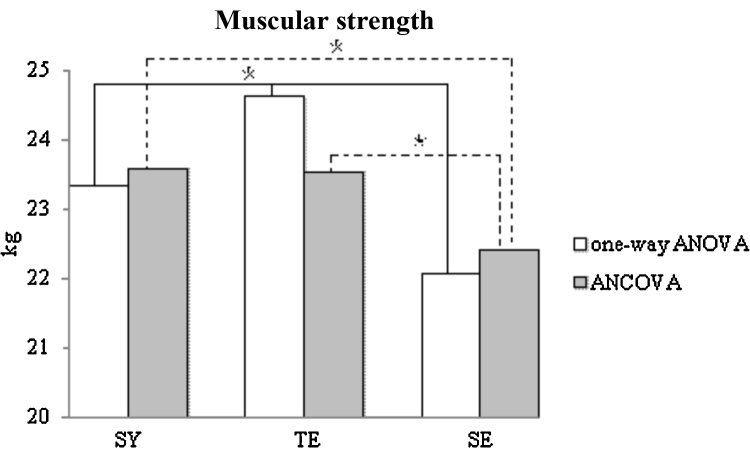
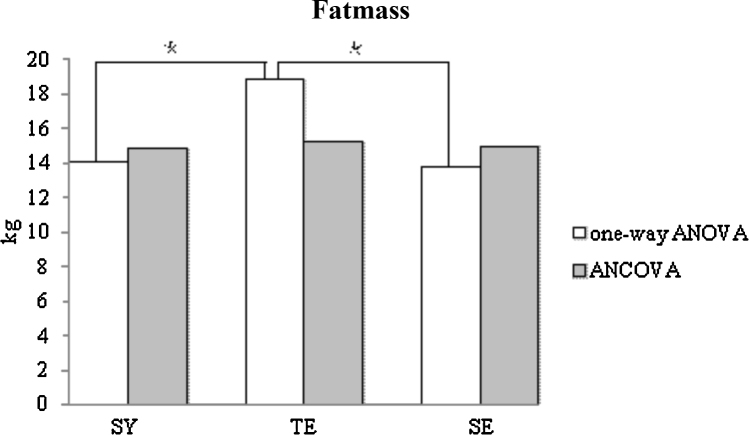
We got 352 So-Yang (SY), 385 So-Eum (SE), and 193 Tae-Eum (TE) Sasang types, and there were significant differences among Sasang types in height, weight and BMI. The significant differences among TE and SY types were disappeared in muscle strength, total body water, protein when BMI is used as a covariate. In ANOVA, there were significant differences that TE was higher on the mineral and fat mass compared to the SY type and SE type. However it disappeared when we introduced BMI as covariate.
The results demonstrated that the BMI should be considered as an important element for studying physical characteristics of Sasang typology.
本研究旨在以体重指数(BMI)作为协变量,研究不同体质类型之间的体能和身体成分差异,据报道BMI对体能和身体成分有影响。
我们测量了930名韩国女大学生的体能和身体成分,并比较了在考虑或不考虑体重指数(BMI)的情况下不同体质类型组之间的差异。我们评估了体能方面的肌肉力量、敏捷性、肌肉耐力、力量和柔韧性,以及身体成分方面的全身水、蛋白质、肌肉质量、矿物质、瘦体重和脂肪量。
我们得到了352例少阳(SY)、385例少阴(SE)和193例太阴(TE)体质类型,不同体质类型在身高、体重和BMI方面存在显著差异。当将BMI用作协变量时,太阴型和少阳型之间在肌肉力量、全身水、蛋白质方面的显著差异消失。在方差分析中,太阴型在矿物质和脂肪量方面高于少阳型和少阴型,存在显著差异。然而,当我们引入BMI作为协变量时,这种差异消失了。
结果表明,在研究体质类型的身体特征时,BMI应被视为一个重要因素。