Swan Zachary D, Bouwer Anthea L, Wonderlich Elizabeth R, Barratt-Boyes Simon M
Department of Infectious Diseases and Microbiology, University of Pittsburgh, Pittsburgh, PA, USA.
Department of Immunology, University of Pittsburgh, Pittsburgh, PA, USA.
Eur J Immunol. 2017 Nov;47(11):1925-1935. doi: 10.1002/eji.201646904. Epub 2017 Jul 24.
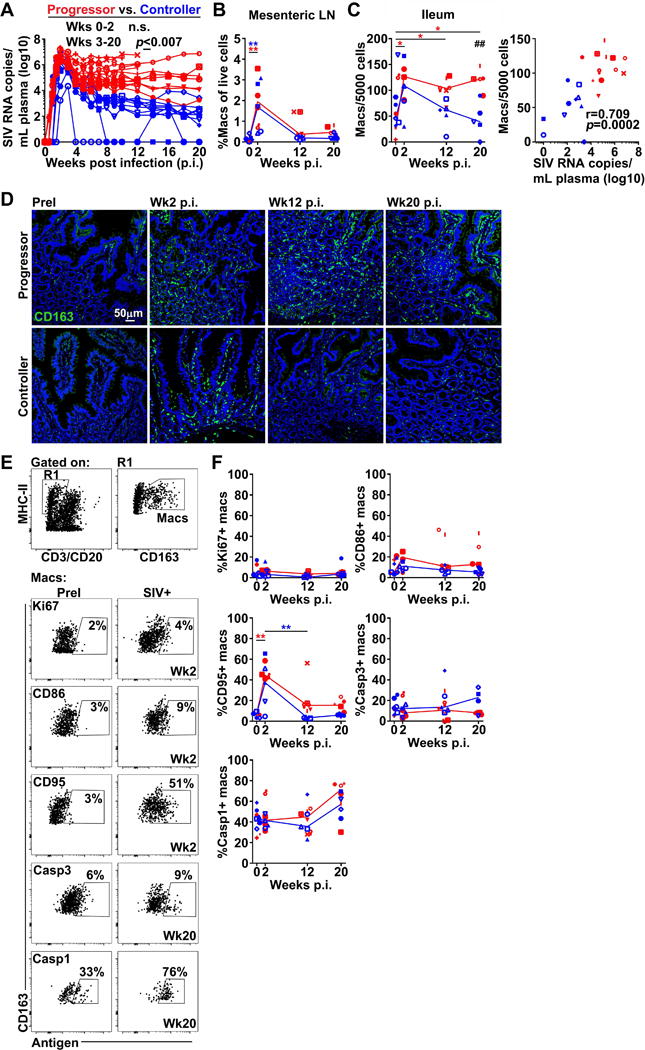
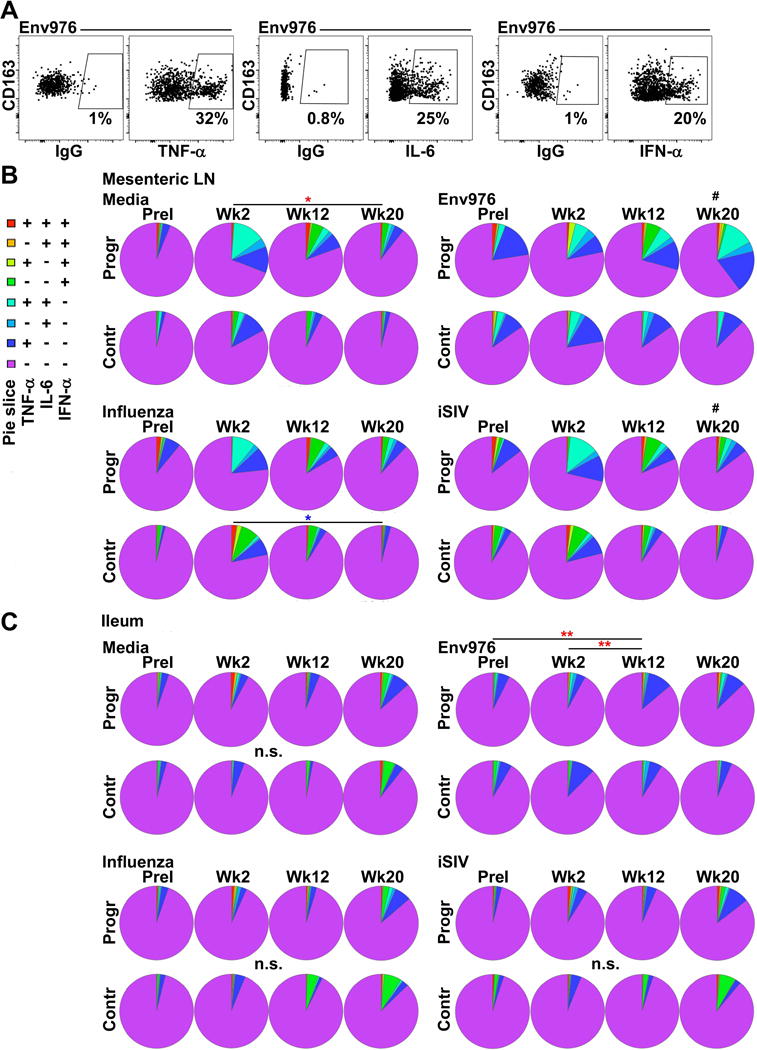
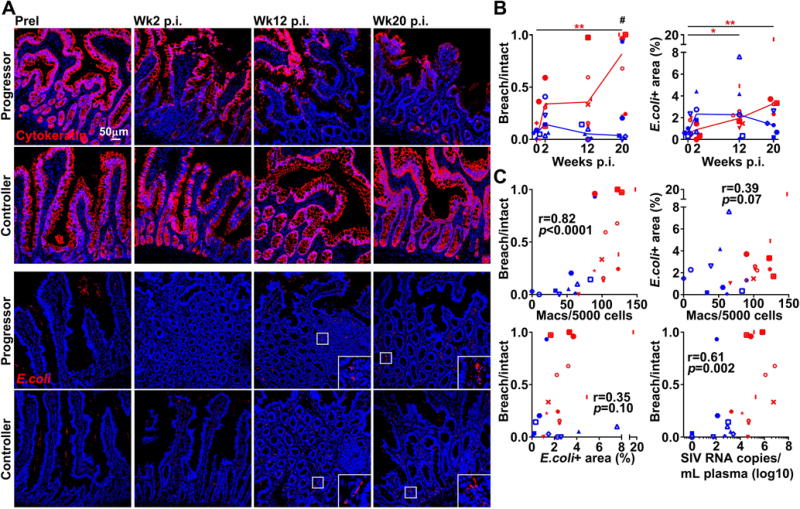
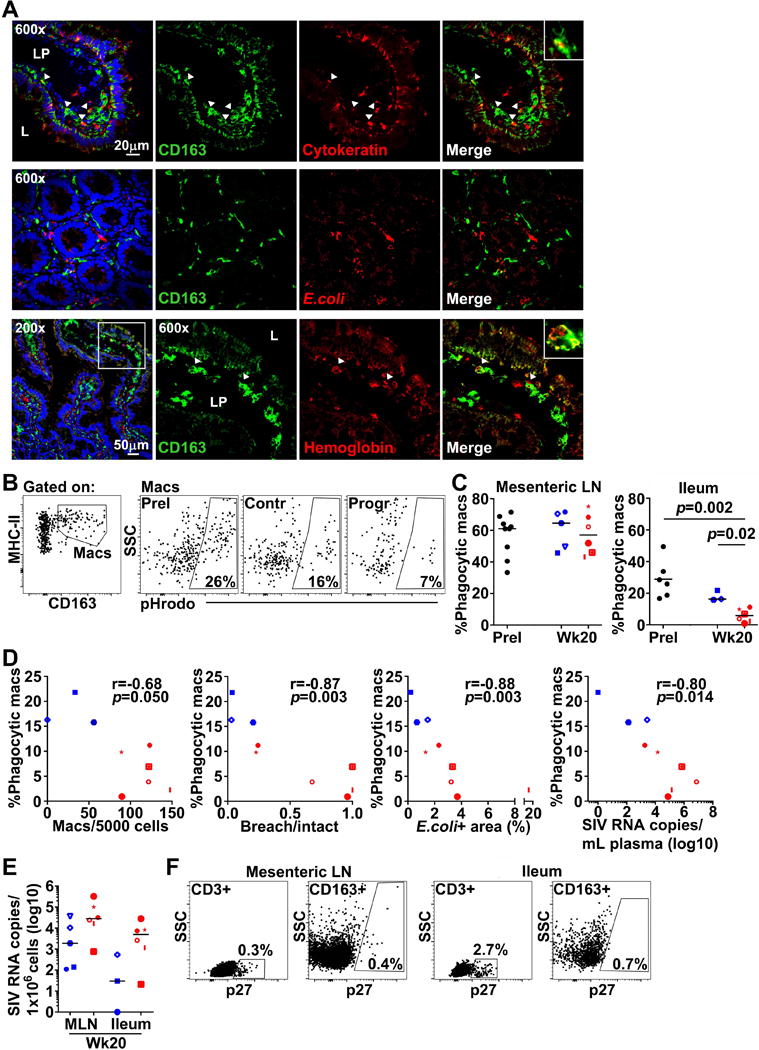
The contribution of macrophages in the gastrointestinal tract to disease control or progression in HIV infection remains unclear. To address this question, we analyzed CD163 macrophages in ileum and mesenteric lymph nodes (LN) from SIV-infected rhesus macaques with dichotomous expression of controlling MHC class I alleles predicted to be SIV controllers or progressors. Infection induced accumulation of macrophages into gut mucosa in the acute phase that persisted in progressors but was resolved in controllers. In contrast, macrophage recruitment to mesenteric LNs occurred only transiently in acute infection irrespective of disease outcome. Persistent gut macrophage accumulation was associated with CD163 expression on α4β7 CD16 blood monocytes and correlated with epithelial damage. Macrophages isolated from intestine of progressors had reduced phagocytic function relative to controllers and uninfected macaques, and the proportion of phagocytic macrophages negatively correlated with mucosal epithelial breach, lamina propria Escherichia coli density, and plasma virus burden. Macrophages in intestine produced low levels of cytokines regardless of disease course, while mesenteric LN macrophages from progressors became increasingly responsive as infection advanced. These data indicate that noninflammatory CD163 macrophages accumulate in gut mucosa in progressive SIV infection in response to intestinal damage but fail to adequately phagocytose debris, potentially perpetuating their recruitment.
胃肠道中的巨噬细胞对HIV感染中疾病控制或进展的作用仍不清楚。为了解决这个问题,我们分析了感染猴免疫缺陷病毒(SIV)的恒河猴回肠和肠系膜淋巴结(LN)中的CD163巨噬细胞,这些恒河猴具有预测为SIV控制者或疾病进展者的二分表达的主要组织相容性复合体I类等位基因。感染在急性期诱导巨噬细胞在肠道黏膜中积聚,这种积聚在疾病进展者中持续存在,但在控制者中得到缓解。相比之下,无论疾病结果如何,在急性感染期间巨噬细胞向肠系膜淋巴结的募集仅短暂发生。肠道巨噬细胞的持续积聚与α4β7 CD16血单核细胞上的CD163表达相关,并与上皮损伤相关。与控制者和未感染的猕猴相比,从疾病进展者肠道分离的巨噬细胞吞噬功能降低,吞噬性巨噬细胞的比例与黏膜上皮破损、固有层大肠杆菌密度和血浆病毒载量呈负相关。无论病程如何,肠道中的巨噬细胞产生的细胞因子水平都很低,而随着感染进展,疾病进展者肠系膜淋巴结中的巨噬细胞反应性越来越高。这些数据表明,在进行性SIV感染中,非炎性CD163巨噬细胞因肠道损伤而在肠道黏膜中积聚,但未能充分吞噬碎片,这可能使它们的募集持续存在。