Ben Said Sami, Or Dani
Department of Environmental Systems Science, Soil and Terrestrial Environmental Physics, ETH ZürichZürich, Switzerland.
Front Microbiol. 2017 Jun 16;8:1125. doi: 10.3389/fmicb.2017.01125. eCollection 2017.
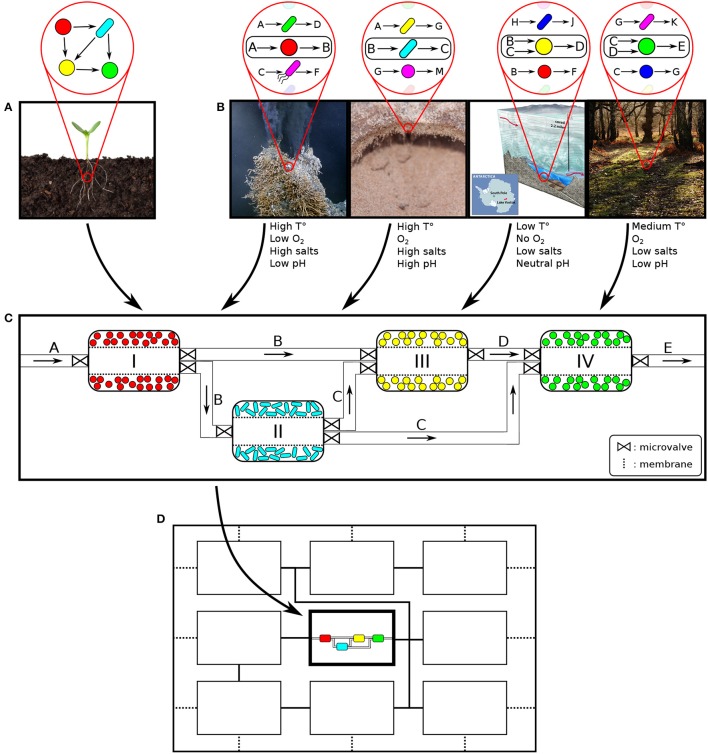
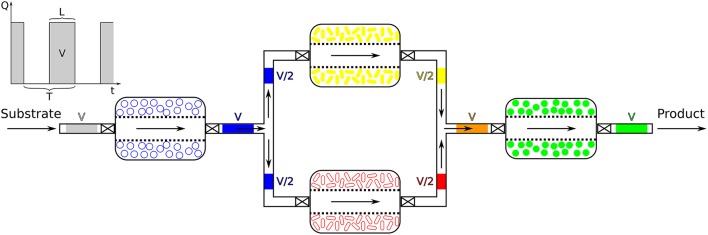
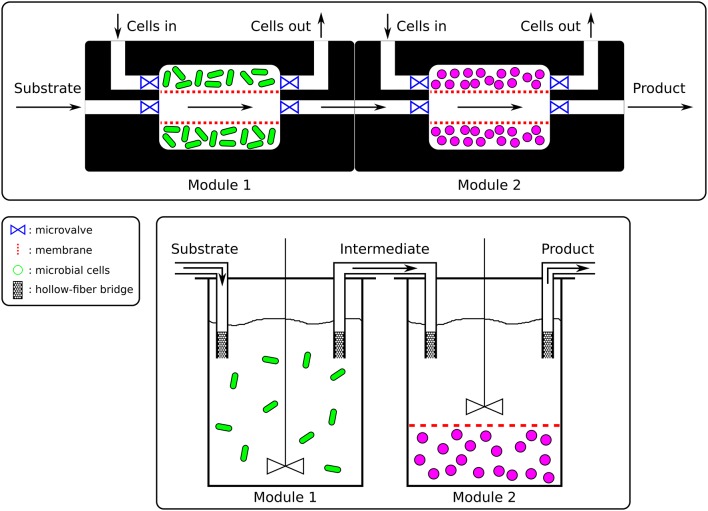
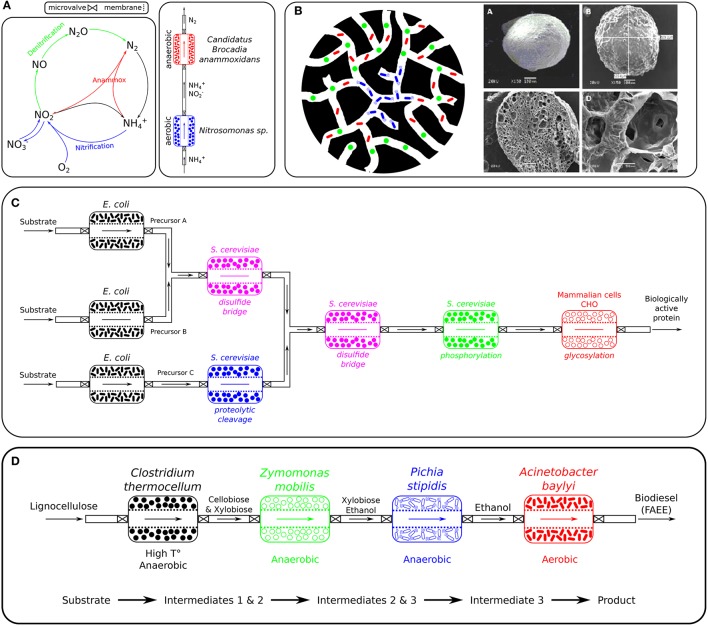
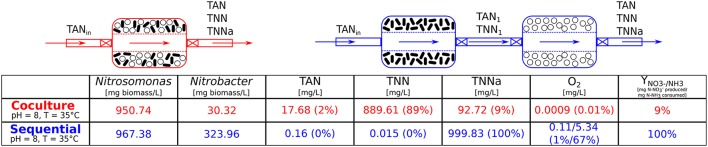
The metabolic diversity present in microbial communities enables cooperation toward accomplishing more complex tasks than possible by a single organism. Members of a consortium communicate by exchanging metabolites or signals that allow them to coordinate their activity through division of labor. In contrast with monocultures, evidence suggests that microbial consortia self-organize to form spatial patterns, such as observed in biofilms or in soil aggregates, that enable them to respond to gradient, to improve resource interception and to exchange metabolites more effectively. Current biotechnological applications of microorganisms remain rudimentary, often relying on genetically engineered monocultures (e.g., pharmaceuticals) or mixed-cultures of partially known composition (e.g., wastewater treatment), yet the vast potential of "microbial ecological power" observed in most natural environments, remains largely underused. In line with the Unified Microbiome Initiative (UMI) which aims to "discover and advance tools to understand and harness the capabilities of Earth's microbial ecosystems," we propose in this concept paper to capitalize on ecological insights into the spatial and modular design of interlinked microbial consortia that would overcome limitations of natural systems and attempt to optimize the functionality of the members and the performance of the engineered consortium. The topology of the spatial connections linking the various members and the regulated fluxes of media between those modules, while representing a major engineering challenge, would allow the microbial species to interact. The modularity of such spatially linked microbial consortia (SLMC) could facilitate the design of scalable bioprocesses that can be incorporated as parts of a larger biochemical network. By reducing the need for a compatible growth environment for all species simultaneously, SLMC will dramatically expand the range of possible combinations of microorganisms and their potential applications. We briefly review existing tools to engineer such assemblies and optimize potential benefits resulting from the collective activity of their members. Prospective microbial consortia and proposed spatial configurations will be illustrated and preliminary calculations highlighting the advantages of SLMC over co-cultures will be presented, followed by a discussion of challenges and opportunities for moving forward with some designs.
微生物群落中存在的代谢多样性能够促进合作,以完成比单个生物体所能完成的更复杂的任务。共生体的成员通过交换代谢物或信号进行交流,从而使它们能够通过分工来协调自身活动。与单一培养物相比,有证据表明微生物共生体能够自我组织形成空间模式,例如在生物膜或土壤团聚体中观察到的模式,这使它们能够对梯度做出反应、改善资源拦截并更有效地交换代谢物。目前微生物的生物技术应用仍很初级,通常依赖基因工程单一培养物(如制药)或成分部分已知的混合培养物(如废水处理),然而在大多数自然环境中观察到的“微生物生态力量”的巨大潜力仍未得到充分利用。与旨在“发现并推进工具以理解和利用地球微生物生态系统能力”的统一微生物组计划(UMI)一致,我们在本概念文件中提议利用对相互关联的微生物共生体的空间和模块化设计的生态学见解,这将克服自然系统的局限性,并尝试优化成员的功能以及工程共生体的性能。连接各个成员的空间连接拓扑结构以及这些模块之间介质的调节通量,虽然代表着一项重大的工程挑战,但将使微生物物种能够相互作用。这种空间连接的微生物共生体(SLMC)的模块化可以促进可扩展生物过程的设计,这些生物过程可以作为更大生化网络的一部分。通过减少同时为所有物种提供兼容生长环境的需求,SLMC将极大地扩展微生物可能组合的范围及其潜在应用。我们简要回顾用于设计此类组合并优化其成员集体活动产生的潜在益处的现有工具。将说明预期的微生物共生体和提议的空间配置,并展示突出SLMC相对于共培养优势的初步计算结果,随后讨论推进某些设计所面临的挑战和机遇。