Arcuri Cataldo, Mecca Carmen, Bianchi Roberta, Giambanco Ileana, Donato Rosario
Department of Experimental Medicine, Centro Universitario per la Ricerca sulla Genomica Funzionale, Perugia Medical School, University of PerugiaPerugia, Italy.
Front Mol Neurosci. 2017 Jun 19;10:191. doi: 10.3389/fnmol.2017.00191. eCollection 2017.
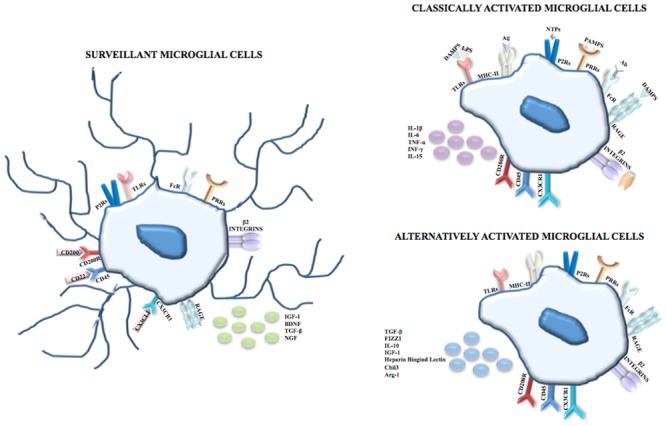
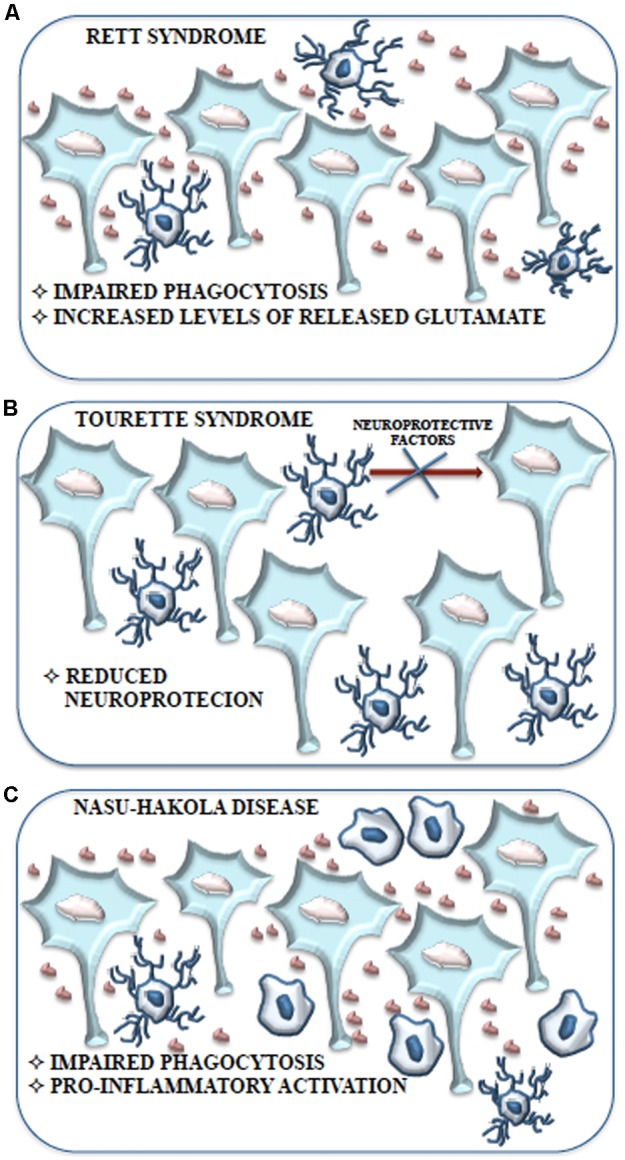
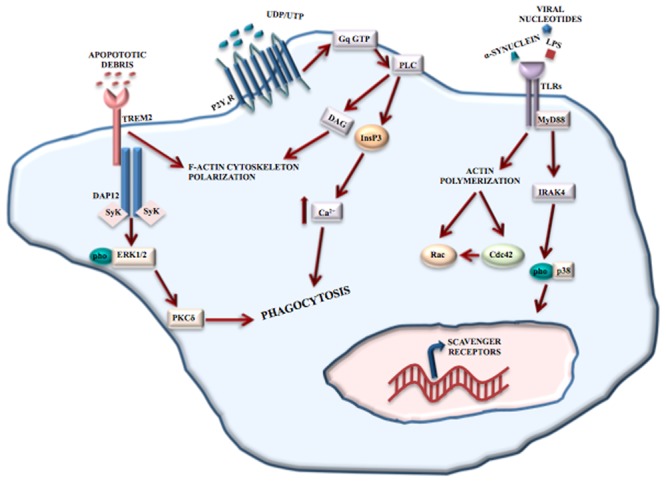
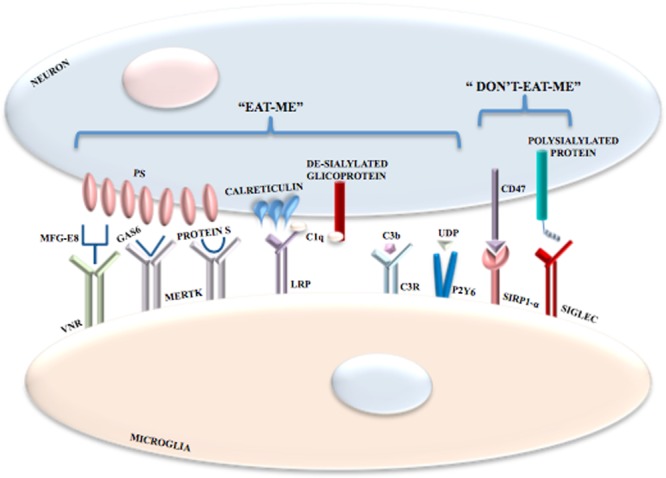
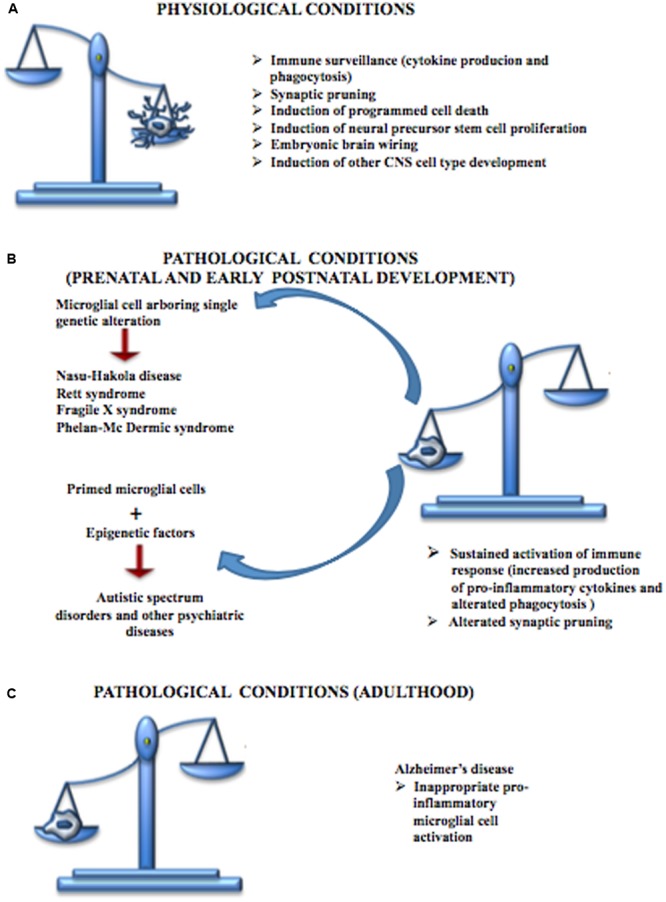
In vertebrates, during an early wave of hematopoiesis in the yolk sac between embryonic day E7.0 and E9.0, cells of mesodermal leaflet addressed to macrophage lineage enter in developing central nervous system (CNS) and originate the developing native microglial cells. Depending on the species, microglial cells represent 5-20% of glial cells resident in adult brain. Here, we briefly discuss some canonical functions of the microglia, i.e., cytokine secretion and functional transition from M1 to M2 phenotype. In addition, we review studies on the non-canonical functions of microglia such as regulation of phagocytosis, synaptic pruning, and sculpting postnatal neural circuits. In this latter context the contribution of microglia to some neurodevelopmental disorders is now well established. Nasu-Hakola (NHD) disease is considered a primary microgliopathy with alterations of the DNAX activation protein 12 (DAP12)-Triggering receptor expressed on myeloid cells 2 (TREM-2) signaling and removal of macromolecules and apoptotic cells followed by secondary microglia activation. In Rett syndrome microglia shows a substantial impairment of phagocytic ability, although the role of microglia is not yet clear. In a mouse model of Tourette syndrome (TS), microglia abnormalities have also been described, and deficient microglia-mediated neuroprotection is obvious. Here we review the role of microglial cells in neurodevelopmental disorders without inflammation and on the complex role of microglia in developing CNS.
在脊椎动物中,在胚胎第E7.0天至E9.0天期间卵黄囊造血早期阶段,定向分化为巨噬细胞谱系的中胚层小叶细胞进入发育中的中枢神经系统(CNS),并产生发育中的天然小胶质细胞。根据物种不同,小胶质细胞占成年大脑中胶质细胞的5%-20%。在此,我们简要讨论小胶质细胞的一些典型功能,即细胞因子分泌以及从M1表型到M2表型的功能转变。此外,我们综述了关于小胶质细胞非典型功能的研究,如吞噬作用的调节、突触修剪以及塑造出生后神经回路。在后一种情况下,小胶质细胞对某些神经发育障碍的作用现已明确。纳苏-哈科拉(NHD)病被认为是一种原发性小胶质细胞病,存在DNAX激活蛋白12(DAP12)-髓系细胞触发受体2(TREM-2)信号改变以及大分子和凋亡细胞清除障碍,随后继发小胶质细胞激活。在雷特综合征中,小胶质细胞的吞噬能力严重受损,尽管小胶质细胞的作用尚不清楚。在抽动秽语综合征(TS)的小鼠模型中,也描述了小胶质细胞异常,且小胶质细胞介导的神经保护功能缺陷明显。在此,我们综述小胶质细胞在无炎症的神经发育障碍中的作用以及小胶质细胞在发育中的中枢神经系统中的复杂作用。