Chen Jianping, Liu Xiaoyan, Li Zhonggui, Qi Airong, Yao Ping, Zhou Zhongyu, Dong Tina T X, Tsim Karl W K
Shenzhen Key Laboratory of Hospital Chinese Medicine Preparation, Shenzhen Traditional Chinese Medicine Hospital, Guangzhou University of Chinese Medicine, Shenzhen 518033, China.
Division of Life Science, Center for Chinese Medicine, The Hong Kong University of Science and Technology, Clear Water Bay, Hong Kong.
Evid Based Complement Alternat Med. 2017;2017:3019568. doi: 10.1155/2017/3019568. Epub 2017 Jun 7.
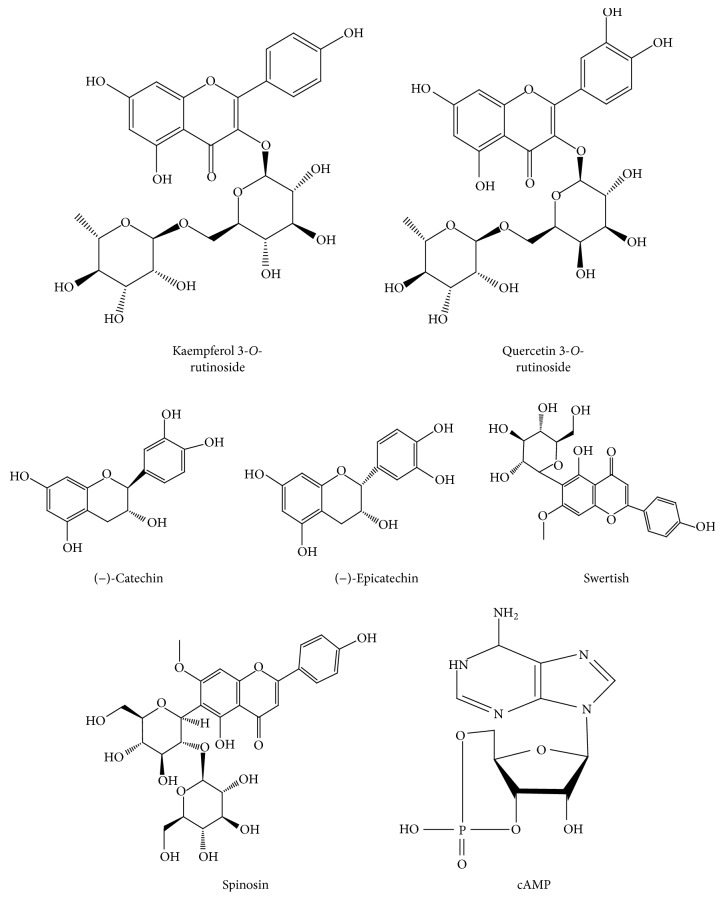
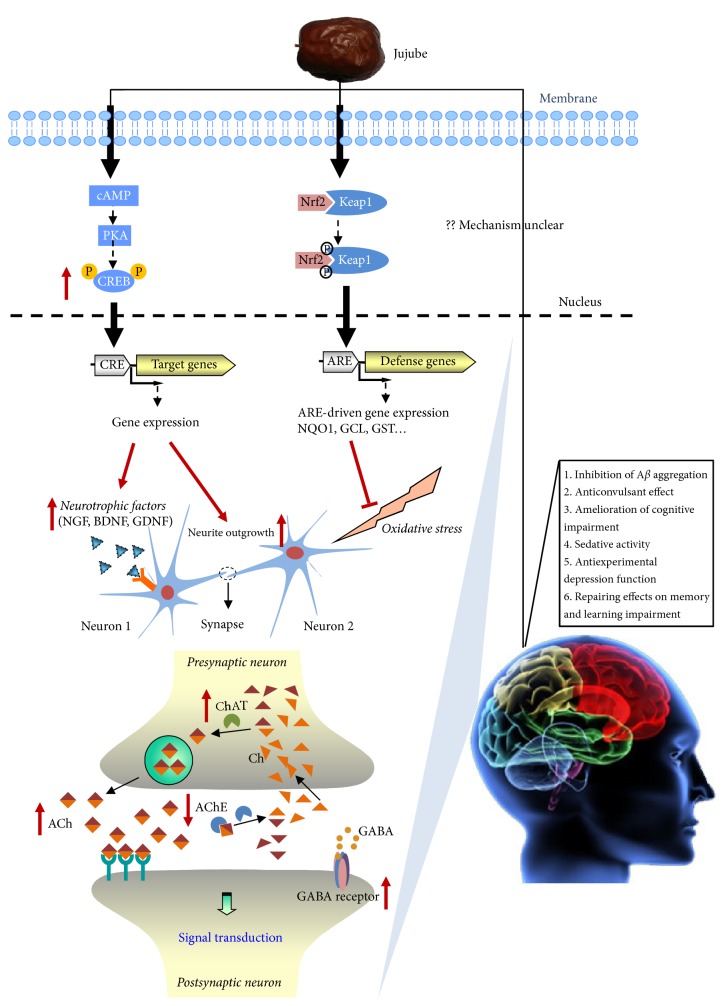
The fruits of , known as jujube or Chinese date, are being consumed all around the world because of their health benefits, as both food and herbal medicine. Traditionally, one of the main functions of jujube, as described in herbal medicine, is to benefit our brain by calming down the mind and improving quality of sleep. Here, the activities of jujubes on nervous system are summarized and discussed. Jujube possesses neuroprotective activities, including protecting neuronal cells against neurotoxin stress, stimulating neuronal differentiation, increasing expression of neurotrophic factors, and promoting memory and learning. Flavonoid, cAMP, and jujuboside could be the potential bioactive ingredients to account for the aforesaid biological activities. These findings imply that jujube is a potential candidate for development of health supplements for prevention and/or treatment of neurological diseases.
酸枣,又称枣或中国枣,其果实因其对健康有益,作为食品和草药在世界各地被食用。传统上,如草药中所述,酸枣的主要功能之一是通过镇静安神和改善睡眠质量来补益大脑。在此,对酸枣在神经系统方面的作用进行总结和讨论。酸枣具有神经保护活性,包括保护神经元细胞免受神经毒素应激、刺激神经元分化、增加神经营养因子的表达以及促进记忆和学习。黄酮类化合物、环磷酸腺苷(cAMP)和酸枣仁皂苷可能是解释上述生物学活性的潜在生物活性成分。这些发现表明,酸枣是开发用于预防和/或治疗神经疾病的健康补充剂的潜在候选物。