de Geus Susanna Wl, Baart Victor M, Boonstra Martin C, Kuppen Peter Jk, Prevoo Hendrica Ajm, Mazar Andrew P, Bonsing Bert A, Morreau Hans, van de Velde Cornelis Jh, Vahrmeijer Alexander L, Sier Cornelis Fm
Department of Surgery, Leiden University Medical Centre, Leiden, The Netherlands.
Monopar Therapeutics Inc., Northbrook, IL, USA.
Biomark Insights. 2017 Jun 22;12:1177271917715443. doi: 10.1177/1177271917715443. eCollection 2017.
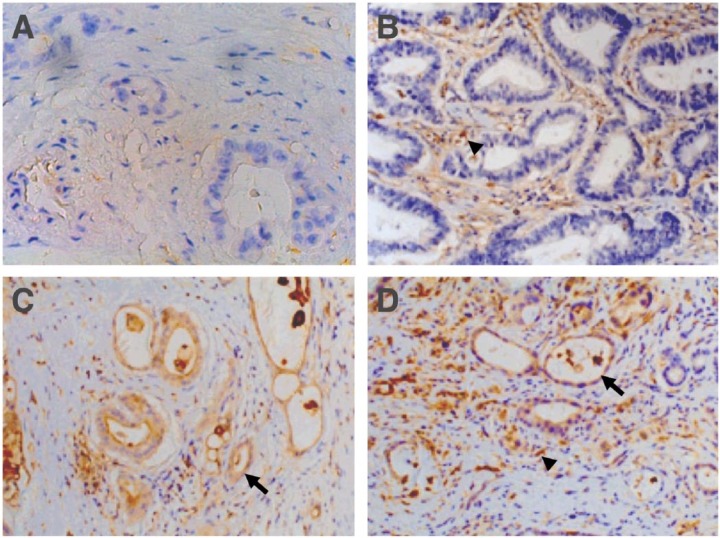
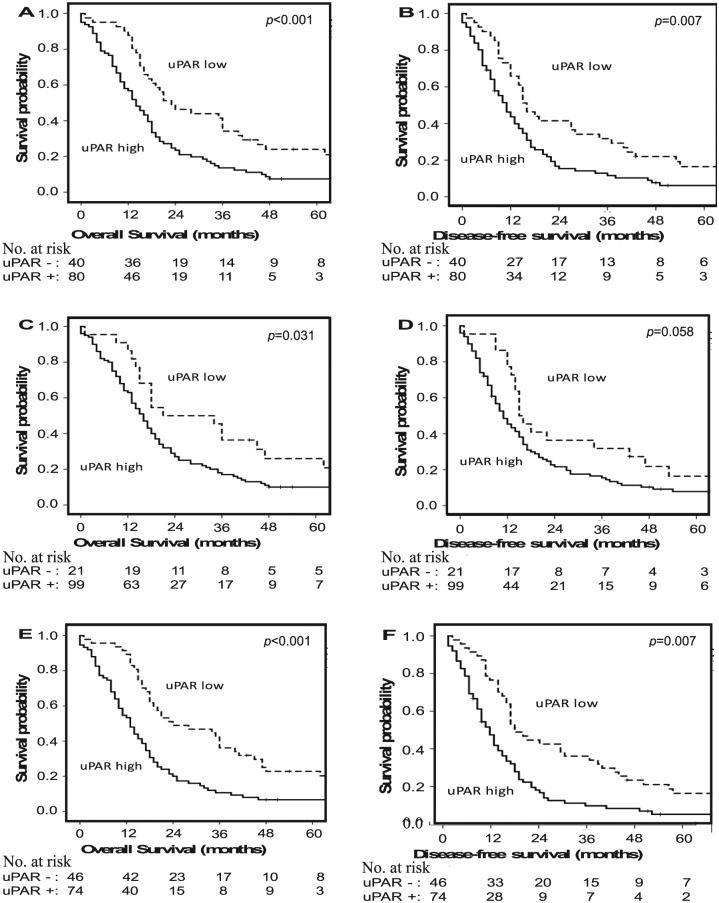
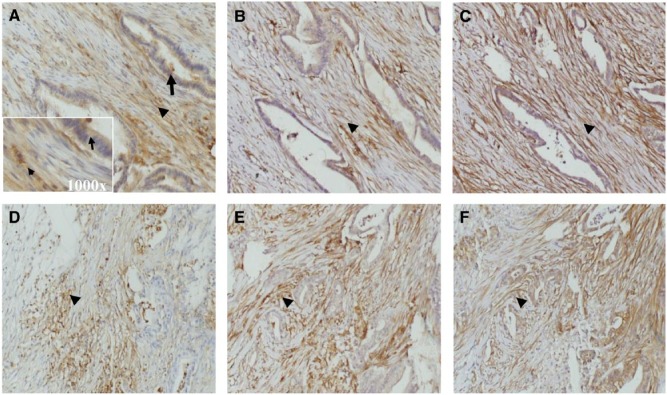
The urokinase plasminogen activator receptor (uPAR) has been proposed as a potential prognostic factor for various malignancies. The aim of this study is to assess the prognostic value of uPAR expression in neoplastic and stromal cells of patients with pancreatic adenocarcinoma. Urokinase plasminogen activator receptor expression was determined by immunohistochemistry in 122 pancreatic ductal adenocarcinomas. Kaplan-Meier and Cox regression analyses were used to determine the association with survival. Respectively 66%, 82% and 62% of patients with pancreatic cancer expressed uPAR in neoplastic cells, stromal, and in both combined. Multivariate analysis showed a significant inverse association between uPAR expression in both neoplastic and stromal cells and overall survival. The prognostic impact of uPAR in stromal cells is substantial, but not as pronounced as that of uPAR expression in neoplastic cells. This study suggests a role for uPAR as a biomarker to single out higher risk subgroups of patients with pancreatic cancer.
尿激酶型纤溶酶原激活物受体(uPAR)已被认为是多种恶性肿瘤潜在的预后因素。本研究旨在评估uPAR表达在胰腺腺癌患者肿瘤细胞和基质细胞中的预后价值。采用免疫组织化学方法检测了122例胰腺导管腺癌中尿激酶型纤溶酶原激活物受体的表达情况。运用Kaplan-Meier法和Cox回归分析来确定其与生存的相关性。分别有66%、82%和62%的胰腺癌患者肿瘤细胞、基质细胞以及两者均表达uPAR。多因素分析显示肿瘤细胞和基质细胞中uPAR表达与总生存之间存在显著的负相关。uPAR在基质细胞中的预后影响显著,但不如在肿瘤细胞中uPAR表达那么明显。本研究提示uPAR可作为一种生物标志物,用于筛选出胰腺癌高危亚组患者。