Pindjakova Jana, Sartini Claudio, Lo Re Oriana, Rappa Francesca, Coupe Berengere, Lelouvier Benjamin, Pazienza Valerio, Vinciguerra Manlio
Center for Translational Medicine, International Clinical Research Center, St. Anne's University HospitalBrno, Czechia.
Department of Primary Care and Population Health, University College LondonLondon, United Kingdom.
Front Microbiol. 2017 Jun 22;8:1157. doi: 10.3389/fmicb.2017.01157. eCollection 2017.
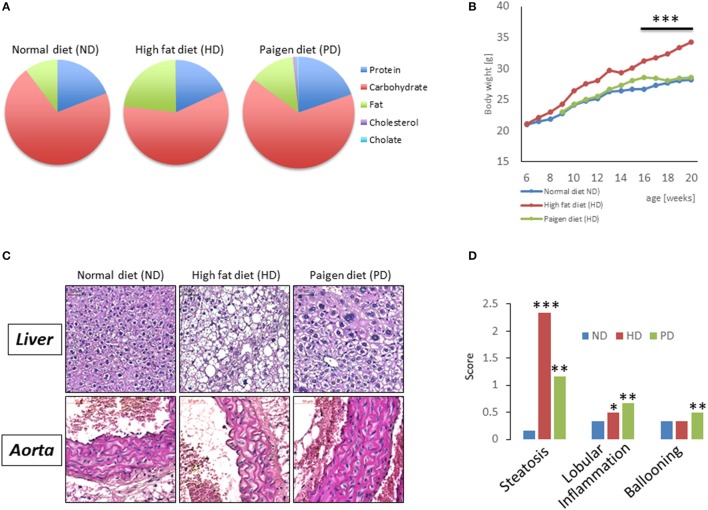
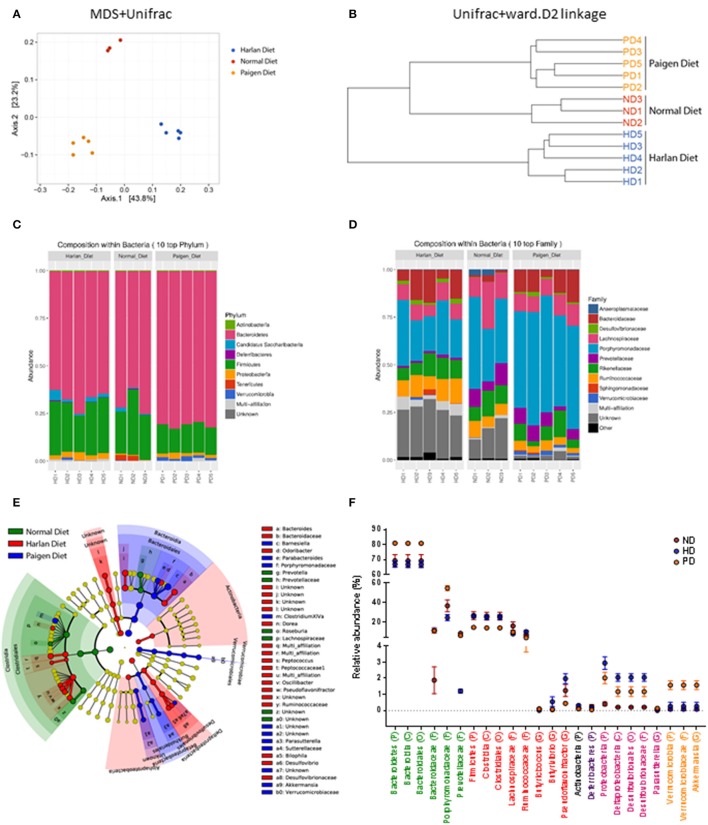
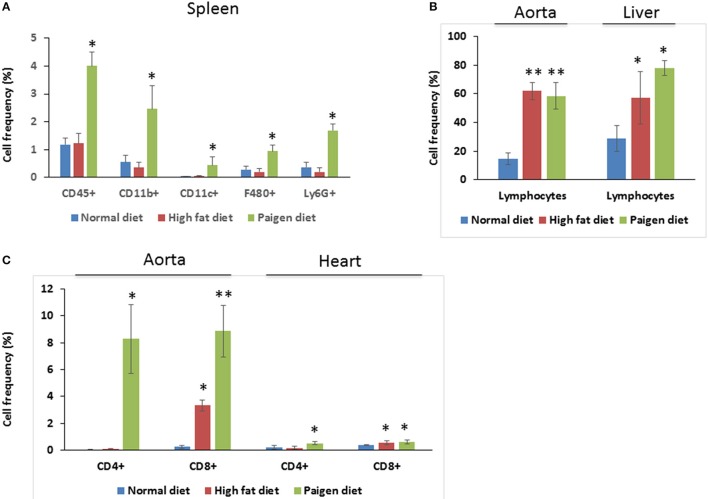
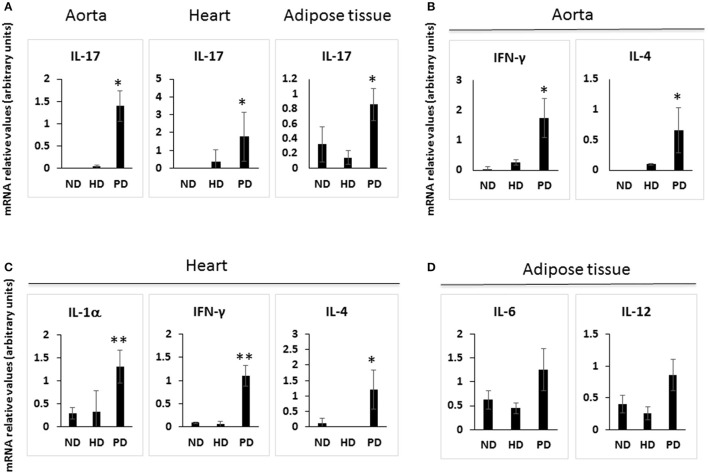
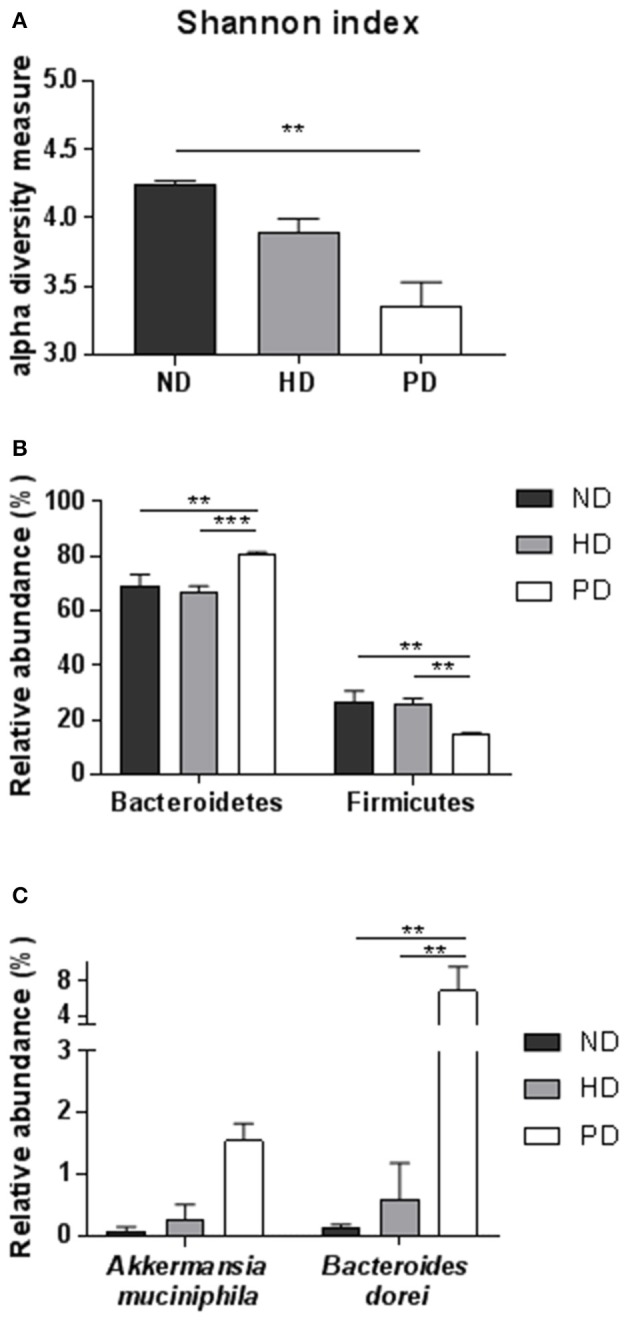
A mutual interplay exists between adaptive immune system and gut microbiota. Altered gut microbial ecosystems are associated with the metabolic syndrome, occurring in most obese individuals. However, it is unknown why 10-25% of obese individuals are metabolically healthy, while normal weight individuals can develop inflammation and atherosclerosis. We modeled these specific metabolic conditions in mice fed with a chow diet, an obesogenic but not inflammatory diet-mimicking healthy obesity, or Paigen diet-mimicking inflammation in the lean subjects. We analyzed a range of markers and cytokines in the aorta, heart, abdominal fat, liver and spleen, and metagenomics analyses were performed on stool samples. T lymphocytes infiltration was found in the aorta and in the liver upon both diets, however a significant increase in CD4+ and CD8+ cells was found only in the heart of Paigen-fed animals, paralleled by increased expression of IL-1, IL-4, IL-6, IL-17, and IFN-γ. Bacteroidia, Deltaproteobacteria, and Verrucomicrobia dominated in mice fed Paigen diet, while Gammaproteobacteria, Delataproteobacteria, and Erysipelotrichia were more abundant in obese mice. Mice reproducing human metabolic exceptions displayed gut microbiota phylogenetically distinct from normal diet-fed mice, and correlated with specific adaptive immune responses. Diet composition thus has a pervasive role in co-regulating adaptive immunity and the diversity of microbiota.
适应性免疫系统与肠道微生物群之间存在相互作用。肠道微生物生态系统的改变与代谢综合征有关,大多数肥胖个体都患有代谢综合征。然而,尚不清楚为什么10%-25%的肥胖个体代谢健康,而正常体重个体却会出现炎症和动脉粥样硬化。我们在喂食普通饲料、模拟健康肥胖的致肥胖但无炎症的饮食或模拟瘦人炎症的派根饮食的小鼠中模拟了这些特定的代谢状况。我们分析了主动脉、心脏、腹部脂肪、肝脏和脾脏中的一系列标志物和细胞因子,并对粪便样本进行了宏基因组学分析。两种饮食喂养的小鼠在主动脉和肝脏中均发现T淋巴细胞浸润,但仅在喂食派根饮食的动物心脏中发现CD4+和CD8+细胞显著增加,同时IL-1、IL-4、IL-6、IL-17和IFN-γ的表达也增加。在喂食派根饮食的小鼠中,拟杆菌门、δ-变形菌门和疣微菌门占主导地位,而在肥胖小鼠中γ-变形菌门、δ-变形菌门和丹毒丝菌科更为丰富。重现人类代谢异常情况的小鼠显示出与正常饮食喂养小鼠在系统发育上不同的肠道微生物群,并且与特定的适应性免疫反应相关。因此,饮食组成在共同调节适应性免疫和微生物群多样性方面具有普遍作用。