Department of Biochemistry and Cambridge Systems Biology Centre, University of Cambridge, 80 Tennis Court Road, Cambridge CB2 1GA, UK.
Division of Biomedical Sciences, Warwick Medical School, University of Warwick, Gibbet Hill Road, Coventry CV4 7AL, UK.
Nat Commun. 2017 Jul 10;8:16018. doi: 10.1038/ncomms16018.
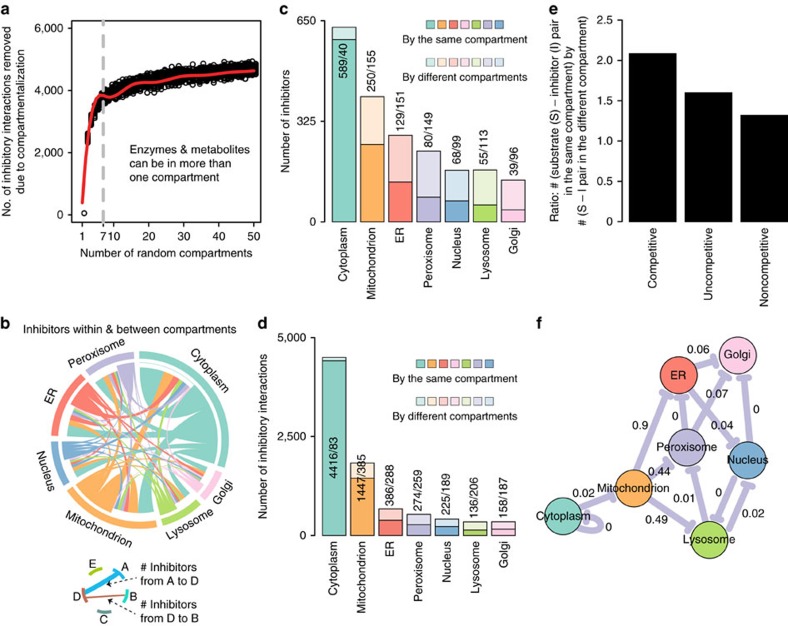
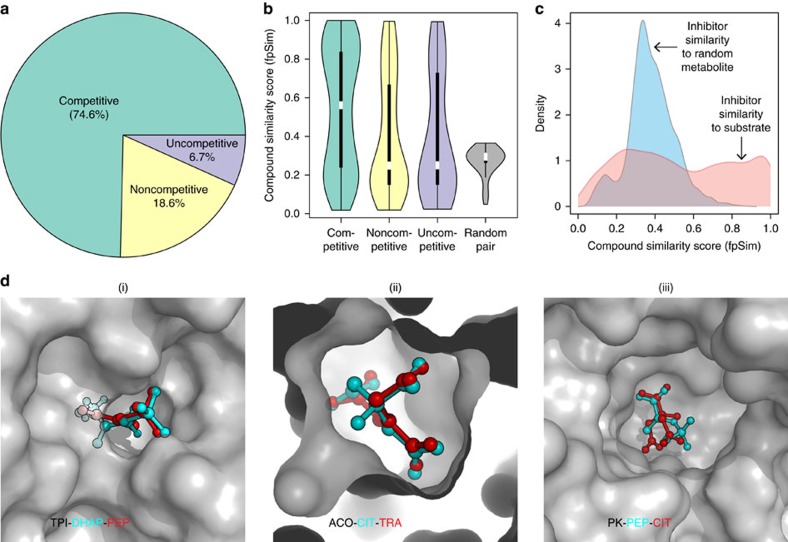
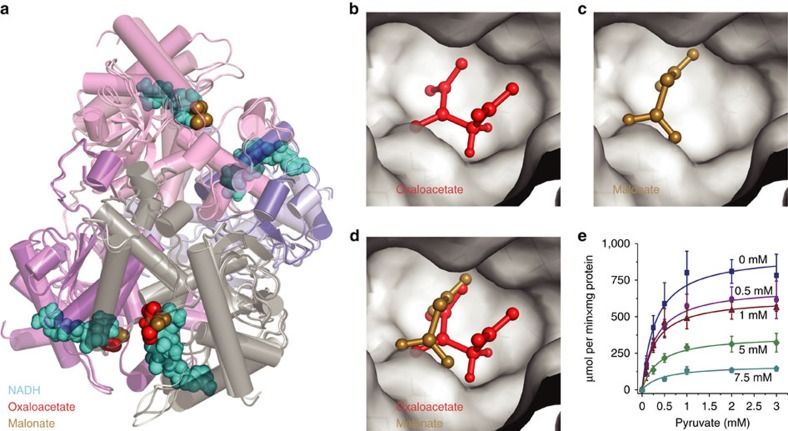
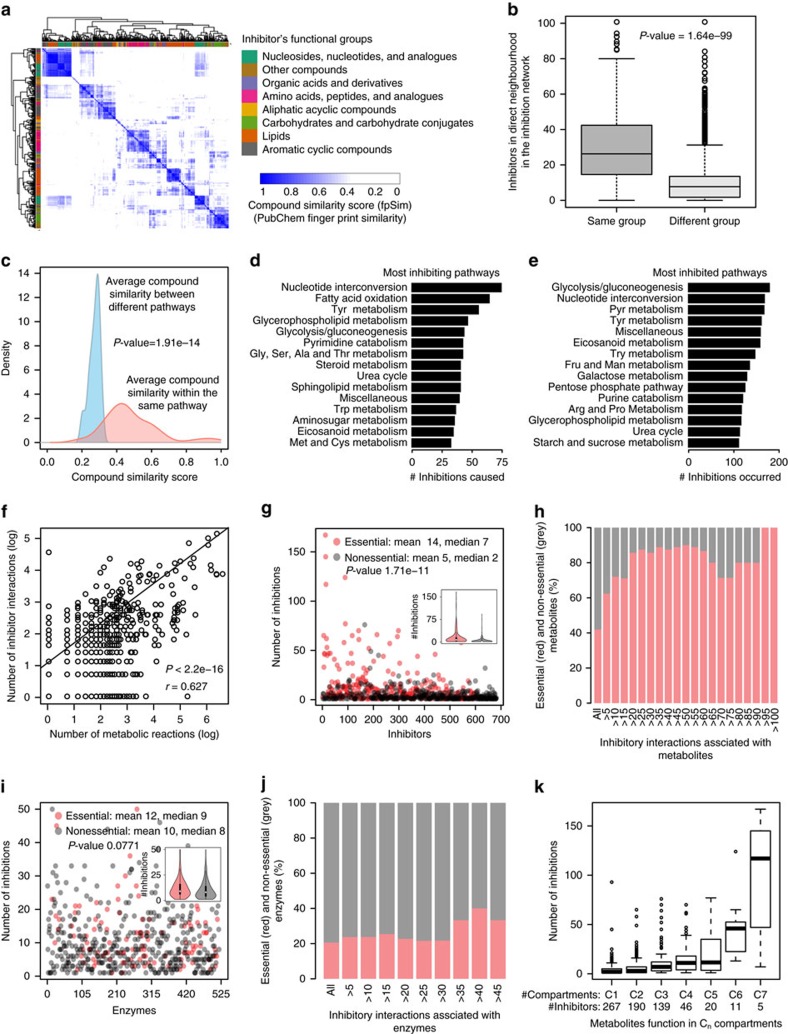
Metabolites can inhibit the enzymes that generate them. To explore the general nature of metabolic self-inhibition, we surveyed enzymological data accrued from a century of experimentation and generated a genome-scale enzyme-inhibition network. Enzyme inhibition is often driven by essential metabolites, affects the majority of biochemical processes, and is executed by a structured network whose topological organization is reflecting chemical similarities that exist between metabolites. Most inhibitory interactions are competitive, emerge in the close neighbourhood of the inhibited enzymes, and result from structural similarities between substrate and inhibitors. Structural constraints also explain one-third of allosteric inhibitors, a finding rationalized by crystallographic analysis of allosterically inhibited L-lactate dehydrogenase. Our findings suggest that the primary cause of metabolic enzyme inhibition is not the evolution of regulatory metabolite-enzyme interactions, but a finite structural diversity prevalent within the metabolome. In eukaryotes, compartmentalization minimizes inevitable enzyme inhibition and alleviates constraints that self-inhibition places on metabolism.
代谢物可以抑制产生它们的酶。为了探索代谢自我抑制的一般性质,我们调查了一个世纪的实验积累的酶学数据,并生成了一个基因组规模的酶抑制网络。酶抑制通常由必需代谢物驱动,影响大多数生化过程,并由一个结构网络执行,该网络的拓扑组织反映了代谢物之间存在的化学相似性。大多数抑制性相互作用是竞争性的,出现在受抑制酶的邻近区域,并且是由于底物和抑制剂之间的结构相似性引起的。结构约束也解释了三分之一的变构抑制剂,这一发现通过对变构抑制的 L-乳酸脱氢酶的晶体学分析得到了合理化。我们的研究结果表明,代谢酶抑制的主要原因不是调节代谢物-酶相互作用的进化,而是代谢物中普遍存在的有限结构多样性。在真核生物中,区室化最大限度地减少了不可避免的酶抑制,并缓解了自我抑制对代谢所施加的限制。