Nilsson Niclas, Håkansson Bo, Ortiz-Catalan Max
Department of Electrical Engineering, Chalmers University of Technology, Gothenburg, Sweden.
Integrum AB, Mölndal, Sweden.
J Neuroeng Rehabil. 2017 Jul 10;14(1):68. doi: 10.1186/s12984-017-0283-5.
Limb prosthetics, exoskeletons, and neurorehabilitation devices can be intuitively controlled using myoelectric pattern recognition (MPR) to decode the subject's intended movement. In conventional MPR, descriptive electromyography (EMG) features representing the intended movement are fed into a classification algorithm. The separability of the different movements in the feature space significantly affects the classification complexity. Classification complexity estimating algorithms (CCEAs) were studied in this work in order to improve feature selection, predict MPR performance, and inform on faulty data acquisition.
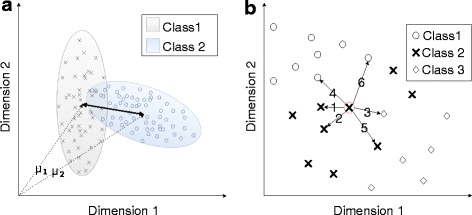
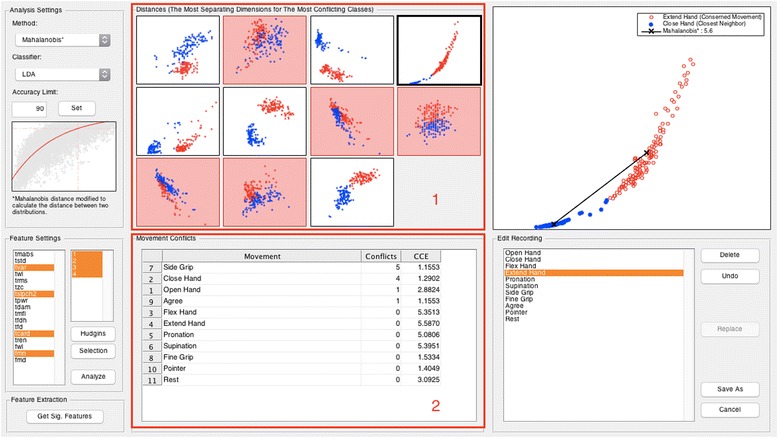
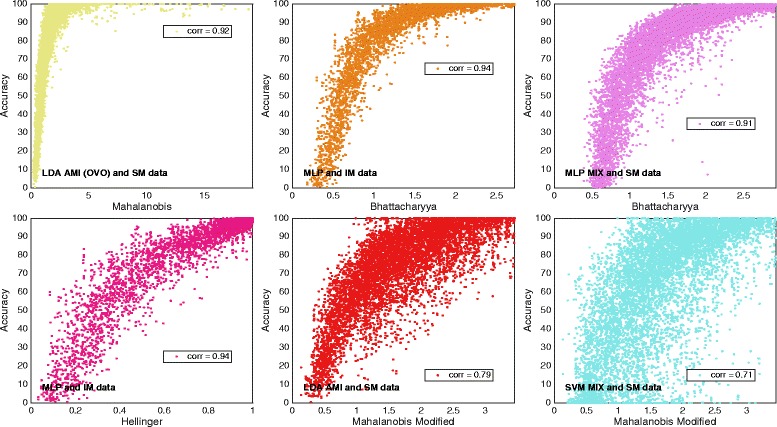
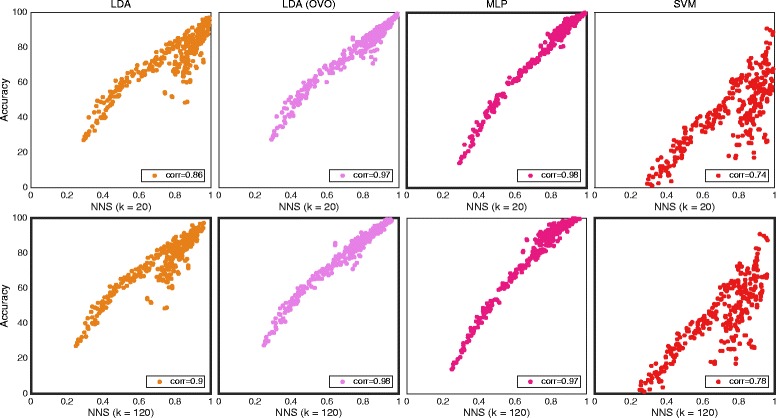
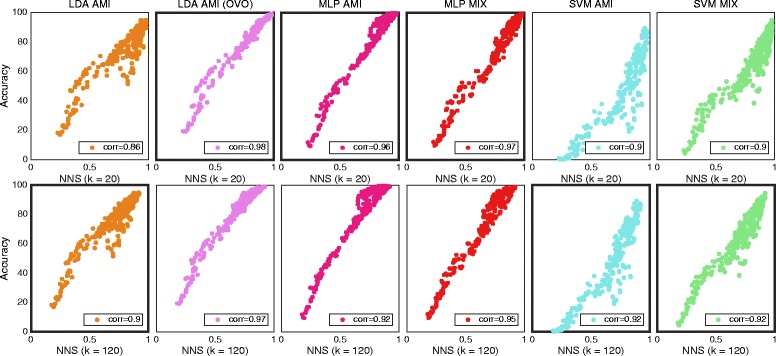
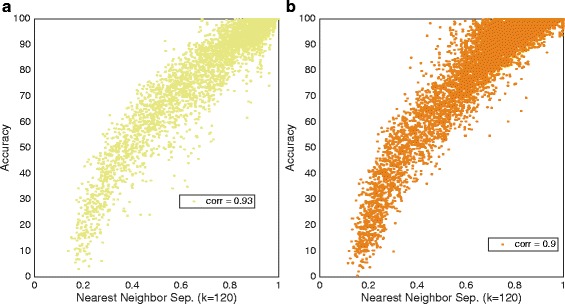
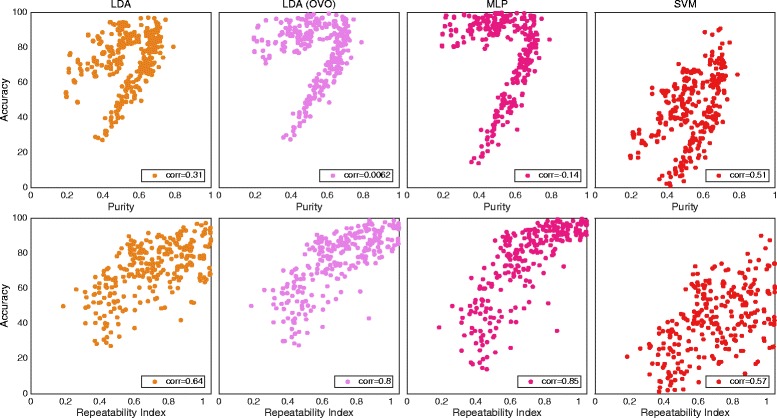
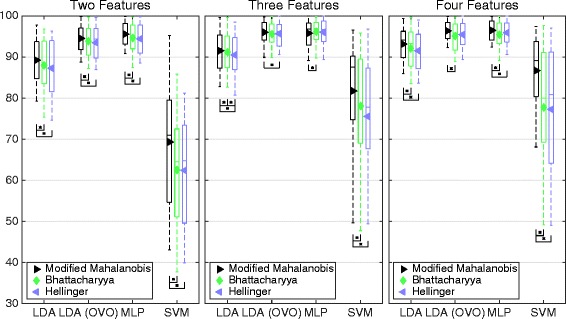
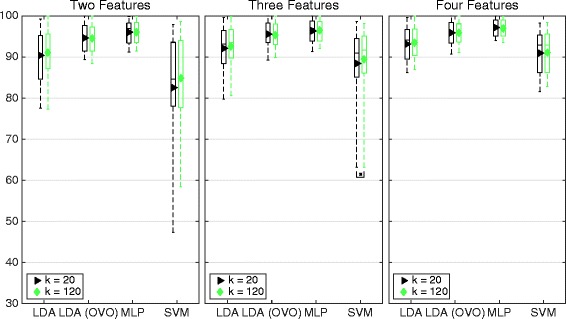
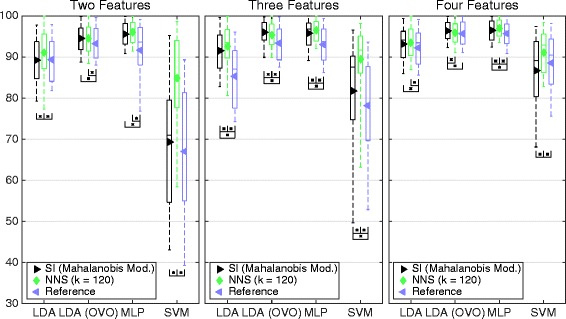
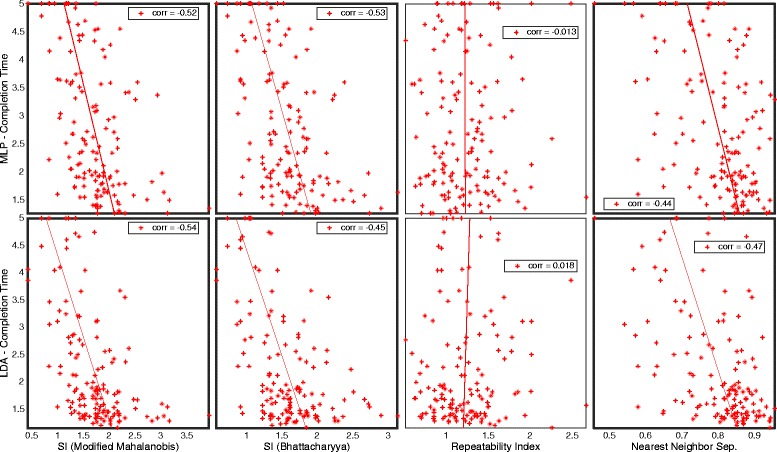
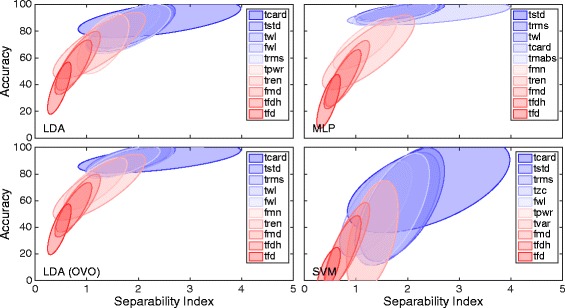
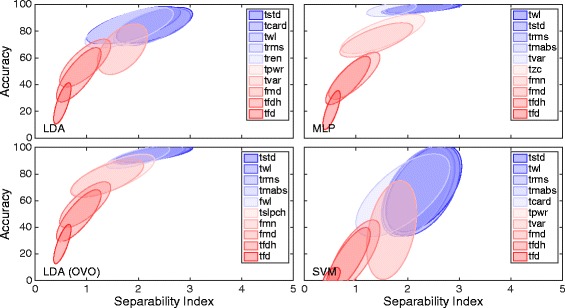
CCEAs such as nearest neighbor separability (NNS), purity, repeatability index (RI), and separability index (SI) were evaluated based on their correlation with classification accuracy, as well as on their suitability to produce highly performing EMG feature sets. SI was evaluated using Mahalanobis distance, Bhattacharyya distance, Hellinger distance, Kullback-Leibler divergence, and a modified version of Mahalanobis distance. Three commonly used classifiers in MPR were used to compute classification accuracy (linear discriminant analysis (LDA), multi-layer perceptron (MLP), and support vector machine (SVM)). The algorithms and analytic graphical user interfaces produced in this work are freely available in BioPatRec.
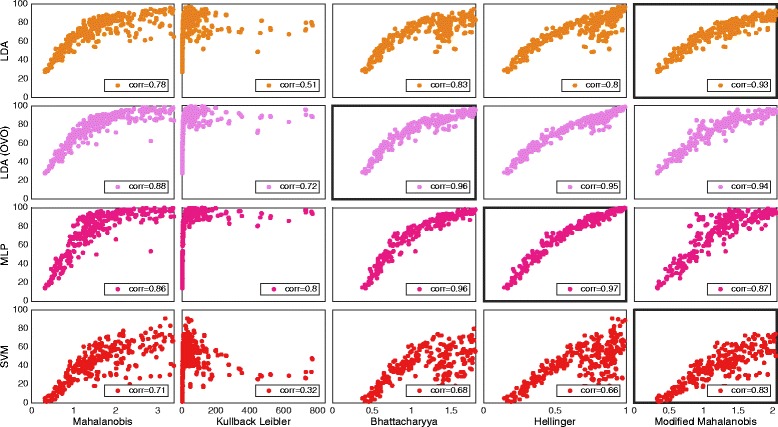
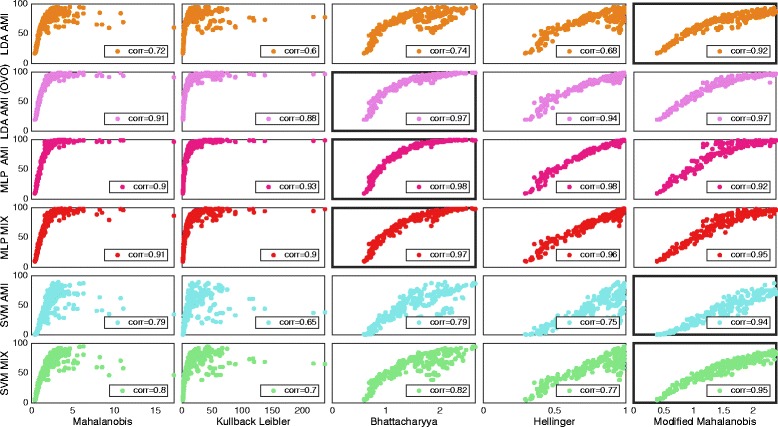
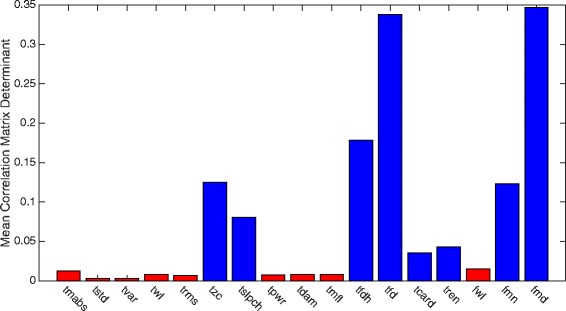
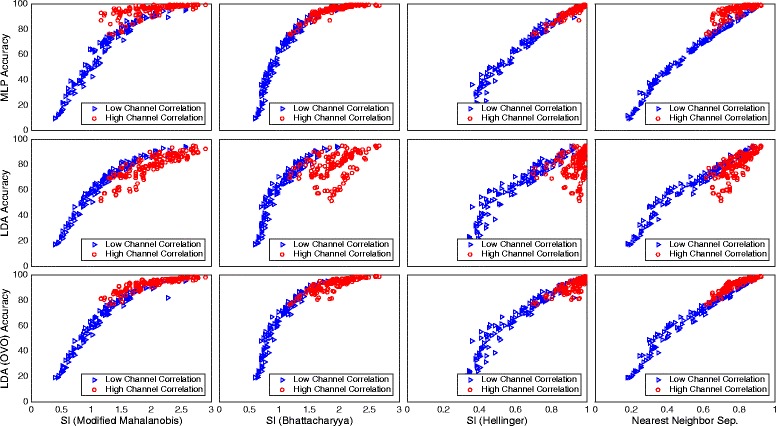
NNS and SI were found to be highly correlated with classification accuracy (correlations up to 0.98 for both algorithms) and capable of yielding highly descriptive feature sets. Additionally, the experiments revealed how the level of correlation between the inputs of the classifiers influences classification accuracy, and emphasizes the classifiers' sensitivity to such redundancy.
This study deepens the understanding of the classification complexity in prediction of motor volition based on myoelectric information. It also provides researchers with tools to analyze myoelectric recordings in order to improve classification performance.
肢体假肢、外骨骼和神经康复设备可以通过肌电模式识别(MPR)直观地进行控制,以解码受试者的预期动作。在传统的MPR中,代表预期动作的描述性肌电图(EMG)特征被输入到分类算法中。特征空间中不同动作的可分离性显著影响分类的复杂性。为了改进特征选择、预测MPR性能并识别错误的数据采集,本研究对分类复杂性估计算法(CCEAs)进行了研究。
基于与分类准确率的相关性以及生成高性能EMG特征集的适用性,对最近邻可分离性(NNS)、纯度、重复性指数(RI)和可分离性指数(SI)等CCEAs进行了评估。使用马氏距离、巴氏距离、赫林格距离、库尔贝克-莱布勒散度和马氏距离的修改版本对SI进行了评估。在MPR中使用三种常用的分类器来计算分类准确率(线性判别分析(LDA)、多层感知器(MLP)和支持向量机(SVM))。本研究中产生的算法和分析图形用户界面可在BioPatRec中免费获得。
发现NNS和SI与分类准确率高度相关(两种算法的相关性均高达0.98),并且能够产生高度描述性的特征集。此外,实验揭示了分类器输入之间的相关程度如何影响分类准确率,并强调了分类器对这种冗余的敏感性。
本研究加深了对基于肌电信息预测运动意志时分类复杂性的理解。它还为研究人员提供了分析肌电记录的工具,以提高分类性能。