Division of Allergy, Immunology and Transplantation, National Institutes of Allergy and Infectious Diseases, National Institutes of Health, Bethesda, Md.
Rho Federal Systems Division, Inc, Chapel Hill, NC.
J Allergy Clin Immunol Pract. 2018 Jan-Feb;6(1):101-107.e2. doi: 10.1016/j.jaip.2017.05.019. Epub 2017 Jul 8.
Although pets are found in more than 50% of US homes, the effect of pet allergen exposure on asthma morbidity in the US population is not well documented.
To determine the effect of dog and cat allergen exposures on asthma morbidity in the US population.
The National Health and Nutrition Examination Survey is a representative sample of civilian US population. Data on asthma, dog and cat allergen levels in bedroom dust, as well as specific IgE to dog and cat were analyzed for all participants 6 years or older.
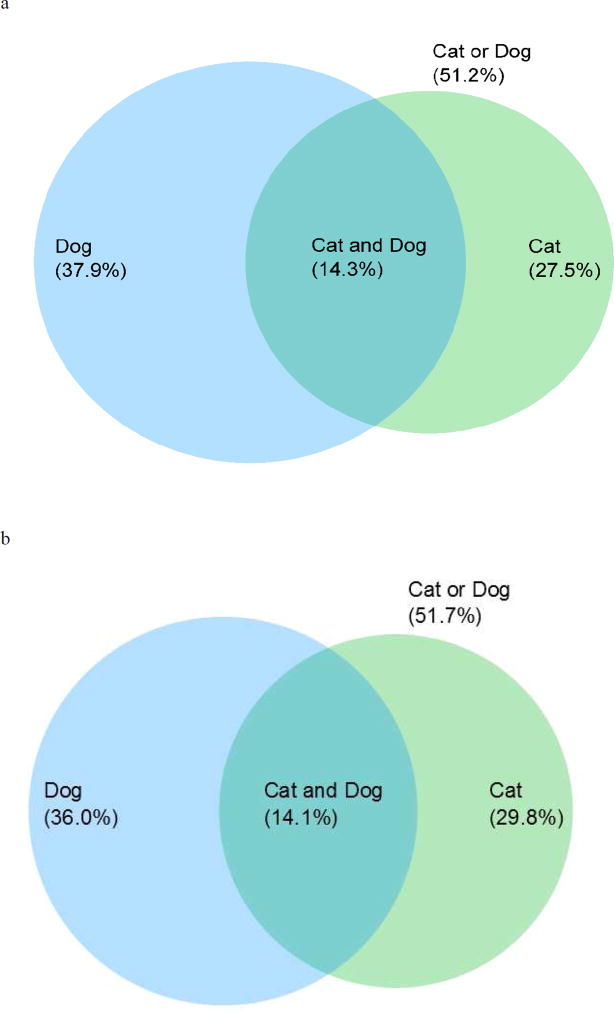
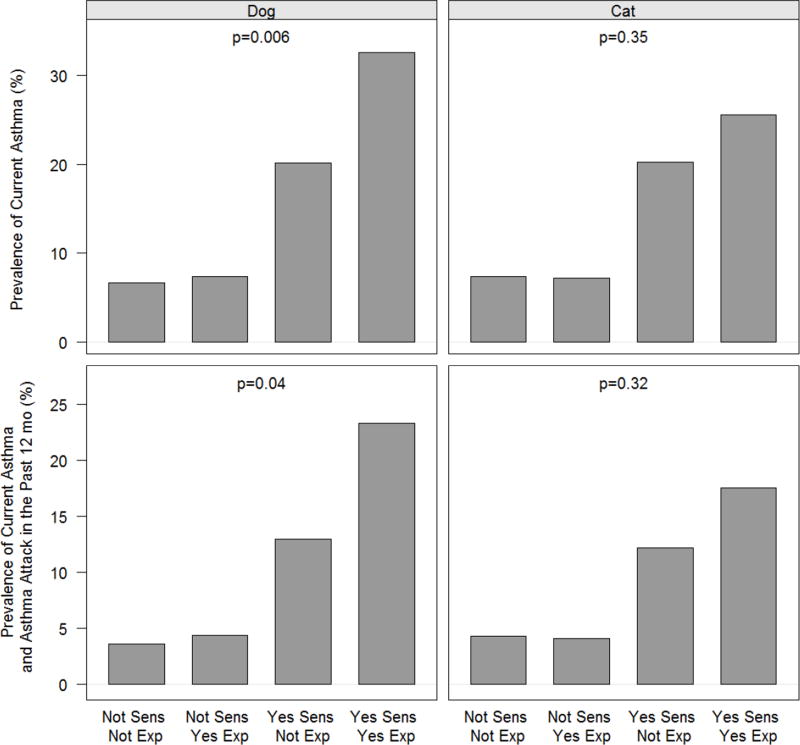
Pets are common in the United States, with more that 50% of households having a dog or a cat or both. The prevalence of allergic sensitization in the National Health and Nutrition Examination Survey population was similar for dog and cat, with both being approximately 12%. Among those who were sensitized, exposure to elevated levels of pet allergens was associated with an increased prevalence of asthma and asthma attacks. Indeed, 44.2% of the asthma attacks were attributable to exposure to high levels of dog allergen in the bedroom among patients with asthma sensitive to dog and 30.3% were attributable to cat allergen exposure among the comparable cat-sensitive and exposed group. Projecting these results to the US population indicates more than 1 million increased asthma attacks each year for the dog-sensitive and exposed group and more than 500,000 increased asthma attacks for the cat-sensitive and exposed population of patients with asthma.
Exposure to elevated levels of dog and cat allergens among those sensitized individuals with asthma is associated with excess asthma attacks. Reducing pet allergen exposures has the potential for a significant decrease in asthma morbidity.
尽管宠物出现在超过 50%的美国家庭中,但宠物过敏原暴露对美国人群哮喘发病率的影响尚未得到很好的记录。
确定狗和猫过敏原暴露对美国人群哮喘发病率的影响。
国家健康和营养检查调查是美国平民人口的代表性样本。对所有 6 岁及以上的参与者进行了卧室灰尘中狗和猫过敏原水平以及对狗和猫的特异性 IgE 的数据分析。
宠物在美国很常见,超过 50%的家庭养有狗或猫,或者两者都有。国家健康和营养检查调查人群中的过敏致敏率在狗和猫之间相似,均约为 12%。在那些致敏的人中,暴露于高水平的宠物过敏原与哮喘和哮喘发作的患病率增加有关。事实上,在对狗过敏且敏感的患者中,有 44.2%的哮喘发作归因于卧室中高水平的狗过敏原暴露,而在具有可比性的对猫过敏且暴露的患者中,有 30.3%的哮喘发作归因于猫过敏原暴露。将这些结果推广到美国人群中表明,每年因狗敏感且暴露而导致的哮喘发作增加超过 100 万次,而因猫敏感且暴露而导致的哮喘发作增加超过 50 万次。
在那些有哮喘的过敏个体中,暴露于高水平的狗和猫过敏原与哮喘发作过多有关。减少宠物过敏原暴露有可能显著降低哮喘发病率。