Satagopan Sriram, Sun Yuan, Parquette Jon R, Tabita F Robert
Department of Microbiology, The Ohio State University, 484 West 12th Avenue, Columbus, OH 43210-1292 USA.
Department of Chemistry and Biochemistry, The Ohio State University, 100 West 18th Avenue, Columbus, OH 43210-1185 USA.
Biotechnol Biofuels. 2017 Jul 6;10:175. doi: 10.1186/s13068-017-0861-6. eCollection 2017.
With increasing concerns over global warming and depletion of fossil-fuel reserves, it is attractive to develop innovative strategies to assimilate CO, a greenhouse gas, into usable organic carbon. Cell-free systems can be designed to operate as catalytic platforms with enzymes that offer exceptional selectivity and efficiency, without the need to support ancillary reactions of metabolic pathways operating in intact cells. Such systems are yet to be exploited for applications involving CO utilization and subsequent conversion to valuable products, including biofuels. The Calvin-Benson-Bassham (CBB) cycle and the enzyme ribulose 1,5-bisphosphate carboxylase/oxygenase (RubisCO) play a pivotal role in global CO fixation.
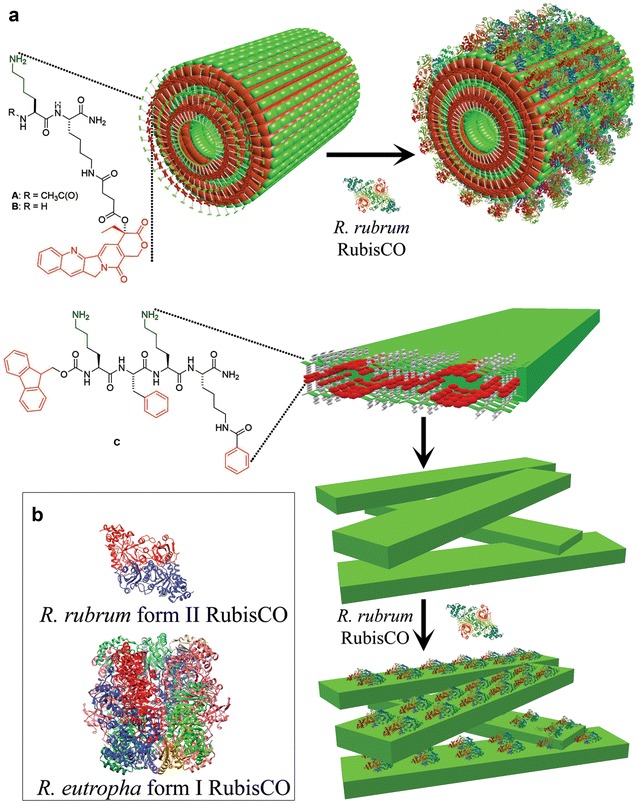
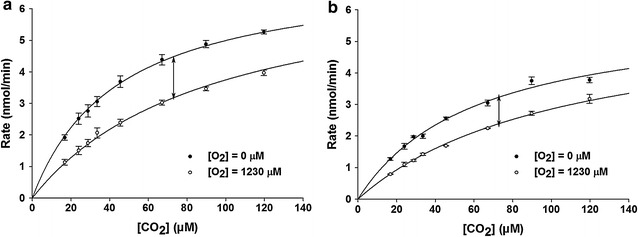
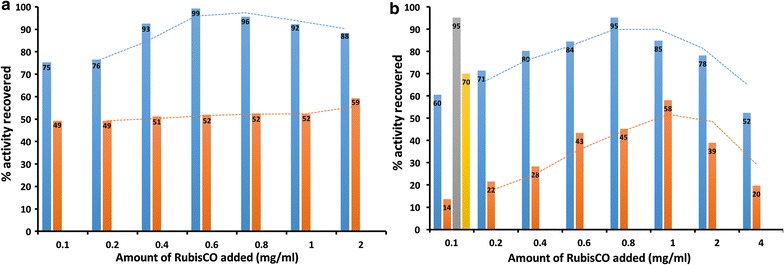
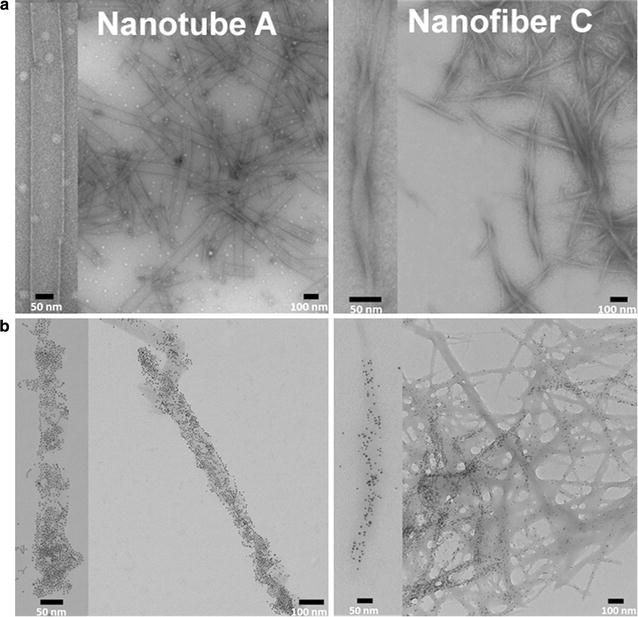
We hereby demonstrate the co-assembly of two RubisCO-associated multienzyme cascades with self-assembled synthetic amphiphilic peptide nanostructures. The immobilized enzyme cascades sequentially convert either ribose-5-phosphate (R-5-P) or glucose, a simpler substrate, to ribulose 1,5-bisphosphate (RuBP), the acceptor for incoming CO in the carboxylation reaction catalyzed by RubisCO. Protection from proteolytic degradation was observed in nanostructures associated with the small dimeric form of RubisCO and ancillary enzymes. Furthermore, nanostructures associated with a larger variant of RubisCO resulted in a significant enhancement of the enzyme's selectivity towards CO, without adversely affecting the catalytic activity.
The ability to assemble a cascade of enzymes for CO capture using self-assembling nanostructure scaffolds with functional enhancements show promise for potentially engineering entire pathways (with RubisCO or other CO-fixing enzymes) to redirect carbon from industrial effluents into useful bioproducts.
随着对全球变暖和化石燃料储备枯竭的担忧日益增加,开发创新策略将温室气体二氧化碳转化为可用有机碳具有吸引力。无细胞系统可设计为催化平台,利用具有卓越选择性和效率的酶,无需支持完整细胞中代谢途径的辅助反应。此类系统尚未用于涉及二氧化碳利用及后续转化为包括生物燃料在内的有价值产品的应用。卡尔文 - 本森 - 巴沙姆(CBB)循环和核酮糖1,5 - 二磷酸羧化酶/加氧酶(RubisCO)在全球二氧化碳固定中起关键作用。
我们在此展示了两种与RubisCO相关的多酶级联反应与自组装合成两亲性肽纳米结构的共组装。固定化的酶级联反应依次将5 - 磷酸核糖(R - 5 - P)或更简单的底物葡萄糖转化为核酮糖1,5 - 二磷酸(RuBP),RuBP是RubisCO催化羧化反应中进入二氧化碳的受体。在与RubisCO小二聚体形式及辅助酶相关的纳米结构中观察到对蛋白水解降解的保护作用。此外,与较大RubisCO变体相关的纳米结构导致该酶对二氧化碳的选择性显著增强,而不会对催化活性产生不利影响。
利用具有功能增强的自组装纳米结构支架组装用于捕获二氧化碳的酶级联反应的能力,有望潜在地设计整个途径(使用RubisCO或其他二氧化碳固定酶),将工业废水中的碳重新导向有用的生物产品。