• 文献检索
  • 文档翻译
  • 深度研究
  • 学术资讯
  • Suppr Zotero 插件Zotero 插件
  • 邀请有礼
  • 套餐&价格
  • 历史记录
应用&插件
Suppr Zotero 插件Zotero 插件浏览器插件Mac 客户端Windows 客户端微信小程序
定价
高级版会员购买积分包购买API积分包
服务
文献检索文档翻译深度研究API 文档MCP 服务
关于我们
关于 Suppr公司介绍联系我们用户协议隐私条款
关注我们

Suppr 超能文献

核心技术专利:CN118964589B侵权必究
粤ICP备2023148730 号-1Suppr @ 2026

文献检索

告别复杂PubMed语法,用中文像聊天一样搜索,搜遍4000万医学文献。AI智能推荐,让科研检索更轻松。

立即免费搜索

文件翻译

保留排版,准确专业,支持PDF/Word/PPT等文件格式,支持 12+语言互译。

免费翻译文档

深度研究

AI帮你快速写综述,25分钟生成高质量综述,智能提取关键信息,辅助科研写作。

立即免费体验

热带起源,蘑菇科小皮伞属腐生蘑菇的扩散模型及十六个新种描述。

Tropic origins, a dispersal model for saprotrophic mushrooms in Agaricus section Minores with descriptions of sixteen new species.

机构信息

State key laboratory of Mycology, Institute of Microbiology, Chinese Academy of Sciences, Beijing, 100101, China.

Department of Entomology and Plant Pathology, Faculty of Agriculture, Chiang Mai University, Chiang Mai, 50200, Thailand.

出版信息

Sci Rep. 2017 Jul 11;7(1):5122. doi: 10.1038/s41598-017-05203-5.

DOI:10.1038/s41598-017-05203-5
PMID:28698573
原文链接:https://pmc.ncbi.nlm.nih.gov/articles/PMC5505996/
Abstract

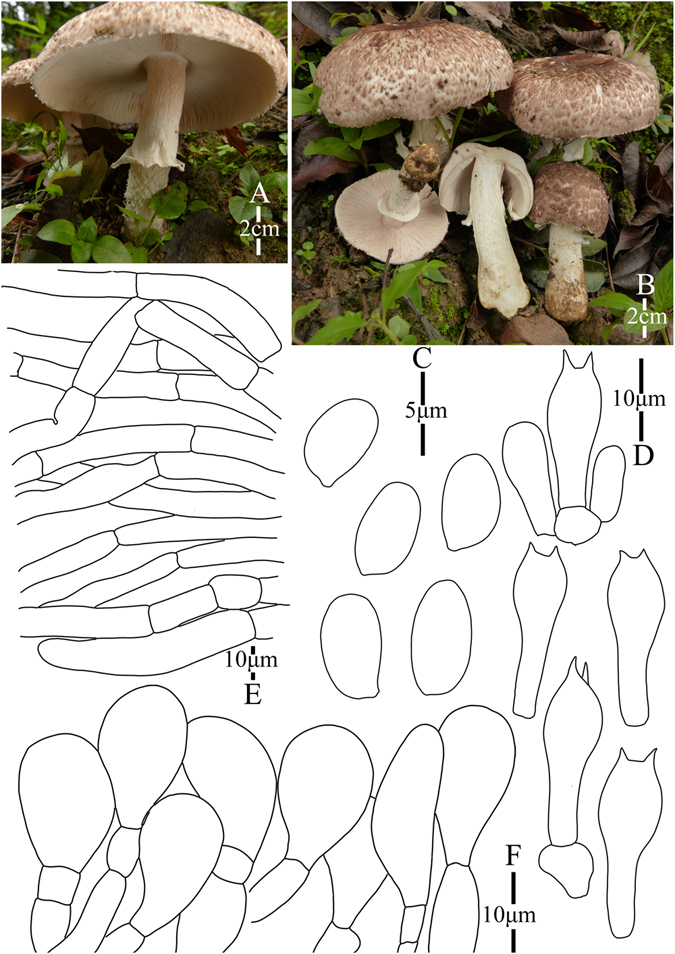
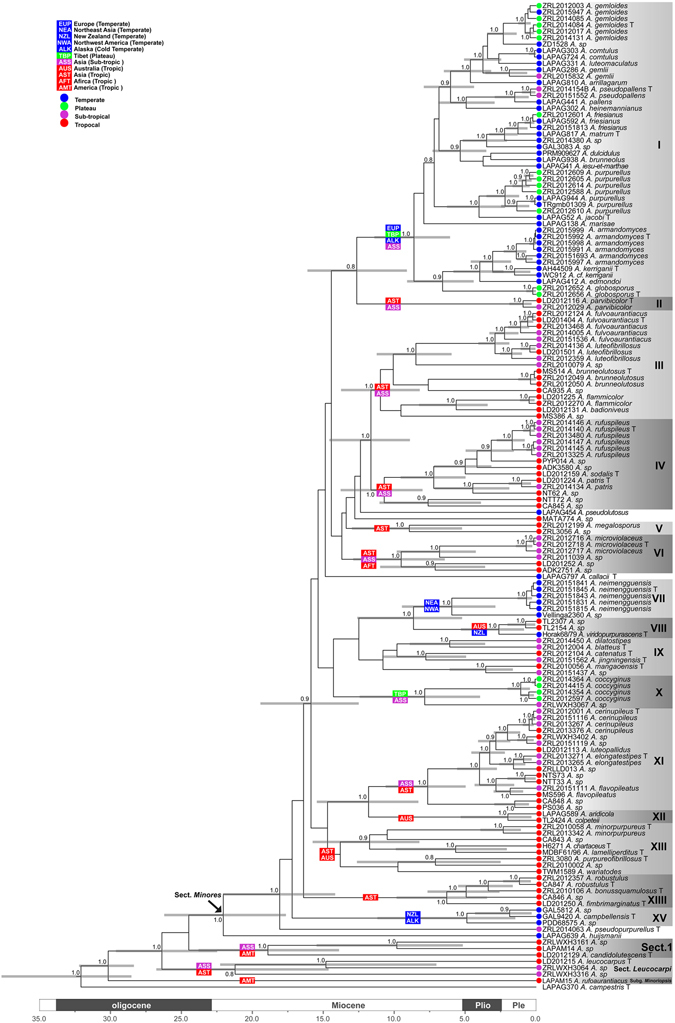
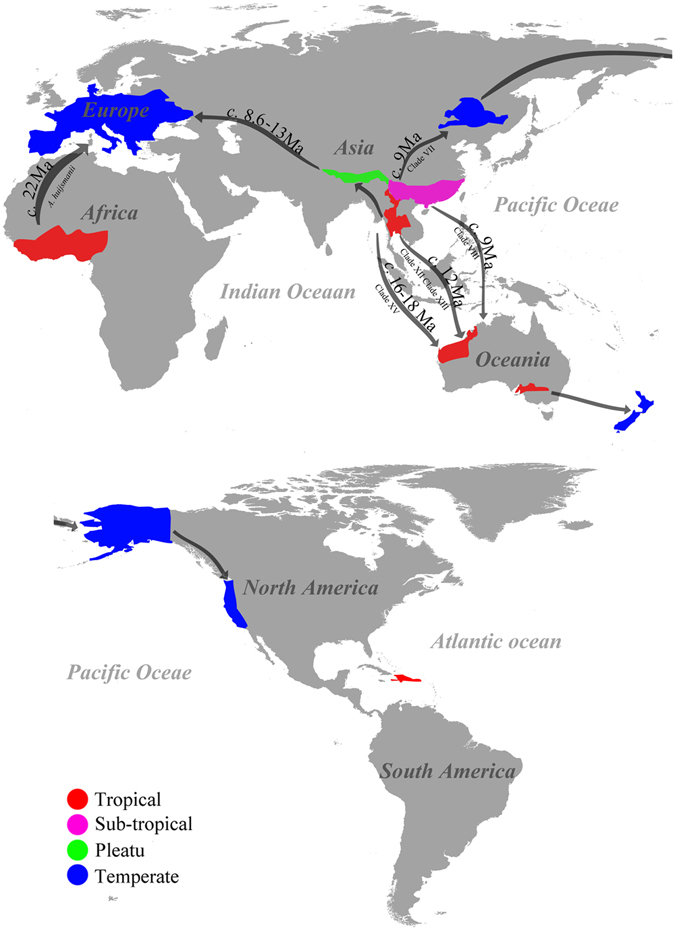
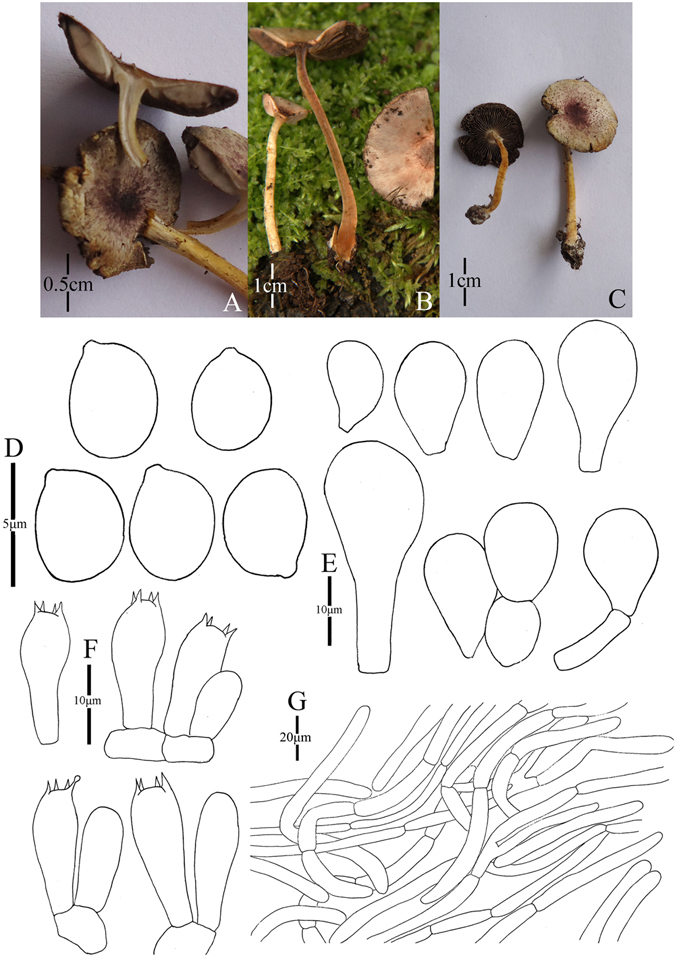
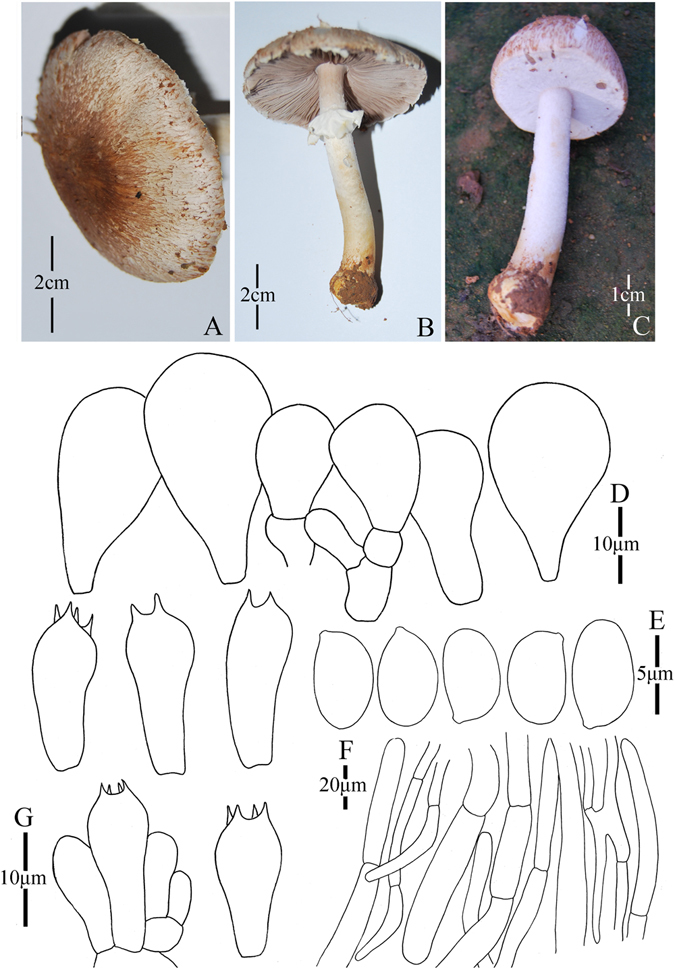
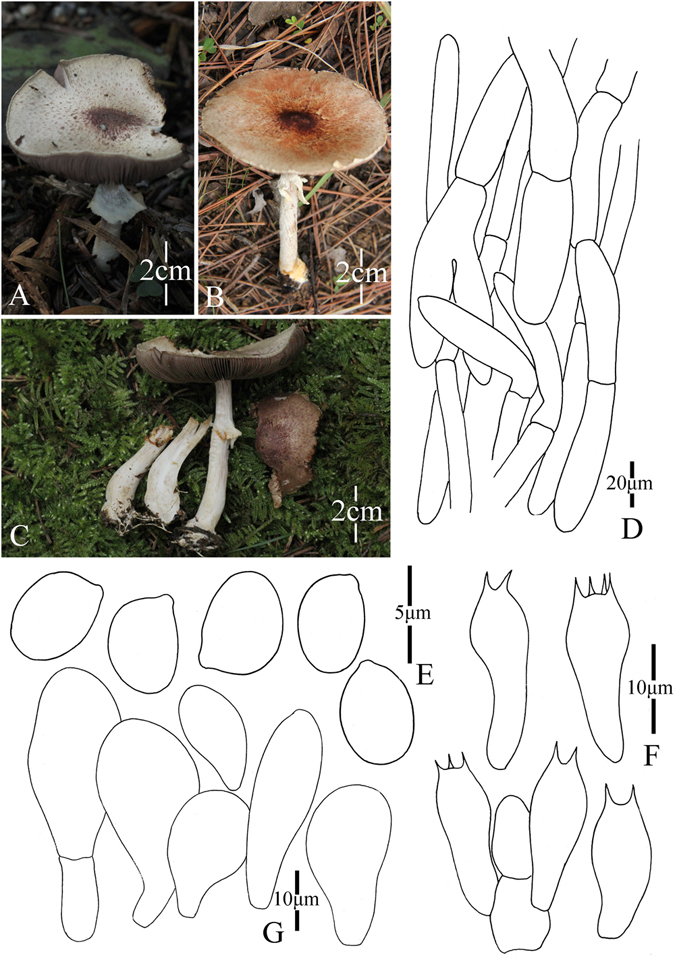
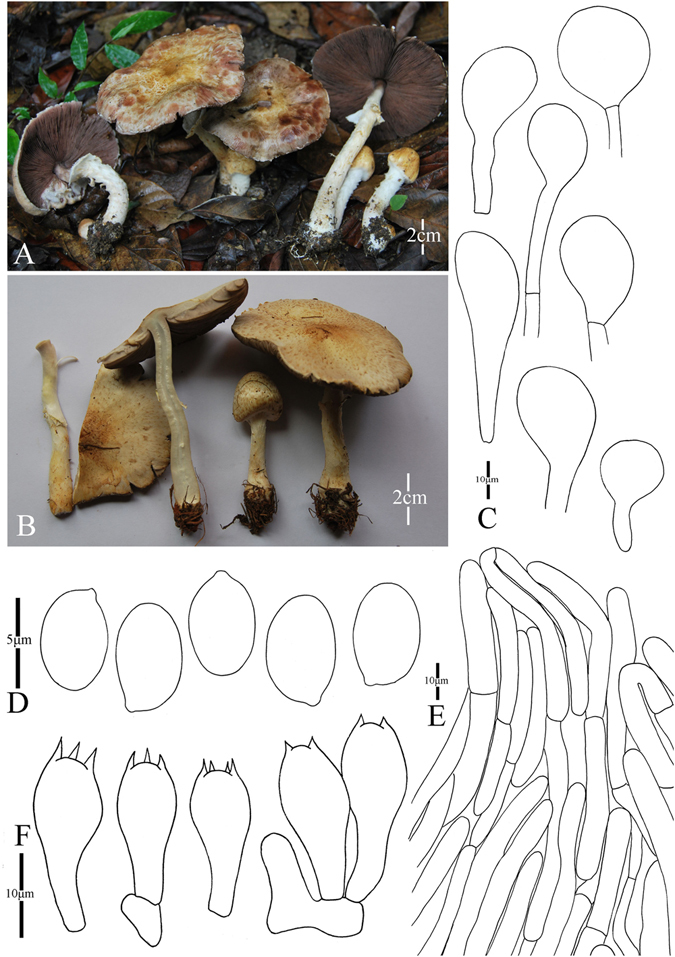
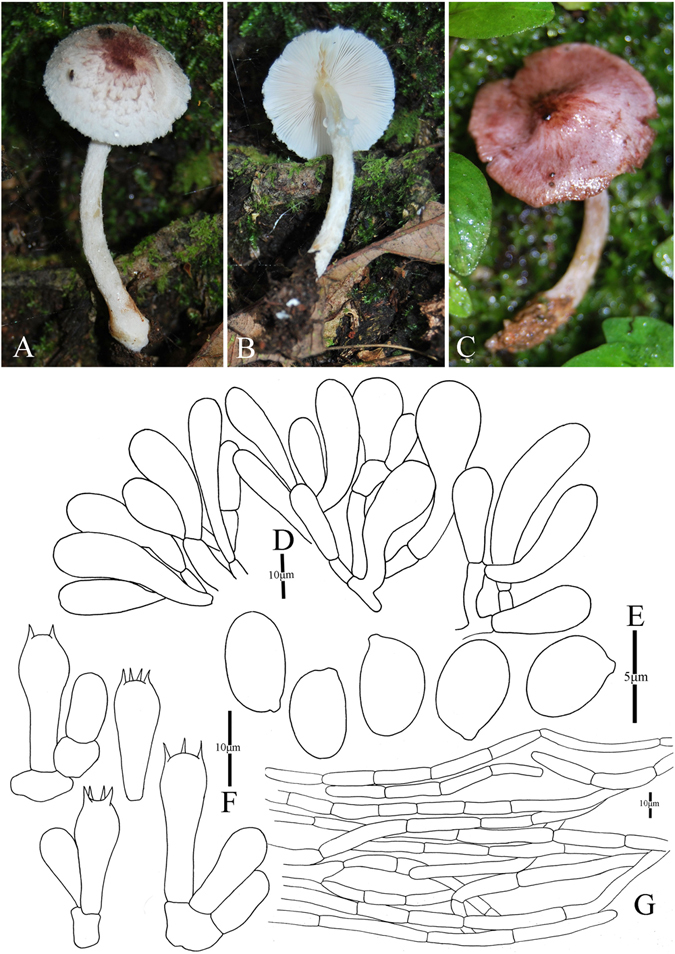
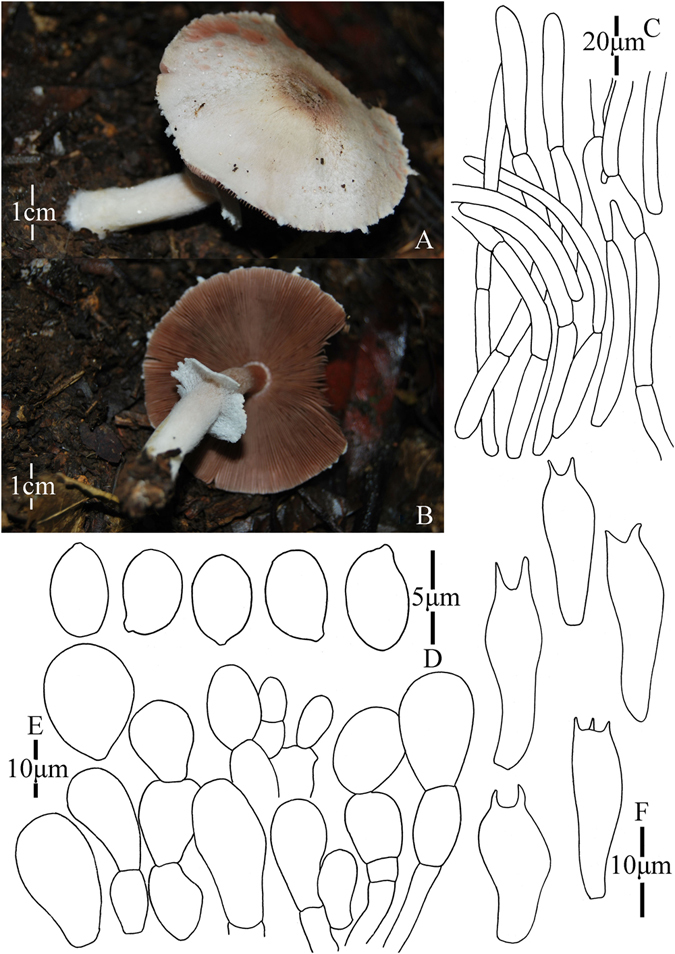
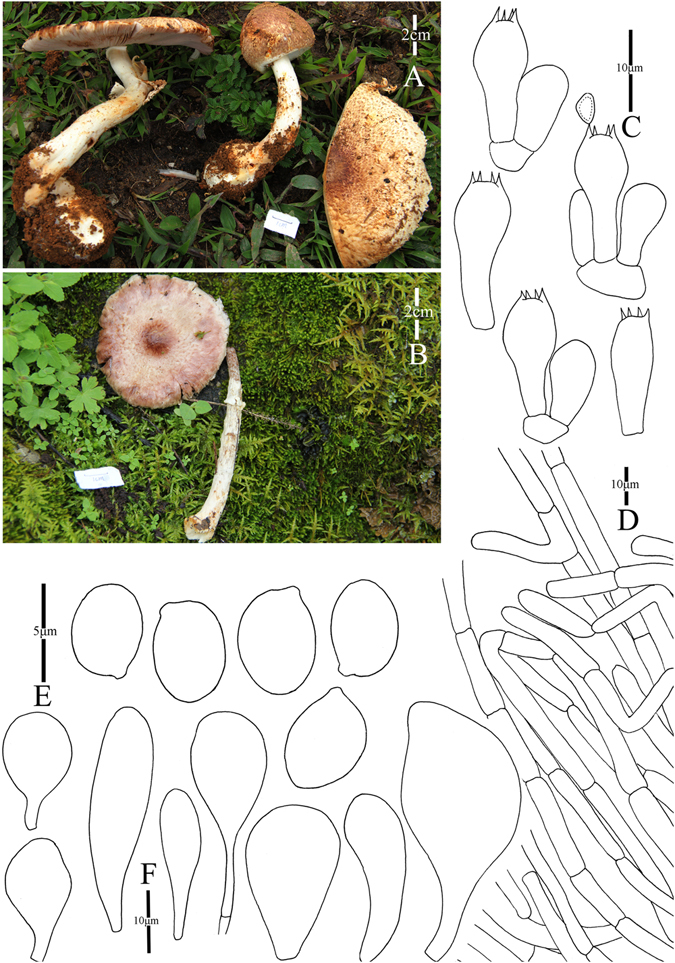
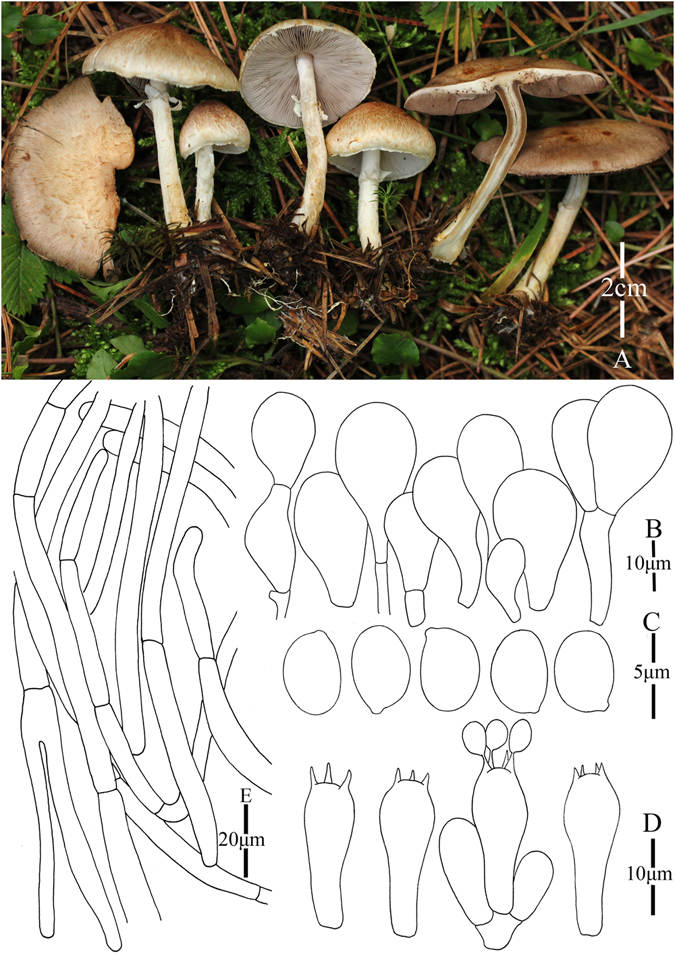
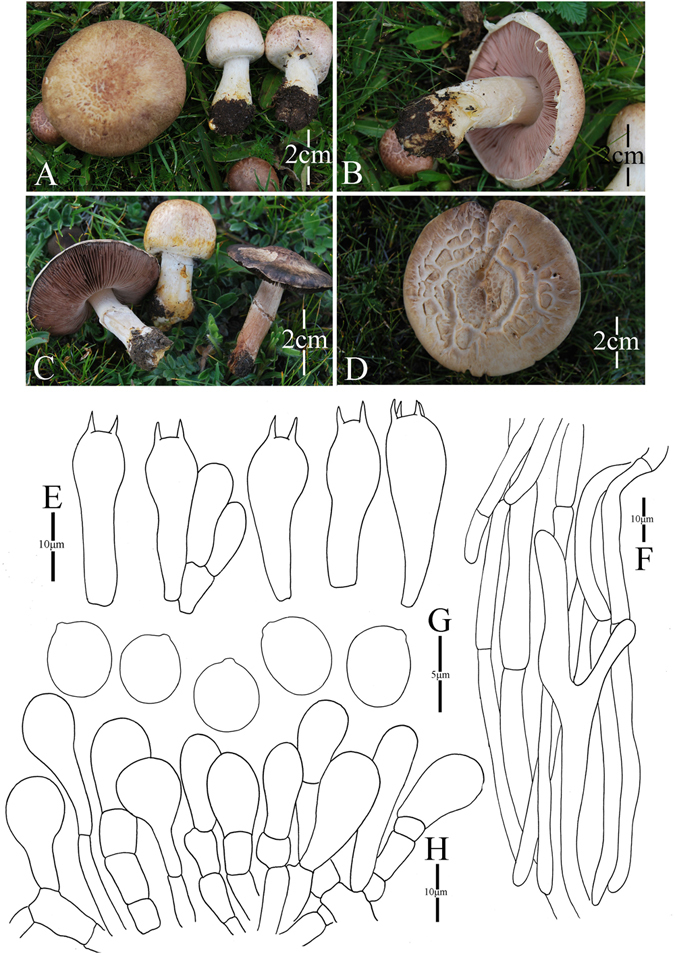
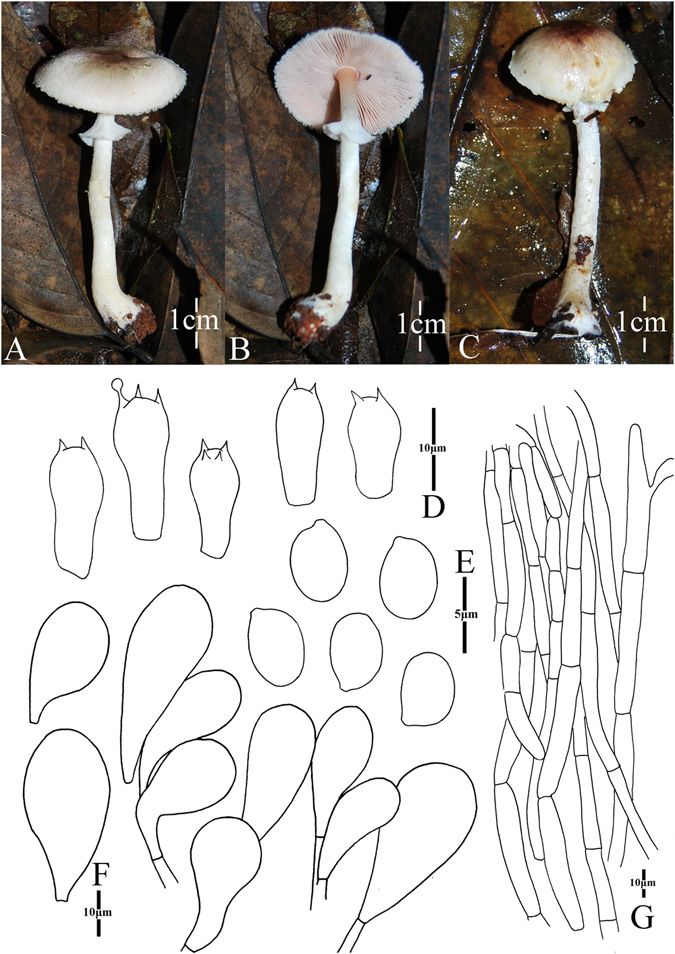
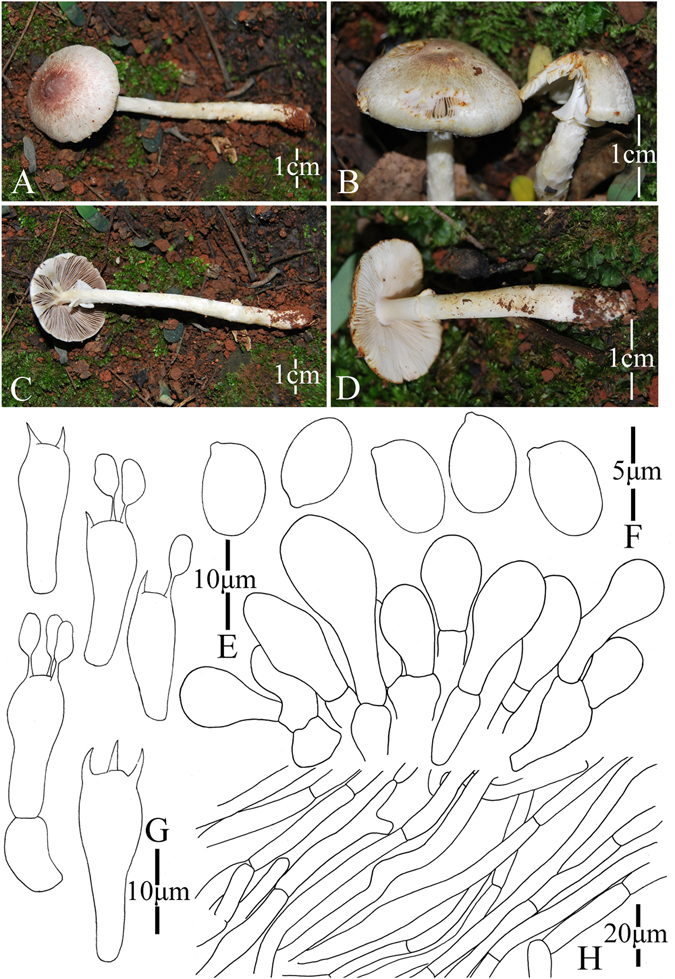
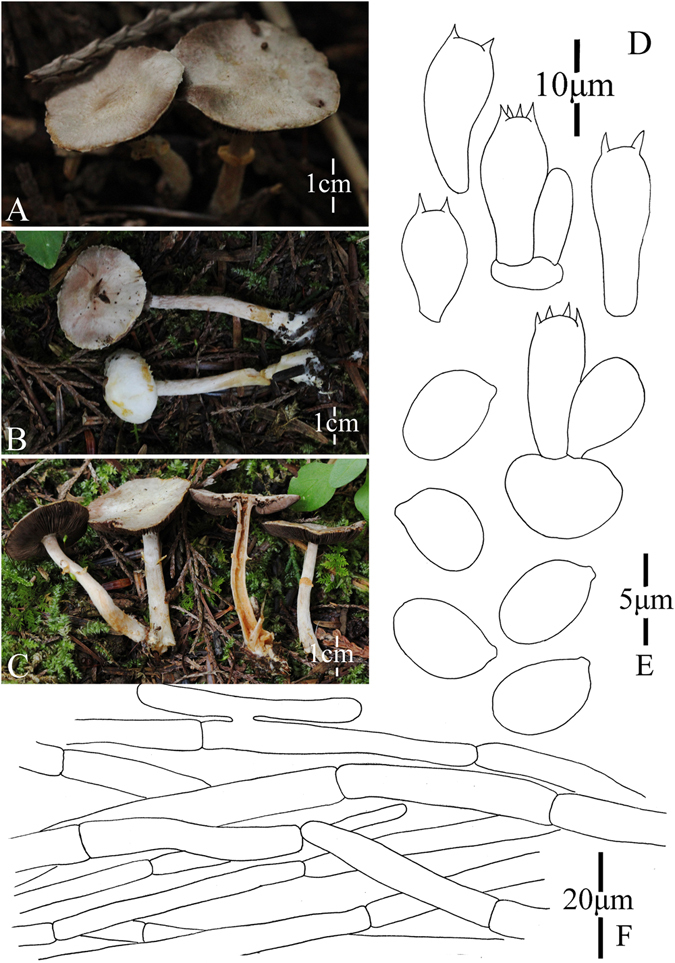
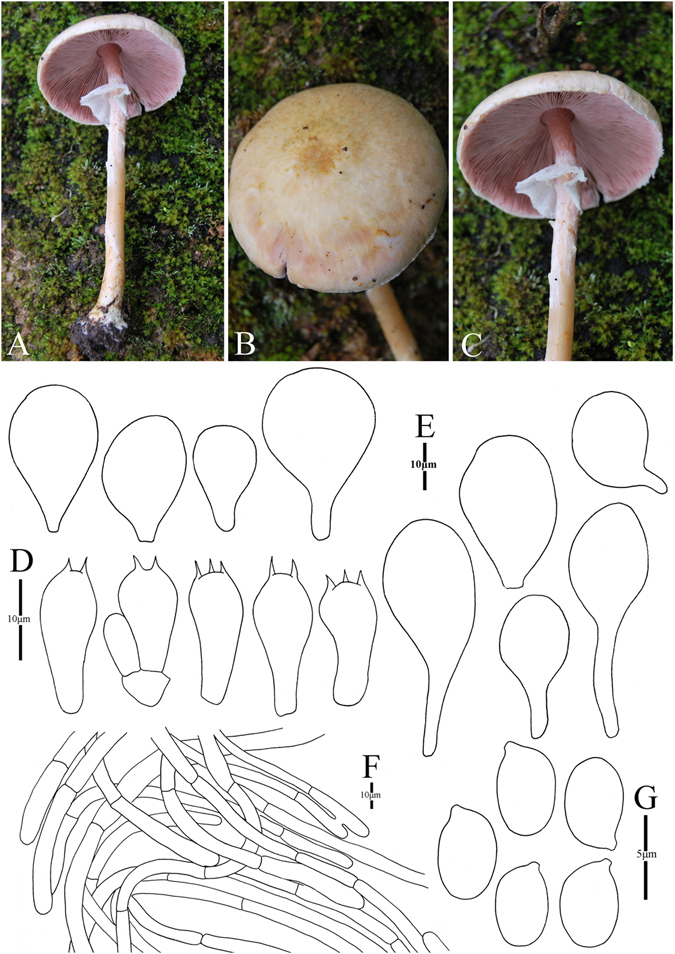
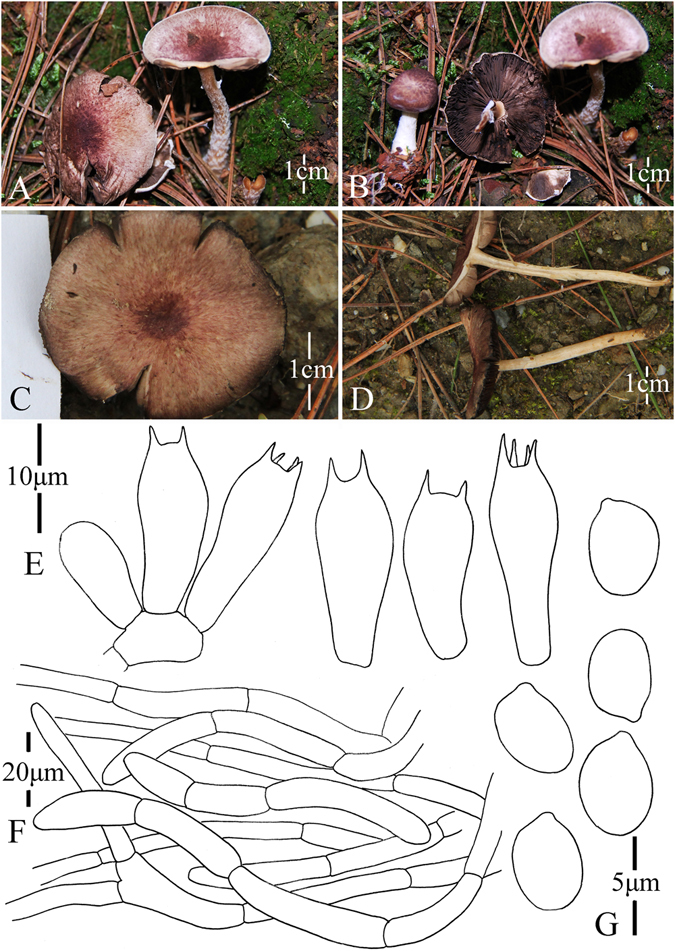
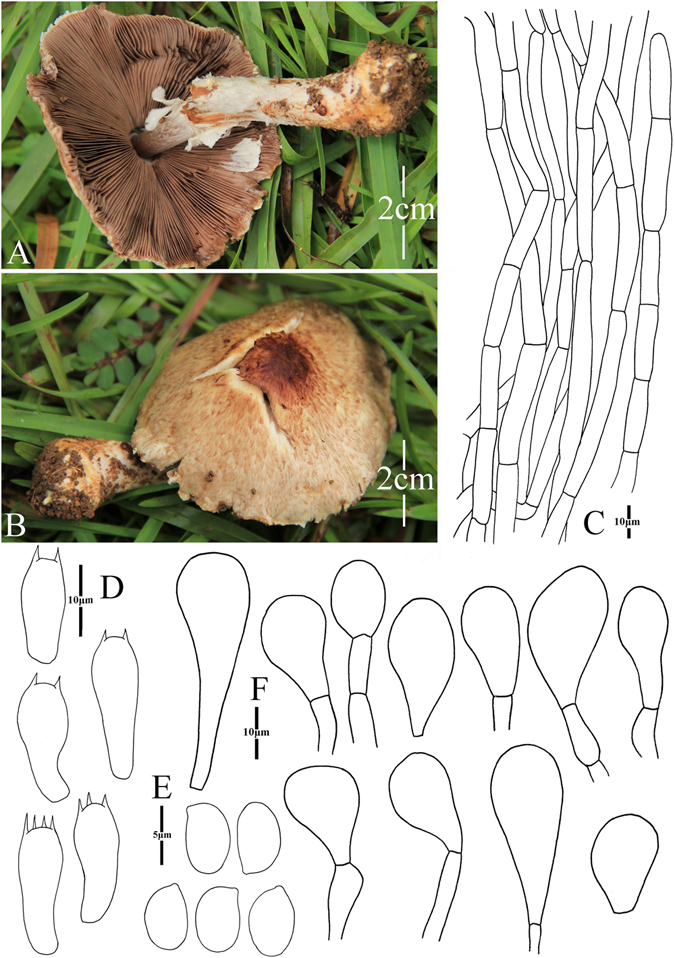
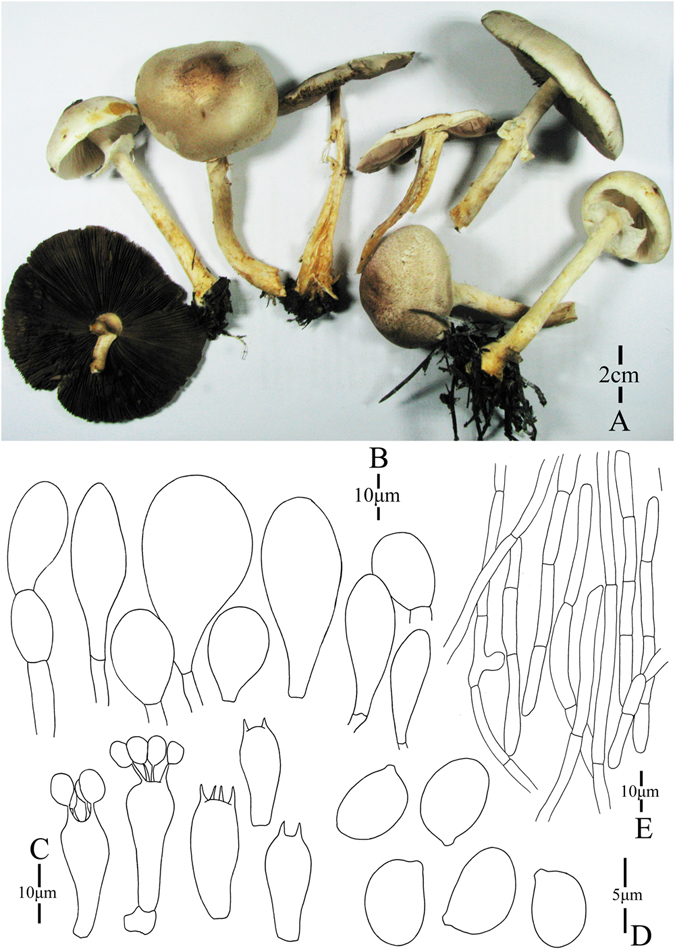
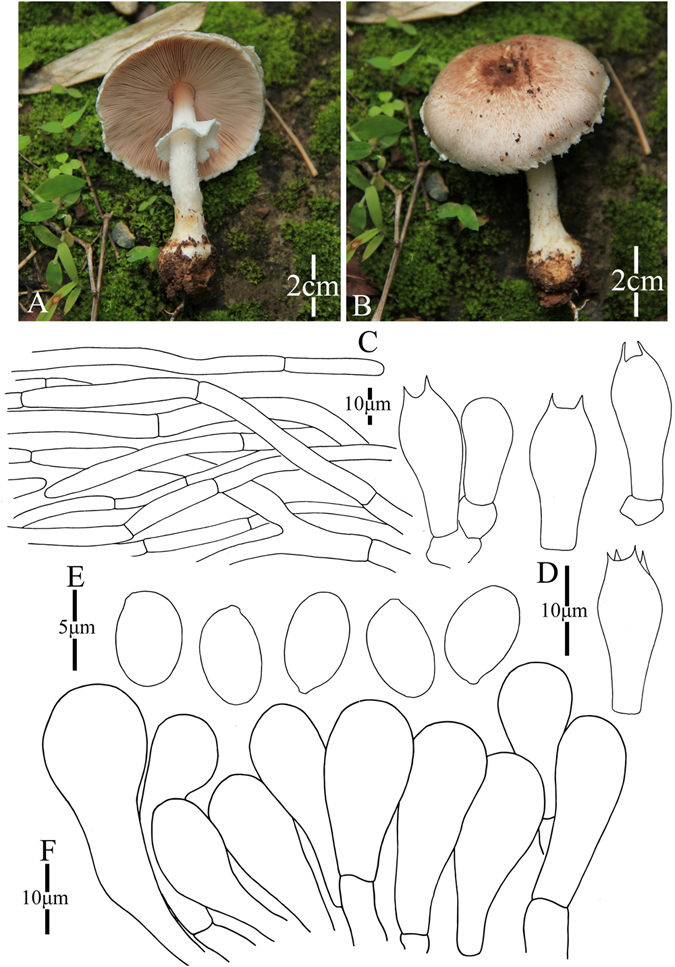
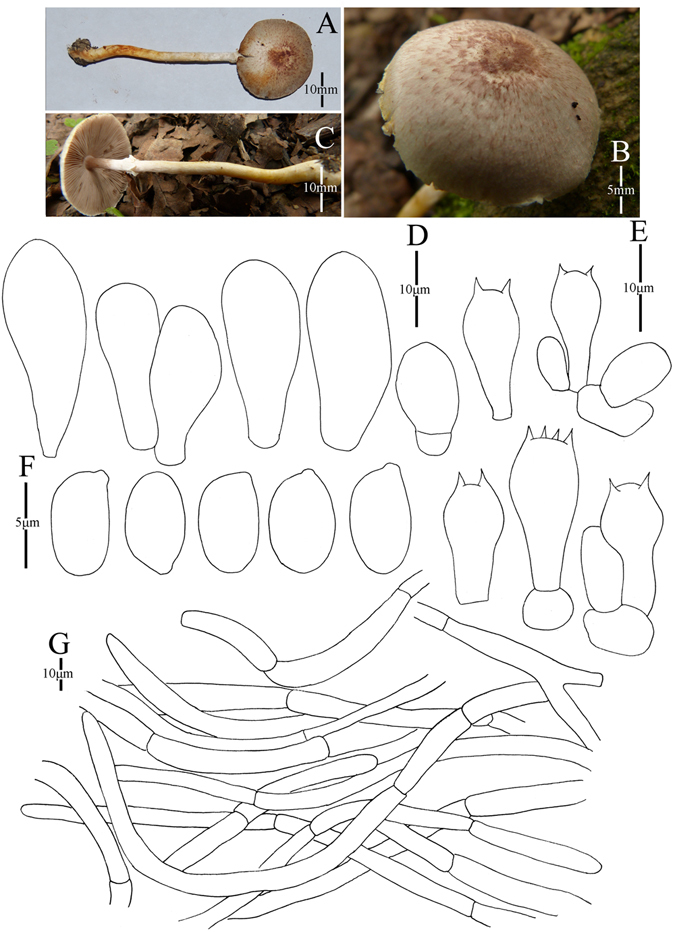
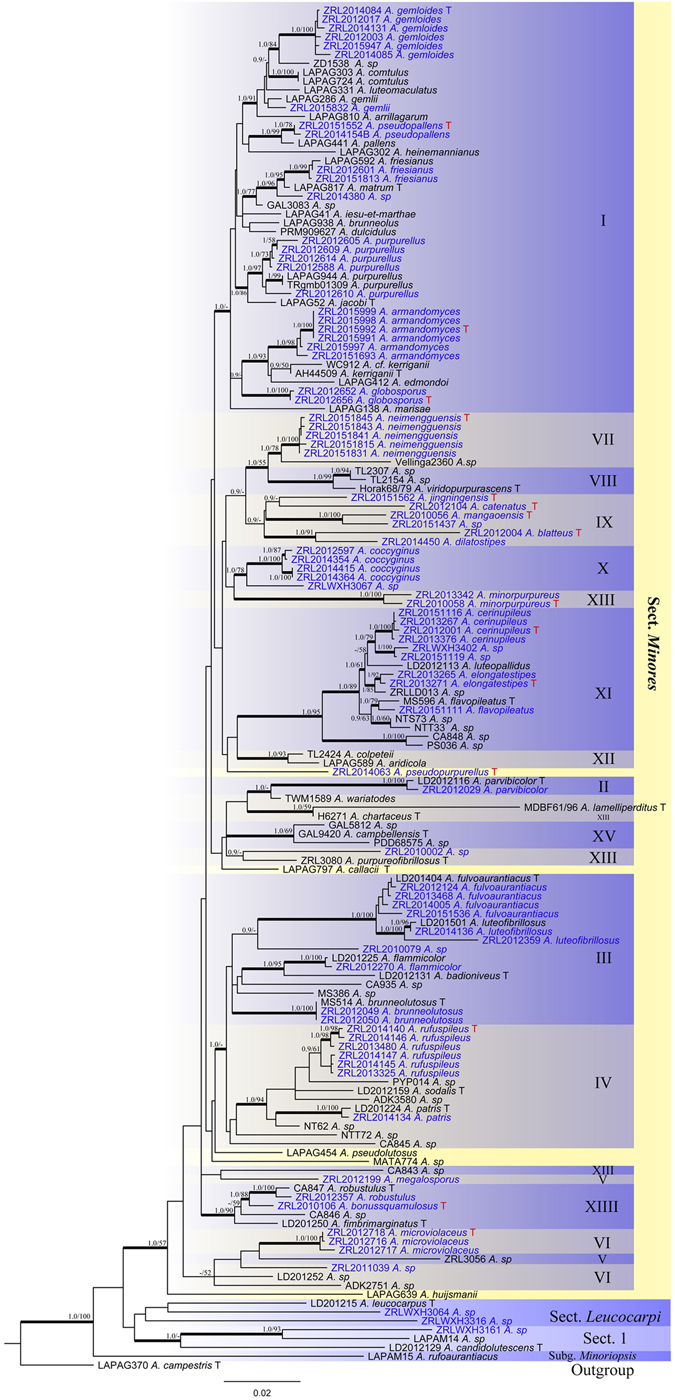
Agaricus section Minores contains the richest species diversity within the genus. Its Phylogeny is firstly presented by a Maximum Likelihood tree generated through DNA sequences from four gene regions of 91 species. Furthermore, a molecular dating analysis is conducted used those sequences, and it provided the divergence times of the clades within section Minores. Study showed section Minores has a tropical origin. Four main dispersal routes are proposed: (1) species from South Asia migrated through the Tibetan Plateau and reached Europe ca. 9-13 Ma; (2) species from out of South Asia dispersed to Europe in the earlier time of ca. 22 Ma; (3) species from South Asia dispersed through North Asia to Alaska, and reached West America around ca. 9 Ma; and (4) species from South Asia dispersed south and reached Oceania by at least three invading events about ca. 9, 12 and 16-18 Ma respectively. Those routes excepting the second route coincide with those of ectomycorrhizal mushrooms. To know whether the second route existed in the saprotrophic mushrooms requires further studies, and the fourth route may explain why the secotioid species occurring in Australia are morphologically similar but cluster in different phylogenetic clades. This study also demonstrates a great biodiversity of A. section Minores in China. Sixteen new species and three new records are introduced from China with morphological descriptions, illustrations, color photographs and phylogenetic analyses.

摘要

小皮伞属(Agaricus section Minores)包含了该属中最丰富的物种多样性。本研究通过对来自 91 个物种的四个基因区域的 DNA 序列进行最大似然法建树,首次呈现了该属的系统发育。此外,还对这些序列进行了分子定年分析,提供了小皮伞属内各分支的分歧时间。研究表明小皮伞属起源于热带。提出了四个主要的扩散途径:(1)来自南亚的物种通过青藏高原到达欧洲,大约在 9-13 百万年前;(2)来自南亚以外的物种在大约 22 百万年前更早地扩散到欧洲;(3)来自南亚的物种通过北亚扩散到阿拉斯加,大约在 9 百万年前到达了西半球;(4)来自南亚的物种向南扩散,通过至少三次入侵事件分别于大约 9、12 和 16-18 百万年前到达了大洋洲。除了第二条途径外,其他途径与外生菌根真菌的扩散途径相吻合。要知道第二条途径是否存在于腐生蘑菇中还需要进一步的研究,而第四条途径可能解释了为什么在澳大利亚发生的 secotioid 物种在形态上相似但在不同的系统发育分支中聚类。本研究还表明,中国的小皮伞属具有丰富的生物多样性。从中国介绍了 16 个新种和 3 个新记录,包括形态描述、插图、彩色照片和系统发育分析。
https://cdn.ncbi.nlm.nih.gov/pmc/blobs/3a14/5505996/df7ab34c2cdf/41598_2017_5203_Fig22_HTML.jpg
https://cdn.ncbi.nlm.nih.gov/pmc/blobs/3a14/5505996/eff793cd5fa1/41598_2017_5203_Fig1_HTML.jpg
https://cdn.ncbi.nlm.nih.gov/pmc/blobs/3a14/5505996/d464a3ca6af0/41598_2017_5203_Fig2_HTML.jpg
https://cdn.ncbi.nlm.nih.gov/pmc/blobs/3a14/5505996/a5375605ca64/41598_2017_5203_Fig3_HTML.jpg
https://cdn.ncbi.nlm.nih.gov/pmc/blobs/3a14/5505996/b95ac3240ae8/41598_2017_5203_Fig4_HTML.jpg
https://cdn.ncbi.nlm.nih.gov/pmc/blobs/3a14/5505996/953bf0fafc8f/41598_2017_5203_Fig5_HTML.jpg
https://cdn.ncbi.nlm.nih.gov/pmc/blobs/3a14/5505996/e332c4a7e5cb/41598_2017_5203_Fig6_HTML.jpg
https://cdn.ncbi.nlm.nih.gov/pmc/blobs/3a14/5505996/bba258eefac8/41598_2017_5203_Fig7_HTML.jpg
https://cdn.ncbi.nlm.nih.gov/pmc/blobs/3a14/5505996/da4301962e47/41598_2017_5203_Fig8_HTML.jpg
https://cdn.ncbi.nlm.nih.gov/pmc/blobs/3a14/5505996/b0b25da89170/41598_2017_5203_Fig9_HTML.jpg
https://cdn.ncbi.nlm.nih.gov/pmc/blobs/3a14/5505996/8ac84afeb26f/41598_2017_5203_Fig10_HTML.jpg
https://cdn.ncbi.nlm.nih.gov/pmc/blobs/3a14/5505996/7bf1ee30d483/41598_2017_5203_Fig11_HTML.jpg
https://cdn.ncbi.nlm.nih.gov/pmc/blobs/3a14/5505996/9e9153d32fbe/41598_2017_5203_Fig12_HTML.jpg
https://cdn.ncbi.nlm.nih.gov/pmc/blobs/3a14/5505996/561fb013f700/41598_2017_5203_Fig13_HTML.jpg
https://cdn.ncbi.nlm.nih.gov/pmc/blobs/3a14/5505996/b000013aaa37/41598_2017_5203_Fig14_HTML.jpg
https://cdn.ncbi.nlm.nih.gov/pmc/blobs/3a14/5505996/77ae2933a060/41598_2017_5203_Fig15_HTML.jpg
https://cdn.ncbi.nlm.nih.gov/pmc/blobs/3a14/5505996/db5c343ed190/41598_2017_5203_Fig16_HTML.jpg
https://cdn.ncbi.nlm.nih.gov/pmc/blobs/3a14/5505996/d24f6503df0a/41598_2017_5203_Fig17_HTML.jpg
https://cdn.ncbi.nlm.nih.gov/pmc/blobs/3a14/5505996/fbb8c39fb0cb/41598_2017_5203_Fig18_HTML.jpg
https://cdn.ncbi.nlm.nih.gov/pmc/blobs/3a14/5505996/4de14a2524c2/41598_2017_5203_Fig19_HTML.jpg
https://cdn.ncbi.nlm.nih.gov/pmc/blobs/3a14/5505996/af70311a39ff/41598_2017_5203_Fig20_HTML.jpg
https://cdn.ncbi.nlm.nih.gov/pmc/blobs/3a14/5505996/56a1a1057abf/41598_2017_5203_Fig21_HTML.jpg
https://cdn.ncbi.nlm.nih.gov/pmc/blobs/3a14/5505996/df7ab34c2cdf/41598_2017_5203_Fig22_HTML.jpg
https://cdn.ncbi.nlm.nih.gov/pmc/blobs/3a14/5505996/eff793cd5fa1/41598_2017_5203_Fig1_HTML.jpg
https://cdn.ncbi.nlm.nih.gov/pmc/blobs/3a14/5505996/d464a3ca6af0/41598_2017_5203_Fig2_HTML.jpg
https://cdn.ncbi.nlm.nih.gov/pmc/blobs/3a14/5505996/a5375605ca64/41598_2017_5203_Fig3_HTML.jpg
https://cdn.ncbi.nlm.nih.gov/pmc/blobs/3a14/5505996/b95ac3240ae8/41598_2017_5203_Fig4_HTML.jpg
https://cdn.ncbi.nlm.nih.gov/pmc/blobs/3a14/5505996/953bf0fafc8f/41598_2017_5203_Fig5_HTML.jpg
https://cdn.ncbi.nlm.nih.gov/pmc/blobs/3a14/5505996/e332c4a7e5cb/41598_2017_5203_Fig6_HTML.jpg
https://cdn.ncbi.nlm.nih.gov/pmc/blobs/3a14/5505996/bba258eefac8/41598_2017_5203_Fig7_HTML.jpg
https://cdn.ncbi.nlm.nih.gov/pmc/blobs/3a14/5505996/da4301962e47/41598_2017_5203_Fig8_HTML.jpg
https://cdn.ncbi.nlm.nih.gov/pmc/blobs/3a14/5505996/b0b25da89170/41598_2017_5203_Fig9_HTML.jpg
https://cdn.ncbi.nlm.nih.gov/pmc/blobs/3a14/5505996/8ac84afeb26f/41598_2017_5203_Fig10_HTML.jpg
https://cdn.ncbi.nlm.nih.gov/pmc/blobs/3a14/5505996/7bf1ee30d483/41598_2017_5203_Fig11_HTML.jpg
https://cdn.ncbi.nlm.nih.gov/pmc/blobs/3a14/5505996/9e9153d32fbe/41598_2017_5203_Fig12_HTML.jpg
https://cdn.ncbi.nlm.nih.gov/pmc/blobs/3a14/5505996/561fb013f700/41598_2017_5203_Fig13_HTML.jpg
https://cdn.ncbi.nlm.nih.gov/pmc/blobs/3a14/5505996/b000013aaa37/41598_2017_5203_Fig14_HTML.jpg
https://cdn.ncbi.nlm.nih.gov/pmc/blobs/3a14/5505996/77ae2933a060/41598_2017_5203_Fig15_HTML.jpg
https://cdn.ncbi.nlm.nih.gov/pmc/blobs/3a14/5505996/db5c343ed190/41598_2017_5203_Fig16_HTML.jpg
https://cdn.ncbi.nlm.nih.gov/pmc/blobs/3a14/5505996/d24f6503df0a/41598_2017_5203_Fig17_HTML.jpg
https://cdn.ncbi.nlm.nih.gov/pmc/blobs/3a14/5505996/fbb8c39fb0cb/41598_2017_5203_Fig18_HTML.jpg
https://cdn.ncbi.nlm.nih.gov/pmc/blobs/3a14/5505996/4de14a2524c2/41598_2017_5203_Fig19_HTML.jpg
https://cdn.ncbi.nlm.nih.gov/pmc/blobs/3a14/5505996/af70311a39ff/41598_2017_5203_Fig20_HTML.jpg
https://cdn.ncbi.nlm.nih.gov/pmc/blobs/3a14/5505996/56a1a1057abf/41598_2017_5203_Fig21_HTML.jpg
https://cdn.ncbi.nlm.nih.gov/pmc/blobs/3a14/5505996/df7ab34c2cdf/41598_2017_5203_Fig22_HTML.jpg

相似文献

1
Tropic origins, a dispersal model for saprotrophic mushrooms in Agaricus section Minores with descriptions of sixteen new species.热带起源,蘑菇科小皮伞属腐生蘑菇的扩散模型及十六个新种描述。
Sci Rep. 2017 Jul 11;7(1):5122. doi: 10.1038/s41598-017-05203-5.
2
Multigene phylogeny and morphological descriptions of five species of Agaricus sect. Minores from subtropical climate zones of Pakistan.巴基斯坦亚热带气候区的五种小皮伞属 Agaricus 节的多基因系统发育和形态描述。
PLoS One. 2024 Jul 11;19(7):e0302222. doi: 10.1371/journal.pone.0302222. eCollection 2024.
3
Study in subgenus and allied clades reveals a new American subgenus and contrasting phylogenetic patterns in Europe and Greater Mekong Subregion.对亚属及相关分支的研究揭示了一个新的美洲亚属以及欧洲和大湄公河次区域截然不同的系统发育模式。
Persoonia. 2017 Jun;38:170-196. doi: 10.3767/003158517X695521. Epub 2017 Apr 28.
4
Morphological and molecular characterization of three Agaricus species from tropical Asia (Pakistan, Thailand) reveals a new group in section Xanthodermatei.对来自热带亚洲(巴基斯坦、泰国)的三种姬松茸属物种的形态学和分子特征分析揭示了黄皮组中的一个新类群。
Mycologia. 2014 Nov-Dec;106(6):1220-32. doi: 10.3852/14-076. Epub 2014 Aug 24.
5
Agaricus section Arvenses: three new species in highland subtropical Southwest China.蘑菇属阿魏蘑组:中国西南亚热带高地的三个新物种。
Fungal Biol. 2015 Mar;119(2-3):79-94. doi: 10.1016/j.funbio.2014.10.005. Epub 2014 Oct 31.
6
Four new species of subgenus from China.中国 亚属的四个新种。
Mycologia. 2021 Mar-Apr;113(2):476-491. doi: 10.1080/00275514.2020.1852808. Epub 2021 Feb 10.
7
Three new species of from Baiyun Mountain, Guangzhou, China.中国广州白云山的三种新球兰属植物。
Mycologia. 2024 May-Jun;116(3):431-448. doi: 10.1080/00275514.2024.2311039. Epub 2024 Feb 28.
8
An overview of Agaricus section Hondenses and Agaricus section Xanthodermatei with description of eight new species from Pakistan.概述了具有黄色外皮的伞菌属 Hondenses 部分和伞菌属 Xanthodermatei 部分,并描述了来自巴基斯坦的 8 个新物种。
Sci Rep. 2021 Jun 18;11(1):12905. doi: 10.1038/s41598-021-92261-5.
9
Evolution in action: molecular evidence for recent emergence of secotioid genera Endxoptychum, Gyrophragmium and Longula from Agaricus ancestors.正在发生的进化:来自姬松茸属祖先的囊状菌类属Endxoptychum、Gyrophragmium和Longula近期出现的分子证据。
Acta Microbiol Immunol Hung. 2004;51(1-2):97-108. doi: 10.1556/AMicr.51.2004.1-2.7.
10
Agaricus section Xanthodermatei: a phylogenetic reconstruction with commentary on taxa.黄皮伞组:系统发育重建及对分类群的评论
Mycologia. 2005 Nov-Dec;97(6):1292-315. doi: 10.3852/mycologia.97.6.1292.

引用本文的文献

1
Six Unrecorded Species of Agaricales (Agaricomycetes, Basidiomycota) from Mudeungsan National Park in Korea.来自韩国母岳山国立公园的六种未记录的伞菌目(担子菌门,伞菌纲)物种。
Mycobiology. 2025 Jun 19;53(4):421-434. doi: 10.1080/12298093.2025.2517905. eCollection 2025.
2
Morphology and phylogeny reveal two new species and a new geographical record of Agaricus sect. Rubricosi (Agaricales) from West Bengal, India.形态学和系统发育学揭示了来自印度西孟加拉邦的蘑菇属红盖组(伞菌目)的两个新物种和一个新地理记录。
Sci Rep. 2025 Jul 12;15(1):25190. doi: 10.1038/s41598-025-08102-2.
3
What are the 100 most cited fungal genera?

本文引用的文献

1
Genetic diversity of Pisolithus in New Zealand indicates multiple long-distance dispersal from Australia.新西兰豆马勃的遗传多样性表明其多次从澳大利亚远距离扩散而来。
New Phytol. 2003 Dec;160(3):569-579. doi: 10.1046/j.1469-8137.2003.00908.x. Epub 2003 Nov 6.
2
Study in subgenus and allied clades reveals a new American subgenus and contrasting phylogenetic patterns in Europe and Greater Mekong Subregion.对亚属及相关分支的研究揭示了一个新的美洲亚属以及欧洲和大湄公河次区域截然不同的系统发育模式。
Persoonia. 2017 Jun;38:170-196. doi: 10.3767/003158517X695521. Epub 2017 Apr 28.
3
Phylogeny and biogeography of the remarkable genus Bondarzewia (Basidiomycota, Russulales).
被引用次数最多的100个真菌属有哪些?
Stud Mycol. 2024 Jul;108:1-411. doi: 10.3114/sim.2024.108.01. Epub 2024 Jul 15.
4
Multigene phylogeny and morphological descriptions of five species of Agaricus sect. Minores from subtropical climate zones of Pakistan.巴基斯坦亚热带气候区的五种小皮伞属 Agaricus 节的多基因系统发育和形态描述。
PLoS One. 2024 Jul 11;19(7):e0302222. doi: 10.1371/journal.pone.0302222. eCollection 2024.
5
Six New Species of (Agaricaceae, Agaricales) from Northeast China.来自中国东北的六种新的伞菌科(伞菌目)物种。
J Fungi (Basel). 2024 Jan 11;10(1):59. doi: 10.3390/jof10010059.
6
Fourteen Unrecorded Species of Agaricales Underw. (Agaricomycetes, Basidiomycota) from the Republic of Korea.来自韩国的伞菌目(伞菌纲,担子菌门)14种未记录物种。
Mycobiology. 2022 Aug 9;50(4):219-230. doi: 10.1080/12298093.2022.2097364. eCollection 2022.
7
Multigene Phylogeny and Morphology Reveal Three Novel Species and a Novel Record of From Northern Thailand.多基因系统发育与形态学揭示了来自泰国北部的三个新物种及一个新记录种。
Front Microbiol. 2021 Jun 21;12:650513. doi: 10.3389/fmicb.2021.650513. eCollection 2021.
8
A preliminary DNA barcode selection for the genus (Russulales, Basidiomycota).红菇属(红菇目,担子菌门)的初步DNA条形码选择
Mycology. 2018 Aug 23;10(2):61-74. doi: 10.1080/21501203.2018.1500400. eCollection 2019 Jun.
9
A new section and species of AgaricussubgenusPseudochitonia from Thailand.来自泰国的蘑菇属假奇托尼亚亚属的一个新组和新物种。
MycoKeys. 2018 Sep 20(40):53-67. doi: 10.3897/mycokeys.40.26918. eCollection 2018.
卓越的邦氏多孔菌属(担子菌门,红菇目)的系统发育与生物地理学
Sci Rep. 2016 Sep 29;6:34568. doi: 10.1038/srep34568.
4
A new species of section from China.来自中国的一个新的组群物种。
Mycology. 2015 Oct 2;6(3-4):182-186. doi: 10.1080/21501203.2015.1121931. Epub 2015 Dec 16.
5
Phylogeography and evolution of a fungal-insect association on the Tibetan Plateau.青藏高原上一种真菌与昆虫共生关系的系统发育地理学与进化
Mol Ecol. 2014 Nov;23(21):5337-55. doi: 10.1111/mec.12940. Epub 2014 Oct 16.
6
Evidence for a Far East Asian origin of lager beer yeast.支持拉格啤酒酵母起源于远东亚洲。
Curr Biol. 2014 May 19;24(10):R380-1. doi: 10.1016/j.cub.2014.04.031.
7
Surprisingly diverged populations of Saccharomyces cerevisiae in natural environments remote from human activity.在远离人类活动的自然环境中,酿酒酵母的种群出人意料地出现了分化。
Mol Ecol. 2012 Nov;21(22):5404-17. doi: 10.1111/j.1365-294X.2012.05732.x. Epub 2012 Aug 22.
8
DNA sequence analyses reveal abundant diversity, endemism and evidence for Asian origin of the porcini mushrooms.DNA 序列分析揭示了丰富的多样性、特有性,并为牛肝菌属蘑菇源自亚洲提供了证据。
PLoS One. 2012;7(5):e37567. doi: 10.1371/journal.pone.0037567. Epub 2012 May 18.
9
Diversity and evolution of ectomycorrhizal host associations in the Sclerodermatineae (Boletales, Basidiomycota).外生菌根宿主相关性在硬皮马勃菌科(牛肝菌目,担子菌门)中的多样性和进化。
New Phytol. 2012 Jun;194(4):1079-1095. doi: 10.1111/j.1469-8137.2012.04109.x. Epub 2012 Apr 3.
10
Bayesian phylogenetics with BEAUti and the BEAST 1.7.贝叶斯系统发育学与 BEAUTi 和 BEAST 1.7。
Mol Biol Evol. 2012 Aug;29(8):1969-73. doi: 10.1093/molbev/mss075. Epub 2012 Feb 25.